
 Worksheets
Unit 1 CUA REVIEW
Total questions: 32
Worksheet time: 11mins
Which of the following best describes the starving time?
A Native Americans in the area near Jamestown suffered by colonists using up resources
B Colonists suffered when the local native people stopped helping them and colonists ran out of food
C Too many people arrived from England and colonists ran out of supplies to give Native Americans
D The area around Jamestown suffered from an extreme drought and all those in the area struggled
Which leader insisted colonists at Jamestown do work to help build the colony?
John White
John Rolfe
John Smith
John Adams
What role did John Rolfe play in the history of Jamestown?
He led the colonists through the “starving time.”
He negotiated peace treaties with the Powhatan Indians.
He explored the James River and mapped the best trade routes.
He developed processes that made tobacco essential to its economy.
Which event contributed to the development of representative government in Jamestown?
establishment of the House of Burgesses
Nathaniel Bacon’s rebellion against Lord Berkeley
John Smith’s rule of “if you don’t work, you don’t eat”
arrival of women for the purpose of marriage and establishing families
The Pilgrims that founded Plymouth Colony were called “Separatists” because they
wanted to break away from English rule.
believed that God was a trinity of three holy parts.
wanted a complete break from the Church of England.
believed that Catholics should be segregated from other Christians.
What are the men signing the Mayflower Compact agreeing to do?
The Plymouth colonists intended to ignore the rule of the King and Parliament.
The Plymouth colonists agreed to abide by majority rule in making laws and policies.
The Plymouth colonists felt that only the most learned men could lead the government.
The Plymouth colonists believed that a government was unnecessary for order and safety.
Which Indian provided assistance to the Pilgrims at the Plymouth Colony?
Squanto
Powhatan
Sequoyah
Pocahontas
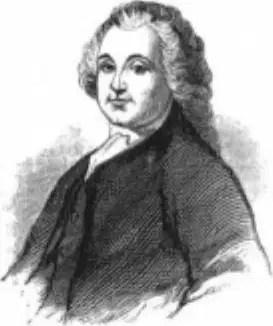
According to the quote, which of the following represents Roger Williams’s impact on democracy in the American colonies?
He expanded the fur trade in the Connecticut colonies.
He rebelled against the authority of the judges in the Salem Witchcraft Trials.
He supported the idea of government based on the consent of the people.
He established the first public school in the colonies.
How did Anne Hutchinson challenge the authority of Puritan authorities in Massachusetts Bay?
She preached among the Indians, as well as to criminals and debtors.
She argued that the laws of the colony should be based on the Bible.
She taught God spoke directly to individuals, not through ministers.
She taught girls could not be guilty of practicing witchcraft in Salem.
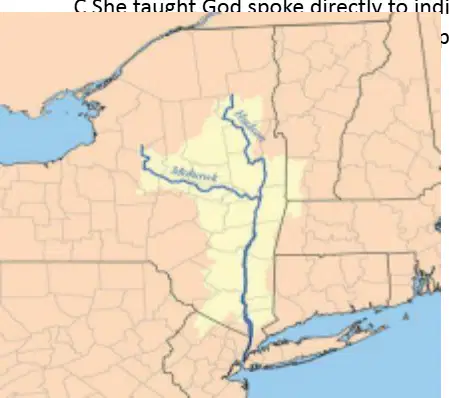
The area highlighted on the map of New York was originally influenced by which European culture?
A Puritan beliefs.
B Dutch culture.
C Quaker beliefs.
D French culture.
Which of the following two were beliefs of the members of the Quaker church in Pennsylvania?
God predestined some people to Heaven and others to damnation.
Members of the church were pacifists.
All people were equal and had a place in the workings of the church.
God existed in a single unified Being that heard confessions of sinners through priests.
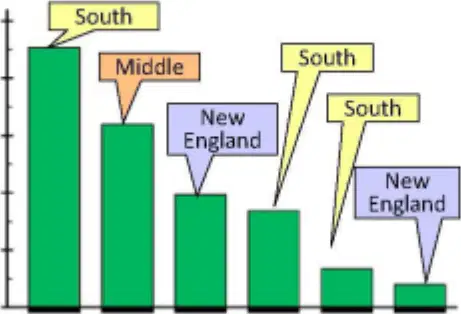
Use the chart and maps to answer the following statement. Which region had the highest population growth according to the data?
Northeast
Midwest
South
West
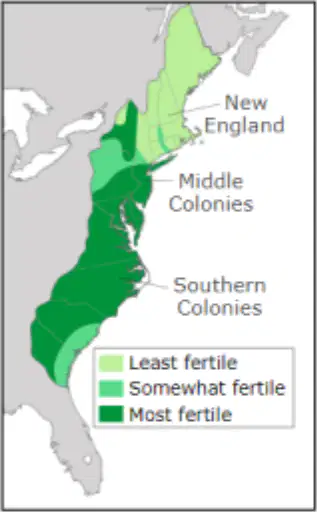
According to the resources above (maps showing Quality of Soil and Length of Growing Season in New England, Middle Colonies, and Southern Colonies), how do New England’s exports relate to their climate and geography?
Their long growing season and fertile land led them to depend on agriculture.
Their short growing season and rocky soil led them to depend on fishing exports.
Their short growing season and rocky soil led them to depend on tar exports.
Their long growing season and rocky soil led them to depend on growing wheat.
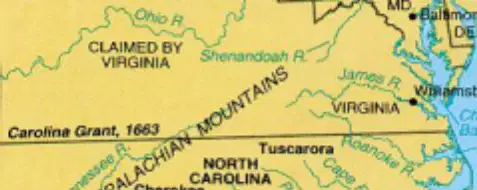
The map provides evidence of why Georgia...
was important for trade and transportation.
had the largest population in the region.
was the first state to abolish slavery.
was the coldest state in the South.
What type of colony was Georgia referred to as?
A crown colony.
B buffer colony.
C farmers colony.
D soldiers colony.
One of the reasons given for the colonization of Georgia was to serve as a(n)
Safe haven for Protestants.
Outpost for English pirates to attack Spanish galleons.
Trade center between English colonies and other European nations.
Military protective zone between English colonies and Spanish settlements.
15. Relationships between Native Americans and leaders of Pennsylvania were better than many because:
Pennsylvania leaders treated Native Americans with respect and fairness.
Pennsylvania leaders forced Native Americans off their land.
Native Americans were given no rights in Pennsylvania.
Pennsylvania leaders ignored Native American concerns.
Which of the following best explains why relations between Native Americans and colonists were more peaceful in Pennsylvania than in other colonies?
Leaders offered better trade goods than in other colonies
Native American leaders there had married colonial women to become citizens
Citizens living there all provided Native Americans part of the crops they were growing
Land was bought from the Native Americans and treaties made instead of taking their land
Use the passage to answer the following question. “there shall be yearly two General Assemblies or Courts…the first shall be called the Court of Election, wherein shall be yearly chosen from time to time, so many Magistrates and other public Officers as shall be found requisite: Whereof one to be chosen Governor for the year ensuing and until another be chosen…” from The Fundamental Orders of Connecticut, 1639 The excerpt above provides evidence that the early English colonists intended to
establish representative governments.
separate themselves from English rule.
choose their leaders from the nobility.
make laws that would please the King.
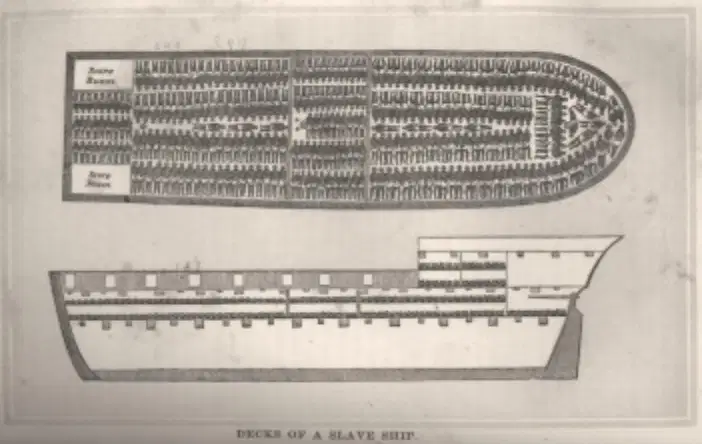
The diagram above is most closely associated with which part of the Triangular Trade?
A starving time
B middle passage
C rum production
D Naval store transportation
Which belief completes the comparison chart above?
A Military service was expected of all male church members.
B All citizens should pay taxes to support the Church.
C Violence is wrong and Native Americans should be treated fairly and with dignity.
D The Church of England should be reformed to allow more tolerance.
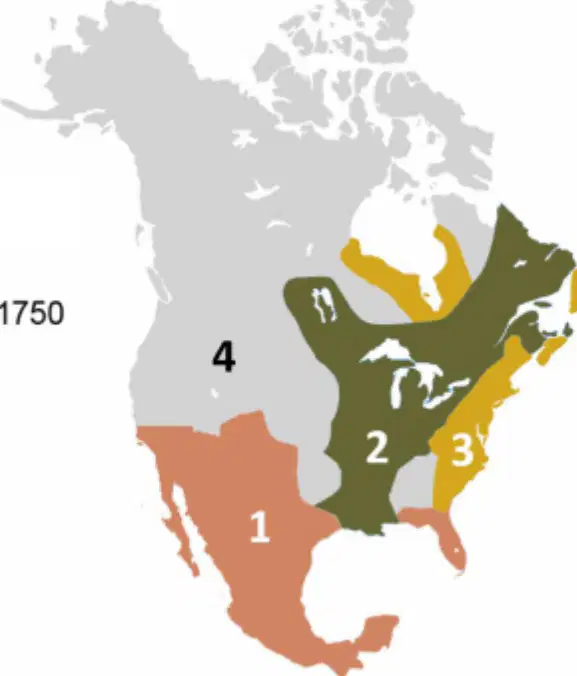
Which country established fur trading posts in the area indicated by the number 2?
England
Spain
Holland
France
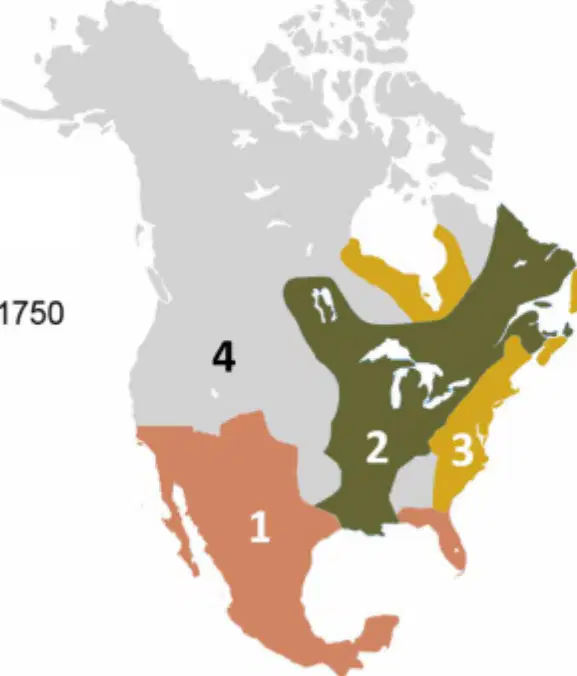
Which number on the map represents the area controlled by Spain?
1
2
3
4
Who was the leader that left the Massachusetts colony due to religious differences to found the Connecticut colony?
William Penn
Thomas Hooker
James Oglethorpe
Roger Williams
Evidence that would be excluded from modern courtrooms-- hearsay, gossip, stories, unsupported assertions, -- was also generally admitted. Many protections that modern defendants take for granted were lacking: the accused had no legal counsel, could not have witnesses testify under oath on their behalf, and had no formal avenues of appeal. Jails approached capacity and the colony "teetered on the brink of chaos" when Governor Phips returned from England. After months of trials, the governor of Massachusetts finally decided to put an end to the trials with the last trials being held in May of 1693. The governor pardoned the rest of the accused and they were released from jail. At least 20 people were put to death during the trials. Over 150 more were jailed and some people died due to poor conditions in jail.
A The Salem Witch Trials
B The Massachusetts Slave Uprising
C The Mayflower Compact Hearings
D The Powhatan Land Trials
What was the major difference between a slave and an indentured servant?
Slaves could buy their freedom, indentured servants couldn’t
Indentured servants were only put to work in businesses in the colonies
Indentured servants were free after they worked off the passage to America that had been paid
Slaves would be freed automatically when their owner died or if they had children to raise
How did New England’s town meetings add to the idea of democracy in America?
Women were also allowed to vote in the town meetings
All citizens with voting rights had a voice in the town meetings and deciding on rules
Church leaders made the decision for the colonists in these public meetings
Local citizens including Native Americans were allowed to speak in the town meetings
Based on the source, which two motivations are given for Dutch and French colonies in North America?
A fur trade
B mining for gold
C tobacco production
D spreading Christianity
E provide a home for debtors
What was one lasting effect of Dutch influence on the colony of New York?
The Dutch introduced new farming techniques.
Dutch culture and architecture remained part of the colony.
The Dutch created the first public school system.
The Dutch set up a brand-new legal system.
What does this quote from Powhatan, father of Pocahontas, mostly reveal about his attitude towards the settlers of Jamestown?
Take away your guns and swords, the cause of all our jealousy, or you may die in the same manner.”
He thinks the settlers are going to attack due to their fear of inferiority.
He thinks that the settlers will not live in peace with the American Indians.
He thinks the settlers and the Powhatans should try to live in peace to establish trade.
He thinks they should leave Jamestown or be prepared to be attacked by American Indians.
The Stono Rebellion and Bacon's Rebellion are both examples of
A passive resistance.
B constructive resistance.
C legal resistance.
D overt resistance.
What were two examples of passive resistance?
A Revolt against owner
B Work slowdown
C Creation of secret codes for communication
D Breaking of tools
E Stealing food

