
Font size
 Worksheets
Staphylococci
Total questions: 100
Worksheet time: 50mins
Which bacterial pathogen is most commonly encountered by pharmacists in practice?
Staphylococcus aureus
Escherichia coli
Pseudomonas aeruginosa
Clostridium difficile
Why is it important for pharmacists to understand antibiotic resistance challenges such as MRSA and VRSA?
Because these challenges impact medication therapy management and infection control
Because they only affect laboratory procedures
Because they are not relevant to public health
Because they are only found in animals
Which of the following statements is true regarding S. aureus infections?
Every person will have some type of S. aureus infection in their lifetime
Only children are affected by S. aureus infections
S. aureus infections are extremely rare
S. aureus infections do not require medical attention
How do S. aureus infections relate to food safety and public health?
They have significant implications for both food safety and public health
They are only a concern in hospital settings
They do not affect food safety
They are only transmitted through water
A pharmacist is developing an infection control protocol for a hospital. Which major challenge should they consider based on the information provided?
Antibiotic resistance, particularly MRSA and VRSA
Seasonal allergies
Viral infections only
Nutritional deficiencies
Which type of infection is most commonly associated with outpatient prescriptions?
Skin and soft tissue infections
Post-surgical infections
Medical device infections
Food poisoning outbreaks
In hospital settings, which type of infection is commonly encountered after surgical procedures?
Post-surgical infections
Food poisoning outbreaks
Antibiotic resistance patterns
Skin and soft tissue infections
Which of the following is most likely to be associated with catheters, prosthetics, and implants?
Medical device infections
Food poisoning outbreaks
Skin and soft tissue infections
Antibiotic resistance patterns
What is a key characteristic of food poisoning outbreaks mentioned in clinical practice?
Heat-stable enterotoxins
Antibiotic resistance
Catheter contamination
Post-surgical complications
Why might therapy modifications be required in clinical practice?
Antibiotic resistance patterns
Food poisoning outbreaks
Medical device infections
Post-surgical infections
A patient presents with an infection related to a prosthetic implant. Which clinical issue should you consider?
Medical device infection
Food poisoning outbreak
Skin and soft tissue infection
Antibiotic resistance pattern
If a patient develops an infection after surgery, what is the most likely type of infection?
Post-surgical infection
Food poisoning outbreak
Medical device infection
Antibiotic resistance pattern
How might the presence of heat-stable enterotoxins impact a clinical scenario?
It may indicate a food poisoning outbreak.
It may require therapy modification.
It may be related to prosthetic implants.
It may be the most common outpatient prescription.
Which of the following is a key difference between Staphylococcus aureus and coagulase-negative staphylococci?
S. aureus is coagulase-positive, while coagulase-negative staphylococci are not.
Both are coagulase-positive.
S. aureus is always antibiotic-resistant.
Coagulase-negative staphylococci are more virulent than S. aureus.
Which of the following best describes the clinical significance of virulence factors in bacteria?
They help bacteria survive in the environment only.
They contribute to the ability of bacteria to cause disease.
They are only important for laboratory identification.
They are unrelated to antibiotic resistance.
Which resistance mechanisms are important to understand in the context of staphylococcal infections?
β-lactamase, MRSA, and VRSA
Capsule formation and flagella
Endospore production and toxin release
Plasmid transfer and conjugation
A patient presents with a suspected staphylococcal infection. Which step is most appropriate for confirming the diagnosis?
Identifying appropriate diagnostic tests and interpreting their results
Prescribing antibiotics immediately without testing
Ignoring laboratory results
Only considering patient history
When selecting antimicrobial therapy for a staphylococcal infection, what is the best approach?
Recommend evidence-based antimicrobial therapy options
Use the most expensive antibiotic available
Prescribe antibiotics based on patient preference
Avoid using any antibiotics
Why is it important to recognize infection control and epidemiological considerations in clinical practice?
To prevent the spread of infections and understand patterns of disease
To increase the cost of healthcare
To reduce the need for diagnostic tests
To avoid using antimicrobial therapy
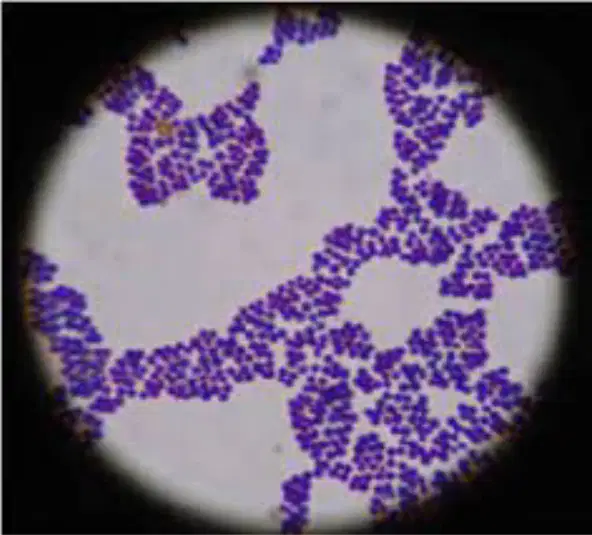
Which of the following best describes the shape and arrangement of Staphylococci?
Gram-positive cocci in grape-like clusters
Gram-negative rods in chains
Gram-positive rods in pairs
Gram-negative cocci in tetrads
What test can be used to differentiate Staphylococci from Streptococci?
Coagulase test
Catalase test
Oxidase test
Urease test
Which statement about the growth conditions of Staphylococci is correct?
They are strict aerobes and cannot grow without oxygen.
They are obligate anaerobes and die in the presence of oxygen.
They are facultative anaerobes and can grow in most conditions.
They only grow in high salt concentrations.
Approximately how many species are present in the genus Staphylococcus?
10+
20+
30+
45+
Where are Staphylococci commonly found?
Only in soil
Only in water
On skin, mucous membranes, and in the environment
Only in the gastrointestinal tract
A microbiologist isolates a Gram-positive, catalase-positive coccus from a skin swab. What genus is most likely present, and what evidence supports this conclusion?
Streptococcus; because it is catalase-positive
Staphylococcus; because it is Gram-positive and catalase-positive
Bacillus; because it is Gram-positive and rod-shaped
Escherichia; because it is Gram-negative and catalase-positive
Which of the following Staphylococcus species is coagulase positive and considered a major human pathogen?
Staphylococcus aureus
Staphylococcus epidermidis
Staphylococcus lugdunensis
Staphylococcus saprophyticus
Which Staphylococcus species is most commonly associated with urinary tract infections (UTIs) in young women?
Staphylococcus aureus
Staphylococcus epidermidis
Staphylococcus saprophyticus
Staphylococcus lugdunensis
What is the primary clinical significance of Staphylococcus epidermidis?
Causes toxin-mediated diseases
Normal skin flora and device infections
Causes UTIs in young women
Causes invasive infections
Which of the following statements best describes Staphylococcus lugdunensis?
It is a major human pathogen causing toxin-mediated diseases.
It is an emerging virulent pathogen.
It is the most common cause of UTIs in young women.
It is a normal skin flora with no clinical significance.
Compare and contrast the clinical importance of Staphylococcus aureus and Staphylococcus epidermidis. Provide at least one key difference in their pathogenic roles.
Both are major human pathogens causing toxin-mediated diseases.
S. aureus is a major pathogen causing invasive infections, while S. epidermidis is mainly associated with normal skin flora and device infections.
Both are primarily responsible for UTIs in young women.
Both are emerging virulent pathogens.
Which of the following best describes the shape and size of the cells mentioned in the laboratory characteristics?
Rod-shaped cells, ~5 µm diameter
Spherical cells, ~1 µm diameter
Spiral cells, ~2 µm diameter
Oval cells, ~10 µm diameter
What is the typical arrangement of the cells as described in the laboratory characteristics?
Chains
Pairs
Irregular clusters ("grape bunches")
Single cells
Which type of colony color is associated with Staphylococcus aureus?
Blue colonies
Golden yellow colonies
Red colonies
Green colonies
What is the typical colony color of Coagulase-negative Staphylococci (CoNS)?
Pink
Gray-white
Orange
Black
Which laboratory characteristic is used to identify pathogenic strains on blood agar?
α-hemolysis
γ-hemolysis
β-hemolysis
δ-hemolysis
A microbiologist observes colonies with a golden yellow color and β-hemolysis on blood agar. Which organism is most likely present?
Streptococcus pyogenes
Staphylococcus aureus
Escherichia coli
Bacillus subtilis
What is the gold standard test for identifying Staphylococcus aureus?
Coagulase test
Catalase test
Gram stain
Oxidase test
Which of the following is true about coagulase positive Staphylococcus species?
They do not clot plasma
They are generally less invasive
They are associated with invasive pathogenic potential
They are often opportunistic pathogens
Which Staphylococcus species is coagulase positive?
S. epidermidis
S. saprophyticus
S. aureus
S. lugdunensis
Which of the following statements best describes coagulase negative Staphylococci (CoNS)?
They are always highly invasive
They are generally less invasive and often opportunistic pathogens
They clot plasma
They are the gold standard for S. aureus identification
Which of the following species is NOT typically classified as coagulase negative Staphylococcus (CoNS)?
S. epidermidis
S. lugdunensis
S. aureus
S. saprophyticus
A laboratory is trying to determine if a Staphylococcus isolate is S. aureus. Which test should they use and what result would confirm S. aureus?
Catalase test; positive result
Coagulase test; positive result
Oxidase test; negative result
Gram stain; Gram-negative result

What does the presence of clotted plasma in a coagulase test indicate?
The organism is coagulase negative
The organism is S. epidermidis
The organism is coagulase positive, likely S. aureus
The organism is not a Staphylococcus species
Which of the following is a key distinguishing feature of Staphylococcus aureus?
Coagulase positive
Catalase negative
Non-hemolytic
Does not ferment mannitol
What pigment is typically produced by S. aureus colonies?
Red
Golden yellow
Blue-green
White
Which of the following best describes the hemolytic property of S. aureus?
α-hemolytic
γ-hemolytic
β-hemolytic
Non-hemolytic
Which metabolic process is S. aureus known for?
Lactose fermentation
Mannitol fermentation
Sucrose fermentation
Glucose oxidation only
Which protein is produced by S. aureus and is considered a key virulence factor?
Protein C
Protein A
Protein G
Protein M
Why is S. aureus considered a major pathogen?
It is always non-pathogenic
It has multiple virulence factors
It cannot survive outside the host
It is only found in soil
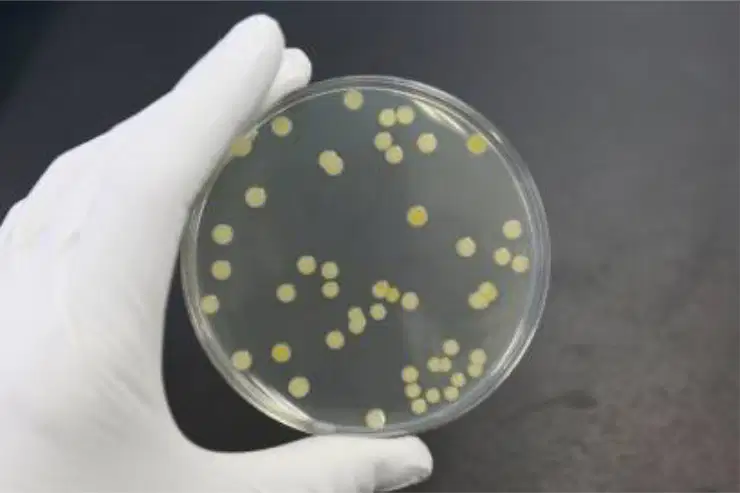
A clinical microbiologist observes golden yellow colonies on an agar plate that are coagulase positive and β-hemolytic. Which organism is most likely present?
Streptococcus pyogenes
Staphylococcus epidermidis
Staphylococcus aureus
Escherichia coli
Which of the following is NOT a mechanism by which S. aureus causes disease?
Tissue invasion
Toxin production
Antibody synthesis
Immune evasion
Which of the following is an example of a factor involved in tissue invasion by S. aureus?
Enzymes
Superantigens
Cytotoxins
Enterotoxins
What regulates the virulence factors of S. aureus in response to environmental cues?
Simple metabolic pathways
Complex genetic systems
Host immune response
Antibiotic resistance genes
Explain how the regulation of virulence factors by complex genetic systems benefits S. aureus in a changing environment.
It allows S. aureus to adapt its pathogenic strategies to different environmental conditions, enhancing its survival and ability to cause disease.
It increases the rate of cell division regardless of environmental changes.
It prevents the bacterium from producing any toxins.
It makes S. aureus more susceptible to antibiotics.
Which of the following is a function of Protein A in microbial surface adhesins (MSCRAMMs)?
Binds fibrinogen/platelets
Binds IgG, immune evasion
Binds collagen
Binds fibronectin
What is the clinical significance of microbial surface adhesins (MSCRAMMs)?
Enable antibiotic resistance
Enable colonization and invasion
Enable toxin production
Enable nutrient acquisition
Which of the following MSCRAMMs binds fibrinogen and platelets?
Protein A
Clumping factor
Collagen-binding proteins
Fibronectin-binding proteins
Which type of protein is responsible for binding fibronectin in microbial surface adhesins?
Protein A
Clumping factor
Fibronectin-binding proteins
Collagen-binding proteins
How do MSCRAMMs contribute to the pathogenicity of microbes?
By producing toxins
By enabling colonization and invasion
By degrading host tissues
By inhibiting protein synthesis
Which enzyme neutralizes hydrogen peroxide (H₂O₂) from neutrophils?
Catalase
Coagulase
Hyaluronidase
β-lactamase
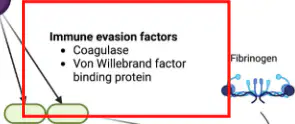
What is the primary function of coagulase in tissue invasion?
Fibrin deposition and abscess formation
Neutralizing hydrogen peroxide
Fibrinolysis
Antibiotic resistance
Which enzyme is referred to as the "spreading factor"?
Hyaluronidase
Staphylokinase
Catalase
Coagulase
Staphylokinase is primarily involved in which process?
Fibrinolysis
Fibrin deposition
Antibiotic resistance
Neutralizing H₂O₂
Which enzyme provides antibiotic resistance by breaking down β-lactam antibiotics?
β-lactamase
Catalase
Coagulase
Hyaluronidase
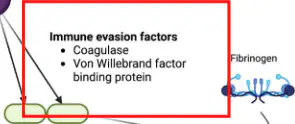
Explain how the combination of coagulase and staphylokinase contributes to the pathogenicity of S. aureus.
Coagulase promotes abscess formation by depositing fibrin, while staphylokinase breaks down fibrin to facilitate spread.
Both enzymes neutralize hydrogen peroxide.
Both enzymes provide antibiotic resistance.
Coagulase and staphylokinase both act as spreading factors.
Which of the following hemolysins is described as pore-forming and broad spectrum?
α-hemolysin
β-toxin
γ-hemolysin
δ-toxin
What is the primary action of β-toxin?
Leukocidin, WBC destruction
Sphingomyelinase, RBC lysis
Membrane disruption
Pore-forming, broad spectrum
Which toxin is responsible for leukocidin activity and white blood cell destruction?
α-hemolysin
β-toxin
γ-hemolysin
δ-toxin
What is the result of the action of cell-damaging toxins such as α-hemolysin, β-toxin, γ-hemolysin, and δ-toxin?
Increased antibody production
Tissue necrosis and immune cell destruction
Enhanced cell proliferation
Decreased inflammation
A patient presents with tissue necrosis and immune cell destruction. Which group of toxins is most likely responsible for these effects?
Cell-damaging toxins (hemolysins and cytotoxins)
Antibody neutralizing proteins
DNA polymerases
Growth factors
Which of the following best describes Panton-Valentine Leukocidin (PVL)?
A toxin associated with community-acquired MRSA virulence
A type of antibiotic used to treat MRSA
A vaccine for pneumonia
A diagnostic test for skin infections
What is the primary function of Panton-Valentine Leukocidin (PVL)?
Kills white blood cells
Promotes red blood cell production
Inhibits bacterial growth
Stimulates antibody production
Which of the following is NOT associated with Panton-Valentine Leukocidin (PVL)?
Diabetes mellitus
Severe skin infections
Necrotizing pneumonia
CA-MRSA outbreaks
Panton-Valentine Leukocidin (PVL) is encoded on which of the following?
Mobile phage
Bacterial chromosome
Plasmid
Mitochondrial DNA
PVL is a two-component toxin. What are the names of its two protein components?
S and F proteins
A and B proteins
X and Y proteins
M and N proteins
A patient presents with a severe skin infection and is found to have CA-MRSA. Which virulence factor is most likely involved?
Panton-Valentine Leukocidin (PVL)
Streptolysin O
Tetanus toxin
Botulinum toxin
Explain how the presence of PVL in MRSA strains can contribute to outbreaks in the community setting.
PVL increases the ability of MRSA to cause severe skin infections and necrotizing pneumonia, leading to more rapid and widespread outbreaks.
PVL makes MRSA resistant to all antibiotics, causing outbreaks.
PVL allows MRSA to survive on surfaces for months, increasing transmission.
PVL causes mild symptoms, making outbreaks hard to detect.
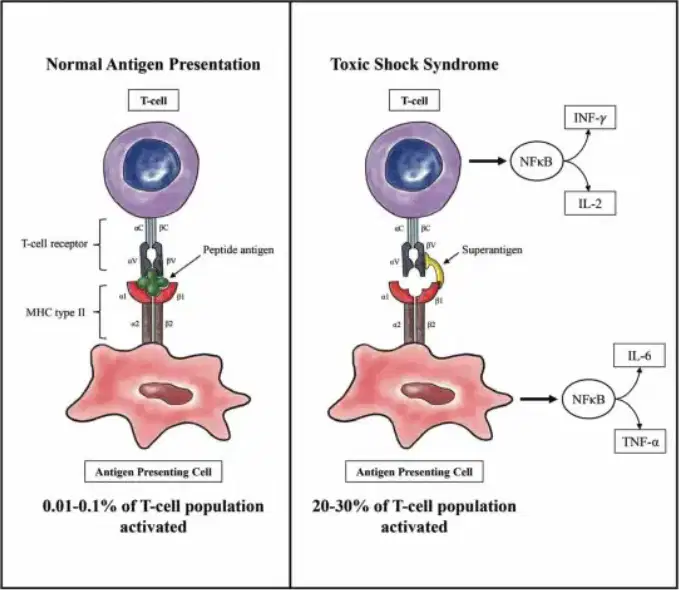
Which of the following best describes the primary effect of superantigen toxins on the immune system?
They cause massive immune system activation.
They suppress all immune responses.
They only affect B-cells.
They prevent any T-cell activation.
Which toxin is considered the prototypical superantigen?
Toxic Shock Syndrome Toxin-1 (TSST-1)
Botulinum toxin
Diphtheria toxin
Cholera toxin
What is a key characteristic of enterotoxins A-E, G-P?
They are heat-stable food poisoning toxins.
They are only found in cold environments.
They are not related to superantigens.
They are antibiotics.
How do superantigens such as TSST-1 affect T-cell activation compared to normal antigen presentation?
They activate a much larger proportion of T-cells.
They inhibit T-cell activation completely.
They only activate memory T-cells.
They have no effect on T-cell activation.
Why does Toxic Shock Syndrome Toxin-1 (TSST-1) cause a systemic inflammatory response?
It bypasses normal immune recognition, leading to massive T-cell activation.
It only affects the digestive system.
It blocks all cytokine production.
It is rapidly degraded by the immune system.
Explain why superantigens can lead to toxic shock syndrome, using evidence from their mechanism of action.
Superantigens bypass normal immune recognition, causing massive T-cell activation and a systemic inflammatory response, which can result in toxic shock syndrome.
Superantigens only affect the skin, causing localized rashes.
Superantigens are neutralized before they can affect the immune system.
Superantigens only activate B-cells, not T-cells.
Which syndrome is primarily associated with exfoliative toxins?
Scalded Skin Syndrome
Toxic Shock Syndrome
Scarlet Fever
Kawasaki Disease
What are the two types of exfoliative toxins mentioned in the material?
ETA (phage-encoded) and ETB (plasmid-encoded)
Alpha toxin and Beta toxin
Enterotoxin A and Enterotoxin B
Hemolysin and Leukocidin
What is the primary action of exfoliative toxins on the skin?
Dissolve epidermal matrix
Increase melanin production
Stimulate collagen synthesis
Cause vasoconstriction
Which of the following is NOT a clinical presentation associated with exfoliative toxins?
Generalized skin peeling
Scalded skin syndrome
Bullous impetigo
Erythema nodosum
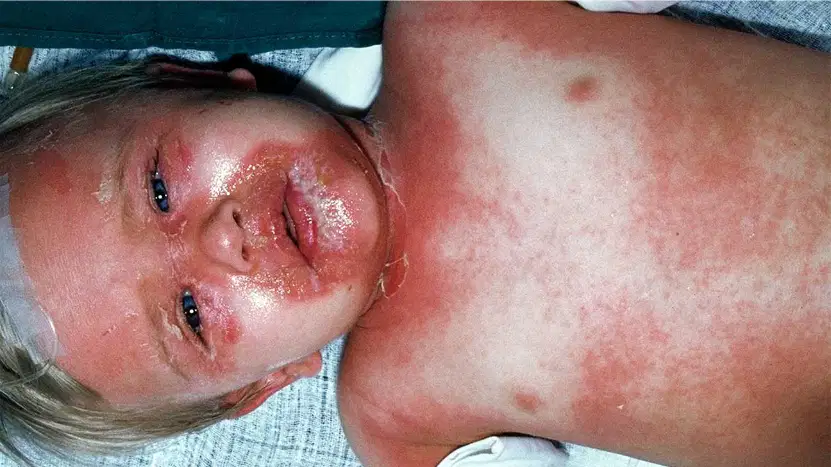
Explain how exfoliative toxins contribute to the clinical presentation of scalded skin syndrome.
By dissolving the epidermal matrix, leading to skin peeling and blistering
By increasing the production of sweat, causing dehydration
By stimulating immune cells to attack the dermis
By blocking blood flow to the skin, resulting in necrosis
Which system is primarily responsible for regulating virulence factor expression in response to cell density in bacteria?
Accessory Gene Regulator (agr) system
Lac operon system
SOS response system
Two-component system
What happens to toxin production in bacteria when cell density is high?
Toxin production increases
Toxin production decreases
Surface adhesins predominate
No change in toxin production
At low cell density, which of the following is most likely to predominate in bacterial cells?
Surface adhesins
Toxins
Antibiotic resistance genes
Capsule formation
How do multiple regulatory networks contribute to the regulation of virulence factors?
They coordinate virulence factor expression with growth phase and environmental conditions
They only activate toxin genes
They suppress all gene expression
They function independently of environmental conditions
Explain how quorum sensing and environmental response are involved in the regulation of virulence in bacteria. (DoK Level 3)
Quorum sensing and environmental response allow bacteria to sense their population density and environmental conditions, adjusting the expression of virulence factors accordingly.
Quorum sensing only affects motility, not virulence.
Environmental response is unrelated to gene regulation.
Quorum sensing is only important in eukaryotic cells.
Which of the following best describes folliculitis?
Hair follicle infection
Deeper abscesses
Spreading skin infection
Superficial skin infection
What is the hallmark of post-surgical wound infections?
Spreading skin infection
Purulent, localized with abscess formation
Deeper abscesses
Superficial skin infection
Which localized infection is characterized by deeper abscesses?
Folliculitis
Furuncles/carbuncles
Cellulitis
Impetigo
A patient presents with a superficial skin infection. Which of the following is the most likely diagnosis?
Cellulitis
Furuncles/carbuncles
Impetigo
Folliculitis
Compare and contrast cellulitis and impetigo in terms of the depth and spread of infection.
Cellulitis is a spreading skin infection, while impetigo is superficial.
Both are superficial skin infections.
Cellulitis is deeper but localized, impetigo is spreading.
Both are deeper abscesses.
Which clinical disease is characterized by a bloodstream infection?
Endocarditis
Osteomyelitis
Bacteremia
Pneumonia
What type of infection does endocarditis refer to?
Lung infection
Heart valve infection
CNS infection
Joint infection

