
 Worksheets
Quiz 2: Photography Basics
Total questions: 25
Worksheet time: 20mins
What makes up the exposure triangle?
Aperture, Shutter Speed, and ISO
Aperture, ISO, and White Balance
Shutter Speed, White Balance, and ISO
Aperture, Shutter Speed, and Exposure Compensation
What is aperture?
A hole or an opening through which light travels
A type of camera lens
A measurement of the loudness of sound
A software for photo editing
How do the sides of the exposure triangle work together?
By adjusting aperture, shutter speed, and ISO independently
By balancing aperture, shutter speed, and ISO to achieve the correct exposure
By using only one of aperture, shutter speed, or ISO to control the exposure
By changing the camera's white balance settings
How does shutter speed work? What is the difference between a slow and fast shutter speed?
A slow shutter speed allows more light and shows motion blur, while a fast shutter speed freezes motion and allows less light.
A slow shutter speed freezes motion, while a fast shutter speed shows motion blur.
Shutter speed does not affect light or motion in photography.
A slow and fast shutter speed have no significant difference.
What happens to a camera's lens when the aperture is adjusted?
The lens moves closer to the subject
The lens changes its focal length
The size of the lens opening changes, allowing more or less light
The lens automatically focuses on the subject
What is depth of field?
The distance between the nearest and the furthest objects that give an image judged to be in focus in a camera
The measurement of the aperture setting on a camera
The color contrast in a photograph
The time a camera's shutter is open
How is aperture different from shutter speed?
Aperture controls the lens's opening size, while shutter speed controls the duration the sensor is exposed to light.
Aperture and shutter speed both control the sensor's exposure duration.
Shutter speed adjusts the lens's opening size, and aperture controls the brightness of the image.
There is no difference between aperture and shutter speed.
In portrait photography, why might a photographer choose to use a shallow depth of field?
To ensure the background is as sharp as the subject
To highlight the subject by blurring the background
To capture more detail in the landscape
To increase the exposure of the photograph
Why is a deep depth of field often desired in landscape photography?
To blur the details in the landscape
To ensure both the foreground and background are in focus
To isolate the subject from the background
To reduce the exposure of the photograph

Select all responses below that describe the shutter speed of this photograph.
Seleccione todas las respuestas a continuación que describen la velocidad de obturación de esta fotografía.
Slow
Fast
1/20s
1/500s

Which direction is the lighting coming from? (¿De qué dirección proviene la iluminación?)
D
B
A
C
What does DOF stand for?
Degree of Focus
Duration of Focus
Depth of Field
Direction of Focus

What type of depth of field is this picture?
average depth
deep depth (high f-stop)
shallow depth (low f-stop)
no depth of field
What are the three pillars of photography?
Shutter speed, ISO, and aperture
Exposure time, ISO, and aperture
Shutter speed, exposure time, and aperture
Shutter speed, ISO, and exposure time
What is shutter speed defined as?
The length of time the image sensor is exposed to incoming light
The time it takes for the mirror to flip up in a camera
The time it takes for the doors to move in a camera
The time it takes for the mirror to fall back into place in a camera
What is the effect of using a fast shutter speed?
It blurs the image
It freezes motion
It increases exposure
It reduces contrast

What does the Rule of Thirds do to your frame?
Turns it into a 3x3 grid
Divides it into a 4x4 grid
Splits it into a 2x2 grid
Leaves it unchanged
Where should you place your subject according to the Rule of Thirds?
At the center of the image
At the intersection of the grid
At the bottom of the image
At the top of the image
What is the purpose of leading lines in photography?
To add color to the photo
To guide the viewer into the photo
To create a border around the photo
To enhance the brightness of the photo
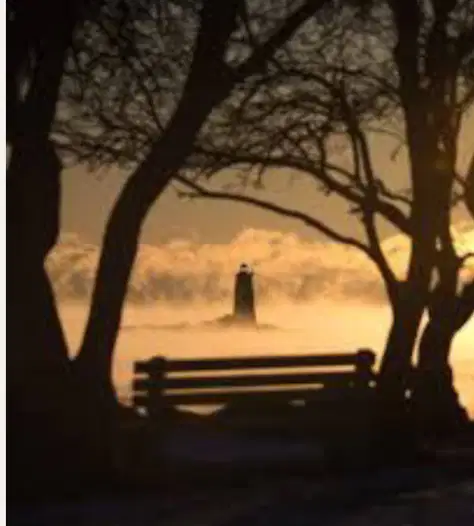
What is the concept of "Frame within Frame" in photography?
A technique where the main subject is surrounded by a secondary frame within the image.
A method of using only industrial elements in photography.
A style of photography that excludes any framing elements.
A way to focus on the background rather than the subject.

What is the main purpose of filling the frame with your subject or focal point in photography?
To make the background more important
To create more negative space
To make the background appear less important
To include more background objects
What should the subject or focal point do in the frame to effectively fill it?
Take up a small portion of the frame
Be centered with lots of space around it
Take up the majority of the frame
Be placed in the corner of the frame
What is the term for finding something that is repeating and similar in a photo?
Shadow and Light
Color
Pattern
Point of View

What composition rule is BEST being shown in this photograph?
High Angle Perspective
Rule of Thirds
Symmetrical Balance

What composition rule is BEST being shown in this photograph?
High Angle Perspective
Rule of Thirds
Symmetrical Balance

