
 Worksheets
ITSP 175 Ch 1 Review
Total questions: 64
Worksheet time: 32mins
The purpose of the Support Center is:
to provide assistance and resolve user issues
to sell products to customers
to conduct market research
to develop new software features
The role of the Help Desk Professional is to:
Provide technical support and resolve user issues
Develop new software applications
Manage company finances
Design marketing campaigns
Users in the context of a support center are defined as:
Individuals who seek assistance or support from the center
Employees who manage the support center
Vendors who supply products to the support center
Technicians who repair equipment for the support center
A typical incident process in a support center involves which of the following steps?
Logging, categorizing, prioritizing, investigating, resolving, and closing the incident
Ignoring the incident until it escalates
Resolving incidents without documentation
Assigning all incidents to a single technician regardless of type
What is the primary purpose of an IT support center?
To generate revenue for the company
To provide technical support to users
To sell products
To market the company
Which of the following tasks are included in the responsibilities of an IT support center?
Starting (or booting) a computer
Logging on
Configuring and running applications
Accessing network resources
Selling products
Fill in the blank: The support center might support users within the same organization or, in other cases, the support center might support ______ customers of the organization.
external
internal
temporary
inactive
True or False: The help desk is a profit center instead of a cost center.
True
False
What is the difference between a profit center and a cost center?
A profit center generates revenue for a company, while a cost center generates additional costs without bringing in direct revenue.
A profit center provides technical support, while a cost center sells products.
A profit center is part of the IT department, while a cost center is part of sales.
There is no difference.
What is an incident in the context of IT service management?
A) A planned upgrade to a system
B) An unplanned interruption or a reduction in the quality of an IT service
C) A scheduled maintenance window
D) A new software installation
Fill in the blank: Incident Management includes all ______ and procedures used to deal with incidents.
processes
meetings
locations
devices
Which of the following best describes Incident Management?
Only the process of reporting incidents
All processes and procedures used to deal with incidents
Only technical staff handling incidents
Only automated tools monitoring events
An incident can be the failure of a fault tolerant or redundant solution designed to increase the availability of a service.
True
False
Which of the following is a common division in an IT department?
Marketing
Help Desk
Human Resources
Finance
Fill in the blank: Organizations often divide an IT department into several different ________.
divisions
colors
seasons
recipes
Which of the following is NOT listed as a common IT division?
Infrastructure
Servers
Security
Sales
Personnel working within IT divisions can focus on specific IT requirements and become ______ within that area.
experts
novices
generalists
interns
Security is a common division within an IT department.
True
False
Which of the following is NOT mentioned as a benefit of dividing IT departments into divisions?
A) Personnel can focus on specific IT requirements
B) Personnel become experts within that area
C) Increases company profits
D) None of the above
Fill in the blank: Help desk personnel are tier __ and provide basic support to users.
1
2
3
4
Fill in the blank: Technicians with a higher level of knowledge, experience, and permissions work at tier __ and can assist tier 1 technicians to resolve more complex problems.
2
3
4
5
Fill in the blank: The highest tier in most organizations is tier __. Administrators and technicians at this tier troubleshoot and resolve the most difficult or complex problems.
3
1
2
4
Fill in the blank: Many organizations have service-level agreements (SLAs) with outside organizations. An SLA stipulates the performance expectations and identifies support services provided by the __.
vendor
customer
employee
auditor
Which tier is typically responsible for providing basic support to users?
Tier 1
Tier 2
Tier 3
Tier 4
What is the role of the help desk professional according to the passage?
To manage the organization's finances
To be the 'face' of the IT staff that customers see and interact with
To design marketing campaigns
To develop new software
Fill in the blank: Hard skills are specific, measurable skills such as _______ and troubleshooting systems.
configuring
communicating
negotiating
empathizing
Which of the following best describes soft skills?
The ability to configure systems
The ability to communicate effectively with others
The ability to write code
The ability to repair hardware
According to the passage, hard skills can often get you an interview while soft skills can get you the job.
True
False
What do Technical skills refer to?
Technical skills refer to the technician’s ability to configure, maintain, and troubleshoot IT systems. These skills vary between organizations and even between specific jobs within an organization.
Technical skills refer to the ability to manage financial accounts and budgets within an organization.
Technical skills refer to the interpersonal skills required to lead and motivate a team.
Technical skills refer to the knowledge of company policies and procedures.
What do Security skills refer to?
Security skills have become more and more important in recent years. Attackers and criminals are constantly waging attacks on individuals and organizations of all sizes.
Security skills are only relevant for software developers.
Security skills are about physical fitness and health.
Security skills refer to artistic abilities like painting and music.
What do Troubleshooting skills refer to?
Troubleshooting skills refer to the ability of a technician to identify and resolve a problem. The highest tier in most organizations is tier 3, and administrators and technicians at this level troubleshoot and resolve the most complex problems.
Troubleshooting skills refer to the ability to design new software applications from scratch.
Troubleshooting skills refer to the process of documenting company policies and procedures.
Troubleshooting skills refer to the ability to market and sell IT products to customers.
What do Business skills refer to?
Business skills refer to the technician’s understanding of the organization’s vision, mission, and values, in addition to the ability to use tools available within the organization.
Business skills refer to the ability to repair technical equipment only.
Business skills refer to the knowledge of programming languages exclusively.
Business skills refer to the understanding of only financial statements.
Fill in the blank: Effective communication is extremely important in IT support job roles. Technicians need to question the user to get adequate information on a problem without taking on a tone of interrogation. Two important communication skills are using ________ questions and active listening.
open-ended
closed-ended
rhetorical
leading
Which of the following is a core personal skill for help desk professionals?
Technical knowledge
Attitude
Speed
Creativity
Fill in the blank: Superior written communication is one of the most important soft skills for ________ technicians.
help desk
network
hardware
software
In many cases, technicians provide training to users so that the users can resolve problems on their own the next time they occur.
True
False
A primary purpose of help desk professionals is to support users. Why is it important for help desk professionals to understand users?
To better equip themselves to help users by understanding their needs and characteristics
To sell more products
To avoid working with users
To reduce the number of help desk staff
One of the simple user categories is based on the user’s relationship to the organization. Fill in the blank: Internal users work in the same organization as the _________?
help desk
customers
vendors
clients
According to the passage, external users are usually:
Employees of the help desk
Customers of the organization
Managers of the organization
IT professionals from another company
Help desk technicians assist customers having a problem with the product or service via which of the following methods?
Chat
Phone
All of the above
Fill in the blank: One of the services provided to users is _________.
Logging on
Formatting the hard disk
Overclocking the CPU
Disabling the firewall
Fill in the blank: One of the services provided to users is _________.
Asking for information
Painting a house
Cooking food for guests
Repairing shoes
Fill in the blank: One of the services provided to users is _________.
Starting an application
Formatting the hard disk
Changing the motherboard
Removing the CPU
Fill in the blank: One of the services provided to users is _________.
Installing or upgrading software
Playing video games during work hours
Ignoring user requests
Deleting important system files
Fill in the blank: One of the services provided to users is _________.
Configuring or troubleshooting hardware
Baking cakes for employees
Organizing birthday parties
Designing fashion accessories
Painting office walls
Fill in the blank: One of the services provided to users is _________.
Using or performing a task with an application
Repairing hardware without tools
Ignoring user requests
Deleting all user data
Fill in the blank: One of the services provided to users is _________.
Accessing a network resource
Painting a picture
Cooking a meal
Growing a plant
Fill in the blank: One of the services provided to users is _________.
Removing viruses or other malware
Sending spam emails to users
Slowing down the computer intentionally
Deleting important user files
Fill in the blank: One of the services provided to users is _________.
Recovering data
Deleting system files
Corrupting user accounts
Spreading malware
Disabling security features
Fill in the blank: One of the services provided to users is _________.
Rolling back changes
Deleting the operating system
Corrupting user data
Disabling all hardware
Fill in the blank: One of the services provided to users is _________.
Understanding errors and messages
Ignoring user requests
Delaying responses intentionally
Providing incorrect information
Restricting access to all features
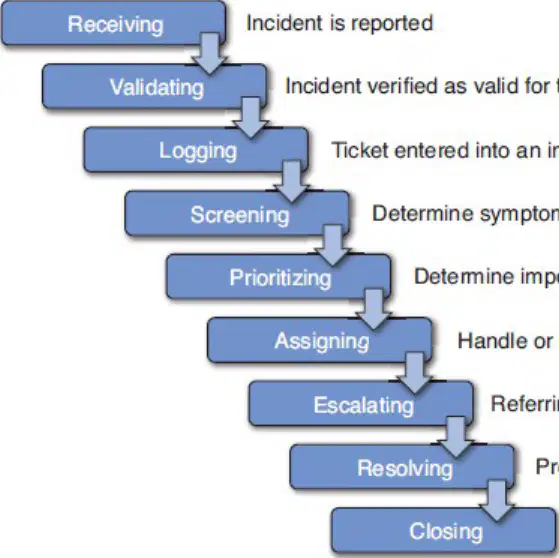
What is the first step in the Typical Incident Process?
Receiving
Resolving
Escalating
Reviewing
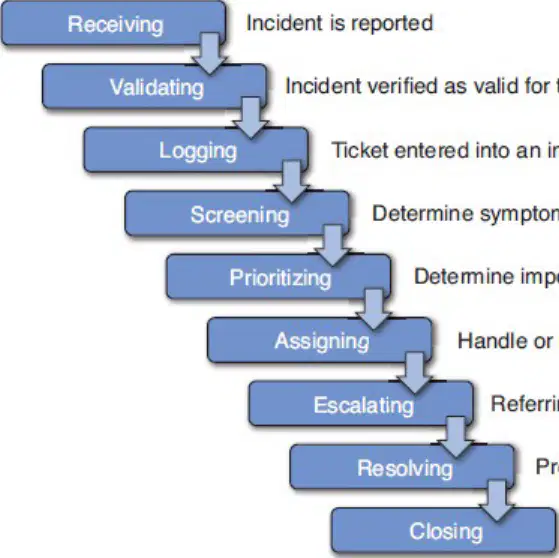
Which step in the Typical Incident Process involves verifying the incident as valid for the help desk to address?
Validating
Escalating
Resolving
Closing
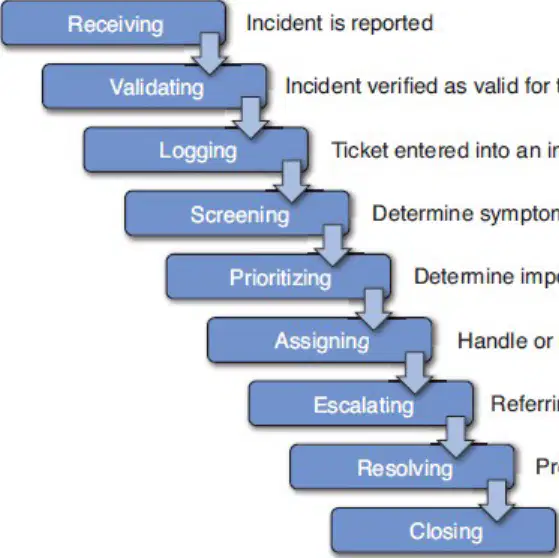
During which step of the Typical Incident Process is the ticket entered into an incident application?
Logging
Investigation
Resolution
Closure
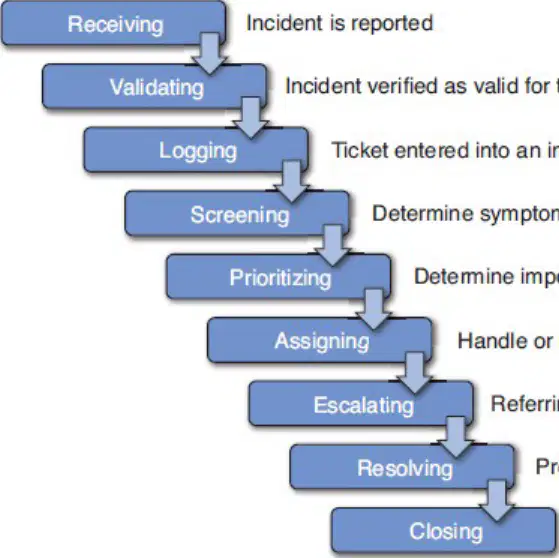
Which step in the Typical Incident Process involves determining symptoms?
Screening
Eradication
Recovery
Containment
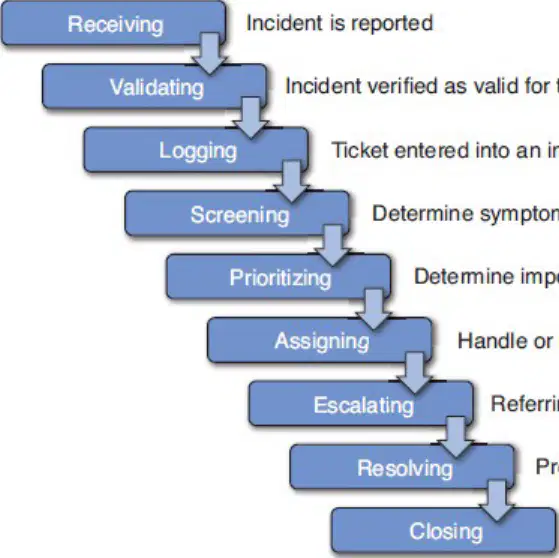
What is the purpose of the Prioritizing step in the Typical Incident Process?
Determine importance of incident
Assign team members to the incident
Close the incident immediately
Ignore the incident until further notice
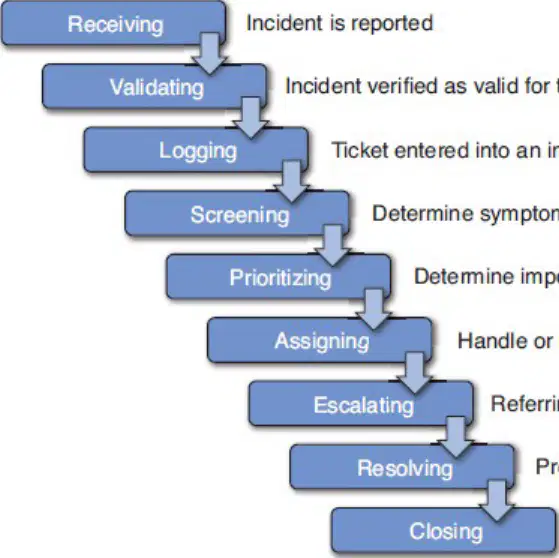
In the Typical Incident Process, which step involves handling or escalating the incident?
Assigning
Identifying
Closing
Documenting
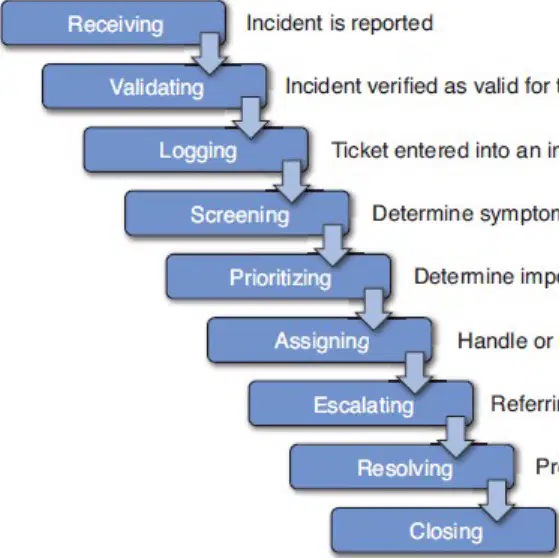
Which step in the Typical Incident Process refers the incident to a higher-level tier?
Escalating
Documenting
Resolving
Monitoring
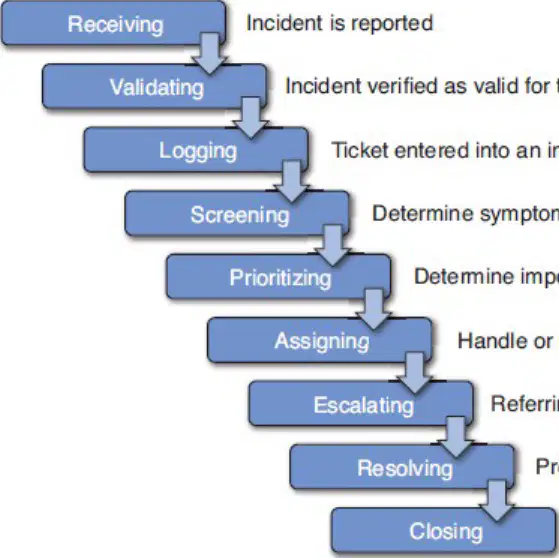
What is the main activity in the Resolving step of the Typical Incident Process?
Problem resolved
Incident reported
Root cause analysis
Escalation to higher support

Which step in the Typical Incident Process involves logging the resolution and changing ticket status?
Closing
Escalation
Investigation
Assignment
What was reviewed in Lesson 1? Fill in the blank: The ________ was reviewed in Lesson 1.
Support Center
Help Desk
Resource Library
Training Portal
What was reviewed in Lesson 1? Fill in the blank: The role of the ________ was reviewed in Lesson 1.
Help Desk Professional
Network Administrator
Software Developer
Database Analyst
What was reviewed in Lesson 1? Fill in the blank: ________ were reviewed in Lesson 1.
Users
Groups
Permissions
Roles
What was reviewed in Lesson 1? Fill in the blank: The typical ________ process was reviewed in Lesson 1.
Incident
Training
Budgeting
Hiring

