
 Worksheets
PHYA520-Rheum-CO2027
Total questions: 13
Worksheet time: 7mins
What word would you use to describe your experience with orthopedics so far?

Which of the following is a modifiable risk factor for gout?
Ethnicity
Age
Hypertension
Sex
Coronary Artery Disease

Write T or F for True or False below.
A 42 yo male presents to PCP office. Gout suspected in the big toe x 12 hr. No hx arthritis. Joint red. No hx HTN. Is it true or false that gout can be diagnosed clinically in this patient? Write T or F in the space below
(a)

Write T or F forTrue or False below.
Synovial fluid is consistent with CPPD.
(a)

A 40 yo presents with CPPD. What is an etiology that should be tested for?
Hyperphosphatasia
Hypoparathyroidism
Hypokalemia
Hypernatremia
Hypomagnesemia

What is one of the diagnostic elements for inflammatory back pain (IBP)?
Onset <45 yo
Pain worse in early morning
Improves with exercise
Sudden Onset
Duration >6 months

A patient presents with IBP. X-ray of the SI joints is negative. NSAID trial ineffective. On exam they have enthesitis. No dactylitis noted. Eye exam unremarkable. On labs the CRP is elevated. What is the next best step?
Order HLA-B27
Start adalimumab
Order MRI SI joints
Order X-ray spine
Start physical therapy
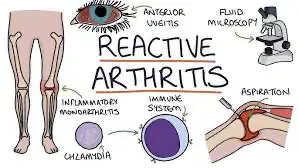
A patient is being evaluated by a rheumatologist. They have been diagnosed with reactive arthritis. They have had symptoms for 8 months. What is the preferred treatment?
Ibuprofen
Prednisone
Infliximab
Naproxen
Sulfasalazine

A 35-year-old male with reactive arthritis presents for routine follow-up 6 months after diagnosis. He initially responded well to high-dose NSAIDs but has had persistent joint pain and swelling for the past 3 months despite maximum NSAID therapy. He reports significant morning stiffness lasting 3 hours and functional impairment. Physical examination shows ongoing synovitis in multiple joints and enthesitis. His HLA-B27 status is positive. He asks about his long-term outlook. How should the patient be counseled on the typical prognosis for reactive arthritis?
All patients develop chronic arthritis requiring lifelong immunosuppression
In at least half of patients, all symptoms resolve in less than six months; in most patients, symptoms resolve within one year
HLA-B27 positive patients always progress to ankylosing spondylitis
Symptoms will definitely recur every 2-3 years regardless of treatment
Complete recovery is impossible once symptoms persist beyond 3 months

Write T or F for True or False below.
A patient presents to a rheumatologist. They present with a swollen painful knee joint that is consistent with an inflammatory arthritis. They have a first cousin with psoriasis. On exam there is nail pitting noted. No rash consistent with psoriasis is seen. Labs show negative RF. This patient meets CASPAR criteria for diagnosis of Psoriatic Arthritis. Write T or F in the space below.
(a)

A patient has peripheral psoriatic arthritis that is mild in severity. What would be a first line medication treatment?
methotrexate
infliximab
naproxen
IL-17 inhibitor
abatacept

A patient has Arthritis of IBD. They have arthritis in knees and SI joints. Ibuprofen and indomethacin are ineffective. Their IBD is stable. What is the next best step in management?
sulfasalazine
infliximab
ustekinumab
etanercept
methotrexate

What is the most common form of arthritis associated with enteropathic arthritis?
Type 1 peripheral
Type 2 peripheral
Arthritis mutilans
Axial
Symmetric polyarthritis

