
Font size
 Worksheets
High S Biology staar 2022
Total questions: 168
Worksheet time: 3hrs 51mins
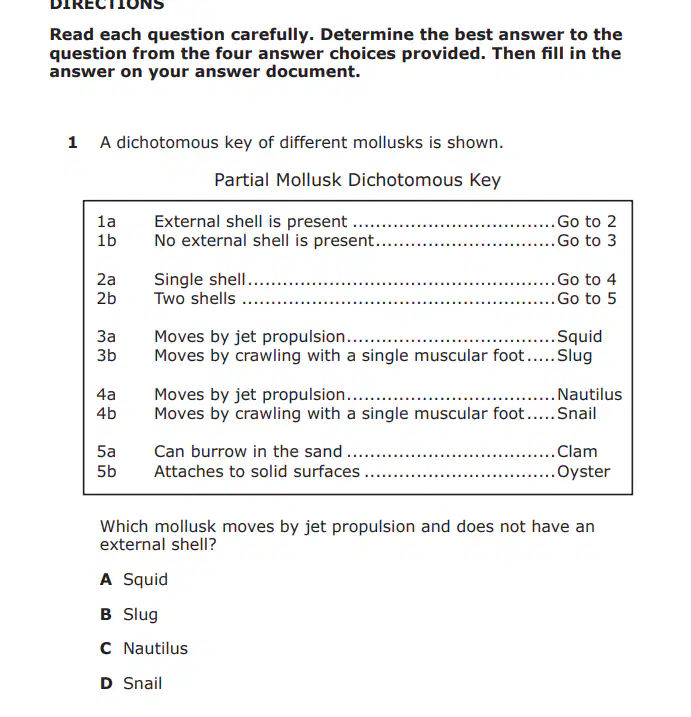
Which mollusk moves by jet propulsion and does not have an external shell?
A Squid
B Slug
C Nautilus
D Snail
Which statement best describes how a virus replicates?
A virus divides into two identical virus particles before infecting the host cell.
A virus enters a host cell and uses the materials from the host cell to produce new virus particles.
Multiple virus particles fuse and form a large particle that breaks apart, releasing new virus particles.
Multiple virus particles break down in component parts, which then reassemble into new copies of the virus.
In a Central Texas grassland, the producers incorporate 12,000 kJ of energy from the sun into their tissues. About how much energy would be incorporated into the tissues of herbivores?
12,000 kJ
1,200 kJ
10,800 kJ
1,080 kJ

After completing your calculations, what is the average amount of energy transferred from one trophic level to the next?
90%
70%
50%
10%

If the producer has 20,000 kJ of energy, how much energy should the secondary consumer have?
2,000 kJ
500 kJ
200 kJ
1,000 kJ
For an energy pyramid, the 10% rule states that
10% of the energy is transferred from one organism to the next.
10% of the energy is gained.
10% of the animals will starve.
10% of the producers are eaten.

Assuming that there's 20,000 kcal on the producer level of this trophic pyramid, how many kcal will be passed on to the quaternary consumers?

The 10% rule states that 10% of energy moves from each trophic level to the next.
In the pyramid, if the producers level contains 1234 kilocalories, how many kilocalories are transferred to the primary consumer level?
123.4
1.234
1234
1234
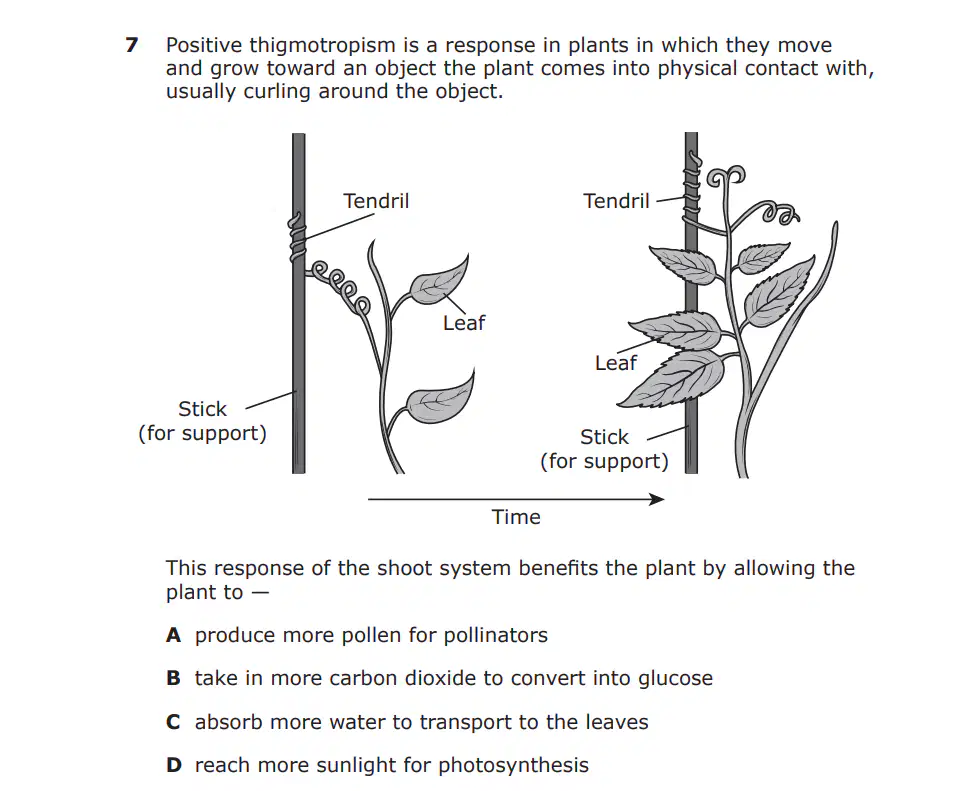
Positive thigmotropism is a response in plants in which they move and grow toward an object the plant comes into physical contact with, usually curling around the object. (Refer to the diagram showing a plant's tendril curling around a stick for support over time.) This response of the shoot system benefits the plant by allowing the plant to —
produce more pollen for pollinators
take in more carbon dioxide to convert into glucose
absorb more water to transport to the leaves
reach more sunlight for photosynthesis
Which part of the plant shows negative geotropism?

What type of tropism is the response to water?

What type of tropism is the response to touch?
Match the image to the correct TROPISM

Phototropism

Gravititropism

Thigmotropism

Hydrotropism

Thermotropism
Plants respond to external stimulus is called tropism. Plant respond to Light (a) , Plant respond to gravity (b) , Plant respond to touch (c) and Plant respond to water (d)
Sunlight
Phototropism
Gravity
Geotropism
Water
Hydrotropism
Touch
Thigmotropism
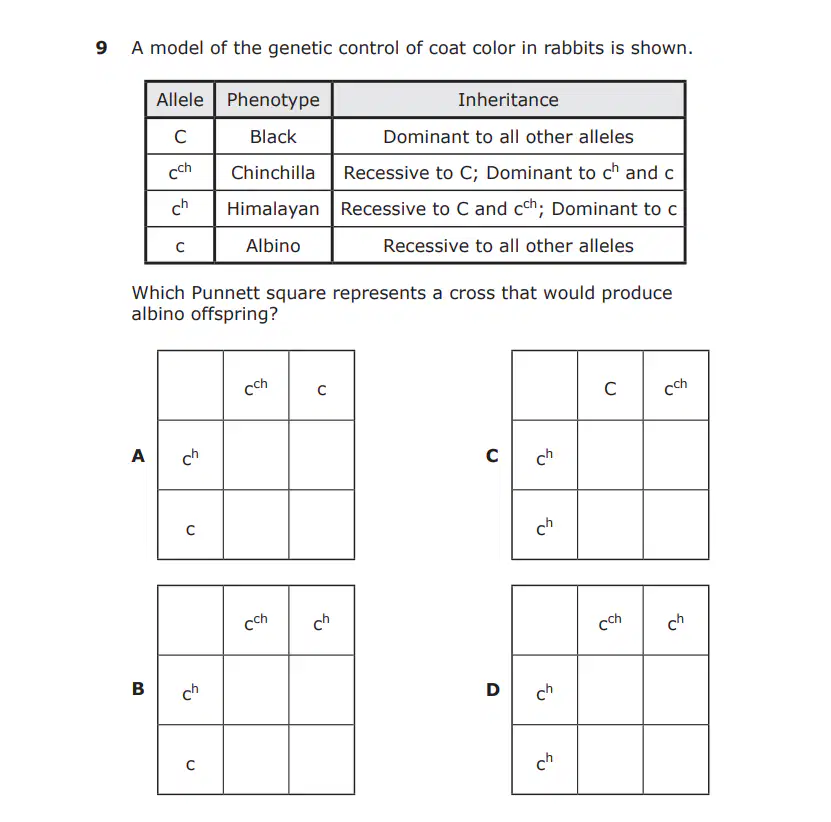
A model of the genetic control of coat color in rabbits is shown. Allele | Phenotype | Inheritance C | Black | Dominant to all other alleles c^ch | Chinchilla | Recessive to C; Dominant to c^h and c c^h | Himalayan | Recessive to C and c^ch; Dominant to c c | Albino | Recessive to all other alleles Which Punnett square represents a cross that would produce albino offspring?
[Punnett square with cch , c , ch , c ]
[Punnett square with cch , cch , ch , c , ch , c ]
[Punnett square with C, cch , ch , ch ]
[Punnett square with cch , cch , ch , ch ]
Which statement best describes the interaction between body systems that allows horses to repel biting flies?
A. The nervous system senses the biting flies and sends a signal to the muscular system to move.
B. The circulatory system senses the biting flies and sends a signal to the nervous system to move.
C. The muscular system senses the biting flies and sends a signal to the integumentary system to move.
D. The integumentary system senses the biting flies and sends a signal to the circulatory system to move.
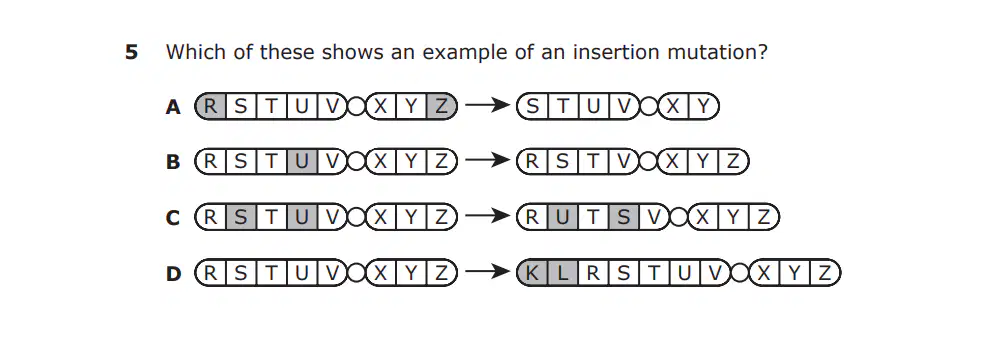
Which of these shows an example of an insertion mutation?
A. R S T U V X Y Z → S T U V X Y
B. R S T U V X Y Z → R S T V X Y Z
C. R S T U V X Y Z → R U T S V X Y Z
D. R S T U V X Y Z → K L R S T U V X Y Z
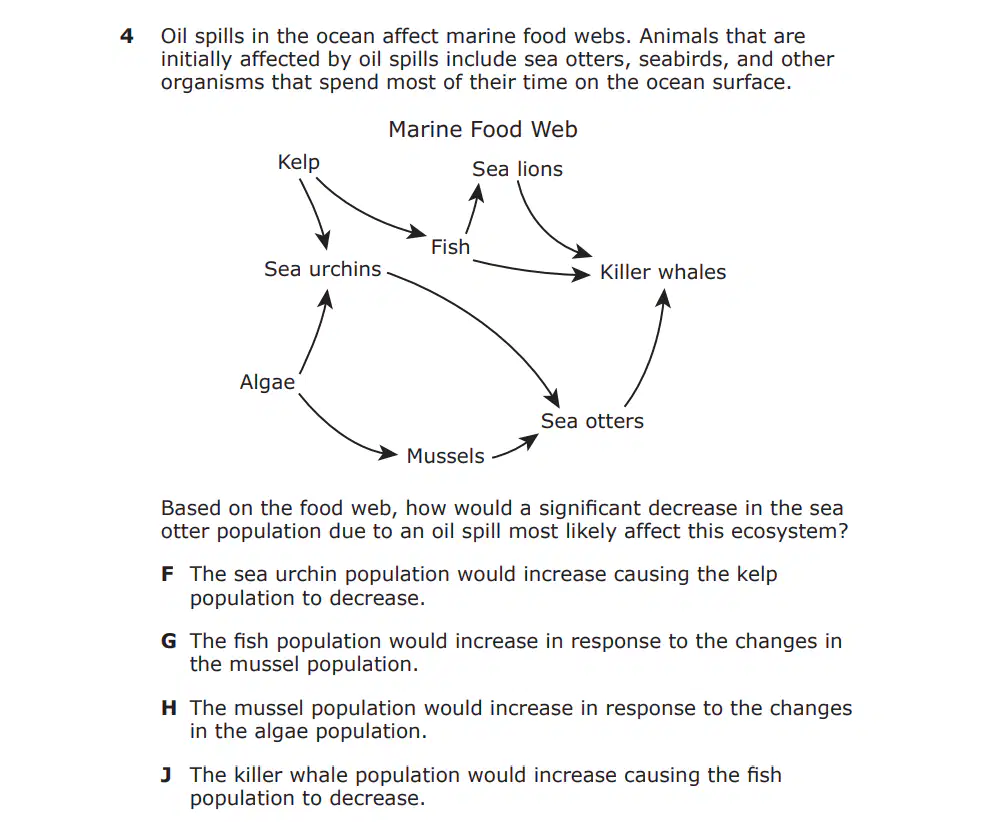
Based on the food web, how would a significant decrease in the sea otter population due to an oil spill most likely affect this ecosystem?
The sea urchin population would increase causing the kelp population to decrease.
The fish population would increase in response to the changes in the mussel population.
The mussel population would increase in response to the changes in the algae population.
The killer whale population would increase causing the fish population to decrease.
White clovers, Trifolium repens, are plants that are native to Europe and Central Asia and are able to produce the poison cyanide within their cells. Skunk cabbage, Symplocarpus foetidus, is a plant that is native to eastern North America and can produce a chemical that makes it have a strong, foul odor and bitter taste. The chemicals produced by both the white clovers and skunk cabbages are adaptations that allow them to —
attract more pollinators
survive a long-term drought
protect against herbivores
grow better in colder habitats
Blue flying fish live in the upper layers of the ocean. Blue flying fish have enlarged pectoral fins that enable them to glide for 400 meters above the ocean surface and appear to fly. Which statement best describes how natural selection led to enlarged pectoral fins in blue flying fish?
A. Fish were able to glide out of the ocean and into other bodies of water to mate with other species.
B. Fish were able to live both on land and in the water as a result of their larger pectoral fins.
C. Fish with enlarged pectoral fins were able to glide out of the ocean to escape predators, increasing their fitness.
D. Fish changed their DNA to express enlarged pectoral fins, changing the allele frequency of the population.
Which factor will most directly determine what type of specialized cell will be produced?
The size of the cell
The length of the cell cycle
The number of chromosomes that are replicated
The genes that are expressed
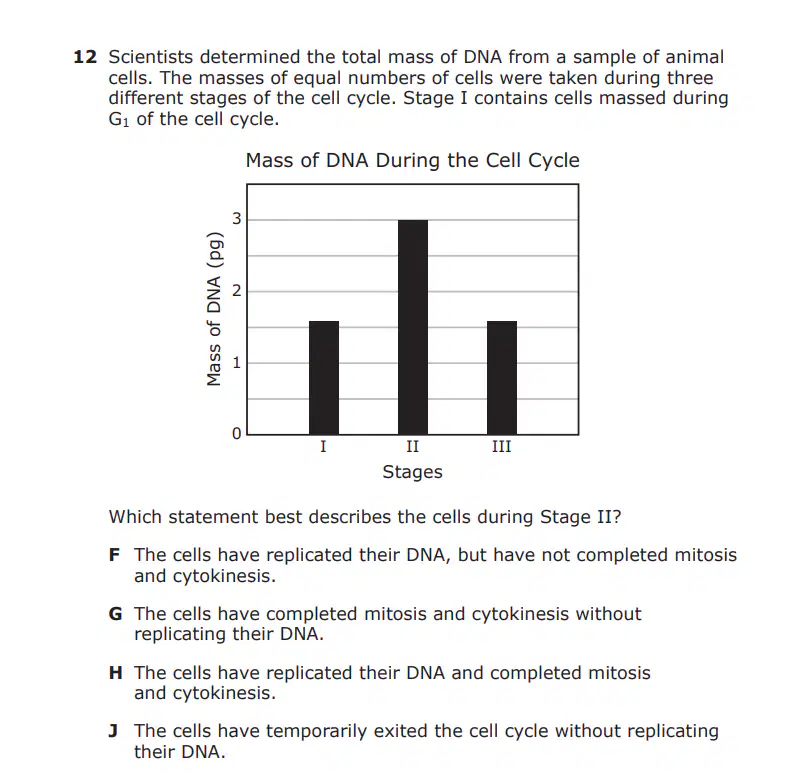
Which statement best describes the cells during Stage II?
The cells have replicated their DNA, but have not completed mitosis and cytokinesis.
The cells have completed mitosis and cytokinesis without replicating their DNA.
The cells have replicated their DNA and completed mitosis and cytokinesis.
The cells have temporarily exited the cell cycle without replicating their DNA.
Click where DNA replication takes place
In the following DNA molecule, the green is the template strand and the yellow is the coding strand. Where would the promoter be found?
Which part is the building block of DNA?
Green anoles are lizards that can change their skin color rapidly in response to various stimuli. This adaptation is the result of —
A. selective breeding of lizards by humans
B. beneficial traits passed from parents to offspring
C. geographic isolation that prevented genetic mutation
D. environmental pollutants that changed their genotype
Which type of movement across a cell’s plasma membrane requires energy supplied by ATP?
Passive transport
Simple diffusion
Active transport
Osmosis
Leaf-cutter ants harvest leaves and carry them to fungi that convert plant material into a usable form for the ants to digest. The fungi depend on the leaves for nutrients. The ants also produce an antibiotic on their bodies that helps protect the fungi from harmful bacteria.
Predation, because the ants feed on the fungi
Mutualism, because both the ants and the fungi benefit from each other
Competition, because both organisms consume the same resource for energy
Commensalism, because the ants receive energy from the fungi and the fungi are unaffected
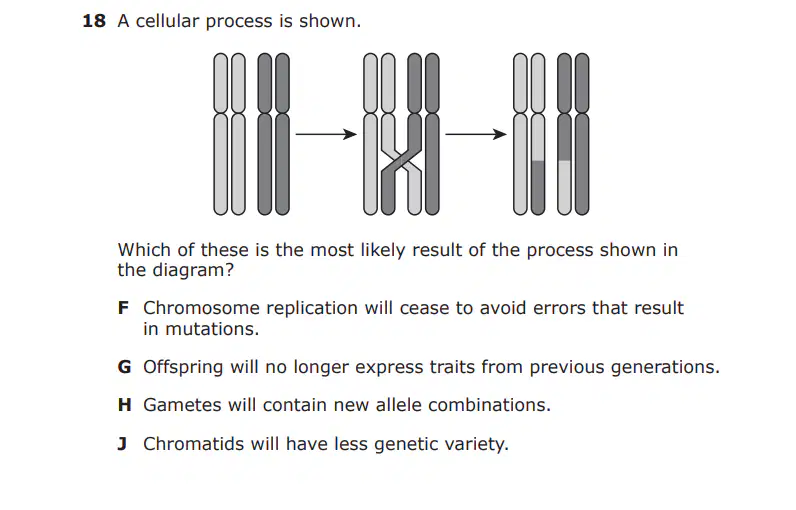
A cellular process is shown. Which of these is the most likely result of the process shown in the diagram?
Chromosome replication will cease to avoid errors that result in mutations.
Offspring will no longer express traits from previous generations.
Gametes will contain new allele combinations.
Chromatids will have less genetic variety.
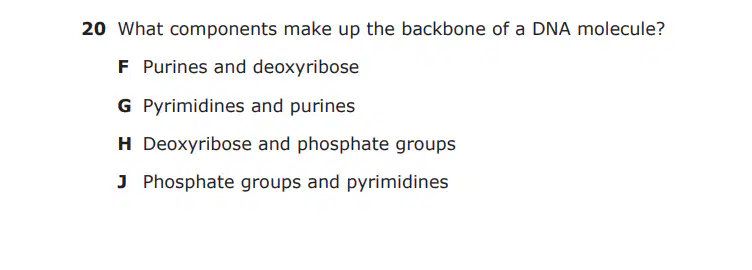
What components make up the backbone of a DNA molecule?
Purines and deoxyribose
Pyrimidines and purines
Deoxyribose and phosphate groups
Phosphate groups and pyrimidines
Label the Nucleotide
5 Carbon Sugar
Nitrogen Base
Phosphate Group

Match the following numbers in the diagram to what part of the DNA molecule they are pointing at.
4
hydrogen bonds
5
sugar phosphate backbone
3
nitrogenous bases
6
nucleotide
2
deoxyribose sugar
Label the nucleotide
Phosphate
Nitrogenous base
Match the following
Thymine (T)
Cytoisine (C)
Guanine (G)
Type of Nucleic Acid
DNA
Twisted Ladder
Double helix
Building block of Nucleic Acid
Nucleotide
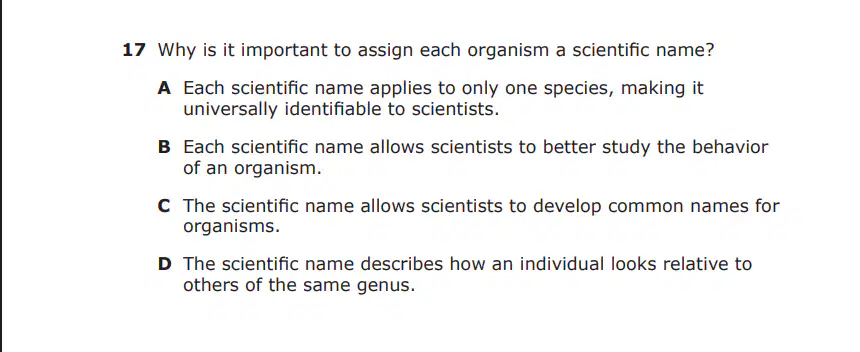
Why is it important to assign each organism a scientific name?
Each scientific name applies to only one species, making it universally identifiable to scientists.
Each scientific name allows scientists to better study the behavior of an organism.
The scientific name allows scientists to develop common names for organisms.
The scientific name describes how an individual looks relative to others of the same genus.
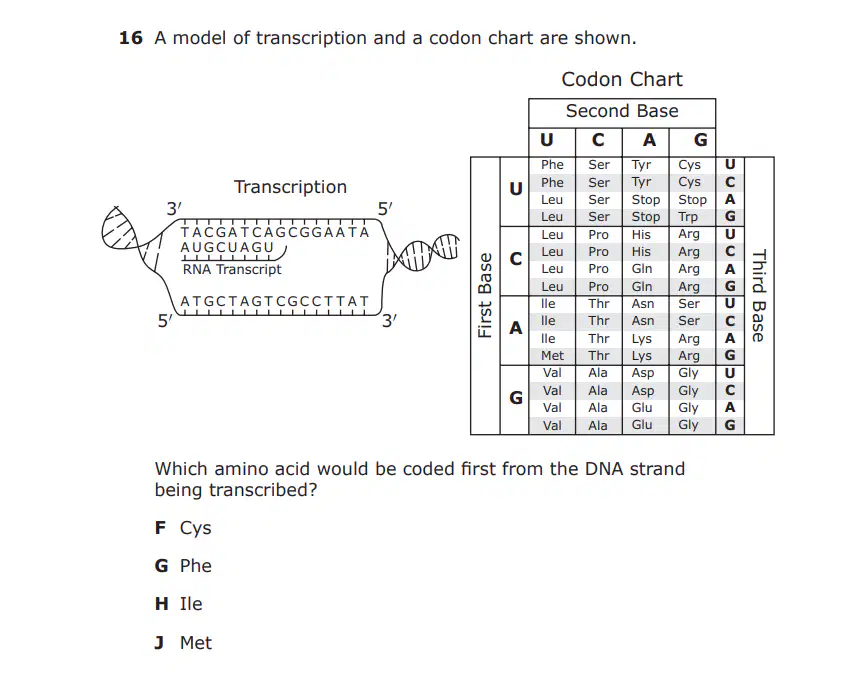
Which amino acid would be coded first from the DNA strand being transcribed?
Cys
Phe
Ile
Met
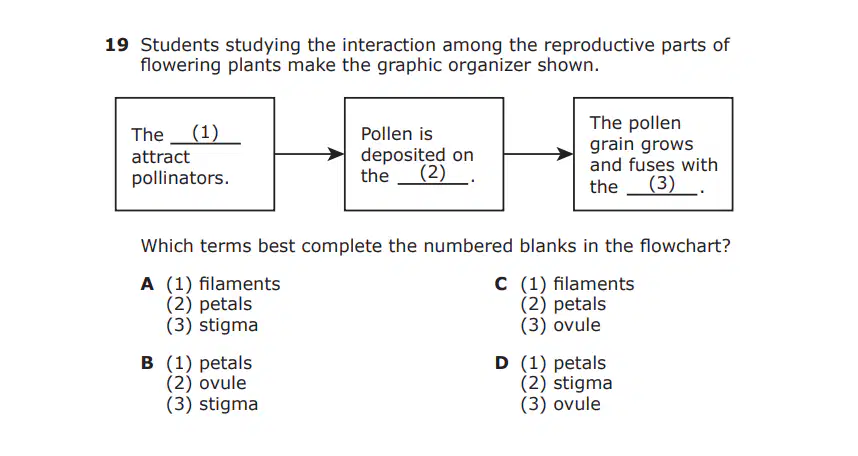
Students studying the interaction among the reproductive parts of flowering plants make the graphic organizer shown. [Flowchart: The __ (1) __ attract pollinators. → Pollen is deposited on the __ (2) __. → The pollen grain grows and fuses with the __ (3) __.] Which terms best complete the numbered blanks in the flowchart?
(1) filaments, (2) petals, (3) stigma
(1) petals, (2) ovule, (3) stigma
(1) filaments, (2) petals, (3) ovule
(1) petals, (2) stigma, (3) ovule

The (a) attract pollinators. Pollen is deposited on the (b) . The pollen grain frows and fuses with the (c)
Click the part of the flower that moves the pollen to ovules
Label the flowing parts of the flower.
Stamen
Filament
Anther
Petals
Stigma
Style
Ovary
Match the following
The female structure of the flower
Pistil
The male structure of the flower
Stamen
The sticky part of the female portion of the flower where the pollen germinates.
Stigma
The part of the male portion of the flower that produces and contains the pollen.
Anther
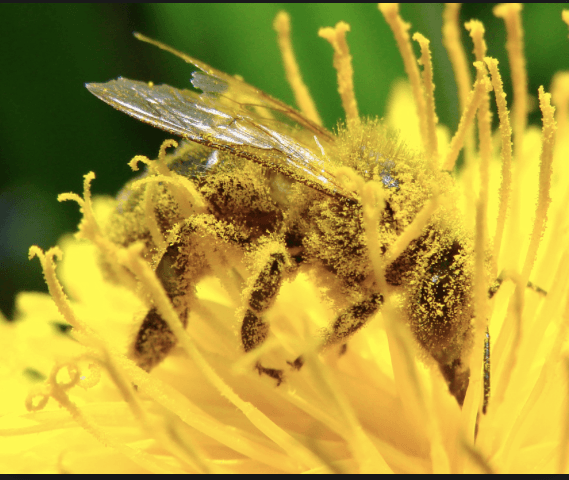

What do we call the yellow dust of the flower that is attached to the stamen?
pollen
pistil
stamen

The _____ is the female reproductive organ of a flower, consisting of the stigma, style, and ovary.
carpel
ovary
stigma
dormant

Which table correctly identifies the function of each structure or group of structures in the reproduction of the plant?
Y Pollen transfer
Z Production of eggs
Y Production of male sex cells
Z Egg production and embryo development
Y Supply nourishment to embryo
Z Place of embryonic development
Y Production of cells that protect internal organs
Z Production of egg and sperm

_____ is the transfer of pollen from male reproductive structures to female reproductive structures in plants.
pollination
ovule
anther
filament

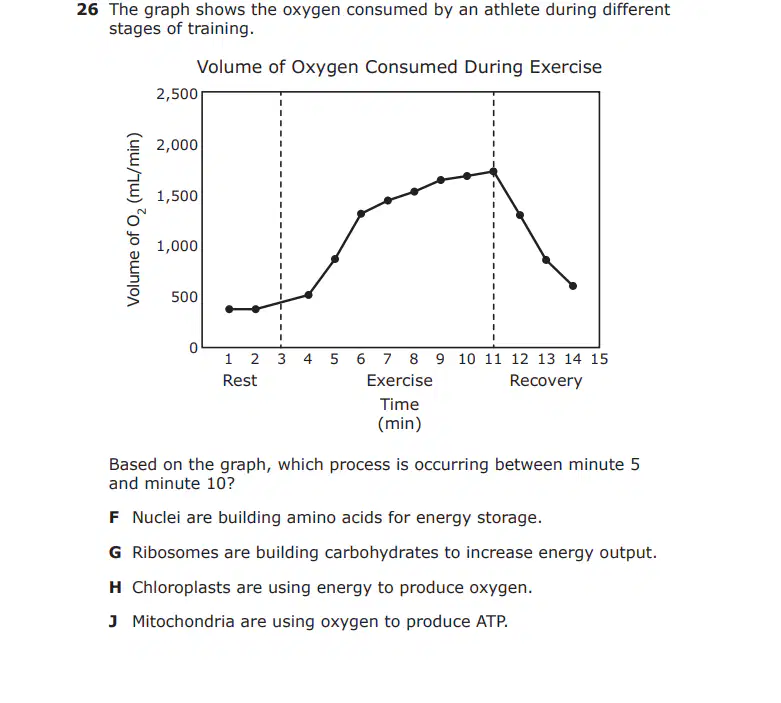
The graph shows the oxygen consumed by an athlete during different stages of training. Based on the graph, which process is occurring between minute 5 and minute 10?
Nuclei are building amino acids for energy storage.
Ribosomes are building carbohydrates to increase energy output.
Chloroplasts are using energy to produce oxygen.
Mitochondria are using oxygen to produce ATP.

The graph shows the oxygen consumed by an athlete during different stages of training. Based on the graph, which process is MOST LIKELY occurring between minute 5 and minute 10?
Protein Synthesis
Photosynthesis
Cellular Respiration
DNA Replication

Cellular respiration occurs in the (a)
Label the diagram
Process in which the cells of an organism obtain energy by combining oxygen and glucose, and liberating carbon dioxide and water.
Label the processes, reactants, and products.
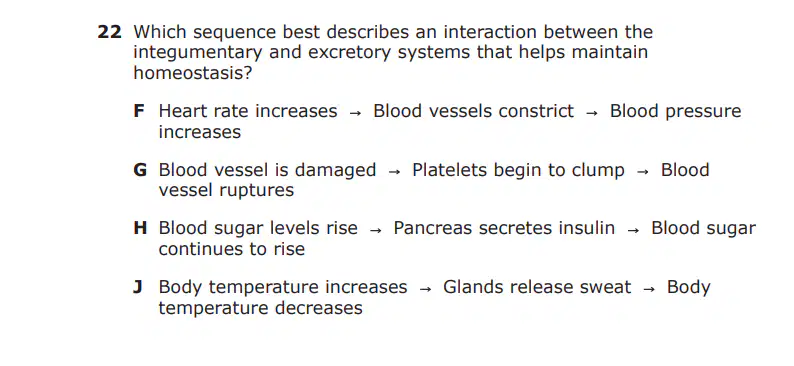
Which sequence best describes an interaction between the integumentary and excretory systems that helps maintain homeostasis?
Heart rate increases → Blood vessels constrict → Blood pressure increases
Blood vessel is damaged → Platelets begin to clump → Blood vessel ruptures
Blood sugar levels rise → Pancreas secretes insulin → Blood sugar continues to rise
Body temperature increases → Glands release sweat → Body temperature decreases
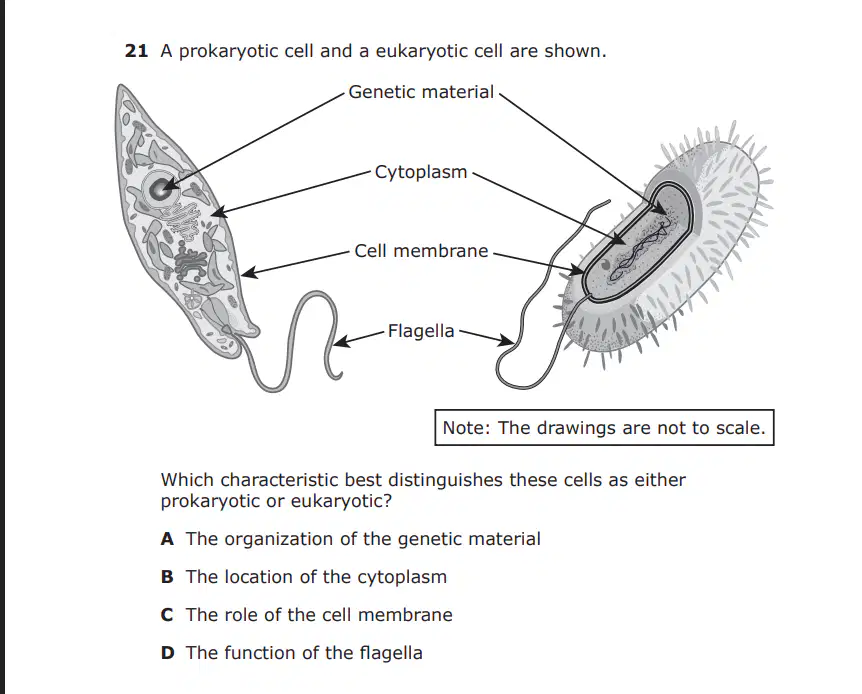
Which characteristic best distinguishes these cells as either prokaryotic or eukaryotic?
A. The organization of the genetic material
B. The location of the cytoplasm
C. The role of the cell membrane
D. The function of the flagella
Which statement best describes a similarity among trees, cats, and amoebas?
They are prokaryotic organisms.
They are classified as members of the same kingdom.
They have genomes that consist of the same number of genes.
They contain DNA composed of the same four types of nucleotides.
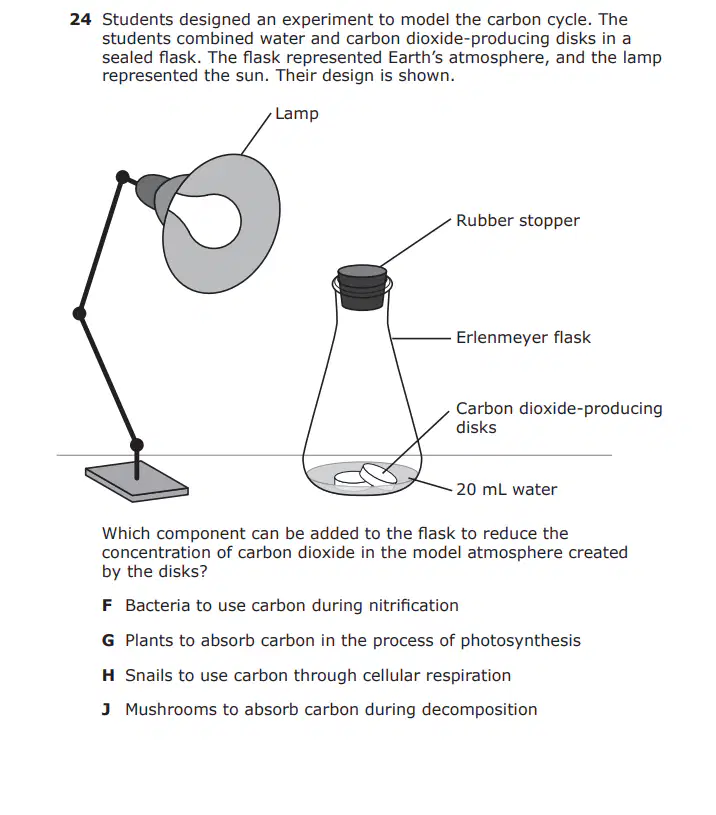
Students designed an experiment to model the carbon cycle. The students combined water and carbon dioxide-producing disks in a sealed flask. The flask represented Earth’s atmosphere, and the lamp represented the sun. Their design is shown in the diagram. Which component can be added to the flask to reduce the concentration of carbon dioxide in the model atmosphere created by the disks?
Bacteria to use carbon during nitrification
Plants to absorb carbon in the process of photosynthesis
Snails to use carbon through cellular respiration
Mushrooms to absorb carbon during decomposition
The reverse of photosynthesis - Sugars are used for metabolism and change “fuel” back into CO2.
Diffusion
Weathering
Decomposition
Respiration
Label each process in the carbon cycle.
Label the following Carbon cycle.
fossil fuels
respiration (animals breathing)
photosynthesis
sunlight
Label each arrow shown in the Carbon Cycle in this diagram.
Plants and animals die and decompose.
CO2 returns to the atmosphere
CO2 is absorbed by plants.
Plants are consumed by animals.
Which characteristic do all organisms in Kingdoms Animalia, Protista, and Fungi have in common?
They are eukaryotic.
They are prokaryotic.
They are unicellular.
They are multicellular.
Select the kingdom that is multicellular, mobile, heterotrophs and contain a cell wall.
Domain, (a) , Phylum, Class, (b) , (c) , Genus, (d)
Match the following
Bacteria
all are unicellular
Animalia
no cell wall
Plantae
cellulose
Fungi
decomposer
Protista
found only in moist places

Animalia

Plantae

Fungi

Bacteria

Protista
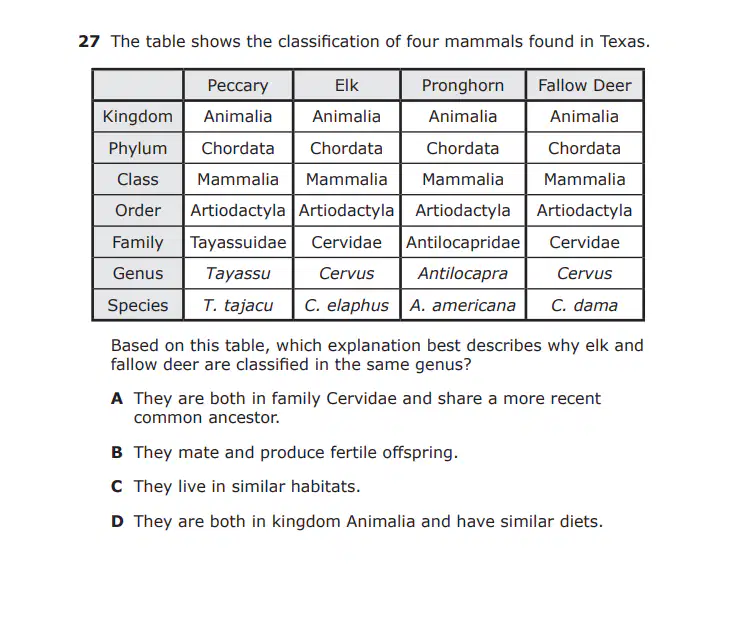
Based on this table, which explanation best describes why elk and fallow deer are classified in the same genus?
They are both in family Cervidae and share a more recent common ancestor.
They mate and produce fertile offspring.
They live in similar habitats.
They are both in kingdom Animalia and have similar diets.
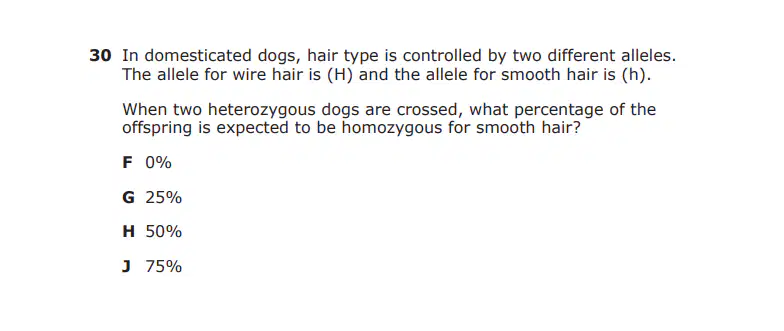
In domesticated dogs, hair type is controlled by two different alleles. The allele for wire hair is (H) and the allele for smooth hair is (h). When two heterozygous dogs are crossed, what percentage of the offspring is expected to be homozygous for smooth hair?
0%
25%
50%
75%
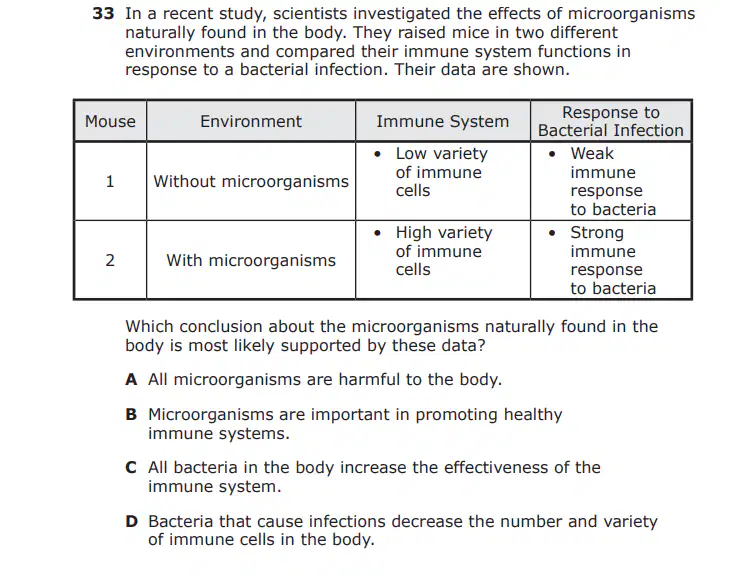
In a recent study, scientists investigated the effects of microorganisms naturally found in the body. They raised mice in two different environments and compared their immune system functions in response to a bacterial infection. Their data are shown. Mouse | Environment | Immune System | Response to Bacterial Infection 1 | Without microorganisms | • Low variety of immune cells | • Weak immune response to bacteria 2 | With microorganisms | • High variety of immune cells | • Strong immune response to bacteria Which conclusion about the microorganisms naturally found in the body is most likely supported by these data?
All microorganisms are harmful to the body.
Microorganisms are important in promoting healthy immune systems.
All bacteria in the body increase the effectiveness of the immune system.
Bacteria that cause infections decrease the number and variety of immune cells in the body.
Field of microbiology that studies the impact of microorganisms on the immune system.
Food and Dairy
Agricultural
Industrial
Immunology
a foreign protein on the surface of a cell that stimulates an immune response (reaction).
Any substance that triggers an immune response
multiple alleles
antigens
autosomal chromosome
karyotype
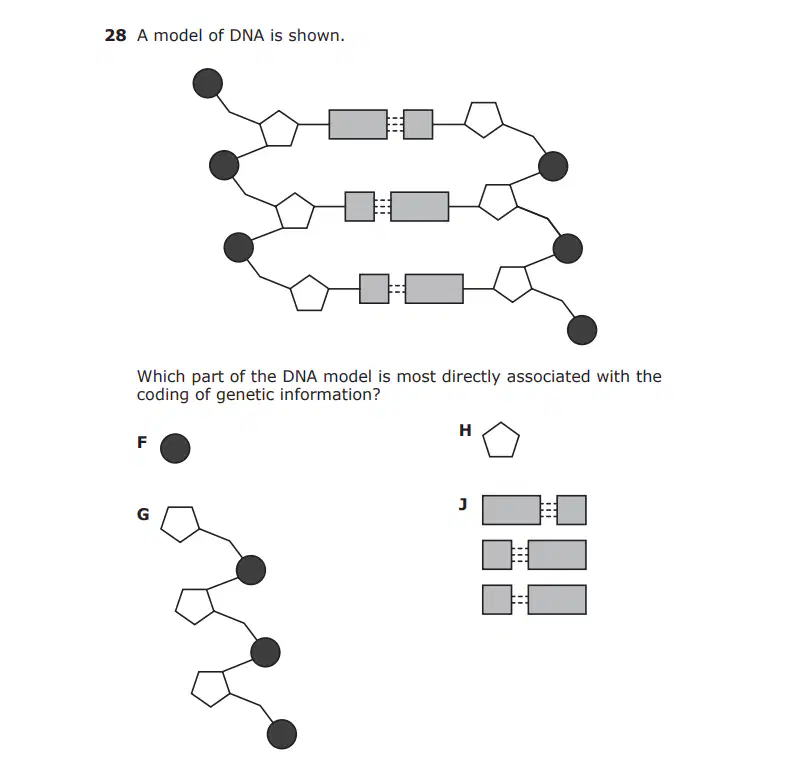
Which part of the DNA model is most directly associated with the coding of genetic information?
F. (black circle)
G. (chain of pentagons and circles)
H. (pentagon)
J. (stacked rectangles with dashed lines)
Which portion of the structure of DNA is responsible for the coding of traits?
The three components of a nucleotide are (a) , (b) group, and (c) base.


Which part of the DNA model is most directly associated with the coding of genetic information?


Label the image with the best word.
Amino acid
Nucleotide
Sugar
Fatty acid
Glycerol
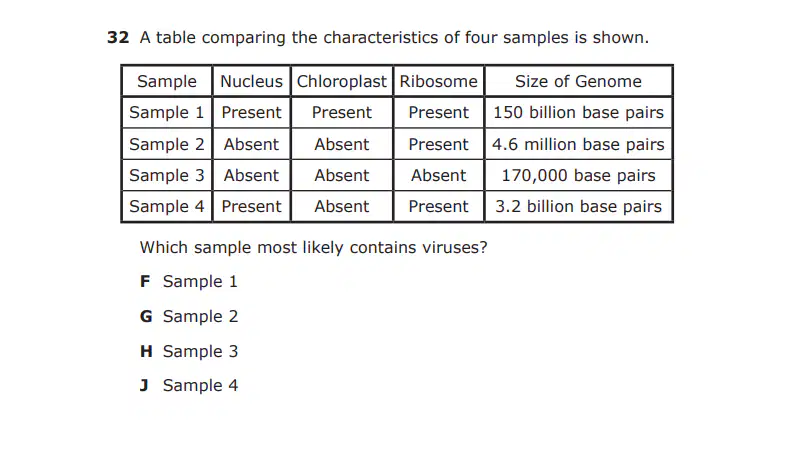
A table comparing the characteristics of four samples is shown. Which sample most likely contains viruses?
Sample 1
Sample 2
Sample 3
Sample 4
Place the following labels in the correct category
nonliving
living
Analyze the following diagram and complete the missing spaces on the Venn diagram.
*** Each label belongs in a specific place, read carefully.
Place the following labels in the correct category
nonliving
made of protein
living
(a) is a single cell organism that lacks a nucleus.

What is the name of this virus
Capsule
Helical
Bacteriophage
Teva (my dog)

Using a light microscope, a student identified the following characteristics of four organisms found in a sample of pond water. Based on the observations of the student, which organisms most likely belong to the taxonomic group for bacteria?
organisms 1 and 2
organisms 3 and 4
organisms 1 and 4
organisms 2 and 3

A table comparing the characteristics of four samples is shown.
Which sample most likely contains viruses?
Sample 1
Sample 2
Sample 3
Sample 4
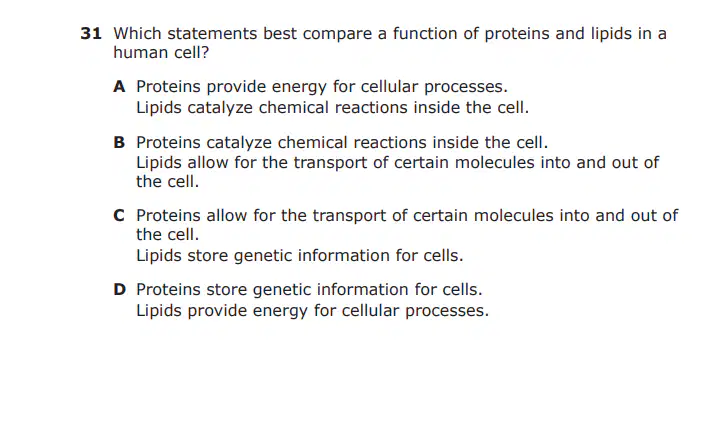
Which statements best compare a function of proteins and lipids in a human cell?
A. Proteins provide energy for cellular processes. Lipids catalyze chemical reactions inside the cell.
B. Proteins catalyze chemical reactions inside the cell. Lipids allow for the transport of certain molecules into and out of the cell.
C. Proteins allow for the transport of certain molecules into and out of the cell. Lipids store genetic information for cells.
D. Proteins store genetic information for cells. Lipids provide energy for cellular processes.
Drag and label the parts of the phospholipid bilayer.
hydrophilic
hydrophobic
Identify the part of the membrane that allows small molecules to pass through
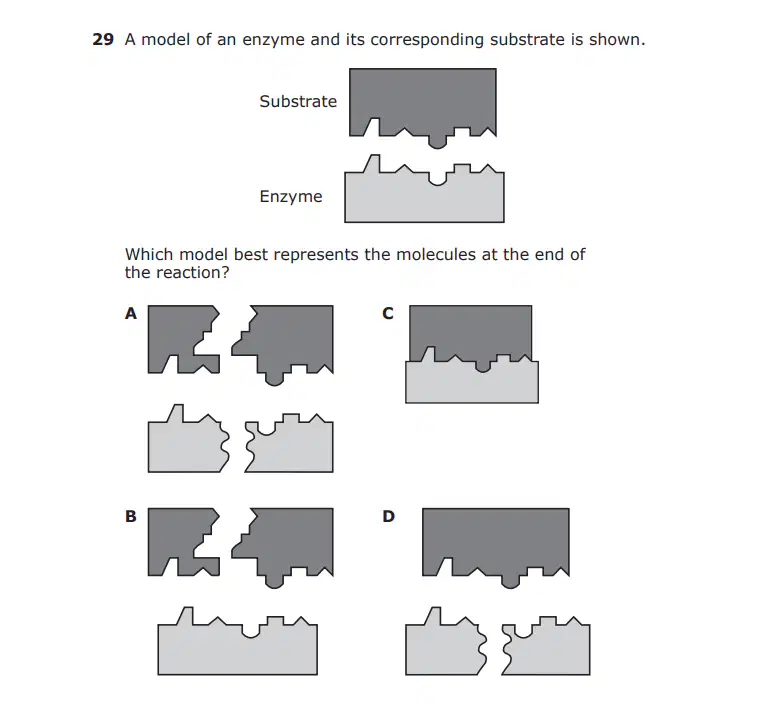
Which model best represents the molecules at the end of the reaction?
A. [Diagram A]
B. [Diagram B]
C. [Diagram C]
D. [Diagram D]
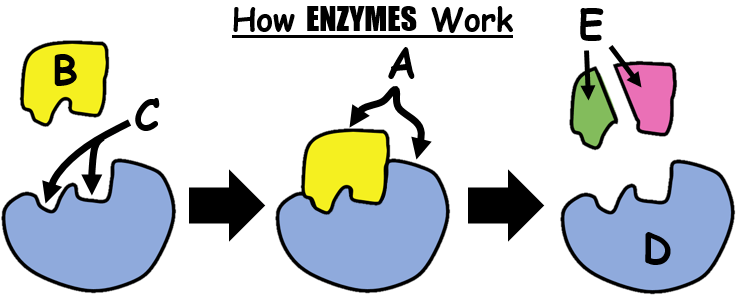
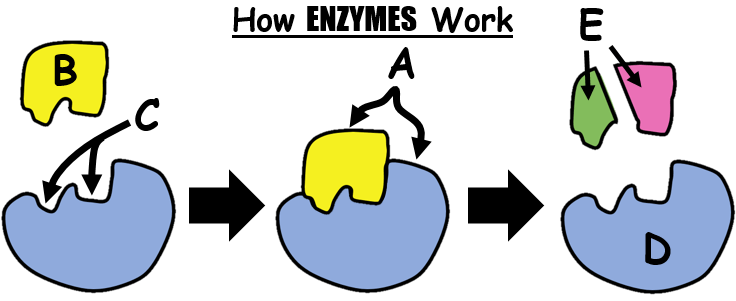

When looking at the enzyme substrate model, the substrate turns into what at the end of the chemical reaction?
Nothing
It does not change
Products
Pieces
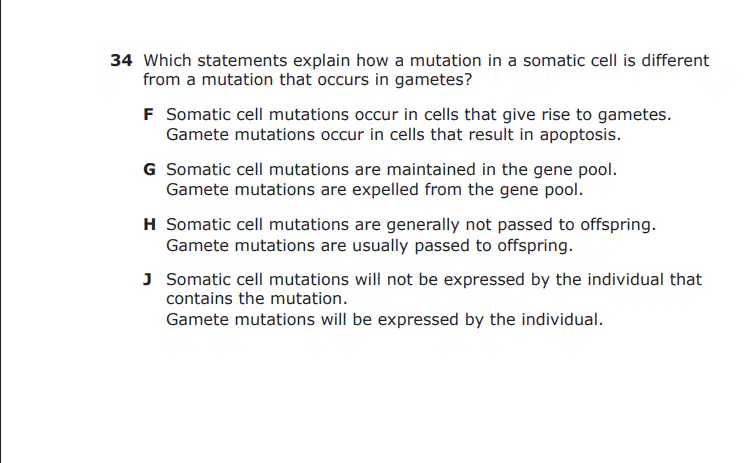
Which statements explain how a mutation in a somatic cell is different from a mutation that occurs in gametes?
Somatic cell mutations occur in cells that give rise to gametes. Gamete mutations occur in cells that result in apoptosis.
Somatic cell mutations are maintained in the gene pool. Gamete mutations are expelled from the gene pool.
Somatic cell mutations are generally not passed to offspring. Gamete mutations are usually passed to offspring.
Somatic cell mutations will not be expressed by the individual that contains the mutation. Gamete mutations will be expressed by the individual.
Which two are Frameshift Mutations?

Match the following

Deletion

Inversion

Duplication

Insertion

Translocation

Use the diagram of the following types of mutations to match the term with the correct letter.
Point Mutation
D
Frameshift
E
Silent Mutation
F
Nonsense Mutation
G
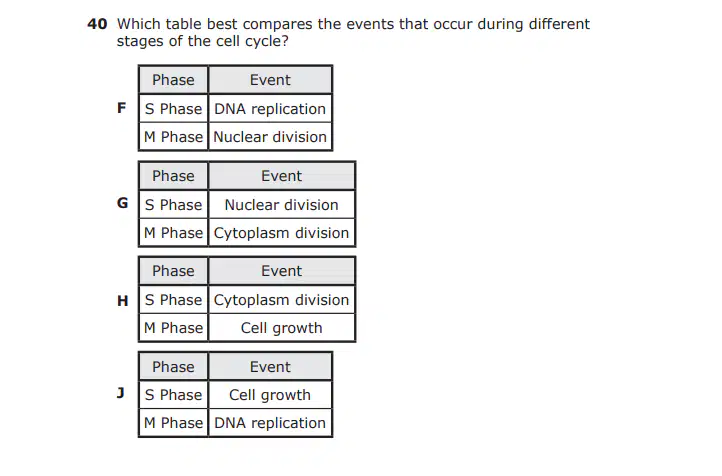
Which table best compares the events that occur during different stages of the cell cycle?
F
G
H
J
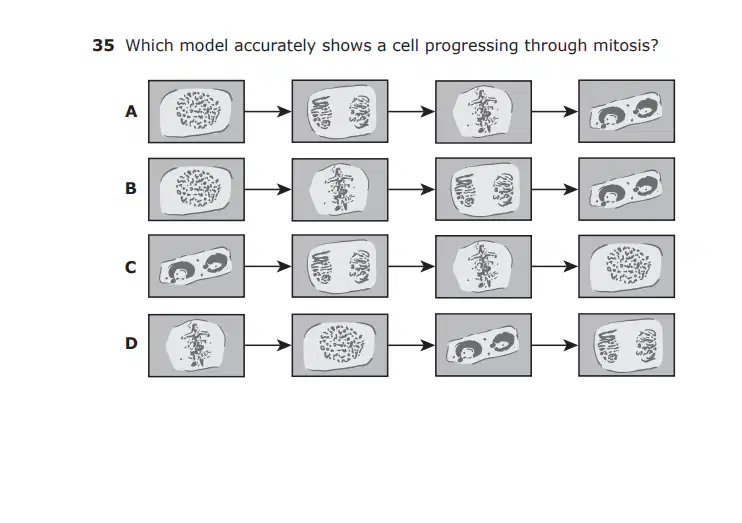
Which model accurately shows a cell progressing through mitosis?
[Sequence of cell diagrams in row A]
[Sequence of cell diagrams in row B]
[Sequence of cell diagrams in row C]
[Sequence of cell diagrams in row D]

Identify the following stage of the life cycle of the cell in the picture.
interphase
prophase
metaphase
anaphase
telophase

During which stage of mitosis do the chromosomes line up in the middle of the cell?
Prophase
Metaphase
Anaphase
Telophase

What is the first stage of mitosis where chromosomes condense and become visible?
Anaphase
Telophase
Prophase
Metaphase
Reorder the following


5.A
Drag and drop the names of the steps of mitosis in order according to the picture.
1. (a) 2. (b) 3. (c) 4. (d)
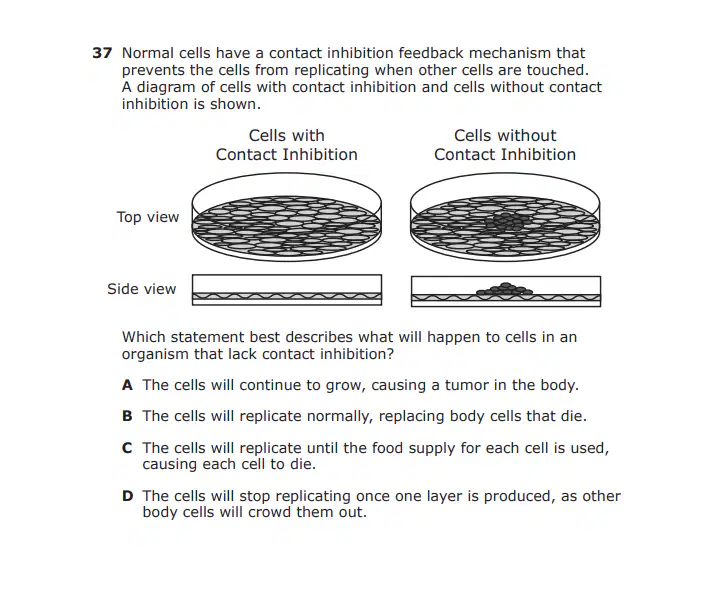
Which statement best describes what will happen to cells in an organism that lack contact inhibition?
The cells will continue to grow, causing a tumor in the body.
The cells will replicate normally, replacing body cells that die.
The cells will replicate until the food supply for each cell is used, causing each cell to die.
The cells will stop replicating once one layer is produced, as other body cells will crowd them out.
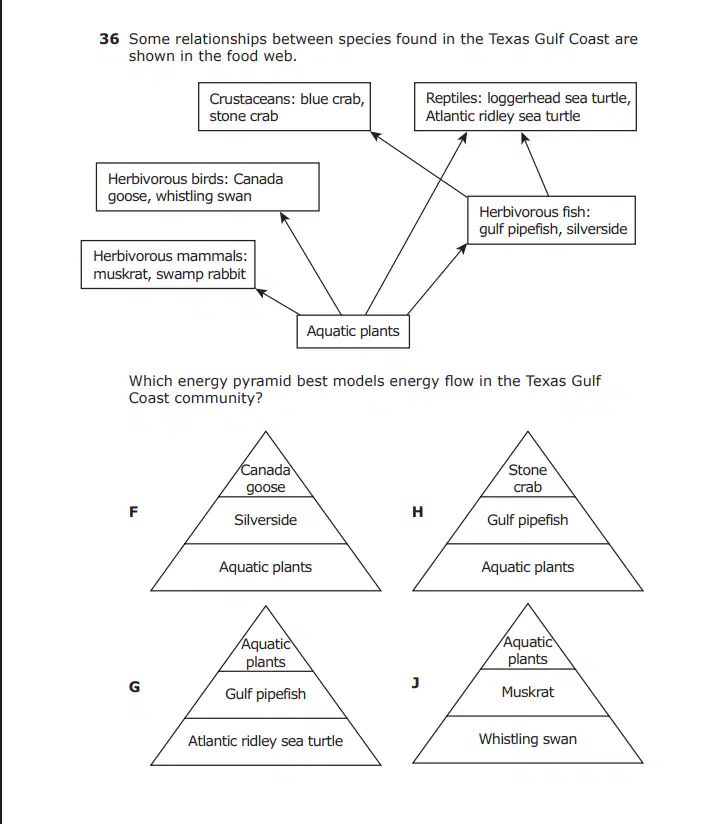
Some relationships between species found in the Texas Gulf Coast are shown in the food web. (Refer to the food web diagram.) Which energy pyramid best models energy flow in the Texas Gulf Coast community?
F: Canada goose > Silverside > Aquatic plants
G: Aquatic plants > Gulf pipefish > Atlantic ridley sea turtle
H: Stone crab > Gulf pipefish > Aquatic plants
J: Aquatic plants > Muskrat > Whistling swan
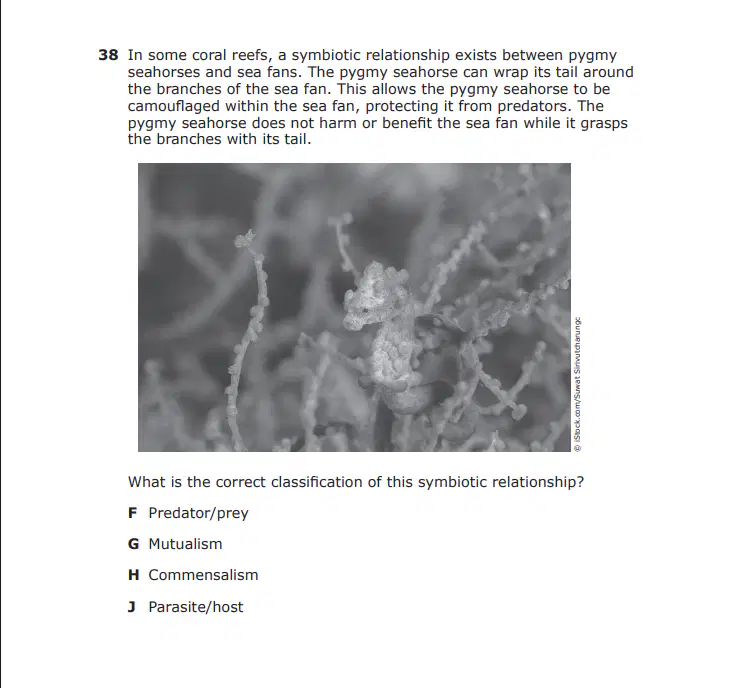
In some coral reefs, a symbiotic relationship exists between pygmy seahorses and sea fans. The pygmy seahorse can wrap its tail around the branches of the sea fan. This allows the pygmy seahorse to be camouflaged within the sea fan, protecting it from predators. The pygmy seahorse does not harm or benefit the sea fan while it grasps the branches with its tail.
Predator/prey
Mutualism
Commensalism
Parasite/host
Two scientists studied patterns of evolution in the fossil record. Many species they analyzed showed periods of slow changes interrupted by a period of rapid change. This pattern of periods of slow change interrupted by periods of rapid change with few, if any transitional fossils, best describes the theory of —
natural selection
genetic drift
punctuated equilibrium
gene flow


Evolutionary theory which states that macroevolution occurred over very short intervals followed by long time periods of no macroevolution is called...
Macroeveoltion
Microevolution
Punctuated equilibrium
Darwinism
Cross-pollination of flowers from different populations of the same species will most likely result in —
gene flow as new alleles are introduced
evolution of a different species as alleles mix
hybrid sterility as gametes from different individuals are incompatible
a decrease of genetic variation among individuals
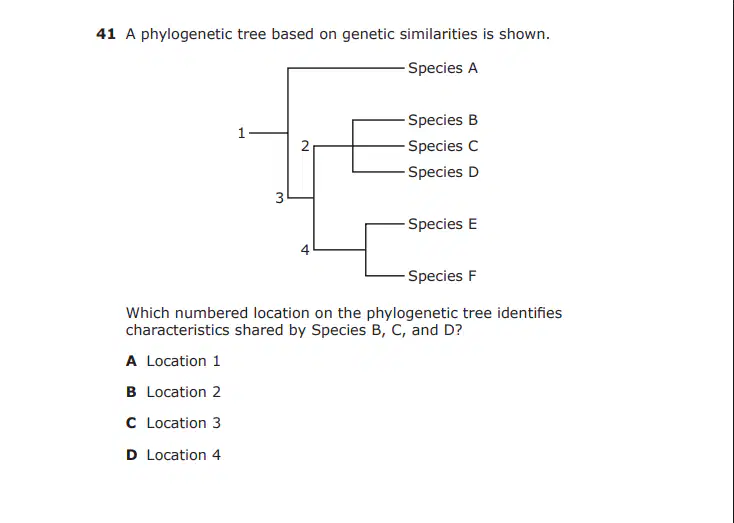
Which numbered location on the phylogenetic tree identifies characteristics shared by Species B, C, and D?
Location 1
Location 2
Location 3
Location 4
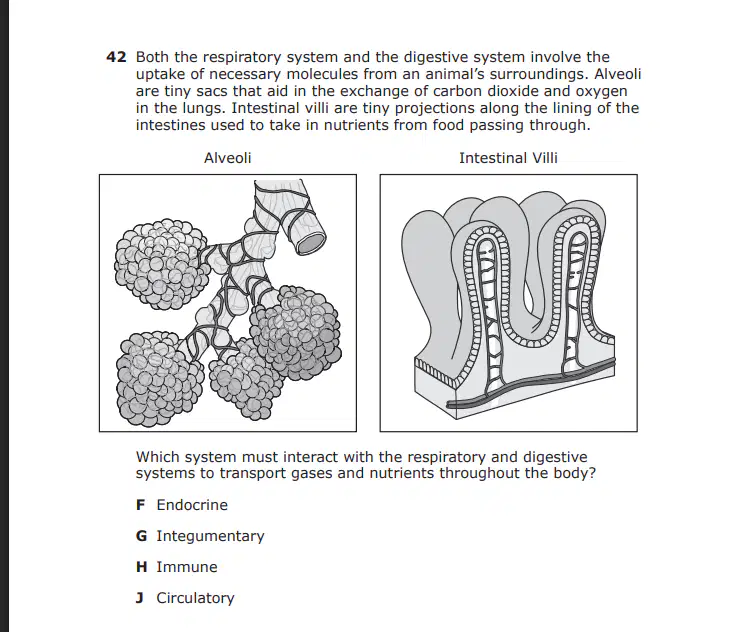
Both the respiratory system and the digestive system involve the uptake of necessary molecules from an animal’s surroundings. Alveoli are tiny sacs that aid in the exchange of carbon dioxide and oxygen in the lungs. Intestinal villi are tiny projections along the lining of the intestines used to take in nutrients from food passing through. Which system must interact with the respiratory and digestive systems to transport gases and nutrients throughout the body?
Endocrine
Integumentary
Immune
Circulatory
HYPER means (a)

Which of the following best describes homeostasis?
An ongoing process in living organisms that leads to an unbalanced, unstable system
An ongoing process in living organisms that leads to a balanced, stable system
A one-time occurrence that leads to an unbalanced, unstable system
A one-time occurrence that leads to a balanced, stable system
After a wheat field is cleared, wild grasses and weeds begin growing. This process is considered —
primary succession because pioneer species appear
primary succession because there are no large trees
secondary succession because soil is already present
secondary succession because the field contains inorganic matter
After a volcanic eruption, volcanic rock is present (but no soil). Label the following illustrations with the correct order of succession.
Large Trees
Shrubs and Bushes
Bare Rock
Lichens
Small Annual Plants
Grasses

An ecosystem must start over from scratch. The soil is completely destroyed, and it takes longer for the ecosystem to rebuild.
Primary Succession
An ecosystem experiences a pause in growth due to a catastrophic event, the ecosystem takes awhile to rebuild.
Secondary Succession
For example: a volcanic eruption
Primary Succession
For example: a wild fire.
Secondary Succession
Monday May 1st
Which type of succession begins with rock.
Which of these events will result in secondary succession?

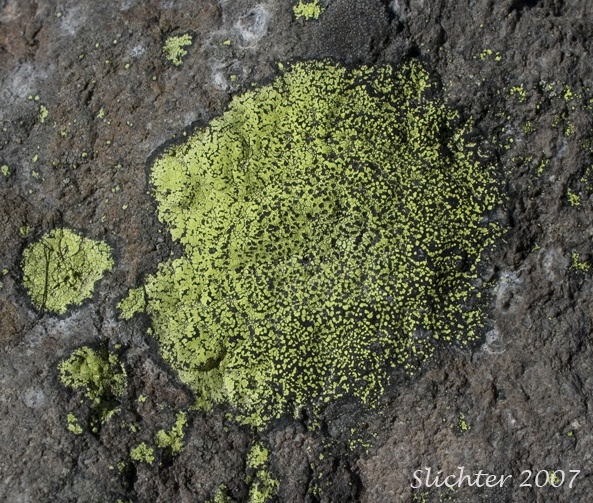
Lichens and mosses that first colonize newly created or exposed habitats are examples of (a) . These organisms play an essential role in primary succession because they (b) .
pioneer species
help create soil that other plants can colonize.
climax community
prevent colonization by other organisms.
species diversity
The first species to colonize previously disrupted or damaged ecosystems and help aid in the process of succession is called a (a) .

A model of two structures that perform cellular processes is shown. What are the products of the cellular processes in these organelles?
I: glucose and carbon dioxide; II: oxygen and water
I: carbon dioxide and oxygen; II: glucose and water
I: oxygen and glucose; II: water and carbon dioxide
I: carbon dioxide and water; II: glucose and oxygen
Place the labels in the blank boxes to complete the model of the process of photosynthesis. There may be more than one correct response. Each label can only be used once.
Cellular respiration occurs in the (a)
Label the diagram
Label the ingredients and products of photosynthesis.
Glucose
Sun Energy
Carbon Dioxide
Oxygen
Water
Select the organelle that performs photosynthesis.
Select the site of Cellular Respiration.
Label the following cellular processes and equations.
6CO2 + 6H2O
C6H12O6 + 6O2
Photosynthesis
Respiration
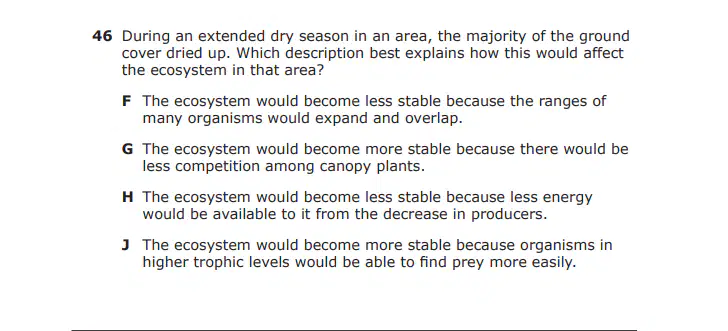
During an extended dry season in an area, the majority of the ground cover dried up. Which description best explains how this would affect the ecosystem in that area?
The ecosystem would become less stable because the ranges of many organisms would expand and overlap.
The ecosystem would become more stable because there would be less competition among canopy plants.
The ecosystem would become less stable because less energy would be available to it from the decrease in producers.
The ecosystem would become more stable because organisms in higher trophic levels would be able to find prey more easily.
Biodiversity
The variety of organisms in a given area
Niche
The role an organism plays in its environment
Keystone Species
Species that are very important to the functioning of an ecosystem.
Habitat
The location where an organism lives
Population
A group of individuals of the same species living in a particular place.
Match the following
Keystone Species
greater impact on ecosystem if removed
Invasive Species
Kudzu
Human Impact on Biodiversity
Land use and deforestation
Human Impact on Biodiversity
Invasive Species
Impact of Industrialization
Thermal Pollution
Burning of fossil fuels can increase (a)
Nitrogen in the soil.
The number of trees in a forest.
Co2 in the atmosphere
The amount of oxygen in the air.
Humans can cause both positive and negative (a) to an ecosystem. (b) energy is a solution to (c) of the air, land and water.


Water, sugar, and other important nutrients need to be transported from one part of a plant to another. Which statement correctly describes the interaction of the root and shoot systems during nutrient transport?
The leaves take in water and sugar, which are then transported to the rest of the plant through vascular tissues.
The roots take in water and sugar, which are then transported to the rest of the plant through vascular tissues.
The leaves take in water and the roots produce sugar that are transported to the rest of the plant through vascular tissues.
The roots take in water and the leaves produce sugar that are transported to the rest of the plant through vascular tissues.
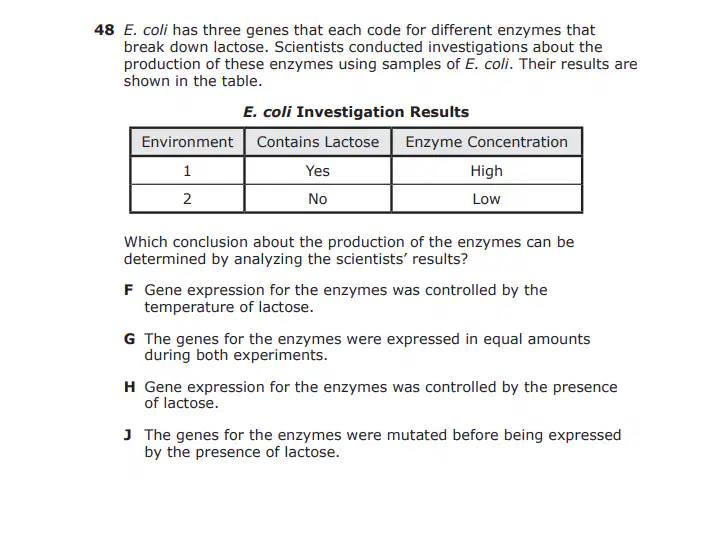
E. coli has three genes that each code for different enzymes that break down lactose. Scientists conducted investigations about the production of these enzymes using samples of E. coli. Their results are shown in the table. E. coli Investigation Results | Environment | Contains Lactose | Enzyme Concentration | |-------------|------------------|---------------------| | 1 | Yes | High | | 2 | No | Low | Which conclusion about the production of the enzymes can be determined by analyzing the scientists’ results?
Gene expression for the enzymes was controlled by the temperature of lactose.
The genes for the enzymes were expressed in equal amounts during both experiments.
Gene expression for the enzymes was controlled by the presence of lactose.
The genes for the enzymes were mutated before being expressed by the presence of lactose.
the temperature at which American alligator eggs are incubated will affect the gender of the offspring. Eggs kept at 30oC tend to hatch mostly male.
Which statement explains why the temperature affects the gender of alligator hatchlings?
Gene repair occurs differently at different temperatures.
Gene expression is different at different temperatures.
Different parts of the embryo's DNA are deleted at different temperatures.
Different parts of the embryo's DNA are duplicated at different temperatures.

E. coli has three genes that code for different enzymes that break down lactose. Scientists conducted investigations about the production of these enzymes using samples of E. coli. Their results are shown in the table.
Which conclusion about the production of the enzymes can be determined by analyzing the scientists' results?
Gene expression for the enzymes was controlled by the temperature of lactose.
The genes for the enzymes were expressed in equal amounts during both experiments.
Gene expression for the enzymes was controlled by the presence of lactose.
The genes for the enzymes were mutated before being expressed by the presence of lactose.
Snowshoe hares can be found living in the Rock Mountains of New Mexico. During the summer months, when there is no snow on the ground, the snowshoe hare's coat color is typically brown. During the winter months, when the mountains are covered in snow, the snowshoe hare's coat is typically white.
Which statement describes the genetic basis for the seasonal change in coat color?
The snow causes mutations in the genes that regulate coat color so that snowshoe hares are adapted to their environment during the winter months.
The genes that control coat color are regulated by hormones signals that are altered by changes in environmental factors.
Sunlight causes cancer cells to develop in the bodies of snowshoe hares, resulting in an apparent brown-colored coat as a result.
The genes that control coat color in snowshoe hares are deleted from the genome during summer months.
CRISPR-Cas9 is a genetic modification technique that edits parts of the genome of an organism. Using this technique scientist can add, remove, or modify sections of the DNA sequence.
How can scientists use this technique to control gene expression?
By activating or deactivating specific genes
By calculating the number of genes different organisms produce
By identifying how closely related one individual is to another
By determining the number of chromosomes in an organism
Which of the following factors can influence gene expression?
a) Genetic variation
b) Environmental factors
c) Both genetic variation and environmental factors
d) none of the above

How can environmental factors affect gene expression?
a) By modifying DNA sequences
b) By altering how a gene is expressed.
c) By directly changing gene function
d) None of the above

Gene expression is solely determined by genes and is not impacted by the environment.
True
False
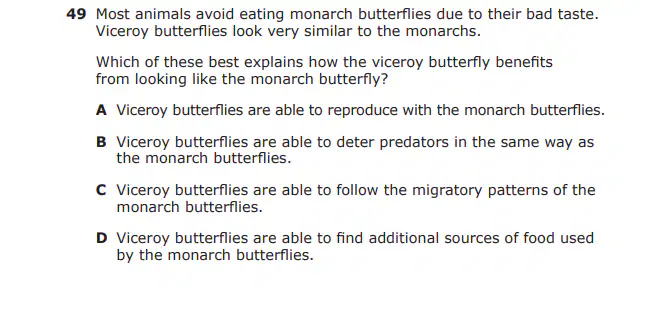
Which of these best explains how the viceroy butterfly benefits from looking like the monarch butterfly?
Viceroy butterflies are able to reproduce with the monarch butterflies.
Viceroy butterflies are able to deter predators in the same way as the monarch butterflies.
Viceroy butterflies are able to follow the migratory patterns of the monarch butterflies.
Viceroy butterflies are able to find additional sources of food used by the monarch butterflies.
Birds do not like to eat monarch butterflies. Since a viceroy butterfly is about the same size, shape and color as a monarch butterfly, the birds leave it alone because they think the viceroy butterfly is a monarch butterfly.
Mimicry
Camouflage
Keen eye sight
What type of mimicry is exhibited by Eristalis tenax?
Peckhamian mimicry
Batesian mimicry
Mullerian mimicry
Aggressive mimicry


Monarch butterflies are toxic to birds because monarch caterpillars eat milkweed. Viceroy butterflies closely resemble monarchs, but are not toxic since the caterpillars do not eat milkweed. This similarity in appearance developed because viceroy butterflies that closely resemble monarchs are
less likely to be eaten by birds
more likely to mate with monarchs
more likely to eat milkweed
less likely to produce offspring
Which sequence represents the levels of organization found in a multicellular organism, from smallest to largest?
Cell → tissue → organ → organ system
Organ system → organ → tissue → cell
Tissue → organ → organ system → cell
Cell → organ system → organ → tissue
Drag and drop the levels of organization in a multicellular organism from the simplest level to the most complex
1 - simplest (a)
2 - (b)
3 - (c)
4 - (d)
5 - most complex (e)
A) cell, organ, tissue, organ system, organism
B) cell, organism, organ system, organ, tissue
C) cell, tissue, organ, organ system, organism
D) tissue, cell, organism, organ, organ system
10C: Which sequence represents the levels of organization found in a multicellular organism, from smallest to largest?
Cell --> tissue --> organ --> organ system
Organ system --> organ--> tissue --> cell
Tissue --> organ --> organ system --> cell
Cell --> organ system--> organ--> tissue
Which sequence illustrates the increasing complexity of levels of organization in multicellular organisms?
organelle → cell → tissue → organ → organ system → organism
cell → organelle → tissue → organ → organ system → organism
organelle → tissue → cell → organ → organ system → organism
cell → organism → organ system → organ → tissue → organelle
A student makes a model to represent the levels of biological organization, as shown.
If the top of the pyramid represents the basic unit of life, how should each section be labeled?

