
NEW
Font size
 Worksheets
SPS7 and S8P2 Assessment
Total questions: 25
Worksheet time: 1hrs 19mins
What is the purpose of a heating/cooling curve?
To calculate the volume changes of a substance during heating or cooling.
To understand the phase changes and energy transfer during heating or cooling process.
To determine the color changes of a substance during heating or cooling.
To measure the temperature of a substance during heating or cooling.
What does a heating curve represent?
The relationship between mass and time during the process of heating a substance.
The relationship between temperature and time during the process of heating a substance.
The relationship between volume and time during the process of heating a substance.
The relationship between pressure and time during the process of heating a substance.
During a phase change, what happens to the temperature of a substance?
decreases
increases
fluctuates
remains constant

What type of energy transformation occurs, when a hawk eats a mouse and then uses the energy from the mouse to fly?
mechanical energy to chemical energy
thermal energy to mechanical energy
chemical energy to mechanical energy
mechanical energy to thermal energy

According to the ESRT, which material would require the most heat energy to increase the temperature of 1 gram of the material one Celsius degree?
Ice
Water
Basalt
Granite

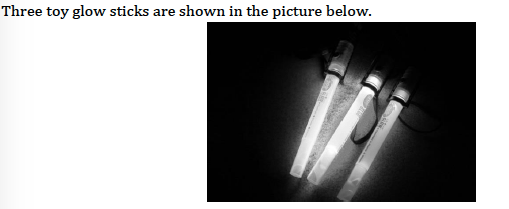
The faster an object moves the greater its ____________ energy.
Kinetic
thermal
Potential
Solar
The energy stored in an object is called ____________.
Joule
Kinetic
Potential
Transferred
The unit of measure for potential and kinetic energy is the
_________.
Newton
Meter
Watt
Joule

At what point does the roller coaster have the most Kinetic energy?
A
B
C
D

What type of energy transformation you see here?
Thermal energy -> Sound energy
Potential energy -> Light energy
Potential energy -> Kinetic energy
Sound energy -> Mechanical energy

The bicycle rider is traveling up a hill. When the rider reaches the top of the hill, she stops to rest. Then she travels down the hill. The diagram shows the rider in the three different positions. Which of these correctly describes the potential energy and the kinetic energy of the bicycle rider?
When the rider is at the top of the hill, her potential energy is the greatest, and her kinetic energy is the least.
As the rider moves up the hill, her kinetic energy increases, and her potential energy decreases.
When the rider goes down the hill, her potential energy increases, and her kinetic energy decreases.
As the rider reaches the bottom of the hill, her kinetic energy and her potential energy decrease.

A demonstration helps students understand the principle of roller coaster design. Which answer choice correctly describes the ball’s kinetic and potential energy?
The ball has more PE at position X than at position Z.
The ball has more KE at position Y than at position W.
The PE and KE of the ball are equal at position X
The PE and KE of the ball are greatest at position Z.
When a person holds an object, it has potential energy. How will the potential energy change if the person lifts the object above his or her head?
The object's potential energy will be the same.
The object's potential energy will be greater.
The object's potential energy will be less.
The object's potential energy will be zero.
Jayla drops the same 10-kg ball from heights of 1 m, 2 m, and 3 m. Which graph correctly shows the kinetic energy of the ball that Jayla dropped from each height?


Using the image, where is the KE = 100 and PE = 0?
A
B
C
D

A ball will be rolled four times. In which of the following situations will some of the kinetic energy of the ball be converted into potential energy as the ball rolls?
Situation A
Situation B
Situation C
Situation D

In heat transfer, heat always flows from the _______________ substance to the _______________ substance.
Hotter to colder
Colder to hotter
Hotter to hotter
Colder to colder
What happens to the molecules in a substance when thermal energy is added to it?
The molecules move slower and get closer together.
The molecules move faster and space themselves farther apart.
The molecules do not change their behavior.
The molecules move faster and get closer together.



