
 Worksheets
Plant Life Cycles and Structures
Total questions: 45
Worksheet time: 25mins
Which are basic needs of plants that are met by the environment? Select all that apply.
shelter
air
sugar
water
space

Which part makes most of a plant's food?
roots
stems
leaves
flowers
Pine trees can reproduce with __________ that produce pollen or a sticky liquid that captures pollen.
cones
leaves
roots
flowers
Which of the following is NOT a basic need of plants?
air
water
sugar
space
Why do you think leaves are important for a plant’s survival? (Choose the best answer.)
They help the plant stand tall.
They make most of the plant’s food.
They absorb water from the soil.
They protect the plant from animals.
Why do plants found in hot, dry areas often have smaller leaves than plants found in warm, wet areas?
Smaller leaves limit the amount of transpiration that occurs.
Smaller leaves allow plants to grow in smaller spaces.
Smaller leaves help plants to take in more water through transpiration.
Smaller leaves allow plants to give off more water through transpiration.
Which plant part plays the biggest role in supporting the plant?
stem
leaf
seed
flower
Which is true about tropisms?
they are a stimulus
they are a plant part
they help plants get what they need
they are where plants make food
What properties of seeds make them good for reproduction? Use evidence to support your answer.
They can travel and grow into new plants.
They are always green.
They are the biggest part of the plant.
They make food for the plant.
Which of the following is NOT a function of smaller leaves in hot, dry areas?
Allowing plants to grow in smaller spaces
Limiting the amount of transpiration
Helping plants take in more water through transpiration
Allowing plants to give off more water through transpiration

Which is an adaptation used by this plant to survive in a hot, dry environment?
thick stems to hold water
deep roots to soak up the rain
flat surface that faces the sun
white thorns to attract animals
Why do you think thick stems help a cactus survive in the desert?
They store water for dry times
They help the plant move
They make the plant taller
They attract insects
If a plant did not have a seed coat, what might happen to the new plant inside?
It might not be protected and could get damaged
It would grow faster
It would attract more animals
It would have more food
What does it mean to germinate?
to begin to grow or sprout
to cough on people
A flower that is not opened up or fully grown
None of the above

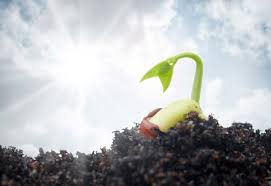
What stage of the plant life cycle is shown in the picture?
A sprout
A bud
embryo
seed coat
A seedling is . . .
the outer protective layer of a seed
to begin to grow or sprout
a seed whose shoot has reached about the ground
none of these

What stage of the plant life cycle is shown?
Full grown, mature plant
a bud
a seed
a sprout

How can flowers attract birds, bees, and other animals?
They can sing.
They can have bright colors.
They can dance.
They can hide.

Why are seeds important?
because they can grow into new plants
because they are all the same size
because they always stay in one place
because they hold up the plant

Which of these happens FIRST in the life of a plant?
A seedling begins to grow.
A seed sprouts.
Flowers bloom on an adult plant.
A seedling grows into a young adult plant.

How is a seedling different from an adult plant?
A seedling does not have flowers or fruit.
A seedling does not have roots.
A seedling does not have a stem.
A seedling does not need sunlight to grow.

Why might the seeds of a maple tree have wings like a helicopter?
They help keep the seeds on the tree.
They help the seeds fly in the wind to new areas.
They protect the seeds from bees.
They protect the seed from becoming a seedling.

Why do farmers like to keep beehives near their crops?
Bees scare the animals away.
Bees keep weeds away.
Bees help plants absorb nutrients from the soil.
Bees help carry plants' pollen so they can make seeds.

What part of the plant does the fruit cover or hold?
the roots
the leaves
the seed
the stem

What part of the plant is #3?
leaf
flower
root
stem

What part of the plant is #4?
leaf
stem
flower
root
True or False? A plant with deeper roots has a longer life cycle?
true
false
What determines a plant's life cycle?
how strong it is
its needs and structure.
where is grows
who plants it the best
What are five things plants need to grow?
water, food, sunlight
water, carbon dioxide, sunlight, nutrients, and space
water, food, oxygen, and space
nutrients, space, and water
Where do pine tree seeds come from?
inside the cone
outside the cone
on the needles
How does a bee pollinate flowers?
It needs pollen from one flower to make another flower
It needs to drink nectar from the sticky stigma.
It needs to bring pollen from one flower to a different flower of its same kind
It needs to bring it to the hive and the other bees help.
How does pollen travel from one flower to another?
the flower walks over to it
birds, insects, other animals, or wind
only scientists
snow
How a certain organism grows and reproduces.
germinate
reproduce
pollinate
life cycle
To make more of one's own kind
germinate
reproduce
pollinate
copy of of
To grow from a seed to a young plant
germinate
pollinate
reproduce
spread germs
What is an apple right BEFORE it becomes an apple?
fruit
seed
flower
stem

