
 Worksheets
Reconstruction and Gilded Age Review
Total questions: 78
Worksheet time: 58mins
The main goal of the Ku Klux Klan during the Reconstruction was to
prevent African Americans from exercising their rights.
gain control of state legislatures.
restore the Confederacy.
improve conditions for poor whites.
The Fourteenth Amendment was part of a series of laws that
ensured the civil rights of African Americans.
shifted the balance of power in favor of the Supreme Court.
changed the way a President could hire government officials.
restored the balance of power between the President and Congress.
As white southerners regained control of state governments, they began to
refuse to pay war debts.
join the Republican Party.
reverse Reconstruction era reforms.
compensate former slaves.
Reconstruction came to end when
President Johnson was impeached.
federal troops were removed from the South.
the Fifteenth Amendment was ratified.
the Freedmen’s Bureau was dismantled.
The Freedmen’s Bureau succeeded in
electing African Americans to southern state governments.
keeping ex-Confederate supporters out of office.
redistributing formerly white-owned land to black southerners.
providing clothing, medical care, food, and education to many freed people.
What was the main goal of sharecropping?
To establish a system of land ownership for former slaves.
To provide labor and land for agricultural production in exchange for a share of the crops produced.
To promote economic equality among farmers.
What were the effects of Jim Crow Laws?
The effects of Jim Crow Laws included the promotion of racial equality, the creation of integrated facilities for African Americans, and the empowerment of their political and economic power.
The effects of Jim Crow Laws included the perpetuation of racial inequality, the creation of separate and unequal facilities for African Americans, and the suppression of their political and economic power.
The effects of Jim Crow Laws included the eradication of racial inequality, the creation of equal facilities for African Americans, and the enhancement of their political and economic power.
What was the impact of the 13th Amendment on the Reconstruction Era?
The 13th Amendment abolished slavery and had a significant impact on the Reconstruction Era.
The 13th Amendment increased the power of the Southern states during the Reconstruction Era.
The 13th Amendment led to increased racial tensions during the Reconstruction Era.
What was the purpose of the Civil Rights Act of 1866?
To grant citizenship and equal rights to all individuals born in the United States, regardless of race or color.
To establish separate but equal facilities for individuals of different races.
To restrict the rights of individuals born in the United States based on race or color.
What was the impact of the 15th Amendment on voting rights?
The 15th Amendment granted African American men the right to vote and prohibited racial discrimination in voting.
The 15th Amendment was repealed and voting rights were restricted again.
The 15th Amendment granted voting rights to all minority groups.
What officially ended Reconstruction in the United States?
Lincoln's Plan
Radical Republican Reconstruction
Compromise of 1877
Who was the first president to be impeached?
Andrew Jackson
Andrew Johnson
Abraham Lincoln
How were former Confederate leaders treated under the Radical Reconstruction Plan?
They were denied citizenship because it was believed they had started the war.
They were denied the ability to obtain political positions.
They were allowed to obtain federal loans to help restore the cotton industry.
How did sharecropping affect farmers in the south during Reconstruction?
By introducing new technology for growing food
By expanding the region's dependence on corn production
By keeping renters in debts to landlords
After the Civil War, southern states adopted Black Codes to-
punish plantations owners for the use of slavery
support Radical Reconstruction objectives in the south
limit the impact of the 13th Amendment
How did southern states respond to the ratification of the 15th Amendment?
By creating a segregated public education system
By imposing requirements designed to deny African Americans the right to vote
By forcing African Americans to work as tenant farmers and sharecroppers
The Freedmen's Bureau was created for what purpose?
Provide aid to the 4 million newly freed people as well as poor white refugees in the South.
To lobby state representatives to vote for the 13th Amendment.
To create a terrorist group aimed at preventing African-Americans from voting.
How did southern states circumvent the 14th and 15th Amendments?
By supporting new reconstructions amendments
By passing Jim Crow Laws and implementing poll taxes and literacy tests for voting
By allowing for all former slaves to move north to find better job opportunities

What does "Gilded" mean when we talk about the Gilded Age?
Nice on the outside, ugly on the inside
Ugly on the outside, nice on the inside

What was one effect of the Industrial Revolution in the United States?
Many more goods were imported.
The government lowered taxes.
The number of people working as farmers increased.
The cost of many goods made in the United States decreased.

_____ opened the way for worldwide communications with the invention of the telephone.
John D. Rockefeller
Alexander Graham Bell
Jacob Riis
Andrew Carnegie

Which is NOT a conclusion that can be made about the transcontinental railroad?
Goods were transported across country
Populations in the west increased
Railroad reduced the size of the US
Travel across the country was possible

Which of the following was NOT central to the life and culture of the Plains Indians in the 1800's?
the horse
the buffalo
the extended family
land ownership

Why did the policy of treating the Great Plains as a huge reservation change?
White settlers began wanting the land on the Plains.
Native Americans refused to remain on the Plains.
Native American populations decreased and needed less land.
The Plains failed to meet the needs of Native American peoples.

What made it possible to construct skyscrapers in the 1800's?
cheap electric power
fire safety standards
the invention of the elevator
new methods of making steel

Vertical integration, a business strategy used by steel mogul Andrew Carnegie, involves _______.
buying out raw material producers and distributors
merging with companies producing similar products
forming trusts
used new methods to increase production

Which is NOT a characteristic of a business monopoly?
encourage business competition
rise prices
put all competition out of business
control all of a products' production

Business owners generally paid low wages in factories because ______.
the government regulated wages
they wanted to maximize worker morale
keeping wages low meant lower production costs
labor unions were focused on worker safety rather than pay

All of the following factors contributed to the immense industrial boom of the late 1800's/ early 1900's EXCEPT ____.
a wealth of natural resources
government support for business
a growing urban population
a growing rural population
Political Machines took advantage of what major groups?
The Immigrants and the Poor
The Immigrants and Big Businesses
The Poor and the Chinese
The Chinese and the Big Businesses
Civil Service Reform was a response to what?
Political Machines and the Spoils System
Chinese Immigrants
Indians (Native Americans)
The need to regulate State Governments
Americans who grew angry and resentful at the increased Immigrant migration into the country, especially those from Southern and Eastern Europe
Nativists
Populists
Philanthropists
Social Workers
An act that removed Indian land from tribal possession, redivided it, and distributed it among individual Indian families to encourage assimilation
Dawes Act
Homestead Act
Interstate Commerce Act
Gospel of Wealth
Founder of Standard Oil, used ruthless business tactics to force competitors out of business. Created a monopoly
Nativists
Political Machines/Bosses
JD Rockefeller
Andrew Carnegie
A Scottish-born American industrialist and philanthropist who founded the Carnegie Steel Company in 1892. By 1901, his company dominated the American steel industry.
Nativists
Political Machines/Bosses
JD Rockefeller
Andrew Carnegie
Corrupt bosses garnered political support (votes) of immigrants by providing social services for immigrants and patronage for their followers
Nativists
Political Machines/Bosses
JD Rockefeller
Andrew Carnegie
U.S. citizens who opposed immigration because they were suspicious of immigrants and feared losing jobs to them
Nativists
Political Machines/Bosses
JD Rockefeller
Andrew Carnegie
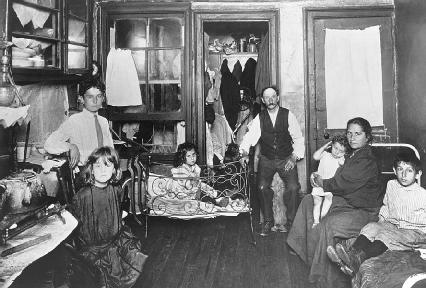
During the Gilded Age, there was an increase in ________________ and _________________ as people moved to U.S. cities looking for economic opportunities.
Immigration / urbanization
capitalism / imperialism
communism / free enterprise
reform movements / civil rights

The government encourage Native Americans and immigrants to adopt white culture in a process called ____________.
cultural diffusion / globalization
acculturation / industrialization
assimilation / americanization
overspeculation / urbanization
Which of the following best characterizes the Gilded Age?
The discovery of goldfields in the West led to an increase in the amount of money issued for circulation.
Industrialists used their connection with corrupt government officials for material gain and political power
In the Deep South a sharp increase in immigration brought a boom in construction and industry
Small, family-owned farms were bought and consolidated to form large agricultural corporations
The Knights of Labor and the American Federation of Labor developed in response to the:
increased need to protect worker interests
decreased power of political machines
increased demand for skilled workers
decreased profitability of the agricultural sector
Which application of a new technology can attributed to an invention of Thomas Edison?
Refrigerated railroad cars allowed food to be transported long distances
Light bulbs made it efficient for factory workers to work at night
Diesel engines were used in production of airplanes
Sonar technology was used to track submarines
The growth of cities is called . . .
rural
technology
immigration
urbanization
The theory that government should not interfere in the operation of the free market.
Maslow
Bessemer Process
Free Enterprise
Laisez-Faire
When there is complete control of a product or service; the elimination of fair competition.
Dictatorship
National Market
Opportunity Cost
Monopoly

Who was the Populist/Democratic candidate for President?
Andrew Jackson
Grover Cleveland
William Jennings Bryan
William McKinley

Why did the Populist party want unlimited coinage of silver?
To increase the amount of money in circulation and raise farm prices
To reduce economic inflation
To raise campaign contribution limits
To decrease the bargaining power of labor unions


What was the main issue of the 1896 election?
Adjusting Immigration standards
Establishing new foreign relations policy
Which metal would be the basis of the nation's currency
Westward Expansion

Who did the Populists believe should run the railroads?
The Government
The local cities/towns
Private Enterprise
The Farmers


Who won the election of 1896?
Teddy Roosevelt
William McKinley
William Jennings Bryan
Grover Cleveland
The New South era refers to the time period
between World War I and World War II
after Reconstruction and before the turn of the century
after the Civil War and before Reconstruction
Who is credited with coining the term, "New South"?
Thomas Watson
Henry W. Grady
Booker T. Washington

Which event showed that Henry Grady's "New South" idea of racial harmony was a lie?
The 1906 Riot
The Leo Frank Trial
The International Cotton Exposition
Booker T. Washington's "Atlanta Compromise" speech

How was the "New South" similar to the South before the Civil War?
Racial inequality
Democrats held political power
Reliance on industry
Reliance on mining and railroads

How was the "New South" was different from the South before the Civil War because there was a shift towards
Industries, mining, and railoads
cotton farming, racial equality, and Democrats leading government
Factories, Republicans leading government, and Jim Crow laws
Farming diversification, racial equality, and Republicans leading govenment

Which early civil rights leader believed that African-Americans should work hard and eventually they would gain equality?
Booker T. Washington
W.E.B. DuBois
Alonzo Herndon
Homer Plessy

Which early civil rights leader believed that African-Americans should demand immediate equality through active protests?
W.E.B. DuBois
Booker T. Washington
Alonzo Herndon
Homer Plessy

What idea of the "Old South" did the Bourbon Triumvirate believe in?
White Supremacy
Economic dependence on cotton
Economic diversity in industry and agriculture
Lower taxes and strong education
the people who immigrated to the US during the time period from the 1880s to the 1920s
nativism
new immigrants
persecution
push factor
pull factor
Between the 1820s-1880s, most immigrants to the U.S. came from (check all that apply)
Western Europe
Asia
Eastern Europe
Southern Europe
Between the 1880s-1920s, most immigrants to the U.S. came from (check all that apply)
Western Europe
Asia
Eastern Europe
Southern Europe
Early immigrants from China came to ________ , called the “ Gold Mountain.”
California
Maine
Texas
New York
Chinese immigrants faced racial attacks. The Chinese Exclusion Act of ___ restricted immigration.
1882
1880
1820
1865
Entering the United States could be a tiring process, however, entering through ____ Island was better because usually you were only detained briefly.
Ellis
Angel
Stanton
Manhattan
A section of a city that was inhabited by mostly one race or ethnicity of people was called...?
Ethnic cleansing
Ethnic Island
Quota Cleansing
Quota Island
The desire for better economic opportunities/jobs.

The movement of more than 1 million African-Americans from the South to the North was called...?
The New Immigration
The Old Immigration
The Terrible Migration
The Great Migration
African-Americans were escaping what in the South?
Civil War
Slavery
Jim Crow Laws
Assimilation

