
 Worksheets
Quiz Par ici method de francais A1 Episode 1 - Cest Moi
Total questions: 61
Worksheet time: 11mins
Which of the following French phrases means "Hello!"?
Bonjour!
Salut!
Allo!
Je m'appelle...
"Je m'appelle" means (a) in English.
According to the table, which country has the highest number of French speakers?
France
Canada
Algeria
Congo
If you wanted to introduce yourself in French, which phrase would you use?
Je me présente…
Merci beaucoup
Au revoir
Comment ça va?

Quel est le thème principal représenté par les images sur cette page ?
Se présenter et saluer les autres
Faire des courses au marché
Cuisiner de la nourriture française
Voyager en train
Which of the following is NOT a way to greet someone in French, according to the list?
Merci!
Bonjour!
Salut!
Allo!
Which of the following is an informal way to greet someone upon arrival in French?
Allo!
Bonjour!
Au revoir!
À bientôt!
Which phrase would you use to say goodbye in a formal situation in French?
Salut!
Bye!
Au revoir!
Ça va?
How do you ask "How are you?" in a formal way in French?
Comment ça va?
Comment vas-tu?
Comment allez-vous?
Salut!
(a) n'est pas une façon de saluer quelqu'un à votre arrivée.
If you want to ask someone informally how they are, which phrase would you use?
Comment allez-vous?
Comment ça va?
Au revoir!
À bientôt!
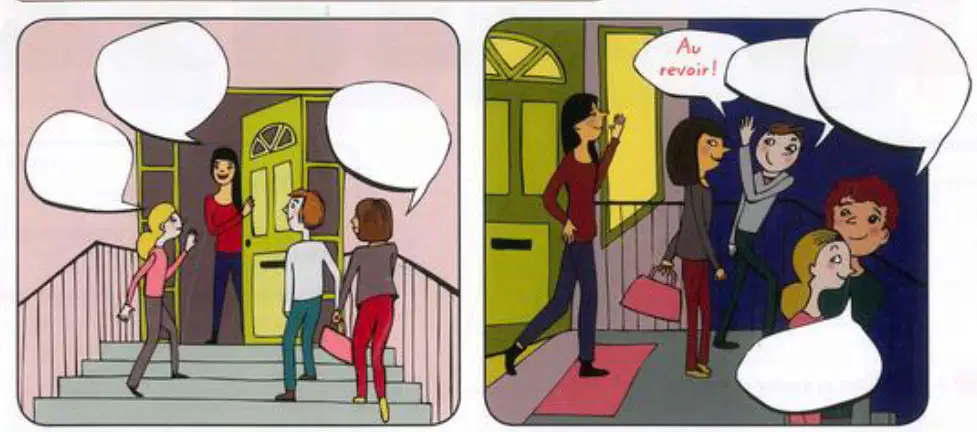
Based on the images, which phrase would you most likely use when leaving a group of friends?
Bonjour!
Salut!
Au revoir!
Comment allez-vous?
Une bonne réponse à "Comment ça va?" est (a)
Match each statement about French greetings with the correct explanation.
Because it shows respect and appropriateness depending on the situation.
This is the reason why distinguishing between formal and informal greetings is important in French.
Because all greetings mean the same thing.
This statement is incorrect as it suggests no difference in meaning among greetings.
Because French people do not use informal greetings.
This statement is incorrect as it claims informal greetings are not used in French.
Because only formal greetings are used in France.
This statement is incorrect as it claims only formal greetings are used in France.
Which of the following is an example of how to spell your name in French, as shown in the learning material?
Je m'appelle Marie. M-A-R-I-E
Je m'appelle Marie. M-E-R-I-E
Je m'appelle Marie. M-A-R-E-E
Je m'appelle Marie. M-I-R-A-E
Which of the following is NOT listed as one of the most popular male names in Quebec from 1980-2013?
Alexandre
Maxime
Samuel
Pierre
What is the French term for the accent mark found in the letter "é"?
L'accent grave
L'accent aigu
Le tréma
La cédille
Which of the following is the correct way to greet and introduce yourself in French?
Salut! Je m'appelle Julie.
Bonjour! Mon nom est Julie.
Allo! Je m'appelle Julie.
All of the above
L'accent utilisé dans le mot "Ça" est (a) .
If you want to say "My name is Marc-André" in French, which of the following is correct?
Je m'appelle Marc-André.
Je suis Marc-André.
Mon prénom est Marc-André.
Je nomme Marc-André.
Which of the following is the correct French term for a male teacher?
Enseignante
Enseignant
Étudiant
Directeur
Match the following profession with its corresponding tool: Which profession uses a stethoscope?
Un coiffeur
Un comptable
Un infirmier
Un serveur
What is the feminine form of the French word "serveur"?
Serveuse
Serveur
Serveurine
Servante
Which of the following pairs correctly matches a masculine and feminine profession in French?
Musicien - Musicienne
Comptable - Comptableuse
Dentiste - Dentisteuse
Policier - Policieuse
A student wants to say "I am a female journalist" in French. Which is the correct way to say it?
Je suis journaliste
Je suis journalisteuse
Je suis journalisteur
Je suis journalisteuse

La profession représentée par l'image d'une personne travaillant avec des enfants en garderie est (a) .
According to the memo, what is the feminine form of "informaticien"?
Informaticienne
Informaticieuse
Informateur
Informateuse
Which of the following is NOT a correct masculine-feminine pair for professions in French?
Avocat - Avocate
Directeur - Directrice
Comptable - Comptable
Policier - Policieuse
If someone says "Je suis (a) " and is female, which correction should be made?
Which of the following professions has the same form for both masculine and feminine in French?
Comptable
Serveur
Policier
Directeur
Which of the following sentences means "I come from Japan" in French?
Je viens du Maroc.
Je viens du Japon.
Je viens de France.
Je viens des États-Unis.
Match the country with the correct French phrase for "I come from" (Je viens...). Which is the correct way to say "I come from Canada"?
Je viens du Canada.
Je viens de Canada.
Je viens des Canada.
Je viens d’Canada.
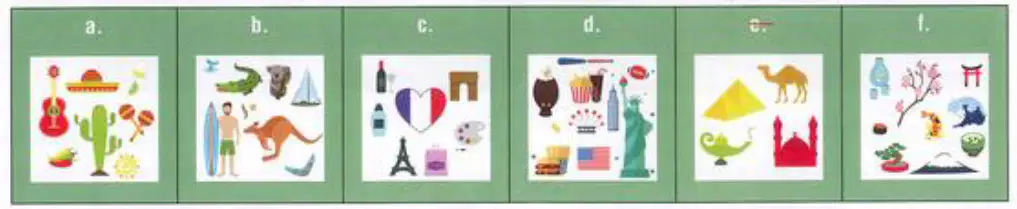
Quelle image représenterait le mieux « Je viens d’Australie » ?
Image avec un sombrero et un cactus
Image avec un kangourou et un désert
Image avec la tour Eiffel
Image avec la Statue de la Liberté
Match each nationality statement with its correct feminine form.
Je suis américaine.
Feminine form of "Je suis américain".
Je suis américaineuse.
Incorrect feminine form: extra ending.
Je suis américainne.
Incorrect feminine form: double 'n'.
Je suis américaine.
Duplicate of correct feminine form.
Which of the following is the correct way to say "I come from Brazil" in French?
Je viens du Brésil.
Je viens de Brésil.
Je viens des Brésil.
Je viens d’Brésil.
If someone says "Je suis canadienne", what can you infer about this person?
The person is a Canadian woman.
The person is a Canadian man.
The person is from China.
The person is from France.
Which of the following pairs correctly matches the masculine and feminine forms for someone from Spain?
Je suis espagnol / Je suis espagnole.
Je suis espagnol / Je suis espagnienne.
Je suis espagnole / Je suis espagnolienne.
Je suis espagnol / Je suis espagnolienne.
Which preposition is used with "les États-Unis" to say "I come from the United States" in French?
des
du
de
d’
Which of the following is the correct way to say "I am Vietnamese" (feminine) in French?
Je suis vietnamienne.
Je suis vietnamien.
Je suis vietnamienneuse.
Je suis vietnamienneur.
If you want to say "I am Irish" (masculine) in French, which phrase would you use?
Je suis irlandais.
Je suis irlandaise.
Je suis irlandien.
Je suis irlandienne.
Which of the following is the correct way to say "I live in Montreal" in French?
J'habite à Montréal.
J'habite à Paris.
J'habite à Rome.
J'habite à New York.
How do you say your place of residence in French?
J'habite à + name of the city
Je suis de + name of the city
Je vais à + name of the city
J'aime + name of the city
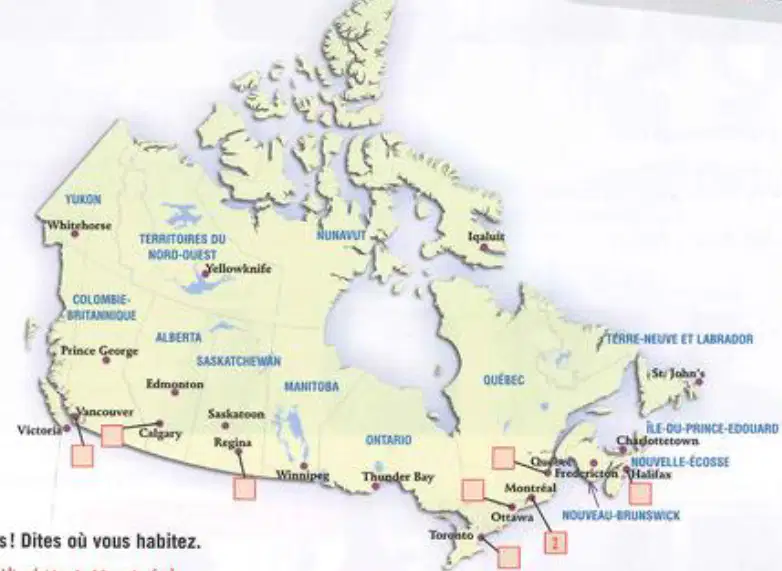
Which Canadian city is located in the province of British Columbia?
Vancouver
Toronto
Montréal
Québec
How would a woman say "I am Canadian" in French?
Je suis canadienne.
Je suis canadien.
Je suis canadiennez.
Je suis canadienneuse.
Which of the following pairs correctly matches the language to its greeting?
Espagnol - Hola!
Allemand - Hello!
Russe - Bonjour!
Arabe - Guten Tag.
If someone says "Je parle mandarin," the greeting they would most likely use is (a)
What is the feminine form of "Je suis italien"?
Je suis italienne.
Je suis italiena.
Je suis italiennez.
Je suis italienneuse.
If you want to say "I am Portuguese" as a man, which phrase would you use?
Je suis portugais.
Je suis portugaise.
Je suis portugaises.
Je suis portugaisienne.
Which of the following is the correct translation for "Hello!" in Russian?
Здравствуйте (Zdravstvuyte)
Hola!
Bonjour!
Guten Tag.
The French term for someone who is single is (a) .

Quelle image représente le mieux un couple marié ?
Image de deux mains avec des alliances.
Image d'un homme seul.
Image d'un couple assis ensemble.
Image d'un gâteau de mariage coupé en deux.
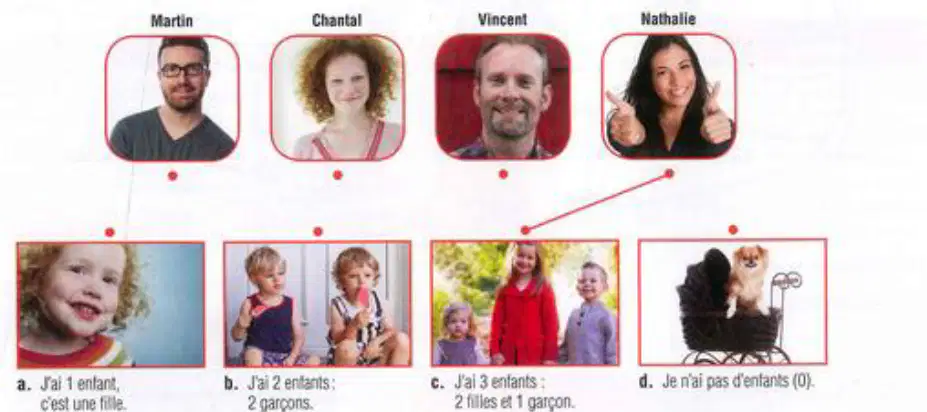
Faites correspondre chaque description d'enfants avec l'image appropriée :
Image de deux jeunes garçons assis ensemble.
J'ai 2 enfants : 2 garçons.
Image d'une seule fille.
J'ai 1 enfant, c'est une fille.
Image de trois enfants (deux filles et un garçon).
J'ai 3 enfants : 2 filles et 1 garçon.
Image d'une poussette avec un chat.
Je n'ai pas d'enfants (0).
What does "divorcé(e)" mean in English?
Divorced
Married
Single
Partnered
According to the example, how would you say "I have 2 children, 1 boy and 1 girl" in French?
J'ai 2 enfants, 1 garçon et 1 fille.
J'ai 3 enfants, 2 filles et 1 garçon.
J'ai 2 enfants, 2 garçons.
Je n'ai pas d'enfants.
Which civil status is described by the phrase "conjoint(e) de fait"?
Common-law partner
Single
Married
Divorced
If someone says "Je n'ai pas d'enfants", what does it mean?
I do not have children.
I have two children.
I have three children.
I have one child.
In the context of the table, which civil status is checked if someone is no longer married and has no children?
divorcé(e)
célibataire
marié(e)
conjoint(e) de fait
Match the following French words with their correct marital status meanings.
célibataire
Single (marital status)
mariée
Married (female)
conjointe de fait
Common-law partner (female)
étudiant
Student
(a) is an appropriate way to greet someone in French, based on the material.
Someone who says "Je suis conjointe de fait" is (a) in terms of their marital status.
Lequel des éléments suivants n'est PAS une information que vous incluriez généralement lorsque vous vous présentez en français, selon le matériel ?
Film préféré
Profession
Nationalité
Nombre d'enfants

