
 Worksheets
Imaging Modality Quiz 3
Total questions: 15
Worksheet time: 15mins
When using the the Systematic Search Pattern for radiographs and CT images, what do you primarily focus on when examining A for Alignment?
Architecture of ligaments, nerves, and muscles
Size and contour of soft tissue
Normal size and number of bones
Good alignment of soft tissue
In MR images, which of the following is examined in the Systematic Search Pattern ABCDS?
B for Bone Density
B for Bone Texture
B for Bone Signal
A for Arrangement
Something that is whiter on a radiograph is _________?
Radiolucent
Hyperintense
Radiopaque
Hypointense
Something that is darker on MR image is _________?
Hyperintense
Hypointense
Radiolucent
Radiopaque
Which of the following is generally not well assessed in MR images?
Bone edema
Bone signal
Bone texture
Growth plates in bone
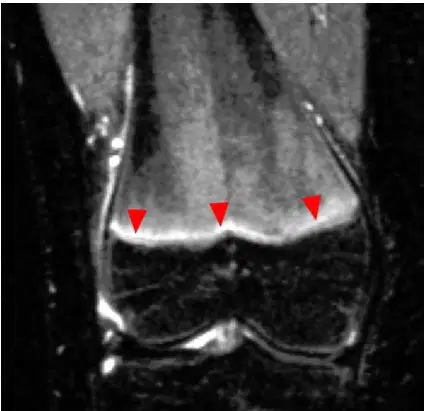
What type of Salter Harris Fracture is this?


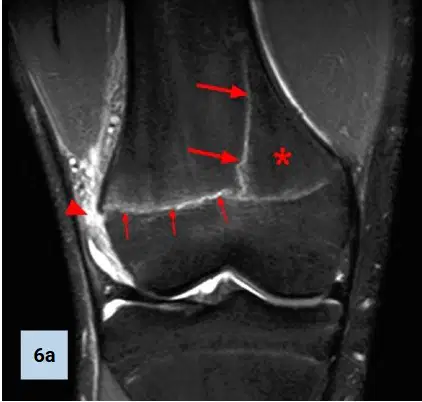
What type of Salter Harris Fracture is this?
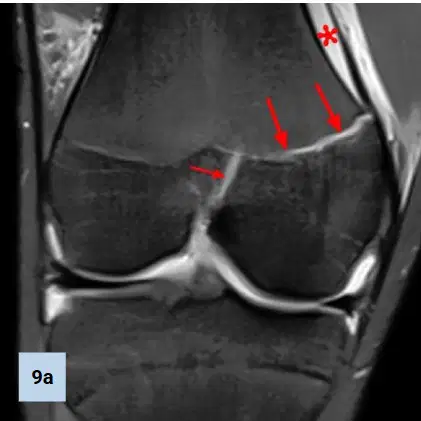
What type of Salter Harris Fracture is this?
In radiographs and CT images, which of the following is the most radiolucent?
Water
Fat
Bone
Metal
In radiographs and CT images, which of the following is more radiopaque?
Femur (Bone)
Joint replacement (Metal)
Hamstring (Muscle)
Adipose tissue (Fat)
Match the following with the right category
Fat sensitive image
Anatomy defining image
Fluid sensitive image
Pathology defining image
Fat is hyperintense on the image
Fluid appears hyperintense on the image
You will see all of the following MRI views EXCEPT...
Coronal
Sagittal
Axial
Lateral
Which of the following would you get with a projection type image?
Axial view
Sagittal view
Coronal view
AP Oblique view
How are fat pads typically represented in T1-weighted MR images?
Radiopaque shapes
Hyperintense shapes
Hypointense shapes
Radiolucent shapes
What additional feature is highlighted in MR images that is not typically seen in radiographs & CT images?
Synovial tissue, including bursa
Density of tissue
Smooth periosteum
Bone texture

