
Font size
 Worksheets
FICTION Unit 1 Test
Total questions: 47
Worksheet time: 16mins
What is the term for using your background knowledge, plus the clues in the text, to read between the lines and figure out what the author is saying?
Inference
Summarization
Prediction
Paraphrasing
What do you call a story's lesson or theme, which is what the author wants to teach you through his or her writing? (Think Disney movies)
Message
Setting
Character
Plot
What are the parts of a story that help create, or show, everything from your story's setting to character descriptions to character feelings called?
Details
Chapters
Titles
Summaries
What is the term for the main idea, which is what the paragraph or whole story is mostly about? What is the author trying to teach me?
Main Idea or Central Message
Setting
Character Trait
Plot Twist
What is a short retelling of the most important parts of the story called? (Think about: Beginning, Middle, End)
Summary
Prediction
Setting
Dialogue
What do you call clues that good readers use to find the meaning of unknown words?
Context Clues
Picture Clues
Word Banks
Glossary
What is the main problem the character is facing in a story called?
Conflict
Setting
Theme
Resolution
What is the turning point in the story called? Fill in the blank: The _______ is the highest point of interest/tension in the story.
climax
introduction
resolution
conflict
Why did the author write this? This is called the author's _______.
purpose
opinion
summary
genre
What is the reason something happened in a story called? Fill in the blank: The _______ explains why something happened.
cause
effect
setting
character
What is the result of something happening in a story called? Fill in the blank: The _______ is what happens as a result.
effect
cause
setting
character
Where does the story take place? Fill in the blank: The _______ is where the story takes place.
setting
character
plot
theme
Which of the following is NOT a skill of good readers?
Read the whole passage
Skip important details
Take notes in the margin
Highlight important details
What should you do if you do not understand a part of the story?
Ignore it
Reread the story
Skip to the end
Guess the answer
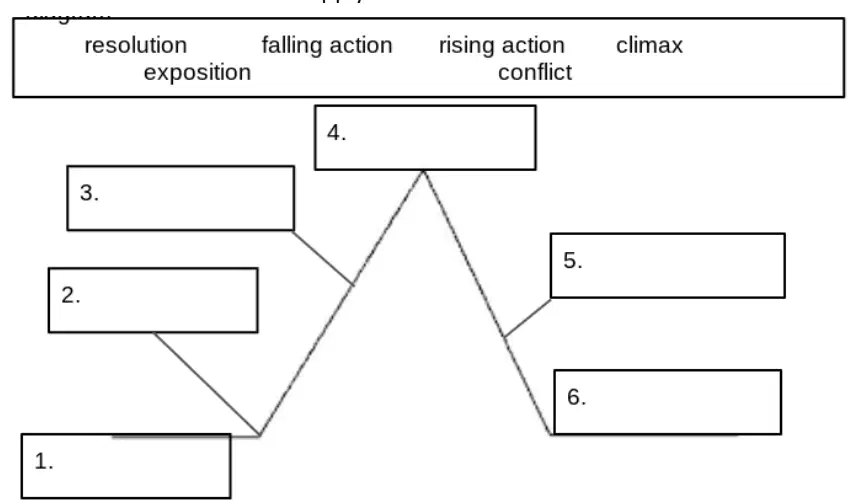
Fill in the blank for box 1 in the diagram.
resolution/exposition
climax
rising action
falling action
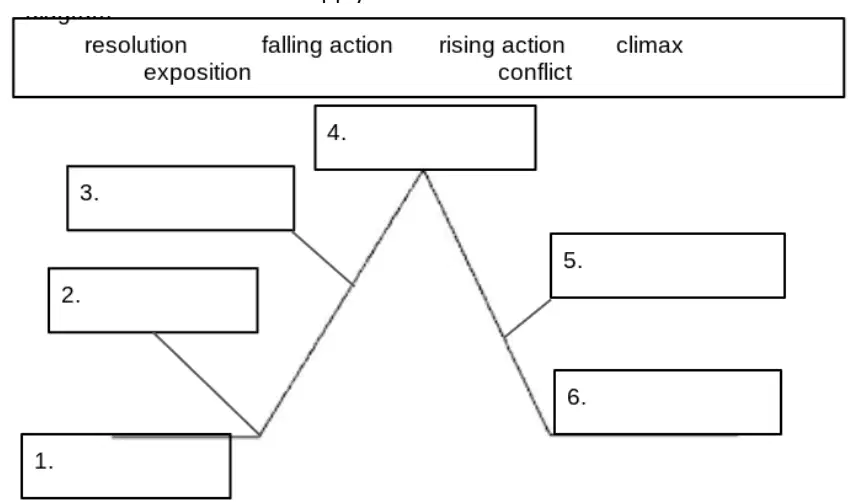
Fill in the blank for box 2 in the diagram.
resolution/exposition
climax
rising action
falling action
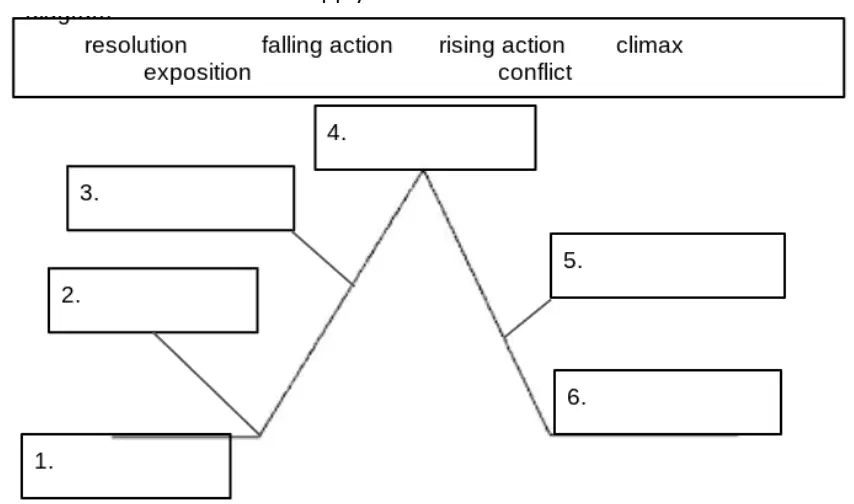
Fill in the blank for box 3 in the diagram.
rising action/conflict
climax
resolution
exposition
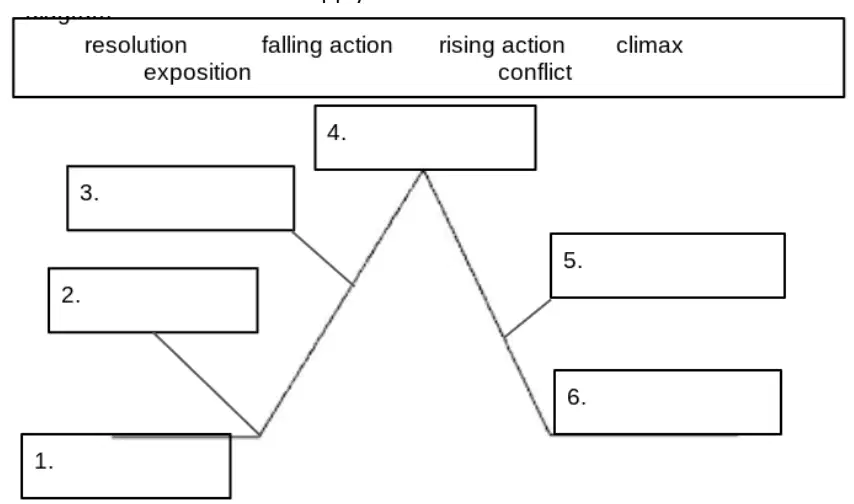
Fill in the blank for box 4 in the diagram.
climax
introduction
resolution
conflict
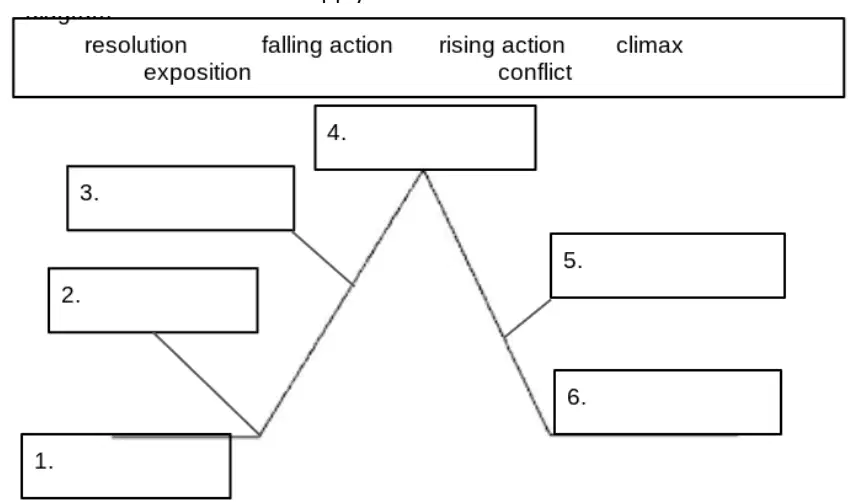
Fill in the blank for box 5 in the diagram.
falling action
exposition
climax
resolution
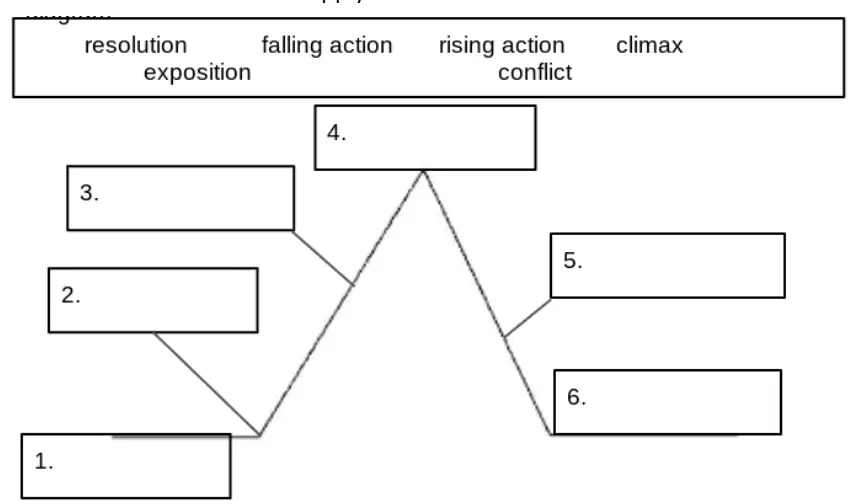
Fill in the blank for box 6 in the diagram.
falling action
exposition
climax
resolution
What does the 'R' in RACES stand for? Fill in the blank: R stands for ________ the question.
Restate
Repeat
Review
Recall
What does the 'A' in RACES stand for? Fill in the blank: A stands for ________ the question in your own words.
Answer
Ask
Arrange
Argue
What does the 'C' in RACES stand for? Fill in the blank: C stands for ________ the evidence or examples.
Cite
Create
Collect
Compare
What does the 'E' in RACES stand for? Fill in the blank: E stands for ________ and give details.
Explain
Evaluate
Elaborate
Examine
What does the 'S' in RACES stand for? Fill in the blank: S stands for ________ it up!
Sum
Show
State
Support

What is setting?
The time and location in which a story takes place
A series of events and character actions that relate to the central conflict.
a struggle between two people or things in a short story.
What you turn on the washer
The time and place of a story. Ex. "We were at the beach on a summer day."
Motif
Suspense
Setting
Narration


Understanding of the characters comes from what they say, do, and think and how others act toward the characters.
Plot
Theme
Climax
Characterization

How would you describe the character of the lion?
The lion is a static character because the text does not tell us that he undergoes a change in his way of thinking or learning a lesson
The lion is a dynamic character because he undergoes a major change in his ways of thinking about the world

How do authors explain details about their characters?
pictures
dialogue
actions
feelings

In fictional writing, what is the process by which an author reveals the personality of a character, either directly or indirectly, called?
Personification
Description
Characterization
Traits
Which story element is being described?
The "good gal or guy " of any given story. This character is working for a positive cause.
antigonist
synonym
protagonist
antonym
A person who actively opposes the protagonist
Narrator
Character
Antagonist
Author
Characters are
the people or animals that drive the action of the story
the time and place in which a story happens
when an author makes a comparison
when something stands for something larger than itself
The events of a story that occur between the climax and the resolution are called the _______________________.
exposition
conflict
rising action
falling action
A summary of a story should include details about the ________, _________, and _________ of a story.
rising action, climax, resolution
conflict, characters, setting
prequel, epilogue, sequel
beginning, middle, end
The plot is...
the main character
the story and all of the events in it
where the story takes place
when the problem reaches its peak
What is the correct sequence of a story?
Falling action, climax, rising action, exposition
Rising action, climax, falling action, exposition, resolution
Whatever the author chooses it to be
Exposition, rising action, climax, falling action, resolution


The lesson or moral of the story is called the what?
conflict
main character
topic
theme

Her hardest hue to hold.
Her early leaf's a flower;
But only so an hour.
Then leaf subsides to leaf,
So Eden sank to grief,
So dawn goes down to day
Nothing gold can stay.
What is the central theme of this poem?


What is the definition of THEME?
A struggle between two opposing forces
A message or life lesson in a text
The attitude a writer has about a subject


