
NEW
Font size
 Worksheets
APUSH Unit 1 Quiz 1
Total questions: 20
Worksheet time: 10mins
What was the primary method by which people migrated from Asia to the Americas?
Sailing across the Pacific Ocean
Walking across the Bering Strait Land Bridge
Flying in primitive aircraft
Traveling through a series of tunnels

During what time period did the migration from Asia to the Americas occur?
Between 70,000 and 50,000 years ago
Between 36,000 and 14,000 years ago
Between 10,000 and 5,000 years ago
Between 5,000 and 1,000 years ago
How did the cultivation of maize influence Native American societies?
It led to the decline of urban centers
It played a crucial role in economic development and social diversification
It caused the collapse of political systems
It was primarily used for religious rituals
What was a notable cultural achievement of the Southeast Region's Native American societies?
Advanced metallurgy
Distinct languages and art forms
Construction of pyramids
Development of written scripts
What was the primary economic base in Mesoamerica?
Gold mining
Maize
Cotton
Livestock
What architectural feature is Mesoamerica known for?
Skyscrapers
Pyramids
Castles
Pagodas
What innovative agricultural techniques were used by Native American societies in Mexico?
Slash and burn
Terrace Farming and Chinampas
Crop rotation
Hydroponics
What activities did Native American tribes rely on in the North East and Great Lakes region?
Mining and construction
Fishing, hunting, and agriculture
Trade and commerce
Herding and weaving
What role did the Mississippi River play for Native American societies?
It was a source of salt for trade
It served as a vital transportation route
It was primarily used for mining
It was a barrier between tribes
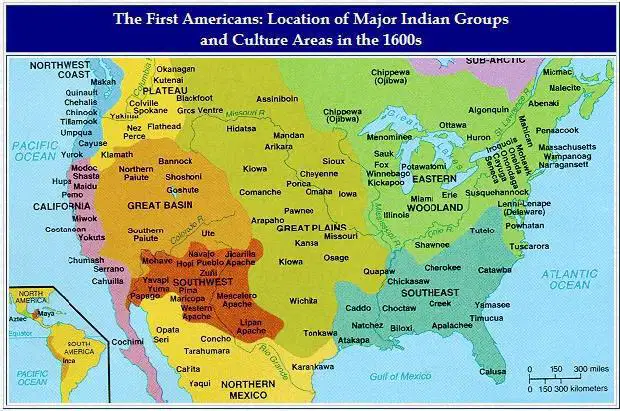
Which tribes inhabited the Mississippi River Valley before European contact?
Shoshone and Ute
Cahokia, Natchez, and Sioux
Apache and Navajo
Cherokee and Iroquois
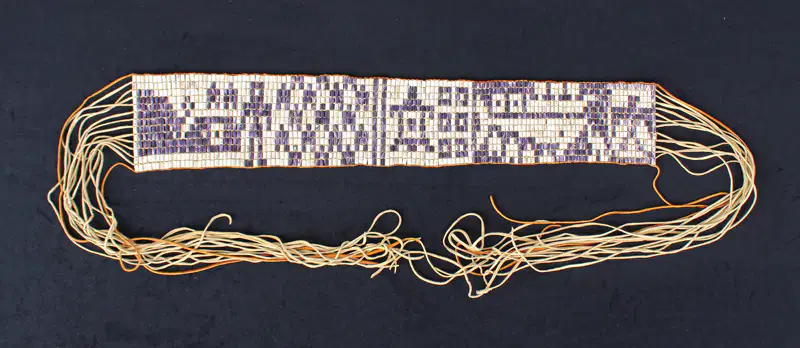
What were wampum beads primarily used for by Native Americans?
Trading with European Explorers
Recording history, agreements and transactions
For clothing and style
Building materials

How does squash contribute to the Three Sisters Cropping System?
It provides carbohydrates for the soil.
It adds protein through nitrogen fixation.
It covers the ground to retain moisture and deter weeds/pests.
It acts as a climbing structure for beans.

Based on the theory presented on the map, the indigenous peoples of the Americas would most likely share the closest ancestry with which group?
People of Asian descent
People of European descent
People of African descent
The early American Indian civilizations of Mexico and Peru were based on which agricultural product?
Wheat
Maize
Cattle
Coffee
Based on the document and your knowledge of history, which theory best describes the spread of maize as a staple crop through the Native American Populations?
Maize was first developed upon the Siberian steppes and carried to the Americas via the land bridge
Maize was first developed in the region that is now Mexico and spread through the Americas in a slow and uneven process
The cultivation of Maize occurred separately in isolated pockets throughout the two continents
Maize was developed by the nomadic tribes of North America but was first grown intensively as a staple crop by Native American groups in South America

Use the image and your knowledge of the time period to answer the following question:
The Native American Mississippian Valley culture differed from other Native American groups in that it
existed mainly in seminomadic populations with limited agriculture
based its social structure on maternal lineage
had a developed network of trade with other regional tribes
illustrated a higher level of hierarchical political organization
“The Mexica (Aztecs) of Mesoamerica developed a tribute-based empire centered on Tenochtitlan, while the Haudenosaunee (Iroquois) organized around a confederacy of tribes for mutual defense and decision-making.”
The differences described in the excerpt above most clearly demonstrate:
The shared reliance of all Native societies on centralized empire-building
The diversity of Native political and social structures across regions
The uniformity of agricultural practices in the Americas
The dependence of all Native cultures on European technologies
Why did Native societies in the Pacific Northwest develop permanent settlements despite not relying heavily on agriculture?
They traded with Spanish colonizers for maize and wheat.
Abundant natural resources, especially salmon and cedar, supported large, sedentary communities.
They adopted farming practices from Mesoamerican empires.
The climate was too harsh to allow for any type of subsistence living.
Which of the following comparisons most accurately reflects differences in subsistence strategies?
Plains tribes relied on maize agriculture, while Eastern Woodland peoples followed bison herds.
Pueblo peoples farmed with irrigation systems, while Plains tribes depended more on hunting and gathering prior to the horse’s arrival.
Caribbean islanders practiced intensive maize farming, while the Iroquois relied exclusively on fishing.
All Native American groups used the same blend of agriculture and hunting.
What conclusion can be drawn about Native American societies before European contact?
They were universally nomadic, lacking permanent settlements.
They showed significant diversity, with cultural practices shaped by geography and environment.
They had no large-scale political organizations.
They relied entirely on European goods for survival.

