
 Worksheets
VTA 110 Quiz 1 Review
Total questions: 48
Worksheet time: 26mins
The definition of "anatomy" is:
The study of growth and development
The study of normal structure of various body organs and their location
To cut an animal
A test of organ function
What is "physiology"?
Study of growth and change
To cut an animal
Describes the mechanisms and steps of how the body and it's various components function
A test of organ function
Cells are the basic structural and functional units of life.
True
False
What are groups of specialized cells called?
Epithelial
Organs
System
Tissue
All of the following are basic types of tissues that make up the animal body, EXCEPT
Epithelial
Nervous
Stretchy
Muscle
What type of tissue covers the interior and exterior surfaces of the body?
Connective
Nervous
Epithelial
Muscle
Simple epithelial tissue is made up of a single layer of cells.
True
False
Stratified epithelial tissue is more than one cell layer thick.
True
False
Epithelial tissue contains blood vessels.
True
False
Endocrine glands...
Are sweat glands
Are ductless glands that secrete hormones into the blood stream
Secrete hormones through ducts
Are mammary glands
Exocrine glands...
Are ductless glands that secrete hormones into the blood stream
Secrete substances through ducts into the blood stream
Secrete substances through ducts onto the body surface
Remove waste products from the blood stream
Match each type of connective tissue to its correct description.
Provides strong connection between different tissues
Dense
Provides support and flexibility to different tissues
Loose
Stores fat for energy and insulation
Adipose
Provides structural support and protection
Bone
Provides flexible support and reduces friction between bones
Cartilage
Match each cartilage type to the correct location where it may be found in the body.
Intervertebral discs
Fibrous
Ear
Elastic
Nose, trachea, ends of long bones
Hyaline
Bone is a living tissue.
True
False
The name for "production of bone" is...
Ossification
Myocyte
Osteocyte
Mineralized Matrix
Groups of tissues are called...
Organs
The body
Cells
Systems
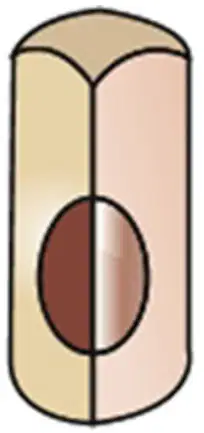
The epithelial cell shape in this image is...
columnar
squamous
stratified
cuboidal

The epithelial cell shape in this image is...
columnar
stratified
squamous
cuboidal
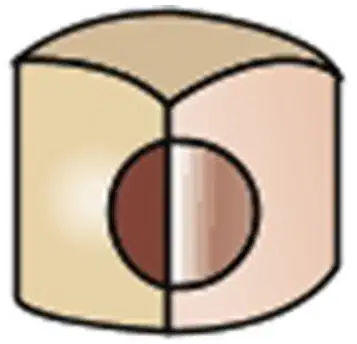
The epithelial cell shape in this image is...
stratified
columnar
cuboidal
squamous
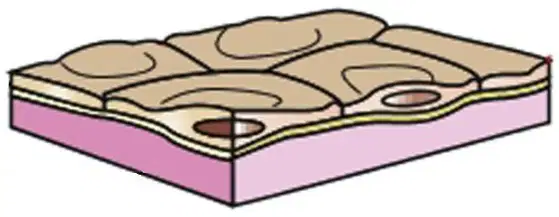
Classify this epithelial tissue.
Stratified Cuboidal
Simple Columnar
Simple Cuboidal
Stratified Squamous
Simple Squamous
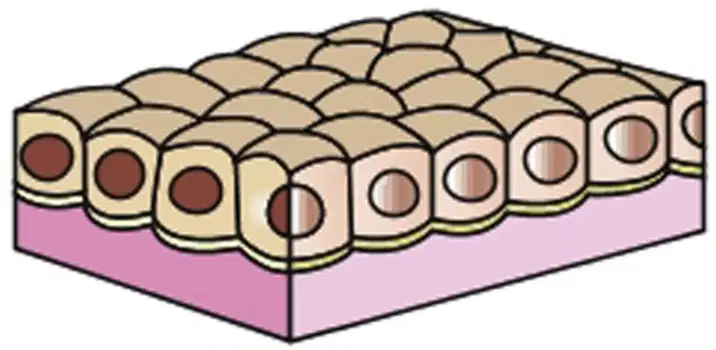
Classify this epithelial tissue.
Simple Columnar
Stratified Cuboidal
Stratified Squamous
Stratified Columnar
Simple Cuboidal
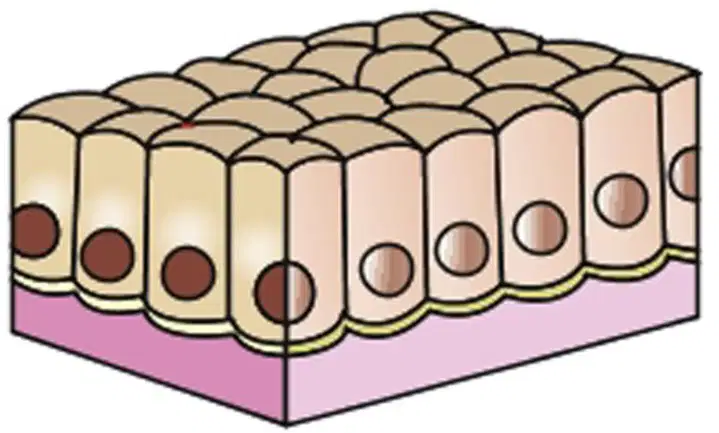
Classify this epithelial tissue.
Stratified Cuboidal
Simple Squamous
Simple Columnar
Pseudostratified Columnar
Stratified Squamous
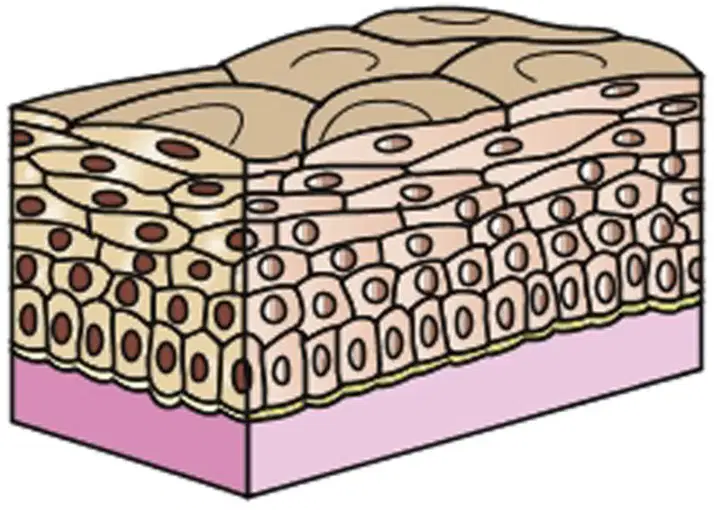
Classify this epithelial tissue.
Simple Cuboidal
Stratified Squamous
Simple Columnar
Simple Squamous
Stratified Columnar
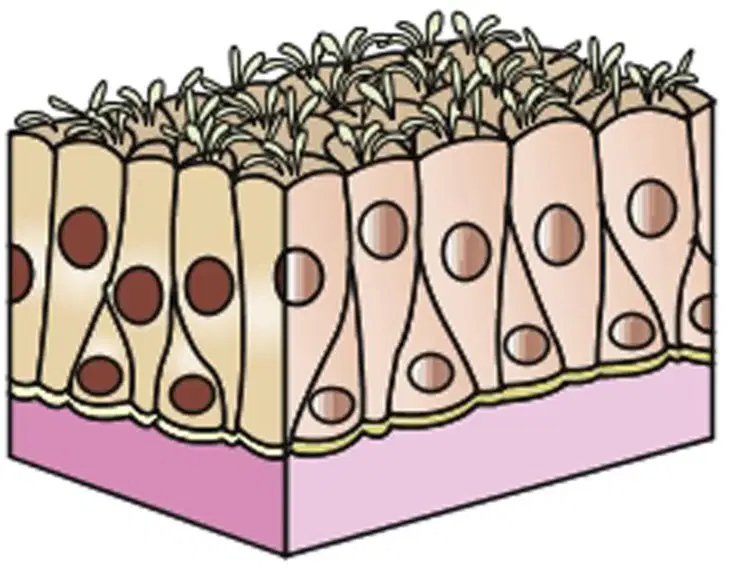
Classify this epithelial tissue. (Image of epithelial tissue provided)
Stratified columnar
Pseudostratified cuboidal
Stratified cuboidal
Pseudostratified columnar
Simple columnar
Blood is a connective tissue.
True
False
Which of the following is NOT a component of the cellular portion of blood?
electrolytes
white blood cells
red blood cells
platelets
Match each cellular component of blood to its correct name.
Leukocytes
White Blood Cells
Erythrocytes
Red Blood Cells
Thrombocytes
Platelets
White blood cells are categorized as granulocytes or agranulocytes.
True
False
What blood cell helps minimize blood loss from damaged vessels by adhering to the injured area and initiating the blood-clotting process?
Antibodies
Platelets
Red blood cells
White blood cells
The two extremities, or ends, of long bones are called...
Metaphysis
Epiphyses
Diaphysis
Phalanges
The shaft of long bones is called the...
Epiphyses
Diaphysis
Phalanges
Metaphysis
Bone marrow contains stem cells, which produce the blood cells.
True
False
The vertebrae are irregular bones.
True
False
Which species skeleton is composed of pneumatic bones?
Reptiles
Fish
Mammals
Birds
Which of the following is NOT a part of the axial skeleton?
Sternum
Femur
Ribs
Vertebrae
The immovable joints of the skull are called
synovial joints
fossa
sutures
processes
Which of the following lists the vertebrae in correct order from cranial to caudal (head to tail)?
cervical, thoracic, lumbar, sacrum, coccygeal
thoracic, cervical, lumbar, sacrum, coccygeal
cervical, lumbar, thoracic, coccygeal, sacrum
coccygeal, sacrum, lumbar, thoracic, cervical
A canine has 13 thoracic vertebrae. How many pairs of ribs does it have?
13
1
26
7
The sternum is composed of rod-like bones called sternebrae.
True
False
The most cranial bone of the sternum is called the...
atlas
axis
manubrium
xiphoid process
The most caudal bone of the sternum is called the...
atlas
axis
xiphoid process
manubrium
What does the appendicular skeleton consist of?
Bones of the spine
Bones of the limbs
Bones of the skull
Bones of the chest
The forelimb is referred to as the (a) limb.
lumbar
pelvic
thoracic
cervical
The hind limb is referred to as the (a) limb.
lumbar
thoracic
pelvic
cervical
Which of the following is NOT a component of the forelimb?
Femur
Humerus
Radius
Carpus
Which of the following is NOT a component of the hind limb?
Tibia
Ulna
Tarsus
Patella
Match each type of joint to its correct description.
Cartilaginous
Bones connected by cartilage, allowing more movement than fibrous joints but less than synovial joints.
Synovial
Joints that allow for free movement, characterized by a synovial cavity.
Fibrous
Bones joined by dense connective tissue, allowing little or no movement.
Match each movement to its correct description.
Movement away from the midline of the body.
Abduction
Movement of a bone around its longitudinal axis.
Rotation
Decreasing the angle between two bones.
Flexion
Increasing the angle between two bones.
Extension
Movement toward the midline of the body.
Adduction
![intro to lang เถื่อน บ่ต้องใส่ / / หรือ [ ] เด้อ](https://cf.quizizz.com/image/image-loader.svg)
