
 Worksheets
Artistic Styles and Transformations of 16th-Century Europe
Total questions: 20
Worksheet time: 10mins
Which artistic styles are mentioned in the prompt as reflecting the transformations of 16th-century Europe?
Gothic and Renaissance
Mannerism and Baroque
Romanticism and Realism
Impressionism and Expressionism
What cultural values did both Mannerism and Baroque art emphasize over Renaissance themes?
Emotional expression and individualism
Scientific inquiry and exploration
Economic stability and growth
Political unity and peace
Which artist is associated with distorted figures and exaggerated poses in Mannerism?
Leonardo da Vinci
Michelangelo
El Greco
Raphael
Which artist is known for using dramatic gestures in Mannerism?
Caravaggio
Tintoretto
Botticelli
Rembrandt
What was a key feature of Baroque art used by Louis XIV?
Minimalist design
Use of dramatic color schemes and contrasts
Focus on abstract forms
Emphasis on geometric patterns
Which art style is characterized by a culture that is confused and uncertain, and involves experimenting with shapes and color?
Baroque
Mannerism
Renaissance
Impressionism
Who is associated with the Baroque art style, known for art made with emotion and feelings?
El Greco
Caravaggio
Michelangelo
Raphael
What is a key characteristic of Baroque art?
Confusion and uncertainty
Experimentation with shapes
Emotion and feelings
Abstract forms
What was one of the purposes of Baroque art and Mannerism in Catholic states?
To promote scientific discoveries
To serve as a tool for Counter-Reformation
To encourage industrialization
To support democratic movements
To which period do the dramatic stylings of Baroque art trace back?
The Middle Ages
The Industrial Revolution
The High Renaissance
The Enlightenment
Which institution dominated spiritual and political life during the period discussed?
The Roman Senate
The Byzantine Empire
The Catholic Church
The Ottoman Empire

What was a significant impact of the printing press during this period?
It limited the spread of ideas
It mass produced books which spread ideas quickly
It was used only for religious texts
It decreased literacy rates

What was the Peace of Augsburg?
A treaty ending World War I
An agreement allowing German princes to choose their religion
A peace treaty between England and France
A declaration of independence

What was one of the key inventions that supported the spread of ideas during the Renaissance?
Steam engine
Printing press
Telegraph
Radio
Which social class is often associated with the rise of capitalism and industrialization?
Proletariat
Bourgeoisie
Aristocracy
Peasantry

What major religious movement aimed to reform the practices of the Catholic Church?
Enlightenment
Protestant Reformation
Scientific Revolution
Industrial Revolution
What were some of the issues that weakened the Catholic Church by the early 1500s?
Corruption, sale of indulgences, declining spiritual authority
Economic prosperity, political stability, increased spiritual authority
Scientific advancements, cultural renaissance, increased literacy
Military conquests, territorial expansion, increased trade
What was one of the effects of the issues faced by the Catholic Church in the early 1500s?
Strengthening of the Catholic Church
Decline in religious reform movements
Growing criticism and major religious reform movements
Increased political power of the Church
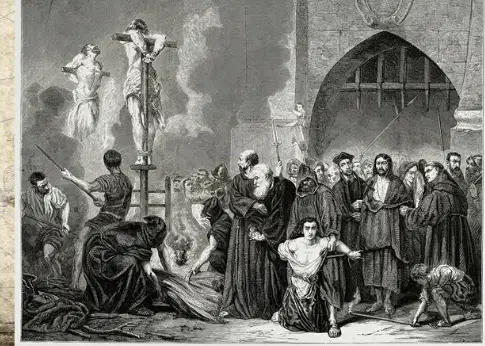
What methods did the Catholic Church use to fight Protestant influence?
Roman Inquisition and Index of Prohibited Books
Scientific advancements and exploration
Industrialization and trade
Democratic reforms and elections
What was the impact of the Catholic Reformation on Protestantism in Northern Europe?
It completely stopped Protestantism.
It only partially stopped Protestantism.
It had no effect on Protestantism.
It made Northern Europe entirely Catholic.

