
NEW
Font size
 Worksheets
Workplace Health and Safety Quiz
Total questions: 51
Worksheet time: 26mins
Which act is included in the key health and safety legislation?
The Health and Safety at Work etc. Act 1974
The Environmental Protection Act 1990
The Data Protection Act 2018
The Equality Act 2010
What does COSHH stand for in health and safety regulations?
Control of Substances Hazardous to Health
Control of Safety and Health Hazards
Control of Occupational Safety and Health
Control of Substances and Health Hazards
Which regulations cover the reporting of injuries, diseases, and dangerous occurrences?
RIDDOR
COSHH
PPE
DSE
What do the PPE regulations focus on?
Personal Protective Equipment at Work
Public Protection Equipment
Personal Privacy Equipment
Public Protective Equipment
Which regulations are concerned with the use of display screen equipment?
The Health and Safety (Display Screen Equipment) Regulations
The Health and Safety (Workplace Equipment) Regulations
The Health and Safety (Manual Handling) Regulations
The Health and Safety (Fire Safety) Regulations
What is the purpose of the Management of Health and Safety at Work Regulations 1999 (MHSWR)?
To provide guidelines for environmental protection
To establish a set of UK laws for workplace health and safety
To regulate financial transactions in the workplace
To manage employee benefits and compensation
Which of the following is a key duty on employers under the MHSWR?
Financial auditing
Risk Assessment
Marketing strategies
Product development
Under the MHSWR, what is required for ensuring safety in the workplace?
Health Surveillance
Employee entertainment
Customer satisfaction surveys
Product innovation
Which of the following is NOT a key duty on employers according to the MHSWR?
Emergency Procedures
Information & Training
Cooperation & Coordination
Sales forecasting
What year were the Workplace (Health, Safety and Welfare) Regulations established in the United Kingdom?
1992
1985
2000
1978
Which of the following is NOT a requirement set out by the Workplace (Health, Safety and Welfare) Regulations?
Lighting
Temperature Control
Employee Dress Code
Ventilation
Which of the following is included in the Workplace (Health, Safety and Welfare) Regulations?
Workstations and Seating
Employee Salaries
Holiday Schedules
Company Profits
What is the primary purpose of the Workplace (Health, Safety and Welfare) Regulations?
To ensure the health, safety, and welfare of people in workplaces
To increase company profits
To manage employee performance
To regulate working hours

What is manual handling defined as?
The use of machinery to transport loads
The physical transportation and support of a load by lifting, lowering, pushing, pulling, or carrying
The digital management of documents
The automated sorting of packages
What is one of the most common causes of injury at work according to the Manual Handling Operations Regulations?
Incorrect manual handling
Slips and trips
Electrical hazards
Chemical exposure
What type of disorders does incorrect manual handling cause, which account for over a third of all workplace injuries?
Respiratory disorders
Musculoskeletal disorders (MSDs)
Cardiovascular disorders
Neurological disorders
What should you consider regarding manual handling according to the Manual Handling Operations Regulations?
The financial cost of manual handling
The risks to the health and safety of employees
The time taken to complete manual handling tasks
The number of employees involved in manual handling
Why is it important to consult and involve the workforce in manual handling operations?
They can provide financial support
They know first hand what the risks are
They can reduce the number of employees needed
They can increase the speed of operations
What is one of the duties of the employer under the Manual Handling Operations Regulations?
Increase the need for hazardous manual handling
Avoid the need for hazardous manual handling, so far as is reasonably practicable
Ignore the risk of injury from hazardous manual handling
Encourage hazardous manual handling practices
What should employers do to manage the risk of injury from hazardous manual handling that cannot be avoided?
Ignore the risk
Assess the risk of injury
Increase the risk
Encourage more manual handling
How should employers handle the risk of injury from hazardous manual handling according to the regulations?
Increase the risk as much as possible
Reduce the risk of injury, so far as is reasonably practicable
Ignore the risk entirely
Encourage employees to take more risks
What is one of the duties of employees under the Manual Handling Operations Regulations?
Ignore safety equipment
Follow systems of work in place for their safety
Avoid cooperating with employers
Disregard hazardous activities
According to the Manual Handling Operations Regulations, how should employees use equipment provided for their safety?
Use it improperly
Use it for personal tasks
Use it properly
Avoid using it
What should employees do if they identify hazardous handling activities?
Ignore them
Inform their employer
Handle them alone
Report to a colleague
Why should employees take care in their activities according to the Manual Handling Operations Regulations?
To ensure they complete tasks faster
To make sure their activities do not put others at risk
To avoid using safety equipment
To reduce their workload
What is one of the first considerations to avoid manual handling according to the Manual Handling Operations Regulations?
Determine if a large workpiece needs to be moved
Use a lift truck for all materials
Always move materials manually
Avoid using automation
Which of the following is a method suggested for automation in new processes?
Manual lifting
A conveyor
Direct delivery by hand
Ignoring automation
What is a suggested alternative to manual handling for delivering materials directly to their point of use?
A lift truck
Manual carrying
Ignoring the need for delivery
Delaying the delivery

Which of the following is a way to reduce the risk of injury according to the Manual Handling Operations Regulations?
Use a lifting aid
Increase the amount of twisting
Carry heavier loads
Avoid using any aids
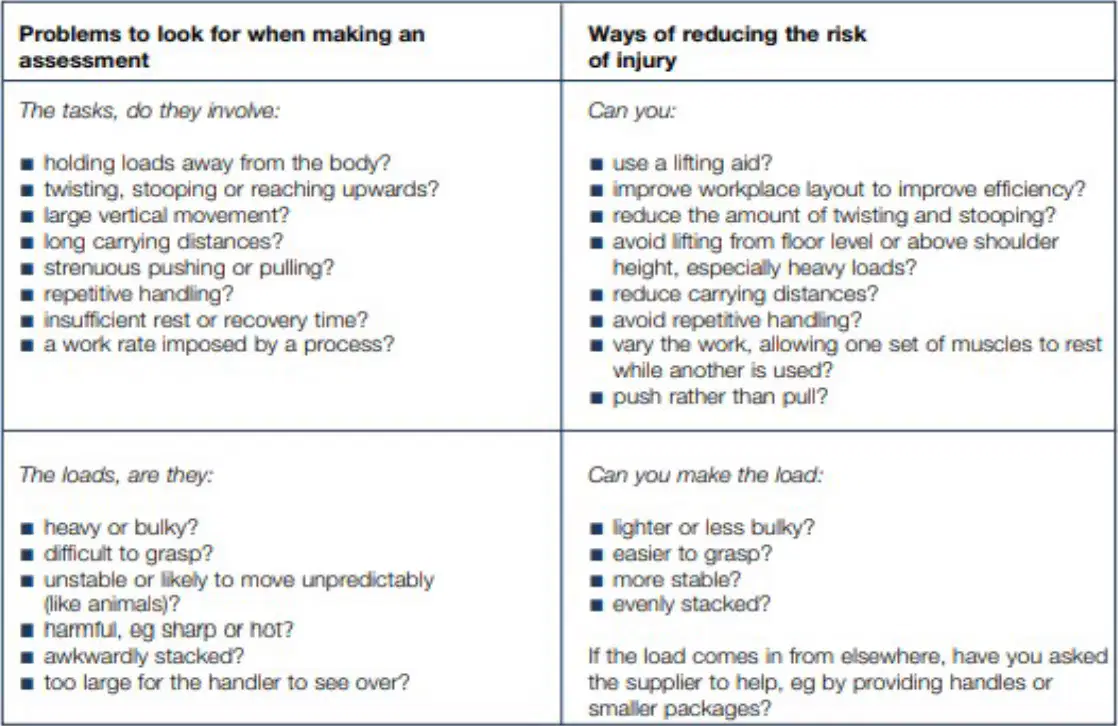
What is one of the problems to look for when making an assessment of manual handling tasks?
Holding loads close to the body
Short carrying distances
Strenuous pushing or pulling
Sufficient rest or recovery time
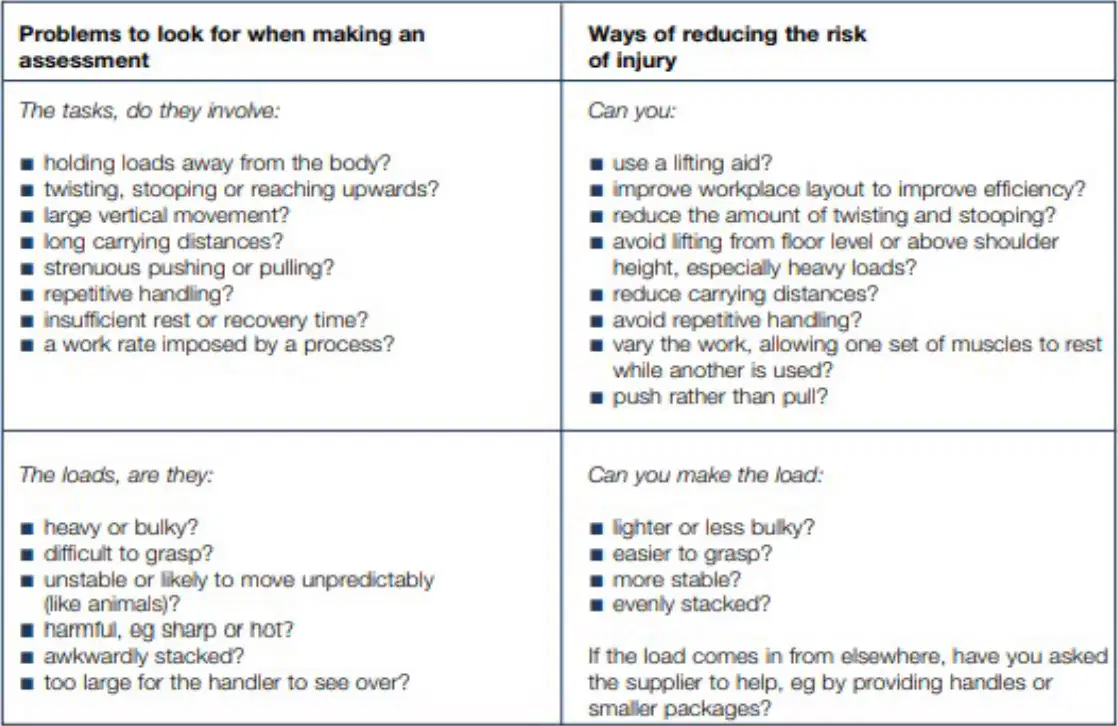
According to the Manual Handling Operations Regulations, what should you do if the load is heavy or bulky?
Make the load lighter or less bulky
Make the load heavier
Ignore the load
Increase the size of the load
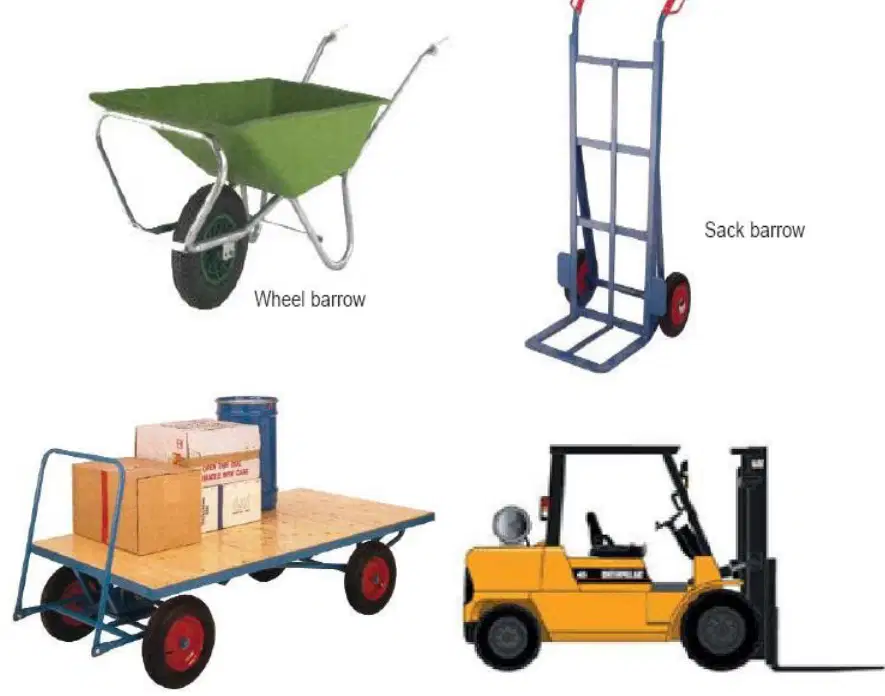
Which of the following is a mechanical aid used to assist manual handling?
Wheel barrow
Hand saw
Hammer
Screwdriver
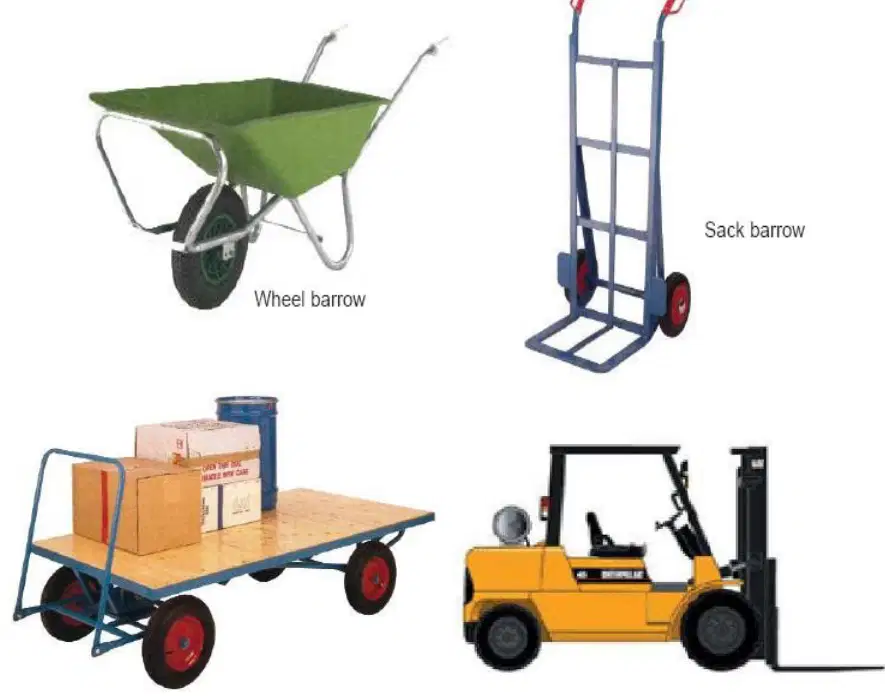
What is the primary purpose of a forklift truck?
To lift and move heavy loads
To cut materials
To drill holes
To paint surfaces
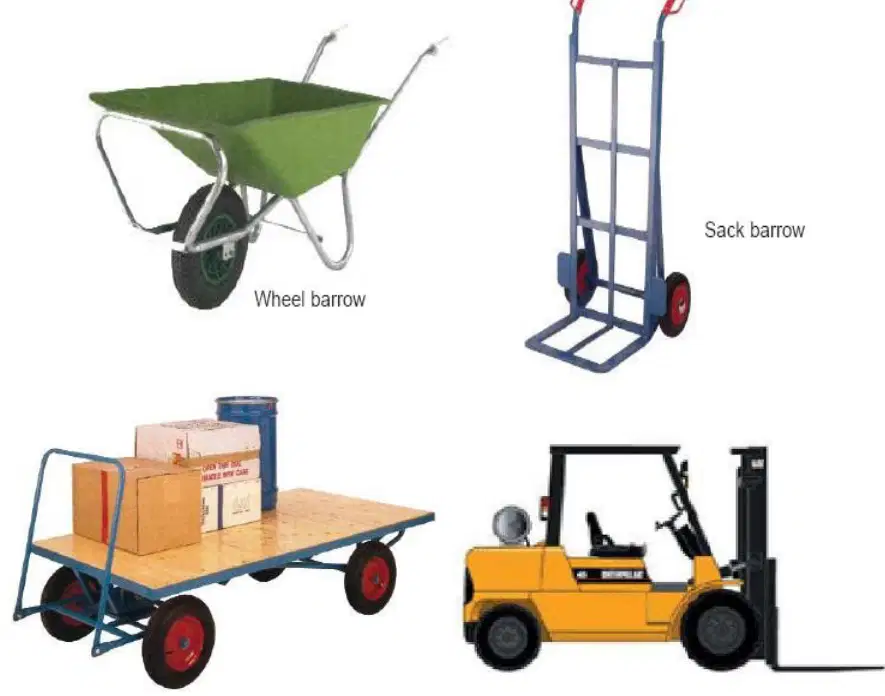
Which mechanical aid is typically used for transporting multiple boxes at once?
Sack barrow
Paint brush
Screwdriver
Pliers
What should you do before lifting or handling a load?
Lift the load quickly to avoid strain.
Plan the lift and consider using handling aids.
Ignore the weight of the load.
Wear tight clothing for better grip.
How should your feet be positioned when adopting a stable position for lifting?
Together and close to the load.
Apart with one leg slightly forward.
Crossed for better balance.
On tiptoes to reach higher.

What is the recommended way to hold a load when lifting?
Grip it tightly with hands only.
Hug it as close to the body as possible.
Hold it at arm's length.
Balance it on one shoulder.
What should you avoid doing with your back while lifting?
Flexing the back further while lifting.
Keeping the back straight.
Slightly bending the knees.
Holding the load close to the waist.

Where should the heaviest side of the load be positioned when lifting?
Away from the body.
Next to the body.
Above the head.
Below the waist.
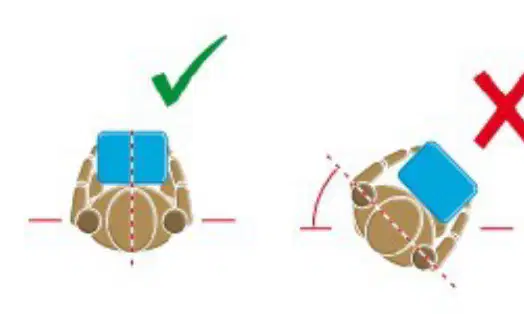
What should you avoid doing while lifting to prevent injury?
Twisting the back or leaning sideways
Keeping the head up
Moving smoothly
Seeking help if needed
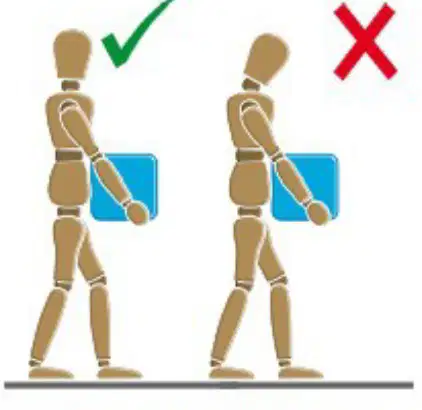
What is the recommended position for your head when handling a load?
Look down at the load
Keep the head up and look ahead
Tilt the head sideways
Look up at the ceiling
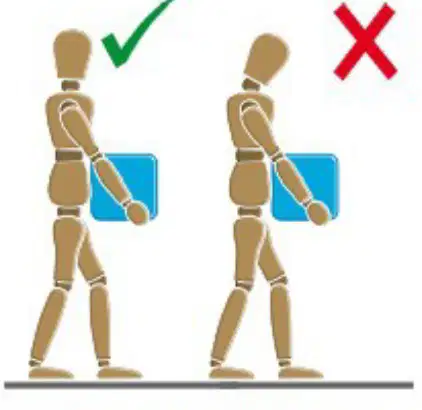
How should the load be moved to ensure safety?
Jerking or snatching the load
Moving smoothly
Dropping the load quickly
Swinging the load
What should you do if you are unsure about lifting a load?
Attempt to lift it anyway
Ignore the load
Seek advice or get help
Lift it with one hand
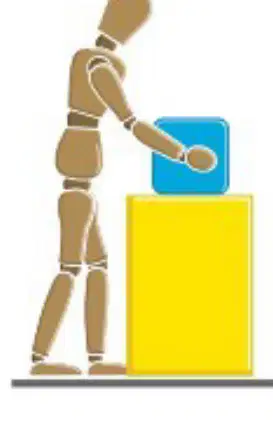
What is the correct technique for handling or lifting a load according to the image?
Lift and carry directly to the desired position.
Put down, then adjust the load into position.
Slide the load without putting it down.
Adjust the load while holding it in the air.

Which of the following is a correct handling/lifting technique?
Bend your back while lifting
Keep close to waist
Lift quickly and suddenly
Ignore the weight/shape

What should you do before lifting an object according to the correct handling/lifting technique?
Think before do it/plan
Lift without planning
Ignore the object's shape
Use only one hand

Which technique is recommended for maintaining safety while lifting?
Keep lifting smooth
Twist your body
Use your back muscles
Lift with a jerk

What is the maximum load weight a woman can handle at shoulder height according to the diagram?
3 kg
7 kg
10 kg
13 kg

At elbow height, what is the maximum load weight a man can handle?
10 kg
15 kg
20 kg
25 kg

According to the diagram, what is the maximum load weight a woman can handle at knuckle height?
7 kg
10 kg
13 kg
16 kg

What is the maximum load weight a man can handle at mid lower leg height?
3 kg
5 kg
7 kg
10 kg

