
NEW
Font size
 Worksheets
Skin Closure Benefits Quiz
Total questions: 48
Worksheet time: 16mins
How do epithelial cells contribute to wound closure during resurfacing?
By forming granulation tissue
By growing from appendages and wound borders
By replacing dermal layers
By creating new fibroplasia
What is the fastest and simplest type of wound closure?
Secondary
Tertiary
Primary
Delayed
What does "healing by primary intention" refer to in wound closure?
Healing with infection
Healing with open wound edges
Healing with physically approximated wound edges
Healing with delayed closure
What type of wounds are typically involved in tertiary wound closure?
Clean wounds
Contaminated wounds
Superficial wounds
Chronic wounds
What is the process involved in tertiary wound closure after cleaning?
Left open to heal naturally
Surgically closed
Covered with a bandage
Treated with antibiotics only
What is an allograft in the context of skin grafts?
A graft from an uninjured area of the same individual
A graft from a cadaver, relative, or donor
A graft from a porcine or bovine source
A synthetic skin substitute
Which type of skin graft is often derived from porcine or bovine sources?
Allograft
Autograft
Xenograft
Skin Substitute
What is an autograft?
A graft from a cadaver
A graft from an uninjured area of the same individual
A graft from a porcine source
A synthetic skin substitute
What tool is used to surgically harvest a split-thickness skin graft?
Scalpel
Dermabrader
Dermascope
Dermatome
How long does it typically take before the area used for a split-thickness skin graft can be re-harvested?
3-5 days
10-14 days
20-25 days
30-35 days
Which of the following is NOT a common donor site for split-thickness skin grafts?
Back
Buttocks
Thighs
Arms
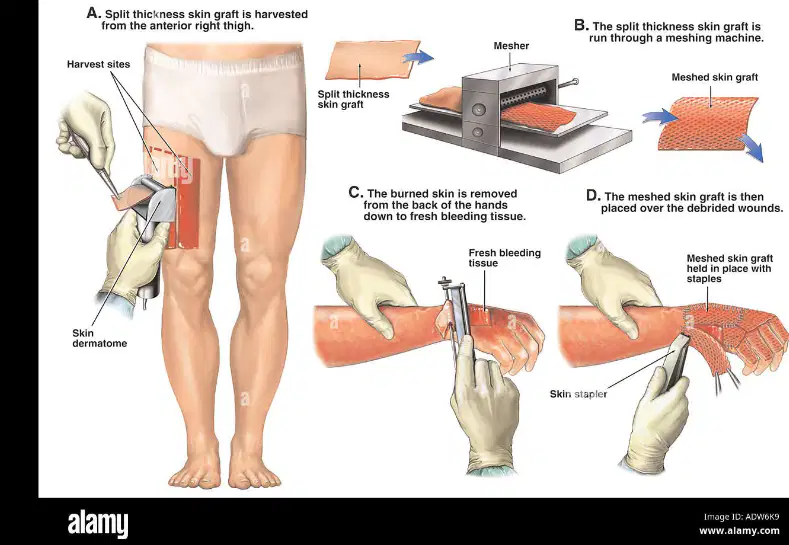
What is a key consideration for choosing the scalp as a donor site for a skin graft?
Thickness
Ease of harvesting
Color match above clavicles
Burn size
What is one reason graft failure can occur?
Adequate excision to get a healthy recipient bed
Serum or blood collect beneath graft, lifting it from bed
Proper movement of the graft in the first 5-7 days
Absence of bacteria or infection on the recipient site
What is one of the benefits of flap grafts?
Reduced blood supply
Better quality skin cover
Decreased ability to cover anatomical structures
Loss of sensation
Which of the following is a type of flap graft?
Bone
Cartilage
Skin
Nerve
Which of the following statements is true about chronic wounds?
They always heal with appropriate care.
They can be surgically altered into an acute wound.
They heal faster than acute wounds.
They never require surgical intervention.
What can lead to the failure or delay of healing components in chronic wounds?
Adequate hydration
Use of cytotoxic agents
Regular sleep
Healthy lifestyle
What is hypergranulation commonly caused by?
Too much moisture
Lack of nutrients
Excessive dryness
Bacterial infection
Which of the following is NOT a treatment for hypergranulation?
Pressure
Silver nitrate
Surgical excision
Antibiotics
What is hypogranulation a result of?
Overproduction of granulation tissue
Failure to fill cavity
Excessive bleeding
Rapid healing
In which patients is hypogranulation often seen?
Patients with hypertension
Patients with diabetes and malnutrition
Patients with asthma
Patients with high cholesterol
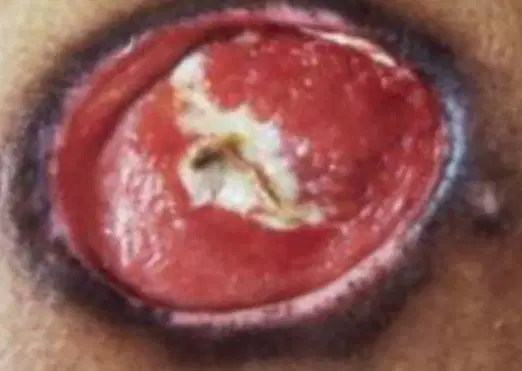
How is hypogranulation treated?
Antibiotics
Debridement and properly filling the wound
Applying ice packs
Increasing physical activity
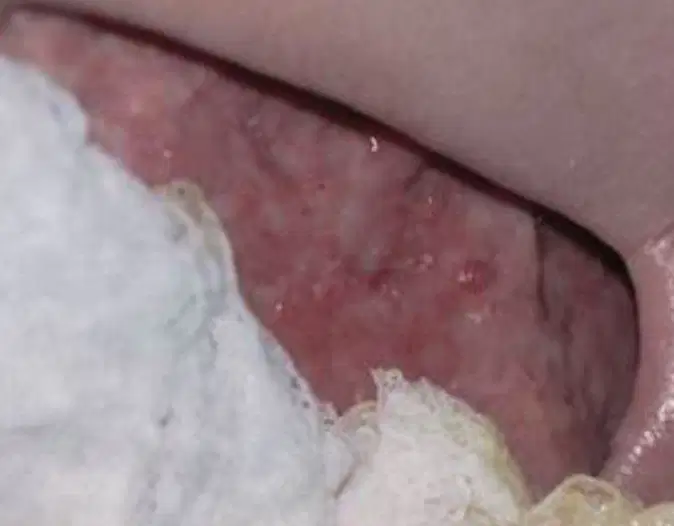
What is the term for the condition where the leading epithelial edge rolls under, stopping migration?
Epibole
Erosion
Ulceration
Granulation
Which of the following is a treatment method for epibole?
Debridement
Antibiotics
Radiation therapy
Chemotherapy
What is another treatment option for epibole besides debridement?
Surgical excision
Laser therapy
Cryotherapy
Physical therapy
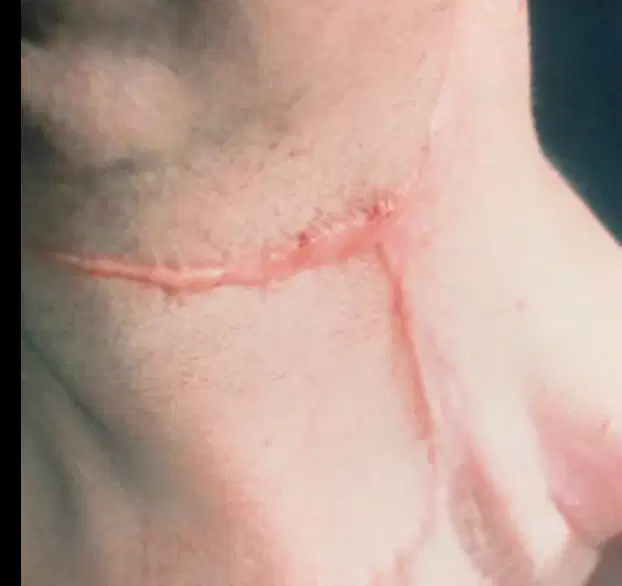
What causes hypertrophic scarring and keloids during the healing process?
Excessive collagen production
Insufficient collagen lysis during remodeling
Overactive immune response
Lack of blood supply
Where does hypertrophic scarring typically remain?
Extends beyond the wound border
Within the wound border
Covers the entire body
Only on the face
How do keloids differ from hypertrophic scars in terms of their growth?
Keloids remain within the wound border
Keloids extend beyond the wound border
Keloids do not form on the skin
Keloids are smaller than hypertrophic scars
Which of the following is a treatment method for hypertrophic scarring?
Compression
Antibiotics
Cold compress
Moisturizing lotion
What type of skin is more prone to developing hypertrophic scarring or keloids?
Darker skin
Lighter skin
Oily skin
Dry skin
What is the earlier definition of a chronic wound in terms of duration?
Greater than 3 months
Greater than 6 months
Greater than 1 month
Greater than 1 year
How long do most wounds typically take to heal?
7 days
14 days
21 days
30 days

What is a consequence of leaving wounds "open to air"?
Faster healing
Reduced inflammation
Increased pain
Enhanced epithelial cell migration
How does leaving a wound "open to air" affect epithelial cell migration?
Speeds it up
Slows it down
Has no effect
Reverses it
What is maceration in the context of wound characteristics?
Excessive dryness of the wound
Excessive moisture leading to fragile, friable tissue
Lack of blood supply to the wound
Infection causing pus formation
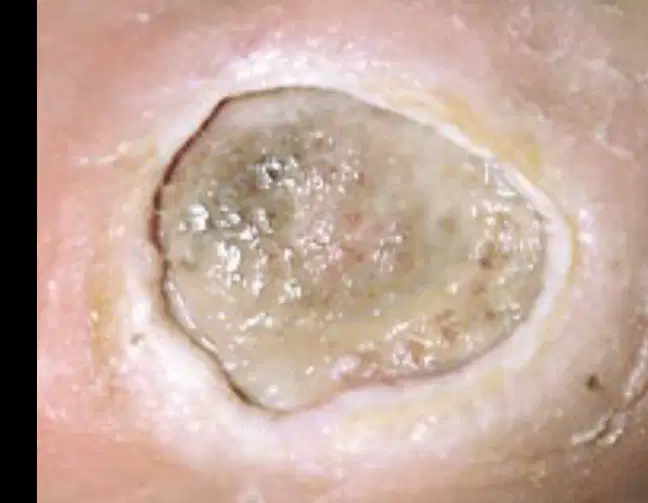
What is a potential consequence of too much hydration in wound care?
Increased blood flow
Maceration
Dehydration
Infection
What is a characteristic of necrotic tissue in wound healing?
It is living tissue that promotes healing.
It is dead, devitalized tissue adhered to the wound bed.
It is a type of foreign body that aids in repair.
It allows epithelial cells to migrate easily.
Which of the following is NOT considered a foreign body in wound care?
Sutures
Gauze strands
Epithelial cells
Wood chips
Why can't epithelial cells migrate in the presence of necrotic tissue?
Because necrotic tissue is living and supports cell movement.
Because necrotic tissue is dead and blocks cell migration.
Because epithelial cells are too large to move.
Because foreign bodies enhance cell migration.
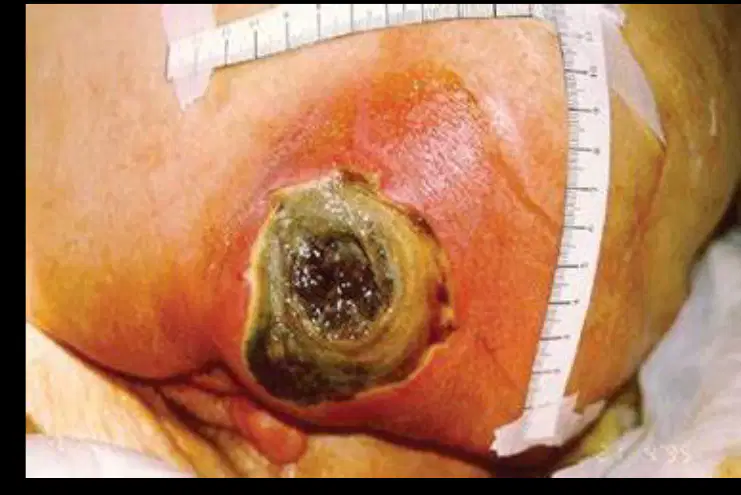
What might poorly defined, wide margins in erythema suggest?
No infection
Possible infection
Well-defined inflammation
No inflammation
Which type of odor is considered normal in the context of infection?
Sweet smell
Ammonia smell
Meat odor
Foul smell
What does a sweet smell in an infected area indicate?
Staphylococcus
Proteus
Pseudomonas
Necrotic debris
Which bacterium is associated with an ammonia smell in infections?
Pseudomonas
Proteus
Staphylococcus
E. coli
A foul smell in an infected area may indicate the presence of which bacterium?
Pseudomonas
Proteus
Staphylococcus
Salmonella
Which of the following is a sign of sepsis?
Increased appetite
Hypotension (systolic <100)
Decreased respiratory rate
High blood sugar
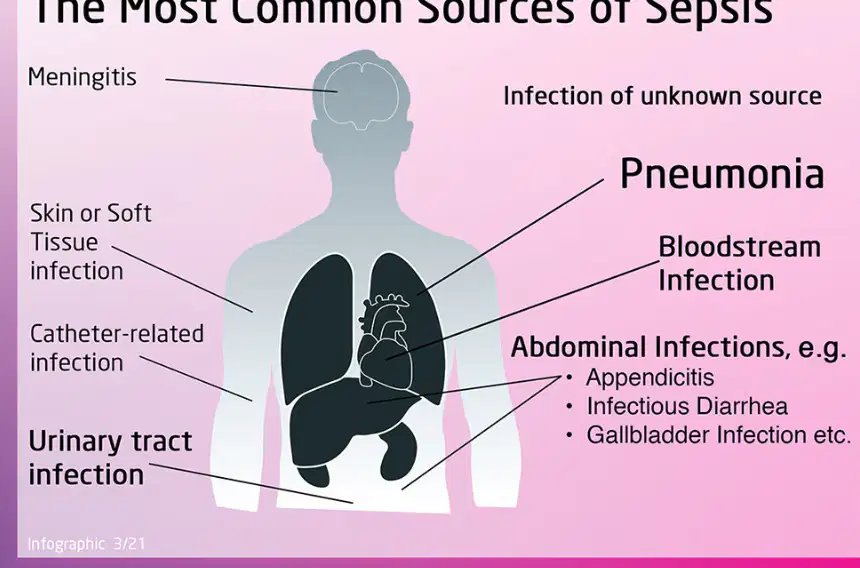
What is a common source of sepsis?
Skin rash
Pneumonia
Migraine
Allergies
What is indicated by contamination in the infection-bioburden continuum?
Bacteria in an otherwise clean wound
Ischemia and foul odor
Cardinal signs with systemic features
Foreign bodies and necrotic tissue
Which of the following is a characteristic of critical colonization?
Tissue hypoxia
Increased exudate and non-healing
Cardinal signs with systemic features
Bacteria in a clean wound

