
 Worksheets
Exploring Biodiversity
Total questions: 20
Worksheet time: 10mins
A heard of elephants is a good example of what level of organization?
Population
Community
Ecosystem
Biome
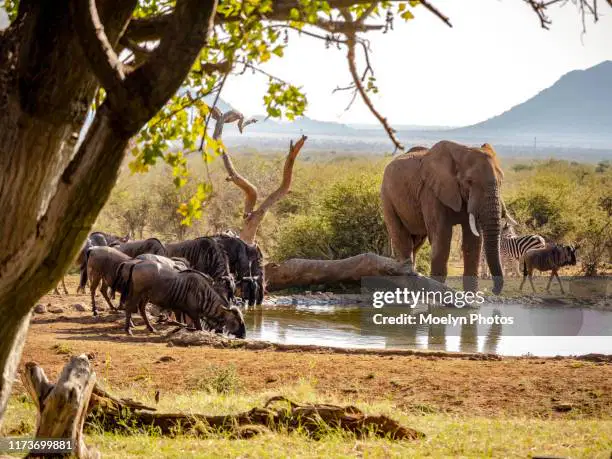
In the dry season of the savanna biome, animals gather around a watering hole to cool and hydrate. All these animals, plus the dry, hot climate are an example of ______.
a community
an ecosystem
a biome
a population
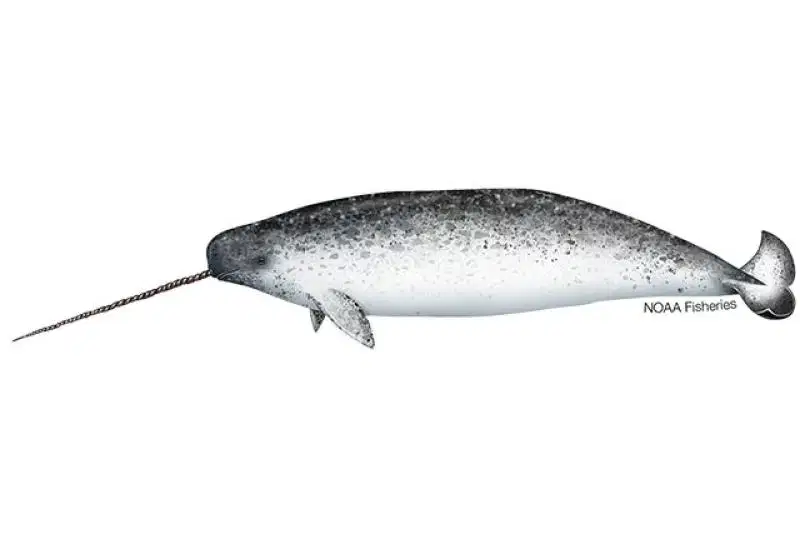
What level of organization is shown in this image?
A population
An organism
A community
A biome
All of the trees behind the school are an example of
A population
A community
A biome
An organism
Grasslands, areas where the dominant vegetation is grass, can be found in all of Earth's continents. Some are tropical but others experience a variety of seasons. Grasslands are a type of ____
Organism
Population
Biome
Community
Finish this sentence: Once Biotic
Always Biotic
Never Biotic
Then later abiotic
Twice Biotic
Is a dead raccoon biotic or abiotic? Why?
Abiotic because it is not alive
Abiotic because it is just food for vultures now
Biotic because it used to be alive and it will decompose
Biotic because it will start smelling bad soon and abiotic things don't have odors
What is the difference between PROkaryotes and EUkaryotes?
Prokaryotes DO have a nucleus
but Eukaryotes do not
Eukaryotes DO have a nucleus but prokaryotes do not
There is not a difference between prokaryotes and eukaryotes
Prokaryotes are single celled organisms and Eukaryotes are multicellular
What are the two levels of classification included in a scientific name?
Kingdom and phylum
phylum and class
genus and species
family and class

Identify rock sample D
Obsidian
Slate
Gneiss
Conglomerate
Identify rock sample E
Obsidian
Slate
Gneiss
Conglomerate

Which of the following is the most specific level of classification?
Kingdom
Phylum
Family
Genus
When two organisms both need the same limited resource, what ecological relationship will take place?
competition
commensalism
mututalism
predation
If a bird builds a nest in a tree, the bird gains a home that is safe from predators on the ground, but the tree is completely unaffected. This is a good example for which type of ecological relationship?
competition
commensalism
mutualism
parasitism
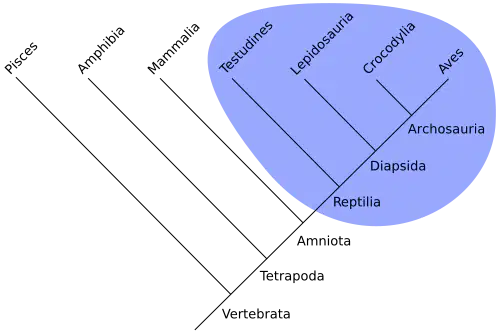
Which characteristic do all animals on this clade share?
They are all reptiles.
They are all Tetrapods
They are all vertebrates.
They are all Aves

How many organisms are considered saurischians?
10
4
1
0
Which of the following best describes a group of different species living together in the same area?
An organism
A biome
A community
A population
Which level of biological organization includes both living organisms and their physical environment?
Ecosystem
Organism
Community
Population
What is the main difference between a community and a population?
A community includes multiple populations of different species, while a population is made up of individuals of the same species.
A population is larger than a community.
A population includes only abiotic factors, while a community includes biotic factors.
A community includes only one species, while a population includes many species.

