
 Worksheets
Unit 2 Atoms and the Periodic Table Review
Total questions: 56
Worksheet time: 28mins
What is an Atom?
Using your Periodic Table, what is the atomic number for Oxygen?
(a)
Using your Periodic Table, how many neutrons does Chlorine have?
(a)
Using your Period Table, how many electrons does Argon have?
(a)
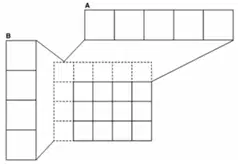

Which of the following best describes a period on the periodic table?
A section containing only metals
A group of elements with similar properties
A horizontal row of elements
A vertical column of elements
What is the charge of a neutron?
Positive
Variable
Negative
Neutral
Which scientist is credited with discovering the electron?
John Dalton
Dmitri Mendeleev
J.J. Thomson
Niels Bohr
Which of the following particles has a negative charge?
nucleus
electron
neutron
proton
What is the main difference between isotopes of the same element?
Number of protons
Chemical symbol
Number of neutrons
Number of electrons
Which of the following statements best describes a property of noble gases?
They are highly reactive with metals.
They have a full outer electron shell.
They easily form positive ions.
They are all solid at room temperature.
What is the main difference between protons and electrons?
Protons and electrons have the same mass.
Protons have a positive charge, electrons have a negative charge.
Protons are found outside the nucleus, electrons are inside the nucleus.
Protons have a negative charge, electrons have a positive charge.
Which scientist is credited with developing the first periodic table?
John Dalton
Dmitri Mendeleev
Niels Bohr
Ernest Rutherford
Which scientist proposed the planetary model of the atom?
J.J. Thomson
Ernest Rutherford
Niels Bohr
Dmitri Mendeleev
What do elements in the same group of the periodic table have in common?
Same number of valence electrons
Same number of neutrons
Same number of protons
Same atomic mass
Which of the following statements best describes an isotope?
Atoms with the same number of protons but different numbers of neutrons
Atoms with different numbers of protons and electrons
Atoms with the same mass number but different atomic numbers
Atoms with the same number of neutrons but different numbers of protons

