
 Worksheets
Heat Loss and Gain
Total questions: 55
Worksheet time: 28mins
What is Heat Transfer?
Heat transfer is the movement of thermal energy from one object or material to another due to a temperature difference.
Heat transfer is the process of converting electrical energy into sound energy.
Heat transfer is the movement of objects from one place to another due to gravity.
Heat transfer is the process of mixing two chemicals to produce heat.
What is Heating System Design?
Heating system design is the process of planning and creating systems to provide heat to a space or building efficiently and effectively.
Heating system design is the process of cooling a building using air conditioning units.
Heating system design refers to the installation of lighting systems in a building.
Heating system design is the process of designing plumbing systems for water supply.
What is Cooling System Design?
Cooling system design is the process of planning and creating systems to remove heat from a space or building to maintain a desired temperature.
Cooling system design is the process of adding heat to a space to increase its temperature.
Cooling system design is the process of designing lighting systems for a building.
Cooling system design is the process of planning water supply systems for a building.
What does BTU stand for in the context of heat loss and gain?
BTU stands for British Thermal Units.
BTU stands for Basic Temperature Unit.
BTU stands for Binary Thermal Unit.
BTU stands for Balanced Thermal Usage.
What is the formula for Heat Load?
The formula for heat load is typically: Heat Load = (Area) x (U-Factor) x (Temperature Difference, ΔT).
The formula for heat load is typically: Heat Load = (Volume) x (Pressure) x (Temperature Difference, ΔT).
The formula for heat load is typically: Heat Load = (Area) x (Thermal Conductivity) x (Time).
The formula for heat load is typically: Heat Load = (Mass) x (Specific Heat) x (Temperature).
What does 'Heat Loss Through a Wall' refer to?
Heat loss through a wall refers to the transfer of heat from the inside to the outside of a building through its walls, usually due to a temperature difference.
It refers to the increase in wall thickness due to heat.
It refers to the absorption of heat by the wall, making it warmer than the inside air.
It refers to the movement of cold air from outside to inside through the wall.
What is Wall R-Value?
Wall R-Value is a measure of a wall's resistance to heat flow; higher R-values indicate better insulating properties.
Wall R-Value is a measure of a wall's resistance to sound; higher R-values indicate better soundproofing.
Wall R-Value is a measure of a wall's resistance to water; higher R-values indicate better waterproofing.
Wall R-Value is a measure of a wall's resistance to pressure; higher R-values indicate stronger walls.
How do you convert R-Value to U-Factor?
U-Factor is the reciprocal of R-Value: U-Factor = 1 / R-Value.
U-Factor is the sum of R-Value and 1: U-Factor = R-Value + 1.
U-Factor is the product of R-Value and 2: U-Factor = R-Value × 2.
U-Factor is the square of R-Value: U-Factor = (R−Value)2 .
What does ΔT represent in heat loss and gain calculations?
ΔT represents the temperature differential, or the difference in temperature between two areas.
ΔT represents the total amount of heat transferred in a system.
ΔT represents the mass of the substance involved in the heat transfer.
ΔT represents the specific heat capacity of the material.
What is Total Heat Transmission Load?
Total Heat Transmission Load is the total amount of heat energy transferred through all building components due to temperature differences.
Total Heat Transmission Load is the amount of heat generated by electrical appliances in a building.
Total Heat Transmission Load is the heat lost through ventilation only.
Total Heat Transmission Load is the heat gained from solar radiation only.
What is heat transfer? Fill in the blank: Heat transfer is the exchange of _______ energy between physical systems (depending on the temperature and pressure) by dissipating heat.
thermal
kinetic
potential
chemical
Heat transfer always occurs from the region of _______ temperature to the region of _______ temperature. Fill in the blanks.
high, lower
low, higher
equal, equal
lower, high
What is thermal equilibrium? Fill in the blank: Thermal equilibrium is reached when all bodies and the surroundings reach the same _______.
temperature
pressure
volume
density
Which of the following is NOT a fundamental mode of heat transfer?
Conduction
Convection
Radiation
Reflection
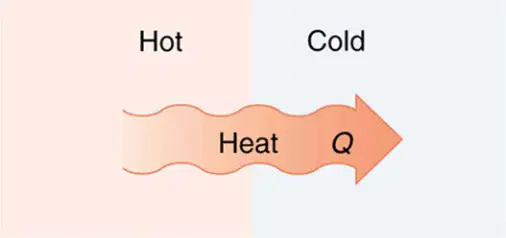
Refer to the diagram showing heat transfer from hot to cold. In which direction does heat flow?
From cold to hot
From hot to cold
What is the goal in heat load design for buildings?
Maximizing heat transfer
Creating a comfortable interior environment while using energy efficiently
Increasing exterior temperature
Reducing building size
Reducing heat transfer between the interior and exterior environments is often a priority in designing energy-efficient buildings.
True
False
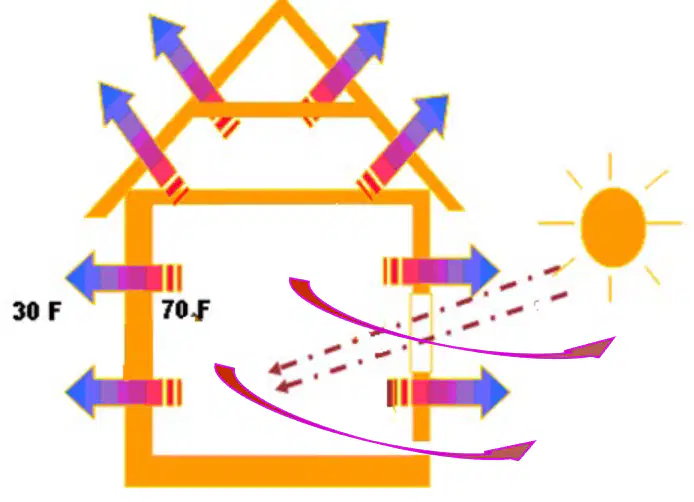
Fill in the blank: The temperature inside the house in the diagram is ____ F, while the temperature outside is ____ F.
70 F, 30 F
60 F, 40 F
80 F, 20 F
50 F, 70 F

Fill in the blank: Thermal Conduction is the process of heat transfer through a solid by transmitting ______ energy from one molecule to the next.
kinetic
potential
chemical
electrical
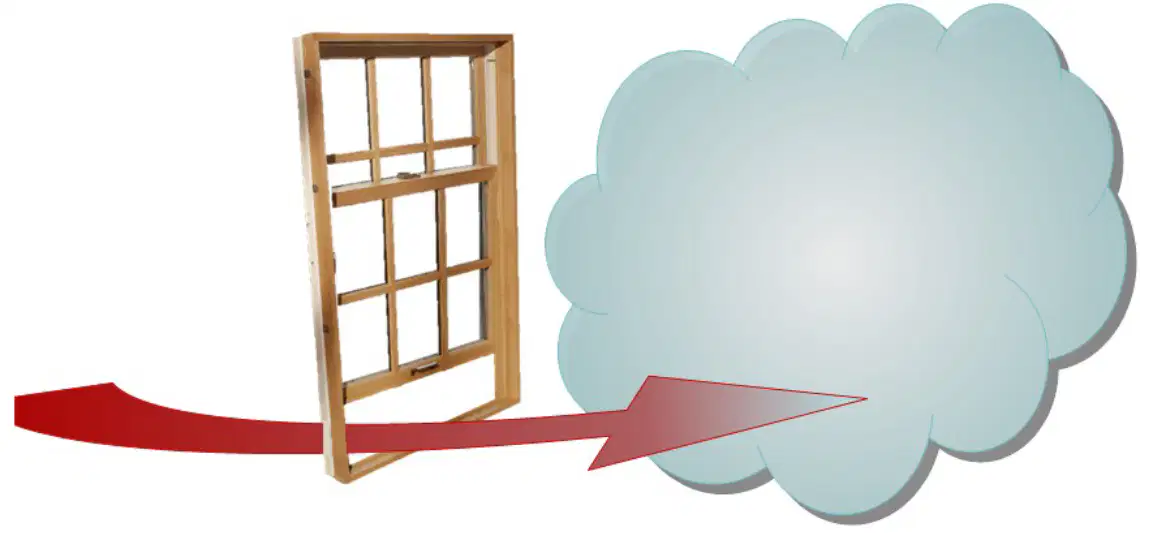
Which of the following best describes thermal convection?
Heat transmission by direct contact
Heat transmission by the circulation of a liquid or gas
Heat transmission by electromagnetic waves
Heat transmission by solid conduction
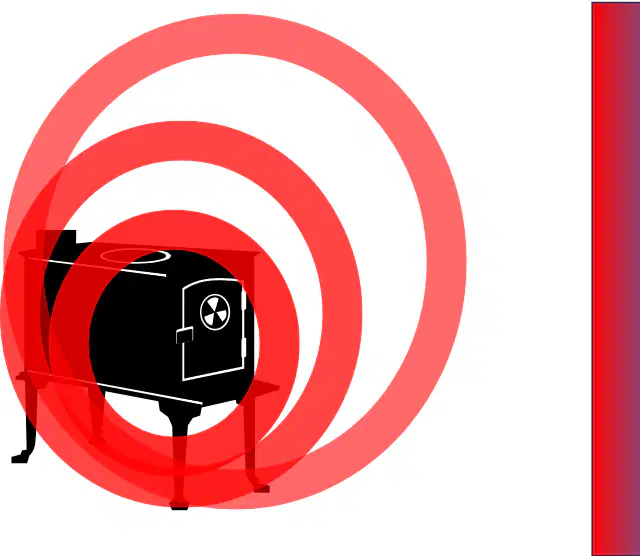
What is Radiant Heat?
Energy radiated or transmitted as rays, waves, or in the form of particles.
Energy transferred by direct contact.
Energy transferred by the movement of fluids.
Energy stored in chemical bonds.

What is heat loss?
Occurs in the summer when air conditioning cools the inside air
Occurs in the winter when a heating system warms the inside air
Occurs when the outside temperature is higher than the inside temperature
None of the above
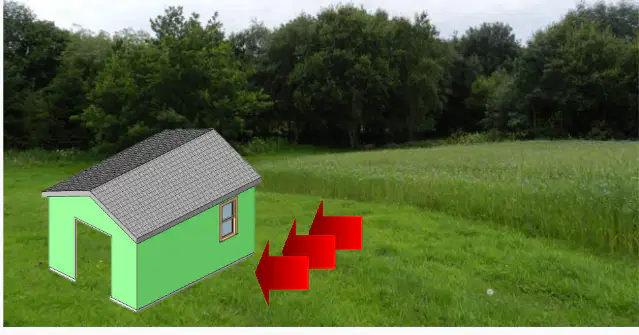
What is heat gain?
Occurs in the winter when a heating system warms the inside air
Occurs in the summer when air conditioning cools the inside air
Occurs when the outside temperature is lower than the inside temperature
Occurs in the summer when the outside temperature is higher than the inside temperature and air conditioning cools the inside air
Fill in the blank: Heat loss occurs when the outside temperature is ______ than the inside temperature.
lower
higher
equal
warmer
Fill in the blank: Heat gain occurs when the outside temperature is ______ than the inside temperature.
higher
lower
equal to
colder
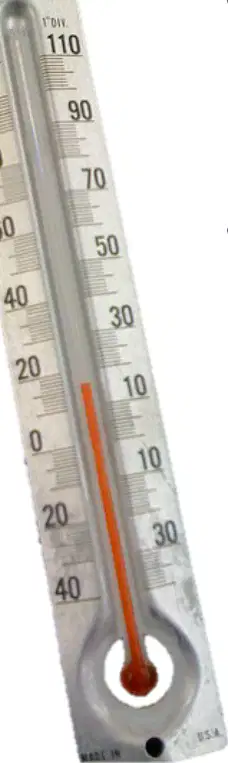
In order to effectively heat a space, the heating system must provide at least as much _______ as is lost through heat transfer.
thermal energy
mechanical work
electrical charge
kinetic force
Which of the following is a method to minimize conductance through the thermal envelope?
Use insulation with higher R-value
Use windows and skylights with higher U-factor
Increase air leaks in the building envelope
Reduce insulation
Minimizing convection in a building envelope can be achieved by eliminating air leaks.
True
False
What is desirable to minimize in order to reduce heat loss in a heating system design?
It is desirable to minimize conductance through the thermal envelope and minimize convection.
It is desirable to maximize conductance through the thermal envelope and maximize convection.
It is desirable to minimize insulation and maximize air leakage.
It is desirable to increase the number of windows and doors.
In order to effectively cool a space, the cooling system must remove at least as much _______ energy as is added through heat transfer.
thermal
kinetic
potential
mechanical
Which of the following is NOT an additional thermal load for cooling in a Cooling System Design?
Solar radiant heat gain
Occupant heat gain
Equipment heat gain
Lighting heat gain
Temperature heat gain
According to the Cooling System Design slide, occupant heat gain is about _______ Btu/h per occupant, or up to _______ Btu/h if the occupant is exercising.
250, 715
400, 900
150, 500
300, 800
Equipment such as computers and coffee makers contribute to the heat gain in a space, according to the Cooling System Design slide.
True
False
List two examples of equipment that can contribute to heat gain in a space, as mentioned in the Cooling System Design slide.
Lighting and computers
Windows and doors
Ceiling fans and carpets
Paint and wallpaper
What is the British Thermal Unit (Btu) used for?
Measuring distance
Measuring energy in the United States
Measuring weight
Measuring temperature
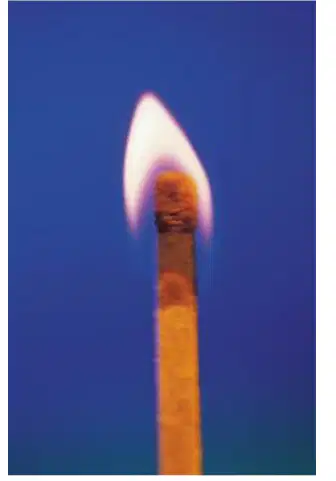
One Btu is about the amount of energy produced by a burning match.
True
False
Fahrenheit is a common temperature scale used by engineers in which of the following fields?
Cooking
Heating, ventilation, and air conditioning (HVAC)
Astronomy
Marine biology
Btu/h is a way of measuring the _______ power of a system such as a furnace, hot water heater, or a barbecue grill.
heating
cooling
electrical
mechanical
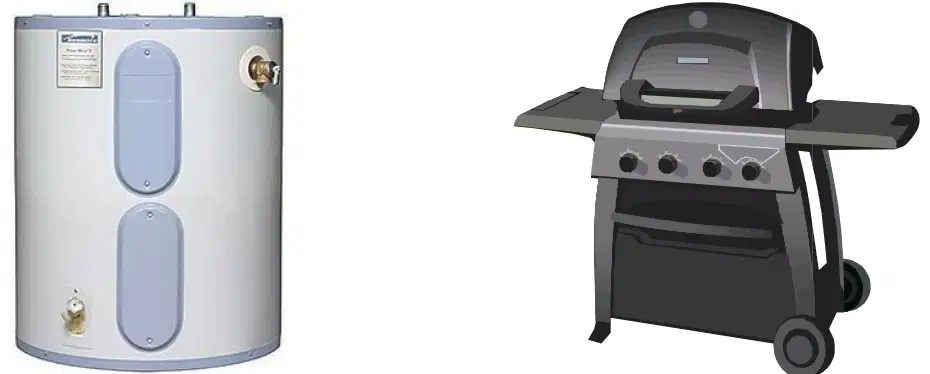
Which of the following systems can have their heating power measured in Btu/h?
Furnace
Hot water heater
Barbecue grill
All of the above
Fill in the blank: 1 watt is approximately ____ Btu/hr.
3.4
0.34
34
0.0034

In most North American air conditioning applications, 12,000 Btu/hr is referred to as:
A kilowatt
A ton
A horsepower
A degree
What are the units of R-Value?
Btu/(ft²·hr·°F)
ft²·hr·°F/Btu
Btu·ft²·hr·°F
ft²·hr·°F
What does the U-Factor (coefficient of heat conductivity) measure?
The measurement of thermal resistance used to indicate the effectiveness of insulation.
The measure of the flow of transmittance through a material given a difference in temperature on either side.
The amount of heat produced by a material.
The rate of temperature change in a material.
What are the units of U-Factor?
ft²·hr·°F/Btu
Btu/(ft²·hr·°F)
Btu·ft²·hr·°F
ft²·hr·°F
Fill in the blank: The relationship between R and U is given by the formula R = _____.
1/U
U2
U+1
U-1
What is the formula for Heat Load?
Q' = AU ΔT
Q = mcΔT
P = IV
F = ma
'Q' in the formula Q' = AU ΔT represents which of the following?
Area under investigation
Total cooling/heating load
Coefficient of heat conductivity
Difference in temperature
In the formula Q' = AU ΔT, what is the unit of Q'?
Btu/hr
Btu
hr
Btu/ft^2
What does the symbol U represent in the formula Q' = AU ΔT?
Coefficient of heat conductivity
Specific heat capacity
Thermal expansion coefficient
Latent heat
ΔT in the formula Q' = AU ΔT stands for the difference in temperature between outside and inside conditions in what unit?
°F
K
°C
J
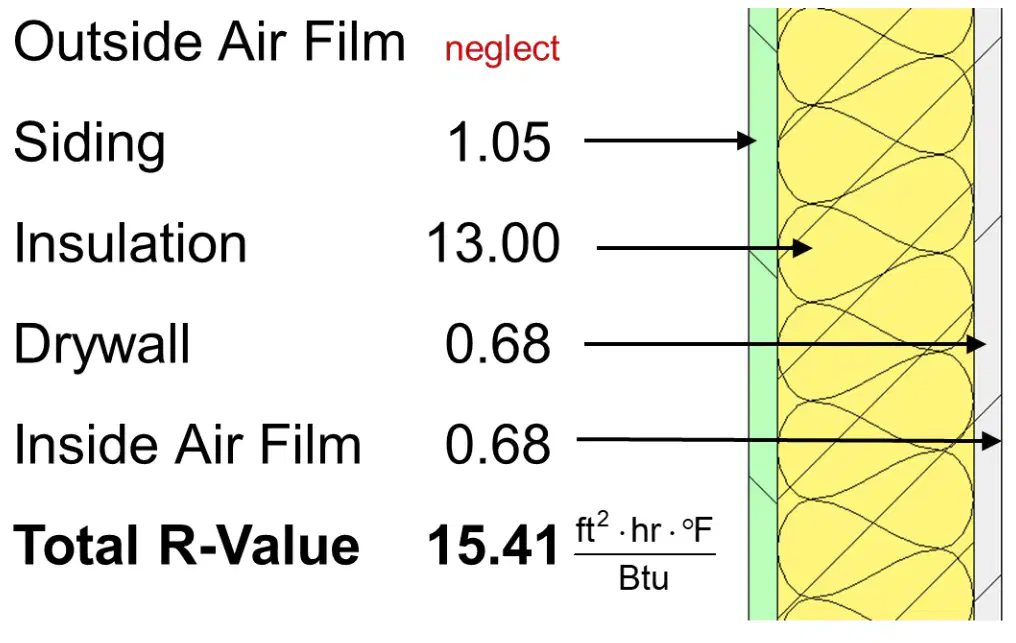
What is the type of Insulation in the wall assembly shown in the diagram?
R13
R19
R31
R/13
If the total R-Value is 15.41 ft²·hr·°F/Btu, what is the value of U (U-Factor)?
0.064 Btu/(ft²·hr·°F)
0.15 Btu/(ft²·hr·°F)
0.25 Btu/(ft²·hr·°F)
0.041 Btu/(ft²·hr·°F)
Which of the following is a source you can use to choose your nearest location for engineering design data?
International Plumbing Code
Local weather data
National Oceanic and Atmospheric Administration (NOAA) Engineering Weather Data
All of the above
It does not matter if you round intermediately in heat load calculations.
True - it will be close enough
False - you should wait until the very end to round numbers
How do you find the R-Value for a given material?
Find a table of published R-values
Calculate it based on a formula
Ask a friend
I don't know

