
 Worksheets
Cell Structures and Homeostasis Quiz
Total questions: 35
Worksheet time: 45mins
Which of the following is NOT an example of an organism with eukaryotic cells?
Animal
Plant
Bacterium
Fungi
Explain how the nucleus and ribosomes work together to support cell function.
The nucleus stores genetic information, and ribosomes use this information to synthesize proteins.
The nucleus produces energy, and ribosomes store it.
The nucleus transports materials, and ribosomes break them down.
The nucleus creates waste, and ribosomes remove it.
Which organelle(s) is responsible for packaging and transporting proteins within the cell?
Golgi Apparatus and Vesicles
Centriole
Vacuole
Rough endoplasmic reticulum
Which of the following best describes the cell membrane?
A rigid structure that gives the cell its shape
A selective barrier between the cell’s interior and exterior
The site of cellular respiration
The storage site for nutrients

What is the main function of the cell nucleus?
To store and safeguard genetic information that controls the functions of the cell
To produce energy for the cell
To transport materials throughout the cell
To digest waste products in the cell
Why is it important for the nucleus to safeguard genetic information?
Because genetic information controls the functions of the cell
Because it helps the cell move
Because it produces food for the cell
Because it stores water for the cell
Where can ribosomes be found within a cell?
In the cytoplasm and attached to the rough endoplasmic reticulum
Only inside the nucleus
Only in the cell membrane
In the mitochondria
What is the primary function of the endoplasmic reticulum (ER) in a cell?
To produce energy for the cell
To transport, process, and distribute proteins and lipids
To store genetic information
To control cell division
How does the Rough Endoplasmic Reticulum (RER) differ from the Smooth Endoplasmic Reticulum (SER)?
RER is involved in energy production, while SER stores genetic material.
RER is studded with ribosomes and modifies proteins, while SER lacks ribosomes and specializes in lipid synthesis.
RER is only found in plant cells, while SER is only found in animal cells.
RER and SER have the same structure and function.
A scientist observes a cell structure that is involved in detoxification and does not have ribosomes attached. Which type of endoplasmic reticulum is being observed?
Rough Endoplasmic Reticulum (RER)
Smooth Endoplasmic Reticulum (SER)
Golgi Apparatus
Lysosome
What is the Golgi apparatus sometimes called?
Golgi bodies or Golgi complex
Mitochondria
Ribosomes
Lysosomes
Why is the Golgi apparatus referred to as the "shipping center" of the cell?
It sorts and packages proteins into vesicles for transport and distribution.
It generates energy for the cell.
It stores water and nutrients.
It controls cell division.
Explain how the structure of the Golgi apparatus supports its function in the cell.
Its series of flattened sacs allow for efficient sorting and packaging of proteins and lipids.
Its circular shape helps it store energy.
Its rigid structure protects the cell from damage.
Its location near the cell membrane helps it absorb nutrients.
Why is the mitochondrion considered crucial for cellular function and survival?
It produces hormones
It organizes the respiratory chain for energy production
It stores water
It digests food particles
Match the organelles with the correct label.
Ribosomes
Flagella
Nucleoid (DNA)
Cilia
Label the diagram with the organelles
Cytoplasm
Mitochondria
Nucleus
Cell Membrane
Sort the following statements based on if the statement is talking about prokaryotes or eukaryotes
A table comparing the characteristics of four samples is shown. Click on the sample name that is most likely a prokaryote.
Select the correct Cell: This cell has a very small size, and does not contain a nucleus. Eubacteria and Archaebacteria are categorize into this cell type.

See how much you remember! Match the following characteristics that belong to Eukaryotes, Prokaryotes, or BOTH!
- No nucleus
- No membrane-bound organelles
- DNA in the cytoplasm
- Single Celled
Prokaryote
- Nucleus
- Membrane bound organelles
- DNA in the nucleus
- Single & Multi celled
Eukaryote
- Ribosomes
- DNA
- Cell Division
- Plasma Membrane
Prokaryote and Eukaryote
Identify the type of cell each column represents.

Students use a microscope to look for structures present in four different cells. The students placed an X for each structure that was viewed for each cell on the table shown.
Which cells that were viewed are most likely prokaryotes? Choose TWO correct answers. (a) (b)
Which organelle stores water for photosynthesis?

Match the organelle to its description.
Proteins are made on these small structures.
Ribosomes
Controls all activity in the cell (the brain) and stores DNA
Nucleus
The fluid that fills the cell and
keeps the organelles in place
Cytoplasm
Power plant of the cell. They
create energy called ATP.
Mitochondrian
Outer lining the cells.
Controls what goes
in and out.
Cell Membrane
Which organelle supports and protects the cell?
Which organelle is known as the "powerhouse" of the cell?
Endoplasmic reticulum
Mitochondrion
Golgi apparatus
Lysosome
What is the primary role of lysosomes in a cell?
To produce proteins
To control cell division
To store water and nutrients
To digest and break down waste materials and cellular debris
Which structure provides support and protection to plant cells but is not found in animal cells?
Nucleus
Cell membrane
Vacuole
Cell wall
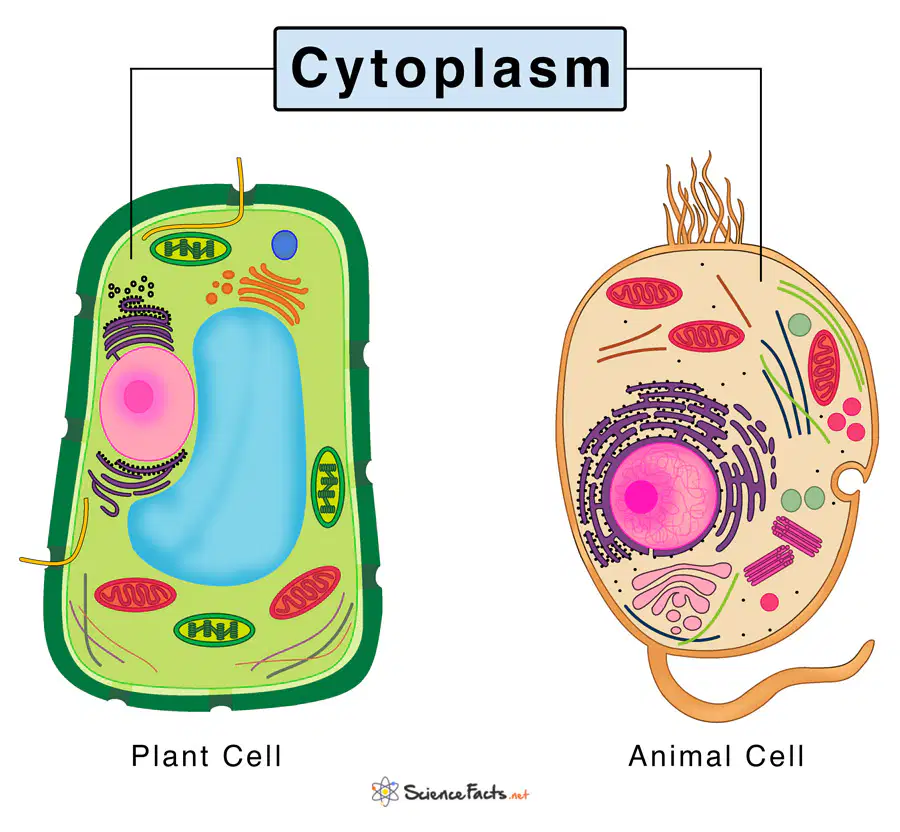
What role does the cytoplasm play in a cell?

What role do peroxisomes play in the cell?
Peroxisomes are involved in lipid metabolism, degrading hydrogen peroxide, and detoxification of harmful substances.
Which of the following is not a component of the cell theory?
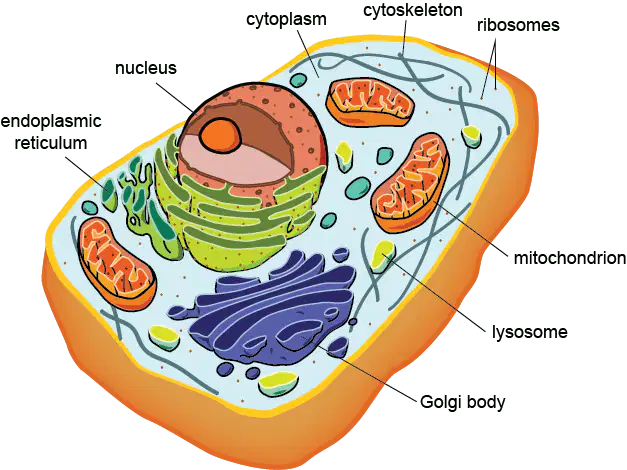
What is the function of cytoskeleton?
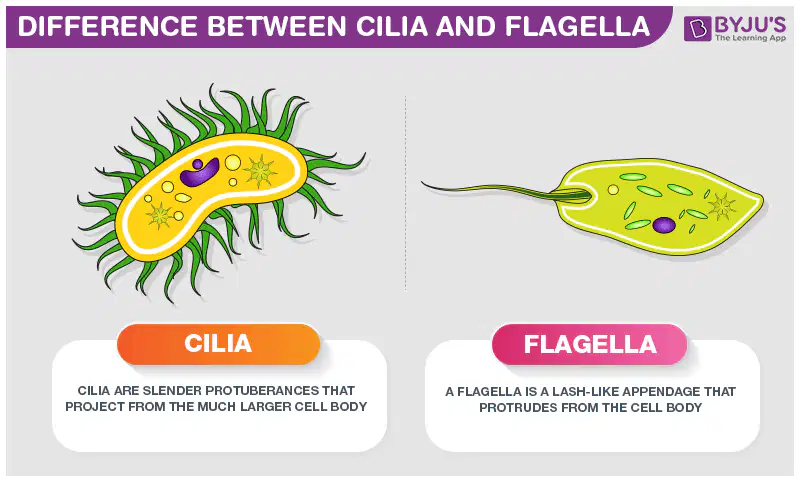
How do flagella and cilia help cells in their environments?
What is the difference between vesicles and vacuoles?
What is cellular homeostasis?

