
 Worksheets
2025 Forces and Motion Test 1
Total questions: 50
Worksheet time: 3hrs 30mins
Name
Class
Date
1.
What is potential energy?
a)
The energy an object has due to its atomic structure.
b)
The energy an object has due to its chemical composition.
c)
The energy an object has due to its motion.
d)
The energy an object has due to its position
2.
Potential energy is energy that is ____________
a)
speed
b)
motion
c)
stored
3.
When height increases , what happens to potential energy?
a)
decreases
b)
increases
4.
What two factors determine how much gravitational potential energy an object has?
a)
Speed and mass
b)
Mass and position
c)
Speed and position
d)
Speed and surface area
5.
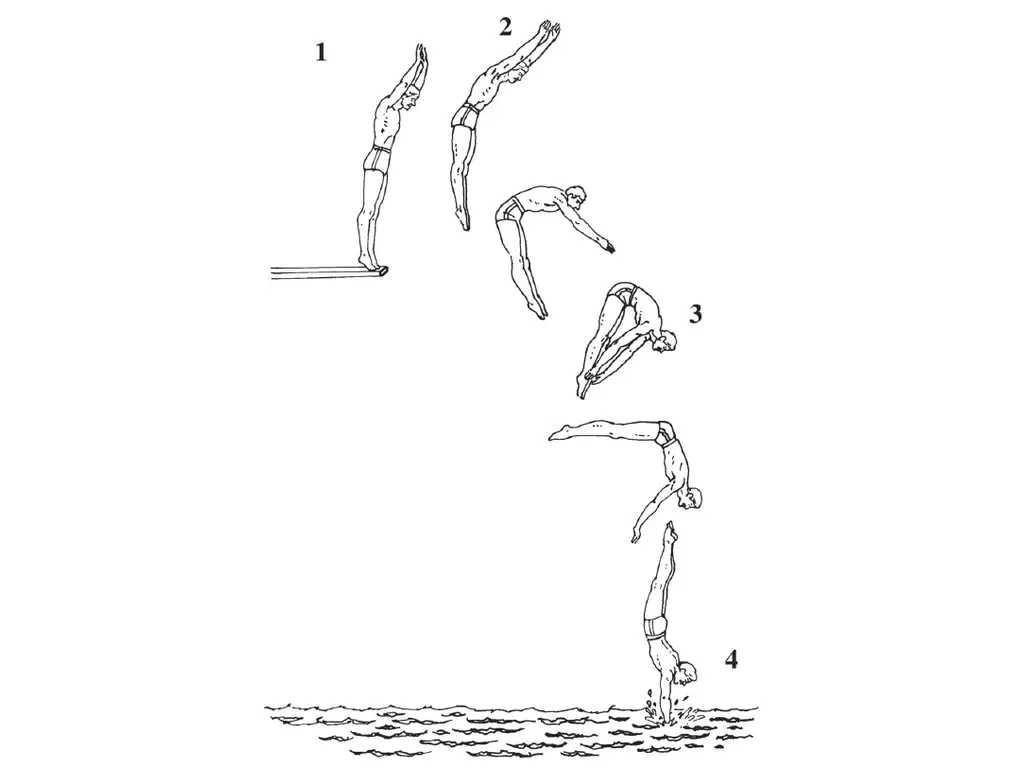
In which position does the diver have the least potential energy?
a)
1
b)
2
c)
3
d)
4
6.
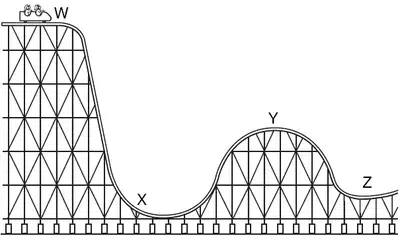
At which point is potential energy greatest?
a)
W
b)
X
c)
Y
d)
Z
7.
Which of the following objects has potential energy?
a)
A bicycle coasting down a hill.
b)
A bowling ball knocking over a bowling pin.
c)
A marble rolling across the floor.
d)
A book sitting on a desk.
8.
Two identical trophies are placed on a bookshelf. Trophy 1 is on a shelf one meter above the floor and trophy 2 is on a shelf two meters above the floor. Which statement best compares the potential energy of the trophies?
a)
Trophy 2 has half as much potential energy as trophy 1.
b)
Trophy 2 has twice as much potential energy as trophy 1.
c)
Trophy 1 has twice as much potential energy as trophy 2.
d)
Trophy 1 has four times as much potential energy as trophy 2.
9.

What kind of energy is in a rock at the edge of a cliff?
a)
potential
b)
kinetic
10.
As a roller coaster goes down hill what happens to the potential energy?
a)
it increases
b)
it decreases because it turns into kinetic energy.
11.
Potential energy depends on the roller coaster's
a)
mass and speed
b)
position and height
c)
being in motion
12.
Bart carried his skateboard up a hill and then rode the skateboard down the hill. When he reached the bottom of the hill, he rolled to a stop. When did Bart have the most potential energy?
a)
while carrying the skateboard up the hill
b)
while standing on the skateboard at the top of the hill
c)
while riding the skateboard down the hill
d)
while standing on the skateboard at the bottom of the hill
13.
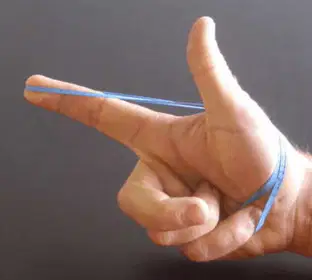
What kind of energy is in a stretched rubber band?
a)
Elastic Energy
b)
Chemical Energy
c)
Thermal Energy
d)
Motion Energy
14.
What is kinetic energy?
a)
The energy an object has due to its position or condition
b)
The energy an object has due to its motion
c)
The energy an object has due to its chemical composition
d)
The energy an object has due to its atomic structure
15.
If you increase the mass of an object how does that affect the kinetic energy?
a)
The kinetic energy will increase.
b)
The kineitc energy will decrease.
16.
Which of the following objects has kinetic energy?
a)
Leaves lying on the ground under a tree.
b)
A book that has been placed on top of a table.
c)
A toy car rolling across the floor.
d)
A bicycle parked at the top of a hill.
17.
When is potential energy transformed into kinetic energy?
a)
When an object at rest is lifted to a higher elevation.
b)
When an object at rest remains at rest.
c)
When an object at rest is put into motion.
d)
When an object in motion is stopped and put at rest.
18.
In the first lab with the blu trac, which trial needed the most kinetic energy?
a)
Trial 1 - no ramps
b)
Trial 2 - 1 ramp
c)
Trial 3 - 2 ramps
d)
Trial 4 with a complete loop
19.
The faster an object moves, the ________ kinetic energy it has.
a)
less
b)
more
c)
none of the above
d)
all of the above
20.
Increasing an object's speed will increase its kinetic energy.
a)
True
b)
False
21.
Increasing an object's mass will increase its kinetic energy.
a)
True
b)
False
22.
Friction is a force that __________ motion when two surfaces touch one another.
a)
increases
b)
resists
23.
What is created when two surfaces slide past each other ?
a)
friction
b)
gravity
c)
potential energy
d)
an increase
24.
A smooth surface like glass or ice will produce
a)
large amounts of friction
b)
very little friction
c)
gravity
25.
What did the sandpaper in the car lab represent?
a)
gravity
b)
speed
c)
friction
d)
energy
26.
Energy stored because of gravity is called:
a)
Gravitational Potential Energy
b)
Kinetic Energy
c)
Mechanical Advantage
d)
Chemical Energy
27.
A contact force is from
a)
objects physically touching
b)
far apart objects
c)
not touching object
d)
always a pull
28.
A non-contact force is between
a)
two objects that are touching
b)
two objects that aren't touching
29.
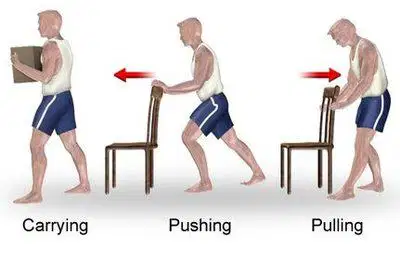
The three examples pictured are of
a)
contact force
b)
non contact force
30.

The force between the phone and the mount is a
a)
contact force
b)
non contact force
31.
What is motion?
a)
A change in force.
b)
A change in position.
c)
A change in gravity
32.
What is a force?
a)
the PUSH or PULL on an object
b)
The MOTION an object creates
c)
An object HITTING one another
d)
Going REALLY FAST
33.
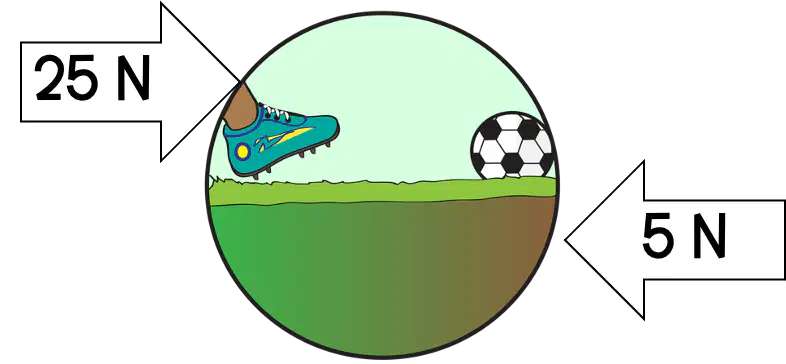
What is the net force acting on the ball?
a)
30 N left
b)
20N right
c)
30 N right
d)
5 N left
34.

What is the name of the force that is acting against the ball? This force would slow or stop the ball from rolling.
a)
gravity
b)
friction
35.
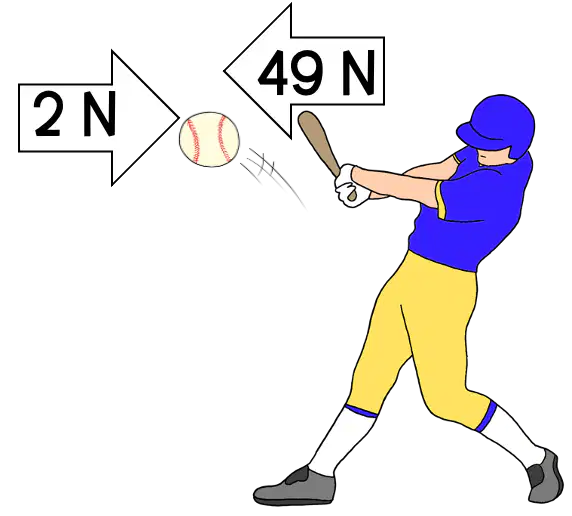
What is the net force acting on the ball?
a)
47 N up
b)
2N right
c)
47 N left
d)
45 N left
36.
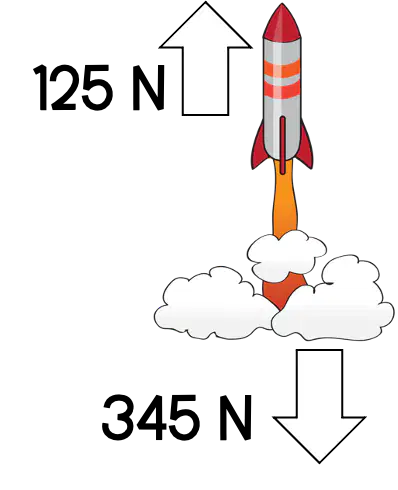
What is the net force acting on the rocket?
a)
345 N down
b)
345 N up
c)
220 N down
d)
125 N up
37.
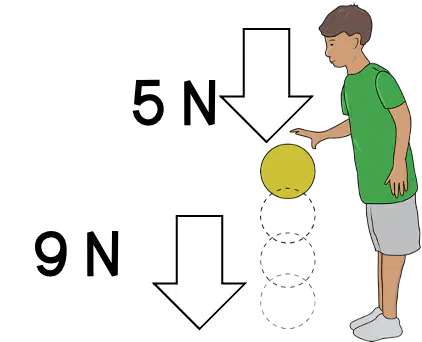
What is the net force acting on the ball?
a)
4 N down
b)
14 N up
c)
14 N down
d)
9 N down
38.
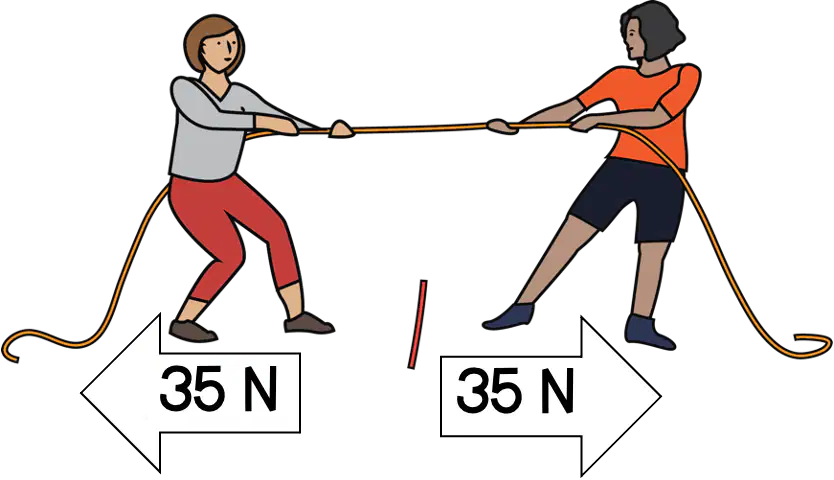
What is the net force acting on the rope?
a)
35N left
b)
35 N right
c)
70 N right
d)
0 N balanced forces
39.
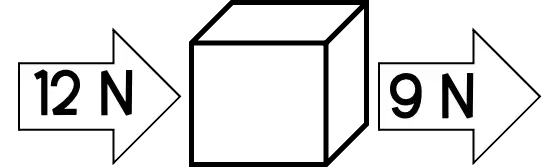
What is the net force acting on the box?
a)
12 N right
b)
12 N left
c)
21 N right
d)
21 N left
40.
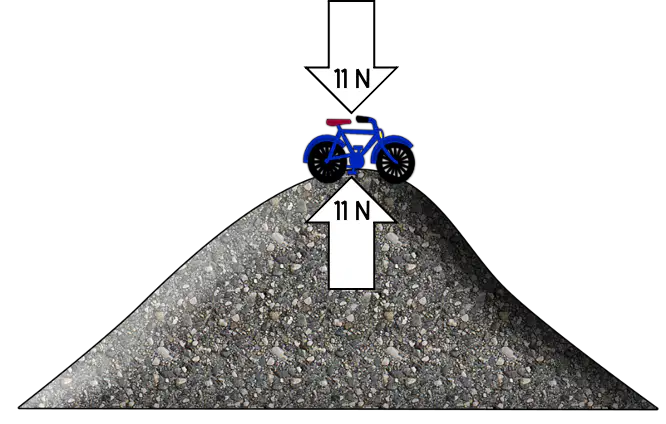
What is the net force acting on the bike?
a)
21 N up
b)
22 N down unbalanced forces
c)
0 N balanced forces
d)
11 n up
41.
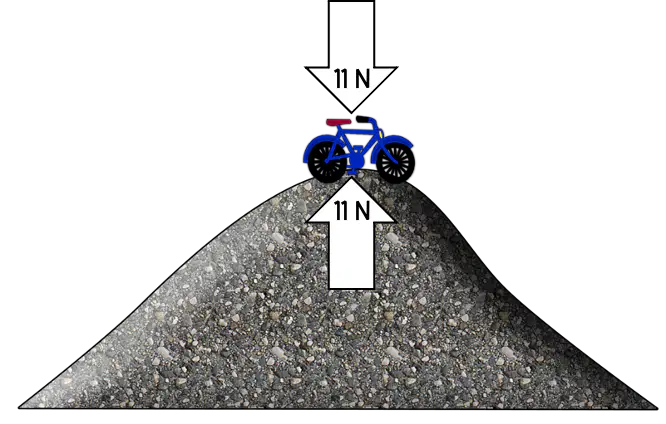
Which type of energy is greatest at the current position of the bike?
a)
potential energy
b)
kinetic energy
c)
thermal energy
42.
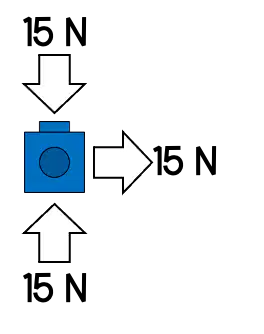
What direction is the block moving?
a)
up
b)
down
c)
left
d)
right
43.

What is the net force of this block?
a)
17 N left
b)
18 N right
c)
11 N right
d)
1 N right
44.

What direction is the block moving?
a)
up
b)
down
c)
left
d)
right
45.
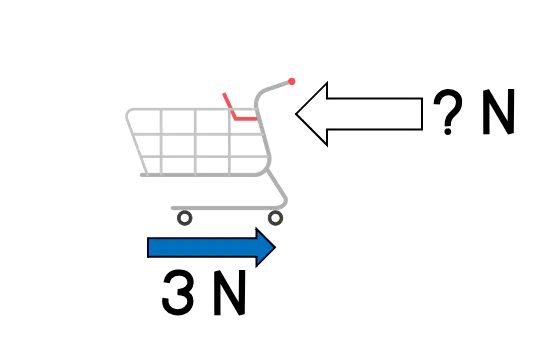
Which force would you add to accelerate the shopping cart so that it moves to the left?
a)
2 N
b)
0 N
c)
5 N
46.
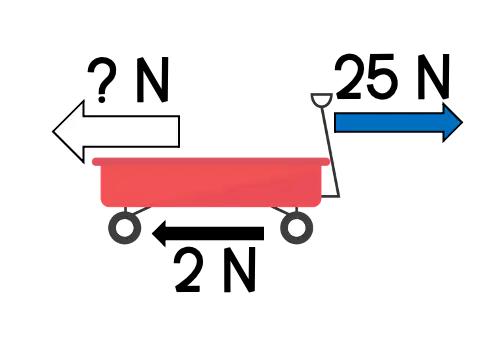
Which force would you add to slow down the wagon?
a)
0 N
b)
10 N
47.

Which force would you add to accelerate the duck to the right?
a)
15 N
b)
0 N
48.
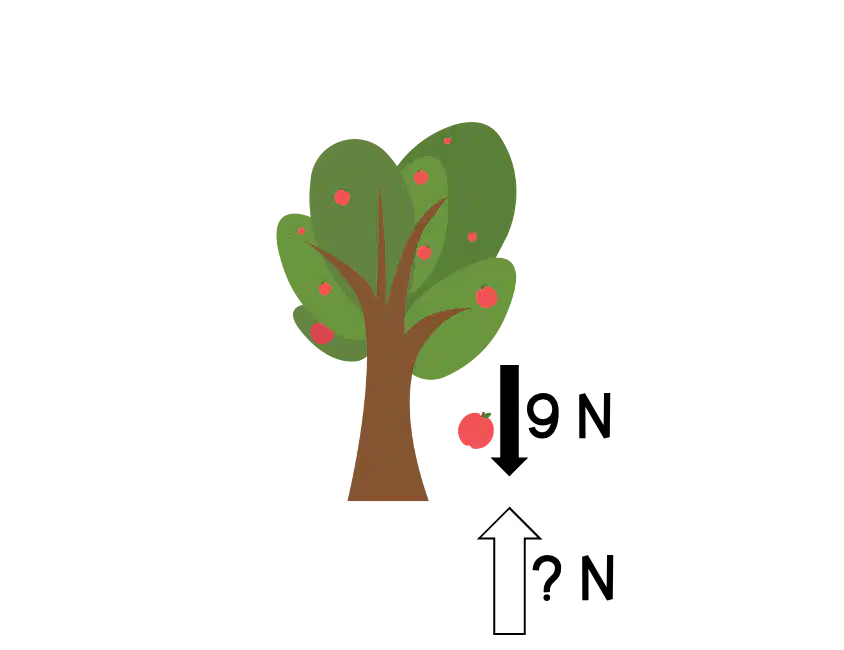
Which force would be needed to stop the apple from falling?
a)
15 N
b)
0 N
c)
9 N
49.
If the vectors ( arrows ) are going the same way what operation do you use to find the net force?
a)
Subtraction
b)
Addition
c)
Division
d)
Multiplication
50.
If the vectors (arrows) are going in opposite directions what operation do you perform?
a)
Addition
b)
Subtraction
c)
Division
d)
Multiplication
100 %

