
 Worksheets
2025-26-1S-PROG9-VTED-CPT1-ME
Total questions: 102
Worksheet time: 17mins
Name
Class
Date
1.
Complete Name
4 lines
2.
Section
4 lines
3.
A voltage drop (also known as a sag), usually for a few seconds, typically caused by an overload in the electrical grid caused by switching on heavy equipment.
a)
Blueout
b)
Blackout
c)
Brownout
d)
All of the above
4.
Frequency variations or waveform distortion change the shape or frequency of the 50/60Hz AC power, sometimes caused by switching power supplies or rectifier issues in AC/AC converters.
a)
Tidalform issues
b)
Loanform issues
c)
Waveform issues
d)
All of the above
5.
A total loss of power (also known as a power failure), which can have many causes, like human errors, lightning strikes or damaged cables as a result of construction work of digging.
a)
Brownout
b)
Blackout
c)
Blowout
d)
All of the above
6.
Instantaneous jumps in voltage, typically caused by lightning strikes.
a)
Strike
b)
Sparkle
c)
Spike
d)
None of the above
7.
A period of high-voltage (also known as a swell), typically caused due to switching off heavy equipment.
a)
Fuse
b)
AVR
c)
Surge
d)
All of the above
8.
A diesel generator providing electrical power in case the utility power input fails. The fuel for the generator should be kept outside of the building or in an isolated room, but also close by and secured.
a)
AVR generator
b)
UPS generator
c)
Genset
d)
None of the above
9.
This is where the actual IT infrastructure components like servers, storage, and network equipment are installed.
a)
Laboratory room
b)
Clinic room
c)
Computer room
d)
None of the above
10.
This datacenter category is used by service providers that provide services for multiple other organizations. These datacenters are typically the largest.
a)
Cross-tenant datacenter
b)
Double-tenant center
c)
Multi-tenant tester
d)
Multi-tenant datacenter
11.
A datacenter that contains all central IT equipment for the organization. An organization can have multiple datacenters, often with failover and fallback capabilities.
a)
Multi-tenance datacenter
b)
Organization owned datacenter
c)
Central hub datacenter
d)
None of the above
12.
Is also known as a patch closet. They contain patch panels for connections to wall outlets in offices and some small equipment like network switches.
a)
Computer room
b)
Auditory room
c)
Clinic room
d)
Sub Equipment Room
13.
Is a small datacenter in the organization’s subsidiaries or buildings.
a)
Sub Equipment room
b)
Computer room
c)
Main Equipment Room
d)
None of the above
14.
Acronym of UPS
a)
Unpredictable Power Supply
b)
Unconditional Power Supply
c)
Uninterruptable Power Supply
d)
All of the above
15.
Acronym of MER
a)
Men Equipment Room
b)
Mean Equipment Room
c)
Main Equipment Room
d)
None of the aboe
16.
Acronym of SER
a)
System Equipment Room
b)
Source Equipment Room
c)
Sub Equipment Room
d)
None of the above
17.
This way the AC power to the IT systems is always generated locally and is free of most of the power issues. In case of a power interruption, the UPS system uses DC power from a battery instead of the converted DC power from the utility provider.
a)
Standby UPS systems
b)
Line interactive UPS systems
c)
Double conversion UPS systems
d)
None of the above
18.
Also known as off-line systems are typically used in small setups (a few workstations or servers). Incoming utility power is fed to the IT systems and monitored for interruptions.
a)
Standby UPS systems
b)
Line interactive UPS systems
c)
Double conversion UPS systems
d)
None of the above
19.
Use a transformer between the utility power and the IT equipment that works as a filter for many of the power issues (like spikes or waveform issues).
a)
Standby UPS systems
b)
Line interactive UPS systems
c)
Double conversion UPS systems
d)
None of the above
20.
Acronym of PDU
a)
Power Deconstruction Unit
b)
Power Demonstration Unit
c)
Power Distribution Unit
d)
None of the above
21.
Acronym of MDU
a)
Mean Distribution Unit
b)
Men Distribution Unit
c)
Mains Distribution Unit
d)
None of the above
22.
Acronym of EER
a)
Energy Efficacity Ratio
b)
Electric Efficiency Ratio
c)
Energy Efficiency Ratio
d)
None of the above
23.
Acronym of CRAC
a)
Computer Room Air Conditioners
b)
Computer Room Air Conductors
c)
Computer Rack Air Conditioners
d)
None of the above
24.
Acronym of SEER
a)
Session Energy Efficiency Ratio
b)
Semi-Conductor Energy Efficiency Ratio
c)
Succession Energy Efficiency Ratio
d)
Seasonal Energy Efficiency Ratio
25.
Acronym of COP
a)
Coefficient of Performance
b)
Conditional of Performance
c)
Conductors of Performance
d)
None of the above
26.
Systems to extinguish the fire once it is detected.
a)
Fire prevention
b)
Passive fire protection
c)
Fire detection systems
d)
Fire suppression systems
27.
Systems to detect smoke and fire.
a)
Fire prevention
b)
Passive fire protection
c)
Fire detection systems
d)
Fire suppression systems
28.
Measures to limit the exposure of the fire once it has started.
a)
Fire prevention
b)
Passive fire protection
c)
Fire detection systems
d)
Fire suppression systems
29.
Measures to avoid a fire in the first place.
a)
Fire prevention
b)
Passive fire protection
c)
Fire detection systems
d)
Fire suppression systems
30.
In the late 1960s, for the first time a number of computers were connected by means of the ______________ the predecessor of the internet. The __________________network consisted of Interface Message Processors (IMPs) which we would now call network routers.
a)
PLDT
b)
GLOBE
c)
ARPANET
d)
IoT
31.
Acronym of FTP
a)
File Transformer Processing
b)
File Transforter File
c)
File Transfer Protocol
d)
None of the above
32.
Acronym of SATNET
a)
Siattle Network
b)
Satellite Network
c)
Sub Network
d)
None of the above
33.
Acronym of NCP
a)
Network Control Protocol
b)
Network Conductors Protocol
c)
Network Conducsive Protocol
d)
All of the above
34.
The first billion internet users were reached in 2005, the second billion in 2010 and the third billion in 2014. It is estimated that in _______________, more than 3.5 billion people use the internet
a)
2016
b)
2017
c)
2018
d)
2019
35.
Acronym of OSI
a)
Open Semi-Conductors Interconnection
b)
Open Sub Interconnection
c)
Open System Interconnection
d)
None of the above
36.
What is the mnemonic layers of networks that can be easily remember.
a)
Practice Daw Nice To Sit Palm Apple
b)
People Do Need To See Pamela Anderson
c)
Pick Do Not To See Papa Amstrong
d)
None of the above
37.
Acronym of NICs
a)
Network Interconnected Cables
b)
Network International Cards
c)
Network Interface Cards
d)
None of the above
38.
Acronym of STP
a)
Subtle Tank Peer
b)
Sinking Twist Peer
c)
Shielded Twisted Pair
d)
Shielded Tween Peer
39.
Acronym of UTP
a)
Unconditional Twisted Pair
b)
Unshielded Twisted Pair
c)
Umbrella Twisted Peer
d)
Uplink Twisted Peer
40.
What do you mean by TX in UTP cable?
a)
Transformer X
b)
Transmitter X
c)
Transmitting Data
d)
Trunk Data
41.
What do you mean by RX in UTP cable?
a)
Receiver X
b)
Rescue X
c)
Receiving data
d)
Revised data
42.
What do you mean by LED
a)
Light emersion Dimension
b)
Light emitting diode
c)
Life emerging data
d)
Life emergency discrete
43.
Is designed to carry only a single narrow band of ray wavelengths of light (a single mode).
a)
Double Mode Fiber
b)
Tripple Mode Fiber
c)
Tripod Model Flexible
d)
Single-Mode Fiber
44.
Are dispersed into numerous paths, also known as modes, as they travel through the cable's core – hence the name.
a)
Sing-Mode Fiber
b)
Tripple-Mode Fiber
c)
Multi-Mode Fiber
d)
None of the above
45.
Using one light source, the maximum bandwidth of a fiber optics cable (both MMF and SMF) is approximately ______ Gbit/s.
a)
5
b)
10
c)
15
d)
100
46.
Using Dense Wavelength-Division Multiplexing (DWDM) the capacity of fiber optics cables can be extended. By using multiple light sources, each having a distinct color (wave length), multiple channels can travel though the fiber optics cable simultaneously. This way up to 80 channels can be created, leading to a total bandwidth of __________ Gbit/s for a single strand of fiber cable.
a)
100
b)
300
c)
500
d)
800
47.
What do you mean by SONET
a)
Symposium Optimal Need
b)
South Option Net
c)
Synchronous Optical Networking
d)
Sound Output Network
48.
What do you mean by SDH
a)
Success Distribution Health
b)
Super Datacenter Hub
c)
Synchronous Digital Hierarchy
d)
Symbol Digital Hyperbole
49.
What do you mean by STM
a)
Synchronous Transport Module
b)
Sinc Transmitting Mode
c)
Symbol Transformer Module
d)
Success Transfer Mode
50.
What is the common speed of OC192/ STM64
a)
622 Mbit/s
b)
2.5 Gbit/s
c)
38 Gbit/s
d)
9.5 Gbit/s
51.
What is the common speed of OC12/ STM4
a)
155Mbit/s
b)
622 Mbit/s
c)
2.5 Gbit/s
d)
38 Gbit/s
52.
What is the common speed of OC768 / STM256
a)
622 Mbit/s
b)
2.5 Gbit/s
c)
38 Gbit/s
d)
9.5 Gbit/s
53.
What is the common speed of OC48/ STM16
a)
622 Mbit/s
b)
2.5 Gbit/s
c)
38 Gbit/s
d)
9.5 Gbit/s
54.
What is the common speed of OC3/ STM1
a)
155Mbit/s
b)
622 Mbit/s
c)
2.5 Gbit/s
d)
38 Gbit/s
55.
The physical coax cable runs to a wiring closet of the cable company (called “___________”), where the data connection is converted to optical fiber for further transportation.
a)
The curse
b)
Time Cube
c)
The Curb
d)
Time Cue
56.
Offers fast data rates over relatively short distances. The shorter the distance, the faster the connection rate, providing speeds up to 100 Mbit/s.
a)
Asymmetric DSL (ADSL)
b)
Symmetric DSL (SDSL)
c)
Very High DSL (VDSL)
d)
None of the above
57.
Is the most common deployed type of DSL, supporting data rates up to 25 Mbit/s when receiving data (download) and up to 3.5 Mbit/s when sending data (upload).
a)
Asymmetric DSL (ADSL)
b)
Symmetric DSL (SDSL)
c)
Very High DSL (VDSL)
d)
None of the above
58.
Supports data rates up to 3 Mbit/s, both upload and download.
a)
Asymmetric DSL (ADSL)
b)
Symmetric DSL (SDSL)
c)
Very High DSL (VDSL)
d)
All of the above
59.
Each Ethernet adapter is programmed with a 48 bit globally unique number, called a ______________________ address. ________ addresses are used to specify both the destination and the source of each Ethernet packet.
a)
Media Assemble Control
b)
Medium Asynchronous Conductors
c)
Media Access Control
d)
Medium Access Conductors
60.
An Ethernet packet starts with a header including the source and destination MAC addresses, followed by the data that needs to be transported (called the ________). The packet ends with a cyclic redundancy check, which is used to detect any corruption of data after it is received.
a)
Conductors
b)
Transformation
c)
Payback
d)
Payload
61.
Also known as peer-to-peer or ad-hoc mode, where clients communicate directly to each other. Wireless devices within range of each other can discover and communicate directly without an access point
a)
Basic Service Set
b)
Independent Basic Service Set
c)
Extended Services Set
d)
None of the above
62.
Also known as infrastructure mode, where clients communicate only to the access point and not directly to each other. Clients on the same Wi-Fi network can only communicate to each other through the access point.
a)
Basic Service Set
b)
Independent Basic Service Set
c)
Extended Services Set
d)
All of the above
63.
Where a set of access points are connected by a wired LAN, providing roaming of Wi-Fi clients.
a)
Basic Service Set
b)
Independent Basic Service Set
c)
Extended Services Set
d)
None of the above
64.
Data encryption in Wi-Fi networks is implemented using ________________________. _____________ dynamically generates a new key for each packet sent over the Wi-Fi network. _______________ also includes a Message Integrity Check to prevent an attacker from capturing, altering and/or resending data packets. ________________ version 2 is now widely implemented and considered secure enough for most applications.
a)
Wired Process Assemble
b)
Wi-fi Protected Access
c)
Control Protected Conductors
d)
None of the above
65.
The LTE specification provides download rates of at least 100 Mbit/s (up to 326 Mbit/s), and an upload speed of at least 50 Mbit/s (up to 86.4 Mbit/s). Today’s LTE-Advanced (also known as ______) can provide download rates of at least 225 Mbit/s (up to 1 Gbit/s).
a)
2G
b)
3G
c)
4G
d)
5G
66.
Global System for Mobile Communications (GSM) is the world's most popular standard for mobile telephone systems in which both signaling and speech channels are digital.
a)
1G
b)
2G
c)
3G
d)
4G
67.
High Speed Downlink Packet Access (HSDPA) is part of the UMTS standard, providing a maximum speed of 7.2 Mbit/s. HSDPA+ is also known as HSDPA Evolution and Evolved HSDPA. It is an upgrade to HSDPA networks, providing 42 Mbit/s download and 11.5 Mbit/s upload speeds.
a)
1G
b)
2G
c)
3G
d)
4G
68.
Enhanced Data rates for GSM Evolution (EDGE), also known as Enhanced GPRS, allows improved data transmission rates as a backward-compatible extension of GSM. EDGE delivers data rates up to 384 kbit/s.
a)
1G
b)
2G
c)
3G
d)
4G
69.

Identify the classes of networks in the image (e.g. 192.168.0.1
a)
Class A
b)
Class B
c)
Class C
d)
Class D
70.

Identify the classes of networks in the image (e.g. 10.0.0.1)
a)
Class A
b)
Class B
c)
Class C
d)
Class D
71.

Identify the classes of networks in the image (128.0.0.1)
a)
Class A
b)
Class B
c)
Class C
d)
Class D
72.

Identify the image
a)
Cabinet
b)
Divider
c)
Closure
d)
Rack
73.
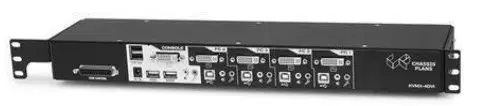
Identify the image
a)
Patch Panel
b)
Router
c)
WAP
d)
KVM switch
74.
Dual stack in an operating system implements IPv4 and IPv6 protocol stacks in a hybrid form. Within network equipment dual stack means that the 2 protocols run simultaneously and independently.
a)
Use IPv6 on the LAN and on dedicated WAN links
b)
Protocol translation
c)
Dual stack
d)
IPv6 over IPv4 tunnels
e)
Non of the above
75.
In this scenario a separate router runs IPv4 on one port and IPv6 on another. The router performs protocol translation between both ports, much like the way NAT works in IPv4 networks (see section 8.2.5.2).
a)
Use IPv6 on the LAN and on dedicated WAN links
b)
Protocol translation
c)
Dual stack
d)
IPv6 over IPv4 tunnels
e)
None of the above
76.
Encapsulating IPv6 packets within IPv4, in effect using IPv4 as a link layer for IPv6. This is also known as “6to4”.
a)
Use IPv6 on the LAN and on dedicated WAN links
b)
Protocol translation
c)
Dual stack
d)
IPv6 over IPv4 tunnels
e)
All of the above
77.
This is a full IPv6 implementation between multiple locations of an organization, where all locations use IPv6 only and the locations are connected using an IPv6 WAN network. Connection to the internet can be implemented using Protocol Translation.
a)
Use IPv6 on the LAN and on dedicated WAN links
b)
Protocol translation
c)
Dual stack
d)
IPv6 over IPv4 tunnels
e)
All of the above
78.
Acronym of VPN
a)
Viber Public Network
b)
Virtues Process Net
c)
Virtual Private Network
d)
Vibes Practice Need
79.
Acronym of DNS
a)
Document Name System
b)
Distribution Network System
c)
Domain Name System
d)
Dongle Network System
80.
Clocks of the nodes in a cluster must run as much in sync as possible.
a)
Log file analysis
b)
Clustering software
c)
Kerberos authentication
d)
None of the above
81.
In order for Kerberos authentication to function correctly all clocks must be in sync.
a)
Log file analysis
b)
Clustering software
c)
Kerberos authentication
d)
All of the above
82.
When tracing information through various infrastructure components, log files show what happened at what point in time. It is crucial for the time stamps in each of the log files of the all infrastructure components to be synchronized and correct.
a)
Log file analysis
b)
Clustering software
c)
Kerberos authentication
d)
All of the above
83.
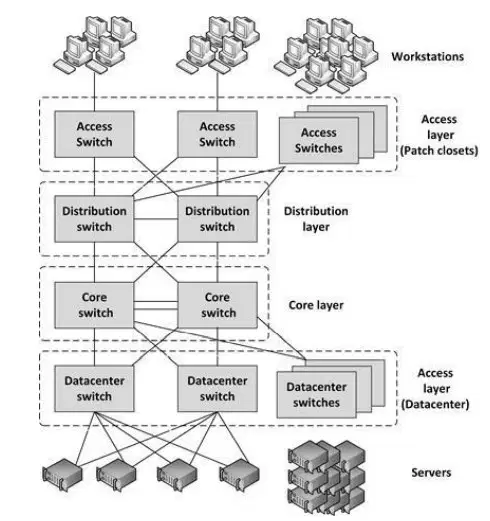
Identify the image
a)
SDN
b)
Network teaming
c)
Spine and leaf topology
d)
LNT
84.
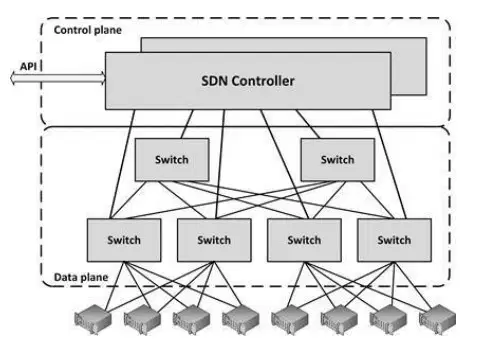
Identify the image
a)
SDN
b)
Network teaming
c)
Spine and leaf topology
d)
LNT
85.
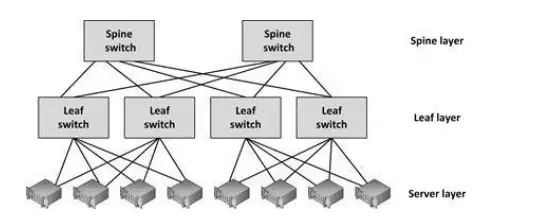
Identify the image
a)
SDN
b)
Network teaming
c)
Spine and leaf topology
d)
LNT
86.
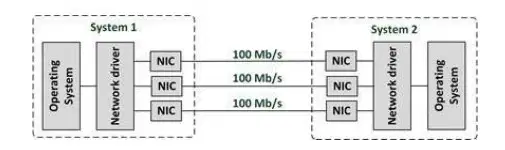
Identify the image
a)
SDN
b)
Network teaming
c)
Spine and leaf topology
d)
LNT
87.
Acronym of IDS
a)
International Distribution System
b)
Interface Digital System
c)
Intrusion Detection System
d)
Internet of Things
88.
Acronym of IPS
a)
International Protocol System
b)
Interface Processing System
c)
Intrusion Prevention System
d)
Internet Protocol System
89.
Acronym of DMZ
a)
Distribution Management Zinc
b)
Digital Magnet Zone
c)
De-Militarized Zone
d)
Decomposition Military Zone
90.
Acronym of RADIUS
a)
Remote Action Digital Internet Under Sub-control
b)
Remote Authentication Dial In User Service
c)
Rapid Access Digital Internet User Security
d)
Rapid Access Distribution Internet Under System
91.
Acronym of NAC
a)
Network Access Control
b)
Network Action Center
c)
Network Authentication Center
d)
Network Application Control
92.
They are used for bulk storage applications as they can store much data, have a low cost per gigabyte and use much less energy than SAS disks, as they typically spin at just 7,200 rpm.
a)
SATA disks
b)
SAS disks
c)
NL-SAS disks
d)
None of the above
93.
Are relatively expensive, high end disks with spinning disk platters with a rotational speed of 10,000 or 15,000 rpm. This makes them very fast, but they typically have 25% of the capacity of SATA or NL-SAS disks.
a)
SATA disks
b)
SAS disks
c)
NL-SAS disks
d)
None of the above
94.
Are low-end high-capacity disks. SATA disks are ideal for bulk storage applications (like archiving or backup) as they have a low cost per gigabyte.
a)
SATA disks
b)
SAS disks
c)
NL-SAS disks
d)
All of the above
95.
States that "the density of information on hard drives has been growing at a rate, increasing by a factor of 1000 in 10.5 years, which roughly corresponds to a doubling every 13 months".
a)
Moore's Law
b)
Nielsen's Law
c)
Kryder's Lay
d)
All of the above
96.
Acronym of SSD
a)
Solid Success Drive
b)
Success State Drone
c)
Solid State Drive
d)
Sub Success Digital
97.
Acronym of RAID
a)
Redundant Access Internet Distribution
b)
Redundant Arrays of Independent Disks
c)
Reluctant Access International Digit.
d)
Redirect Access Internation Digital
98.
Acronym of DAS
a)
Direct Access System
b)
Distribution Action System
c)
Direct Attached Storage
d)
Distribution Access Storage
99.
Acronym of SAN
a)
Storage Area Network
b)
Success Access Network
c)
Synchronous Access Network
d)
System of Area Net
100.
All devices are connected to Fiber Channel switches, a similar concept as in Ethernet implementations. Most implementations today use a switched fabric.
a)
Point-to-Point
b)
Arbitrated loop
c)
Switched fabric
d)
None of the above
101.
Also known as FC-AL - In this topology, all devices are in a loop. Most early Fiber Channel systems worked this way.
a)
Point-to-Point
b)
Arbitrated loop
c)
Switched fabric
d)
All of the above
102.
Two devices are connected directly to each other.
a)
Point-to-Point
b)
Arbitrated loop
c)
Switched fabric
d)
All of the above
100 %