
NEW
Font size
 Worksheets
Web Development Unit 1 Quiz
Total questions: 23
Worksheet time: 12mins
A framework, as the term applies to front-end markup and programming, is:
A pre-written collection of code that provides structure and tools for building web applications.
A type of database used for storing website data.
A graphic design tool for creating website layouts.
A programming language used exclusively for server-side development.
What is a client?
A computer that sends requests for information
The computer that responds with the requested information
What is a server?
A computer that sends requests for information
The computer that responds with the requested information
In which year was ARPANET introduced according to the timeline in the lesson 'Evolution of the WEB'?
1969
1975
1983
1990
What does WWW stand for, as shown in the timeline in the lesson 'Evolution of the WEB'?
World Wide Web
World Web Window
Wide Web World
Web World Wide
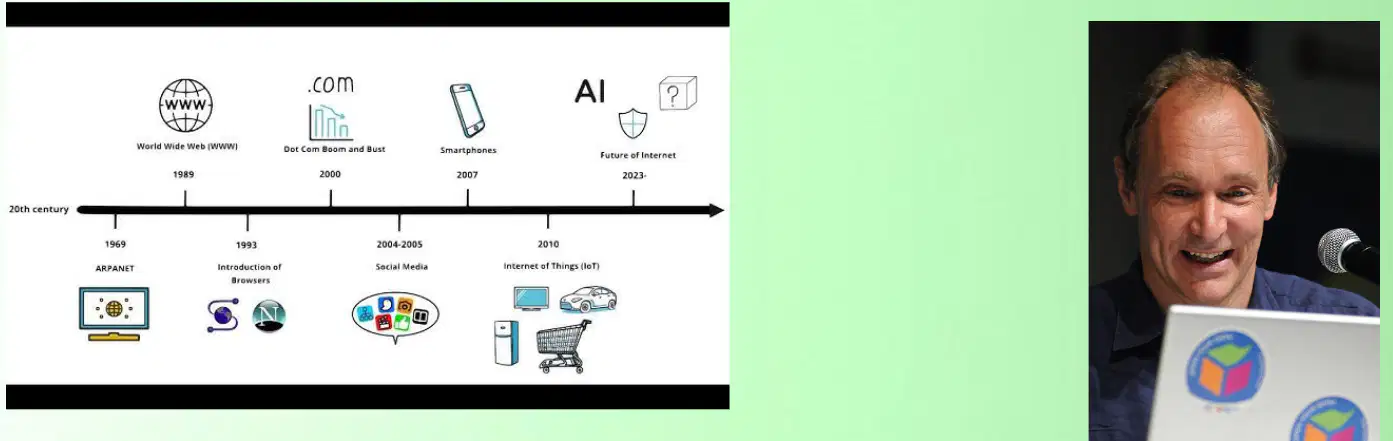
Which of the following was introduced in 2004-2005 according to the timeline in the lesson 'Evolution of the WEB'?
Social Media
Smartphones
Internet of Things (IoT)
Artificial Intelligence (AI)
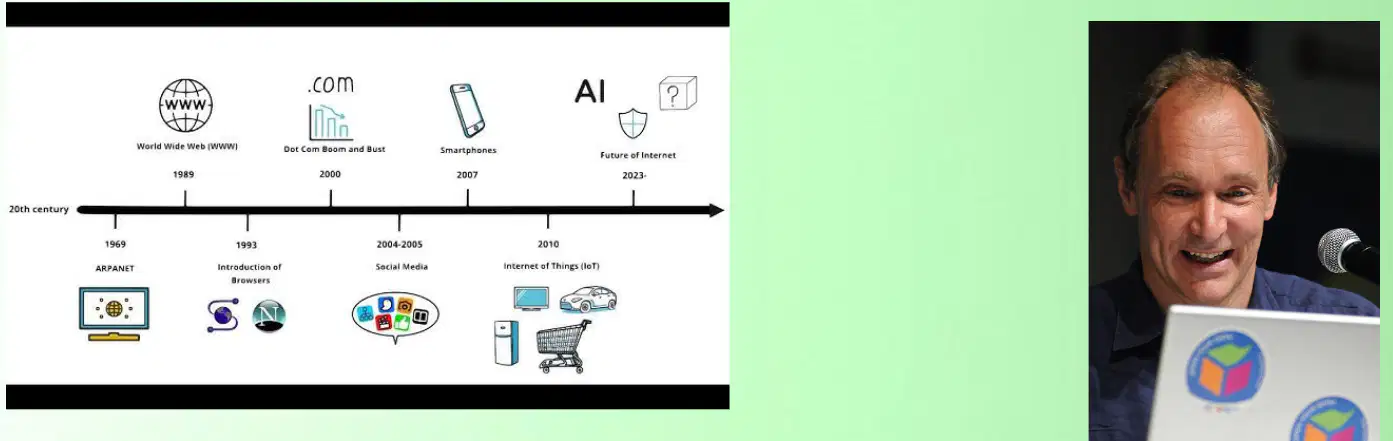
In which year did the Internet of Things (IoT) become prominent according to the timeline in the lesson 'Evolution of the WEB'?
2010
2005
2015
2000
Who established the World Wide Web Consortium, as mentioned in the lesson 'Evolution of the WEB'?
Sir Tim Berners-Lee
Bill Gates
Larry Page
Steve Jobs
What is the main purpose of the World Wide Web Consortium according to the lesson 'Evolution of the WEB'?
To advocate for equal worldwide access to the World Wide Web server, the computer that responds with the requested information.
To develop new programming languages for the internet.
To provide free internet access to all users globally.
To create social media platforms for online communication.
Fill in the blank: CSS describes how the HTML will be ________ on the screen.
rendered
deleted
downloaded
encrypted
What does HTML stand for?
Hypertext Markup Language
High-level Markup Language
Hyperlink and Text Markup Language
Home Tool Markup Language
Fill in the blank: HTML provides _______ for the web page design.
structure
color
animation
sound
What does CSS stand for?
Computer Style Sheet
Creative Style Sheet
Cascading Style Sheet
Colorful Style Sheet
Which technology is used to apply style to web page elements?
HTML
CSS
Javascript
SQL
Javascript is mainly used to:
Add interactivity to a web page
Provide structure for web page design
Apply style to web page elements
Store data in a database

HTML is like an orator. Its role is to ________ a document and its data.
describe
delete
encrypt
ignore

CSS is like a ________. Its task is to style the elements of an HTML document.
stylist
chef
engineer
doctor

JavaScript is like a ________. Its job is to command the items of an HTML document.
commander
follower
observer
listener
What is a Web Framework?
A set of software libraries that provide for a range of consistent, reusable methods for accomplishing web-development tasks.
A type of hardware used to connect computers to the internet.
A programming language used exclusively for web design.
A database management system for storing web data.
Which of the following is ensured by cross-browser testing in front-end frameworks?
Elements display differently in each browser
Elements display the same way in different browsers
Only one browser is supported
No testing is done
What does the Doctype tag do in HTML?
Declares the language of the document
Tells the browser what version of HTML is being used
Stores metadata
Includes all content displayed on a web page
What is the purpose of the Head tag in HTML?
Includes all content displayed on a web page
Stores any metadata and includes the web page title
Declares the language
Tells the browser what version of HTML is being used
The Body tag in HTML includes _________.
ALL the content displayed on a web page
Only the title of the web page
Only the CSS styles
Only the JavaScript code

