
NEW
Font size
 Worksheets
Test Review_ Nuclear
Total questions: 33
Worksheet time: 2hrs 52mins
How many neutrons does an Oxygen-19 isotope have?
19
8
11
10
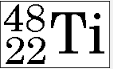
How many protons does this isotope of titanium have?
48
22
26
70
A neutral atom of the isotope 2612Mg would consist of
12 protons, 26 neutrons
26 protons, 12 neutrons
26 protons, 14 neutrons
12 protons, 14 neutrons

How many protons are in the nucleus of the element shown?
19
9
10
28
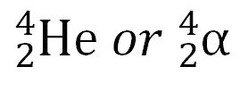

What do these symbols represent?
alpha particle
beta particle
gamma ray
neutron
What are the changes in nuclear structure as a result of fission and fusion?
The nucleus becomes larger in fission and smaller in fusion.
The nucleus becomes smaller in fission and larger in fusion.
The nucleus remains the same size in both fission and fusion.
The nucleus becomes unstable in fission and stable in fusion.
Which process involves the splitting of a nucleus into two smaller nuclei?
Fusion
Radioactive decay
Half-life
Fission
What is the time it takes for half of a radioactive substance to decay called?
Radioactive period
Half-life
Decay time
Nuclear breakdown

If the half-life of iodine-131 is 8 days, how much of a 5.0g sample is left after 32 days?
2.5g
1.25g
0.625g
0.3125g

What type of decay is shown in this equation?
alpha decay
beta decay
gamma emission
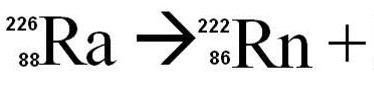
What particle completes this reaction?


85209At = ___ + 24He

6027Co = ___ + 0-1e

What particle completes this reaction?
42He
0-1 e
00γ
178O

What particle completes this reaction?
42He
0-1 e
00Y
178O
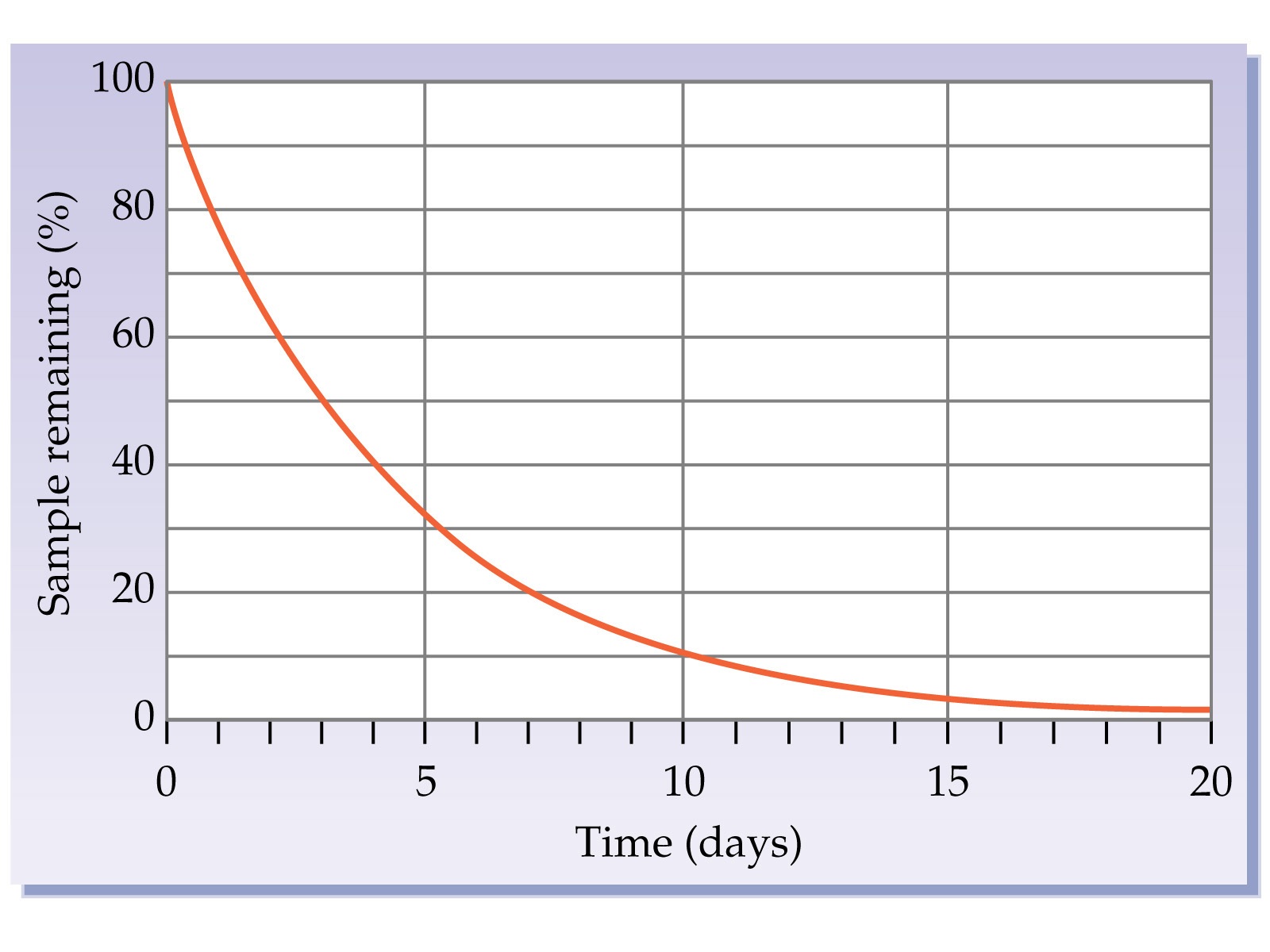
What is the Half Life of this isotope?
3 days
5 days
8 days
10 days
emitted helium nucleus
positron
radioactivity
alpha particle
gamma radiation
beta particle
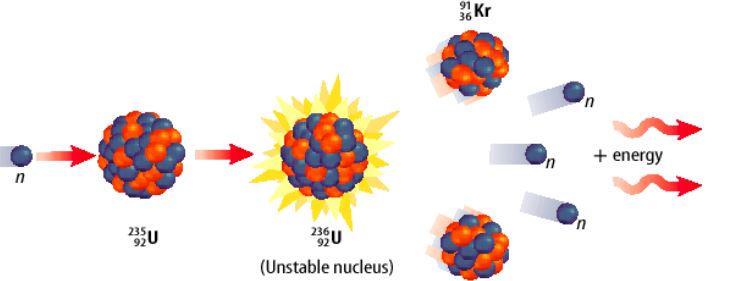
A beta particle is also called _____.
an isotope
a mass number
an electron
a fusion
Has the lowest penetrating power. Can only penetrate 0.05 mm into the body and can be stopped by the skin.
Electron capture
_____is the joining of atomic nuclei
Fusion
chain reaction
Photosynthesis
Fission
The half-life for a 100-gram sample of radioactive element X is 5 days. How much of element X remains after 10 days have passed?
25g
50g
75g
100g
The high energy yields created by nuclear fission are due to...
binding nuclei.
hydrogen bonding.
secondary recovery.
chain reactions.
What resulted from the uncontrolled series of chain reactions that occurred at the Chernobyl plant?
oil spill
coal mine collapse
core meltdown
discovery of plutonium

