
 Worksheets
Scientific principles 4
Total questions: 30
Worksheet time: 15mins
According to the Principles of heat, fill in the blank: There are three methods by which heat can be transferred: ________, Convection, and Radiation.
Conduction
Reflection
Absorption
Diffusion
What is conduction?
The transfer of heat through a vacuum
The transfer of heat through or along a material (one molecule to the next)
The transfer of heat by electromagnetic waves
The transfer of heat by moving fluids
Which of the following is an example of conduction?
Heating copper tube to solder
Sunlight warming your skin
Air moving in a room
Water boiling in a pot
Fill in the blank: Copper is a very good _______ conductor.
thermal
electrical
magnetic
optical
True or False: Plastics tend to be good thermal conductors.
True
False
Which of the following is a bad conductor of heat?
Aluminium
Iron
Still air
Glass
Fill in the blank: We can use bad conductors as ________.
insulators
heaters
coolers
magnets
Where can convection take place?
Only in solids
Only in fluids or gases
Only in gases
In all states of matter
Convection occurs because when molecules are heated, they ______ and rise, and when they cool they fall.
expand
contract
solidify
dissolve
What is the main way a DHWC heats the water up by?
Convection
Radiation
Conduction
Evaporation
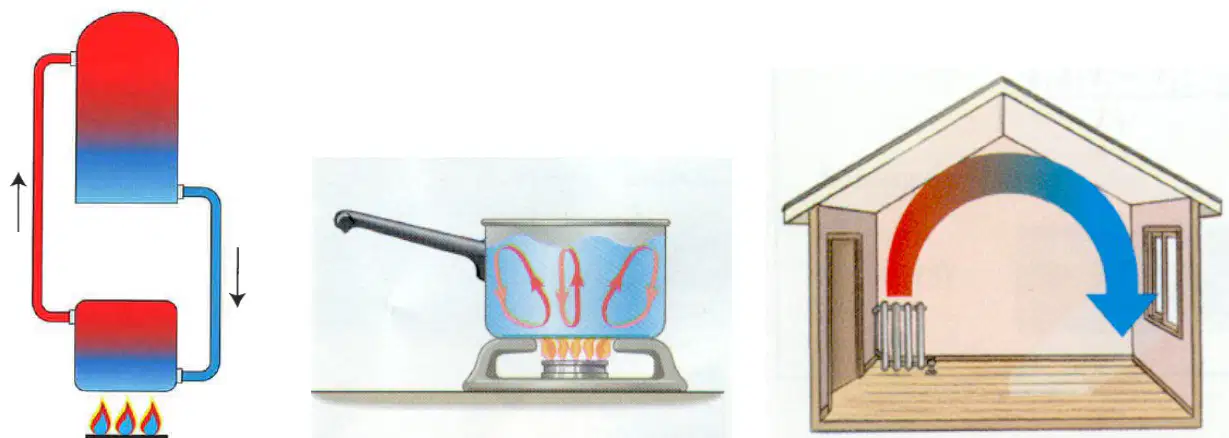
Look at the diagram showing a pot of water being heated. What process is being illustrated?
Conduction
Convection
Radiation
Insulation
What is radiation in the context of heat transfer?
Heat transfer via direct contact
Heat transfer via infrared light, transferring heat from one body to another without heating the space in between
Heat transfer via moving fluids
Heat transfer via conduction
Fill in the blank: Radiation is heat transfer via ________ light. It transfers heat from one body to another without heating the space in between.
infrared
ultraviolet
visible
microwave
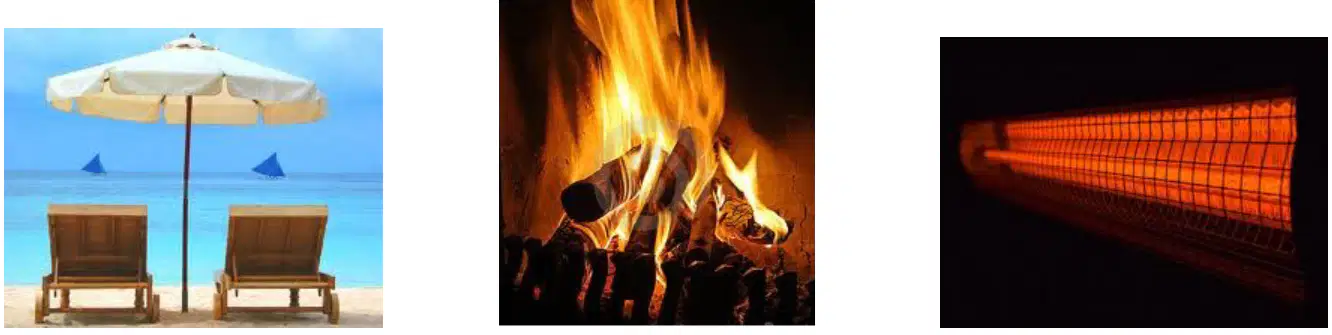
Which of the following images is an example of heat transfer by radiation?
Beach umbrella and chairs
Burning fire
Electric heater
All of the above
Heat is measured in what units?
Degrees Celsius (°C) or Kelvin (K)
Joules (J)
Watts (W)
Amperes (A)
True or False: Heat is scientifically measured in Kelvin (K).
True
False
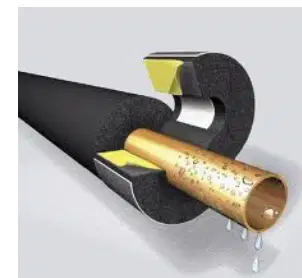
Why do hot water cylinder pipes need insulating?
To keep the heat in, so the hot water does not lose its temperature (efficiency).
To make the pipes look more attractive.
To prevent the pipes from making noise.
To increase the weight of the pipes.
What is the main reason for controlling heat in hot water systems?
To maintain efficiency by preventing heat loss.
To increase water pressure.
To reduce water hardness.
To improve water color.
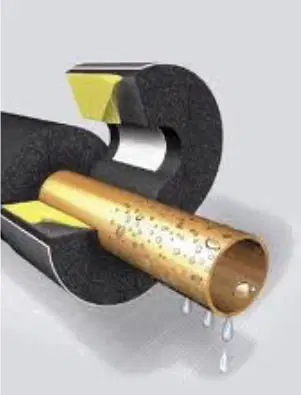
Cold water mains pipe needs to be _______ to stop condensation forming on the pipe.
insulated
painted
polished
exposed
White cars are more common in hot countries because:
they reflect more sunlight and keep the car cooler
they are cheaper to manufacture
they are easier to clean
they are more stylish
Dark colours absorb heat.
True
False
Light colours reflect heat.
True
False
Heat remains in the pipework when it is _______ and therefore increases efficiency and reduces running costs.
insulated
painted
expanded
ventilated
According to the Principles of heat, what is the main reason heat transfer needs to be controlled?
To comply with Building Regulations part L.
To increase the weight of the building.
To reduce the amount of sunlight entering a room.
To improve the color of the walls.
According to the Principles of heat, when should programmers be on?
Only on when needed.
At all times, regardless of need.
Only during the night.
Whenever the temperature is above freezing.
According to the Principles of heat, what should the boiler stat setting be in the primary circuit?
Not too high.
As high as possible.
Always set to maximum.
Below room temperature.
According to the Principles of heat, what is the maximum temperature for the cylinder stat in the secondary circuit?
Not above 60ºC.
Not above 80ºC.
Not above 100ºC.
Not above 40ºC.
According to the Principles of heat, how should the room stat be set?
As low as possible.
As high as possible.
At the average outdoor temperature.
At the maximum setting.
According to the Principles of heat, what do TRVs control?
Individual rooms.
The entire building.
Outdoor temperature.
Water supply.
According to the Principles of heat, what do zones refer to?
Upstairs and downstairs.
Types of insulation.
Different types of heating systems.
Sources of heat.

