
 Worksheets
Unit 1b Review
Total questions: 20
Worksheet time: 10mins
Which of the following is correct about the Milky Way galaxy?
The Milky Way galaxy contains only one solar system.
The Milky Way galaxy is shaped like a perfect sphere.
The Sun is part of the Milky Way galaxy.
Earth is the largest planet in the Milky Way galaxy.
Our solar system is located within a huge collection of stars, gas, and dust. What is this collection called?
a nebula
a galaxy
a planet
a cluster
Which statement about the sun is not true?
The sun is a star.
The sun provides energy for life on Earth.
The sun is smaller than most stars in the galaxy.
The sun is made entirely of solid material.

The diagram shows the paths of planets around the sun. What is the name of the movement of a planet along its path around the sun?
rotation
revolution
gravity
orbit
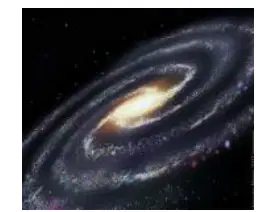
Which type of galaxy is the Milky Way classified as?
Spiral galaxy
Elliptical galaxy
Irregular galaxy
Lenticular galaxy
What happens to the gravitational force if the mass of one of the objects increases?
The gravitational force decreases.
The gravitational force increases.
The gravitational force remains the same.
The gravitational force becomes zero.
What type of galaxy is the Milky Way galaxy?
Elliptical
Irregular
Spherical
Spiral
Which two forces work against each other to maintain the structure of our Solar System?
gravity and friction
inertia and magnetism
gravity and inertia
pressure and temperature
What force keeps the moon in orbit around the Earth?
Rotation of the earth
Earth's magnetism
The tilt of the earth
Gravity
Grace and Anika are each holding a ball, but Grace is standing closer to a large magnet than Anika is. The magnet's pull holds each ball in place. How does the effect of the magnet's pull on Anika's ball compare with the effect of the magnet's pull on Grace's ball?
The magnet has less pull on Grace's ball because it is closer.
The magnet has less pull on Anika's ball because it is farther away.
The magnet has more pull on Anika's ball because it is smaller.
The magnet has the same pull on all balls that are in place.
Avery, Grace, and Maya are working together on a science project to explain how gravity and inertia affect the motion of planets in our solar system. What information would be the MOST important for them to include in their model?
representing gravity as an invisible force that pushes objects away from each other
showing the orbits of planets around the sun to show the effects of gravity and inertia
demonstrating inertia as how objects stay at rest unless acted upon by an external force
including number of moons each planet has to explain the connection between gravity and inertia

The diagram below shows the effect of mass and distance on the force of gravity. Which configuration will result in the greatest gravitational force?
small masses far apart
large masses far apart
small masses close together
large masses close together
Santiago is watching a documentary about astronauts traveling through space. He wonders why the planets in our Solar System move around the Sun instead of floating away. What causes the planets to orbit the Sun rather than drift off into space?
momentum
the force of gravity
the force of magnetism
heat energy from the Sun
Grace is reading about space and comes across objects that orbit the sun and are nicknamed "dirty snowballs." What are these objects called?
meteorites
meteors
asteroids
comets
Daniel is building a model of the solar system and wants to place the asteroids in the correct location. Where should Daniel place most of the asteroids as they revolve around the Sun?
between the orbits of the Sun and Mercury
between the orbits of Neptune and Pluto
between the orbits of Earth and Venus
between the orbits of Mars and Jupiter
Charlotte is observing the paths that planets take as they move around the Sun. Which term best describes the shape of the orbit of planets in our solar system?
circular
elliptical
spherical
centripetal
James is watching a meteor shower and wonders where most meteors come from. Where do most meteors come from?
Oort Cloud
Kuiper Belt
Asteroid Belt
The Sun
Which force causes a planet to resist changes in its state of motion?
centripetal force
friction
inertia
gravity
Imagine Michael is watching the planets in our solar system. If there were no inertia, but only gravity acting on the planets, what would Michael observe happening to the planets?
Planets would not orbit but would move toward the Sun
Planets would fly out of orbit in a straight line
Planets would spin in circles where they are and never move from this position
Planets location and motion would not change.
Arjun is reading about different regions in our solar system. He comes across the Kuiper Belt and wonders where it is located. Where is the Kuiper Belt located?
outside the orbit of Neptune
between the orbits of Earth and Mars
between the orbits of Jupiter and Mars
between the orbits of Neptune and Jupiter

