
 Worksheets
GILDED AGE REVIEW
Total questions: 12
Worksheet time: 6mins
During the Gilded Age there was a notable increase in federal support for —
the growth of big business
involvement in foreign wars
the acquisition of foreign territories
increased temperance regulations
Which of the following best characterizes the Gilded Age?
The discovery of goldfields in the West led to an increase in the amount of money issued for circulation.
Industrialists used their connections with corrupt government officials for material gain and political power.
In the Deep South a sharp increase in immigration brought a boom in construction and industry.
Small, family-owned farms were bought and consolidated to form large agricultural corporations.
A government’s primary role is to provide a favorable atmosphere for business, including a stable currency, hands-off regulation, and domestic order. A supporter of this idea would most likely favor-
establishing consumer protection laws
securing collective-bargaining rights
levying high taxes on business
following laissez-faire economics
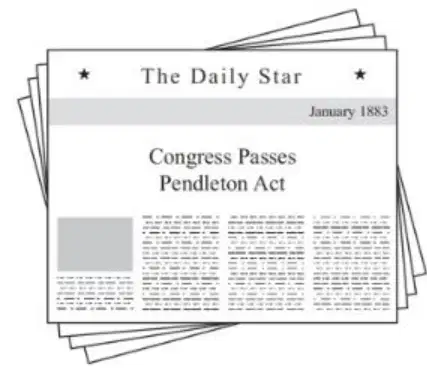
This legislation affected how federal employees were hired. The law now required government jobs to be —
based on the political party affiliation of the applicant
determined by a merit system based on civil service examinations
based on the approval of lawmakers
set aside for business executives of large corporations
During the nineteenth century, one way political bosses gained voter support was by —
campaigning for women’s suffrage
advocating the use of poll taxes
making improvements in urban infrastructure
providing public assistance for former slaves
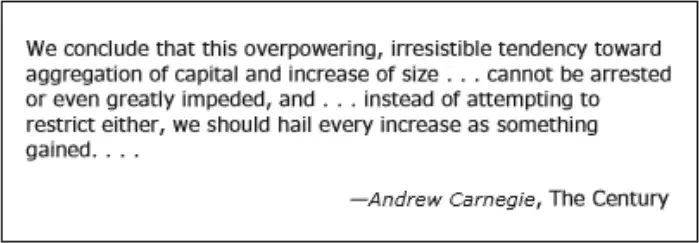
The business practice described above eventually led to the enactment of legislation that —
guaranteed public access to corporate records
protected consumers by prohibiting monopolies
protected domestic industries from foreign competition
required reciprocity agreements between state governments
The Knights of Labor and the American Federation of Labor developed in response to the —
increased need to protect worker interests
decreased power of political machines
increased demand for skilled workers
decreased profitability of the agricultural sector
During the late 1800's, presidents and governors most often used military force during labor management conflicts as a way to -
support industrialists and end strikes
make employers sign collective bargaining agreements
protect workers from the private armies of employers
replace striking factory workers with soldiers
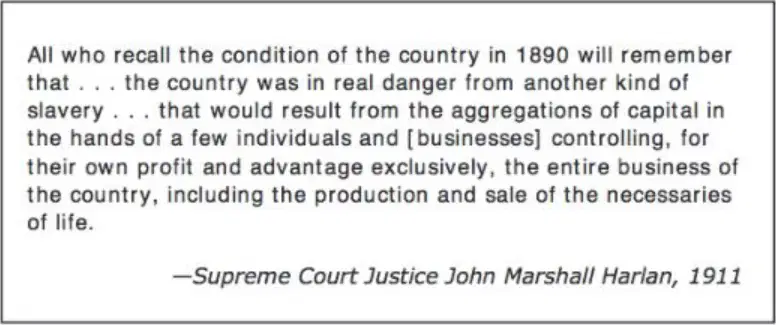
In this excerpt, Justice Harlan is warning against — All who recall the condition of the country in 1890 will remember that . . . the country was in real danger from another kind of slavery . . . that would result from the aggregations of capital in the hands of a few individuals and [businesses] controlling, for their own profit and advantage exclusively, the entire business of the country, including the production and sale of the necessaries of life. —Supreme Court Justice John Marshall Harlan, 1911
a civil service based on patronage rather than merit
allowing powerful monopolies to dominate interstate commerce
a lack of federal funding for essential transportation systems
allowing labor unions to interfere with production goals
Which application of a new technology can be attributed to an invention of Thomas Edison?
Refrigerated railroad cars allowed food to be transported long distances.
Light bulbs made it efficient for factory workers to work at night.
Diesel engines were used in the production of airplanes.
Sonar technology was used to track submarines.
In the late 1800's, which factor directly contributed to the growth of the steel industry?
government regulation of the industry
employee ownership of the industry
new production techniques that increased efficiency
court decisions that allowed collective bargaining
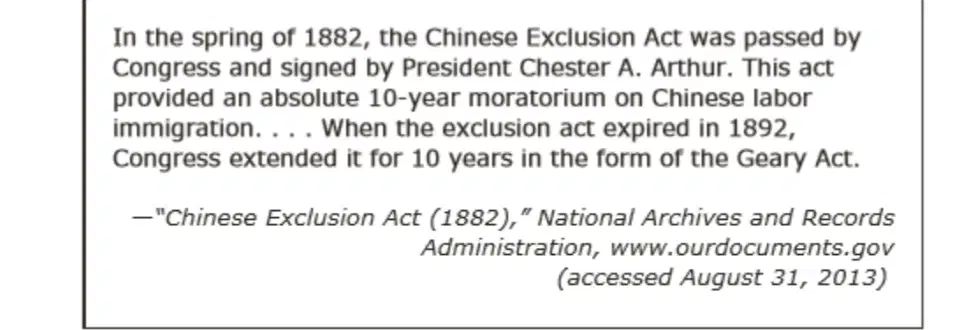
What was the main reason given for the creation of these restrictions?
Preventing the depletion of natural resources
Discouraging anti-American activism
Reducing competition for U.S. jobs
Addressing a lack of urban housing

