
 Worksheets
The Physiology of Addiction
Total questions: 87
Worksheet time: 44mins
Fill in the blank: ______ is a treatable chronic disease characterized by a compulsive dependence on a behavior or substance despite ongoing negative consequences.
Addiction
Influenza
Arthritis
Asthma
Which organization classifies addiction as a mental disorder?
World Health Organization (WHO)
American Psychiatric Association (APA)
Centers for Disease Control and Prevention (CDC)
National Institutes of Health (NIH)
Fill in the blank: ______ dependence is the adaptive state of brain and body processes that occurs with regular addictive behavior and results in withdrawal if the addictive behavior stops.
Physiological
Psychological
Behavioral
Emotional
Fill in the blank: ______ dependence is the dependency of the mind on a substance or behavior, which can lead to psychological withdrawal symptoms such as anxiety, irritability, or cravings.
Psychological
Physical
Chemical
Physiological
Fill in the blank: __________ is the preoccupation with a behavior and an overwhelming need to perform it.
Compulsion
Obsession
Addiction
Impulse
Fill in the blank: __________ is the inability to predict reliably whether a particular instance of involvement with an addictive substance or behavior will be healthy or damaging.
Loss of control
Tolerance
Withdrawal
Dependence
Fill in the blank: __________ refers to physical damage, legal trouble, financial ruin, academic failure, family dissolution, and other severe problems that do not occur with healthy involvement in any behavior.
Negative consequences
Positive reinforcement
Healthy habits
Personal growth
Fill in the blank: __________ is the inability to perceive or accurately interpret the self-destructive effects of an addictive behavior.
Denial
Insight
Empathy
Awareness
Fill in the blank: __________ is the failure to avoid drug use over a sustained period of time.
Inability to abstain
Physical fitness
Nutritional deficiency
Social interaction
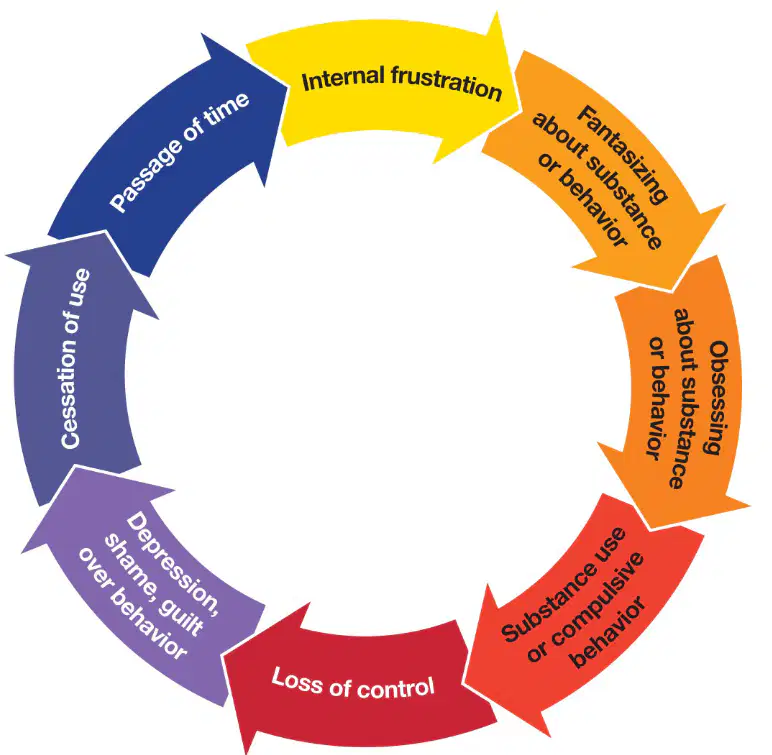
According to Figure 8.2 The Cycle of Psychological Addiction, what is the first stage in the cycle?
Internal frustration
External pressure
Physical craving
Withdrawal symptoms
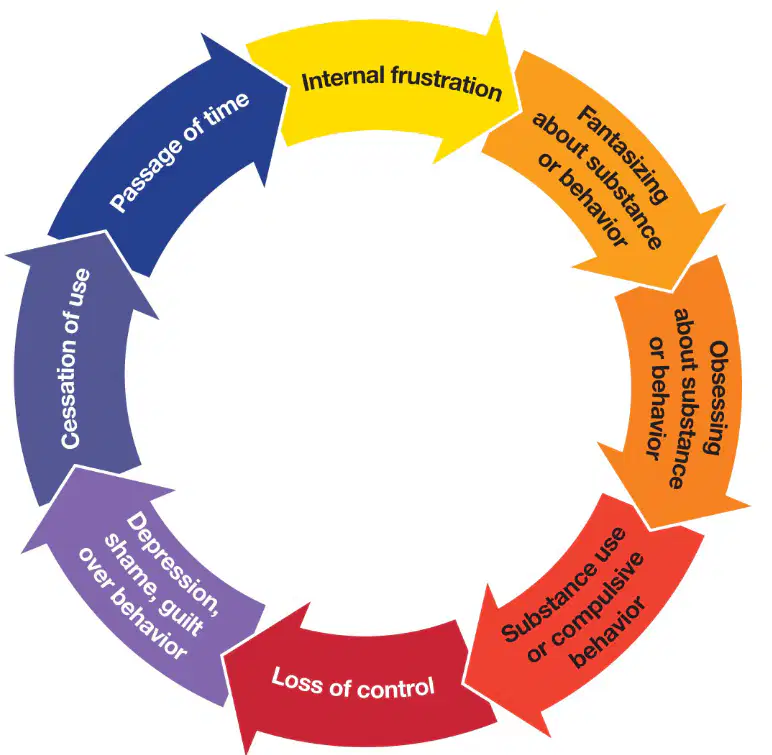
According to Figure 8.2 The Cycle of Psychological Addiction, which stage comes after 'Internal frustration'?
Fantasizing about substance or behavior
Seeking help from others
Experiencing withdrawal symptoms
Returning to normal activities
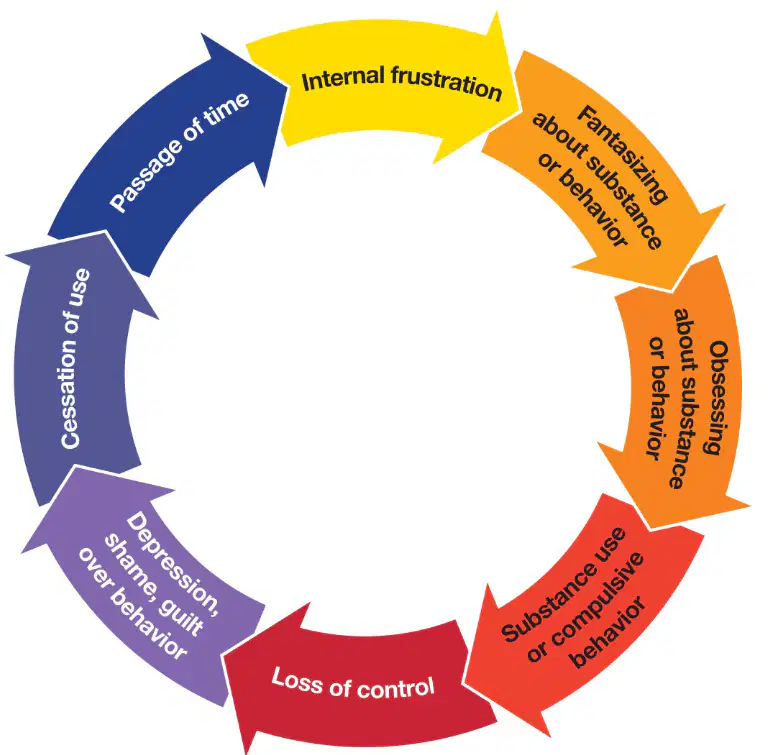
According to Figure 8.2 The Cycle of Psychological Addiction, which stage involves 'Obsessing about substance or behavior'?
The third stage
The first stage
The second stage
The fourth stage
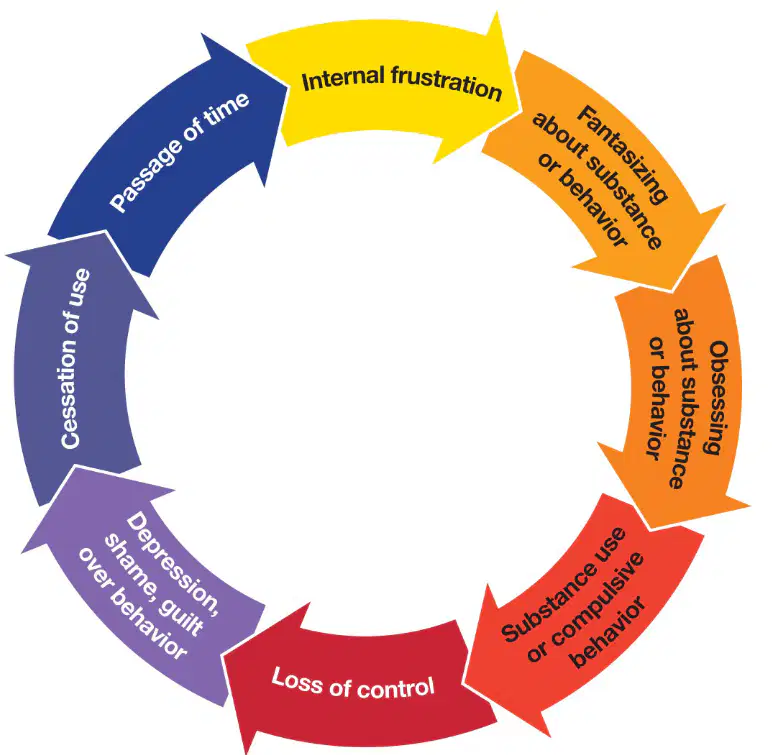
According to Figure 8.2 The Cycle of Psychological Addiction, what happens after 'Substance use or compulsive behavior'?
Loss of control
Improved self-esteem
Immediate recovery
Increased motivation
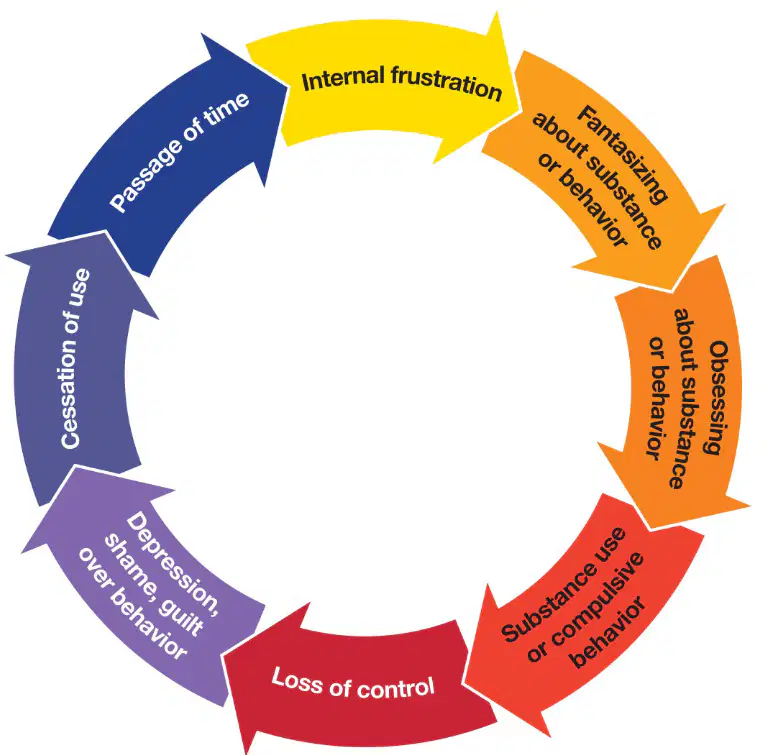
According to Figure 8.2 The Cycle of Psychological Addiction, which stage is characterized by 'Depression, shame, guilt over behavior'?
The sixth stage
The first stage
The third stage
The fourth stage
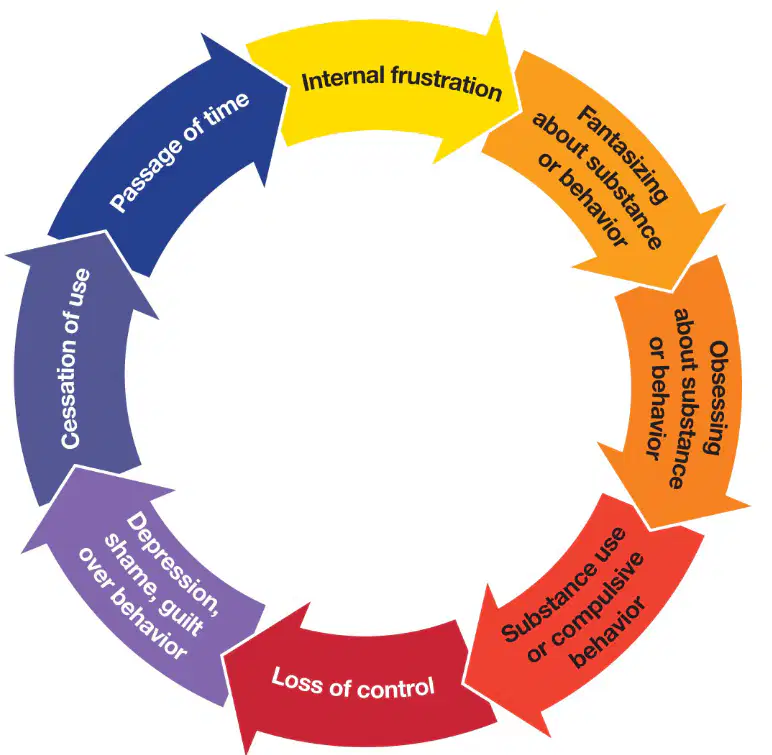
According to Figure 8.2 The Cycle of Psychological Addiction, what is the final stage before the cycle repeats?
Passage of time
Initial use of substance
Craving for substance
Seeking help
Fill in the blank: Addiction involves elements of ______, a repeated behavior in which the repetition may be unconscious.
habit
emotion
logic
talent
A habit can be broken.
True
False
Fill in the blank: Addiction involves repetition of a behavior that occurs with ______, and considerable discomfort occurs if the behavior is not performed.
compulsion
relaxation
indifference
satisfaction
What are process addictions?
Addictions to drug chemicals
Behaviors known to be addictive because they are mood altering
Addictions to food
Addictions to sleep
Fill in the blank: Gambling, compulsive buying, compulsive exercise, and compulsive Internet or technology use are all examples of _________
process addictions
nutritional deficiencies
infectious diseases
physical disabilities
Drug chemicals are the only source of addiction. People cannot become addicted to behaviors.
True
False
Which of the following is NOT an example of a process addiction?
Compulsive buying
Compulsive exercise
Compulsive Internet use
Eating vegetables
According to the passage, which of the following can be addictive?
Cell phones
Video games
Networking sites
The Internet
All of the above
Approximately what percent of college students report that Internet use and computer games have interfered with their academic performance?
9 percent
2 percent
15 percent
25 percent
Which of the following is NOT listed as a symptom of technology and internet addiction in the passage?
A) General disregard for one's health
B) Sleep deprivation
C) Increased physical activity
D) Neglecting family and friends
Symptoms of technology and internet addiction include general disregard for one's health, sleep deprivation, neglecting family and friends, lack of physical activity, euphoria when online, lower grades in school, and poor job performance.
True
False
More than ___ percent of Americans have access to the Internet and use it daily.
85
60
40
25
What percentage of people over the age of 65 report using the Internet?
50%
75%
85%
99%
___ percent of 18-to 29-year-olds say they are almost constantly online.
36
22
48
60
What percentage of U.S. adults use some form of social media?
36%
73%
84%
99%
An estimated one in ___ Internet users may have Internet addiction.
eight
ten
twenty
five
More than how many people meet the criteria for having a gambling addiction?
One million
Three million
Five million
Ten million
What is the current term used by the APA for what was previously called pathological gambling?
Gambling disorder
Impulse control disorder
Compulsive betting syndrome
Addictive wagering disorder
Gambling disorder is recognized as a mental disorder by the APA.
True
False
There is strong evidence for a ________ component in gambling disorder.
biological
cultural
economic
spiritual
What percentage of college students report gambling in the last year?
25%
50%
75%
100%
What is compulsive buying disorder?
A disorder where people avoid shopping
A disorder where people shop excessively to feel better about themselves
A disorder where people never spend money
A disorder related to eating habits
Which of the following is a symptom of compulsive buying disorder?
Preoccupation with shopping and spending
Avoiding shopping malls
Saving all your money
Refusing to buy gifts
Fill in the blank: Buying more than one of the same item is a _______ of compulsive buying disorder.
symptom
cure
hobby
treatment
Shopping for longer periods than intended is a symptom of compulsive buying disorder.
True
False
Which of the following is NOT a symptom of compulsive buying disorder?
Repeatedly buying more than is needed or can be afforded
Buying to the point that it interferes with social activities or work
Only shopping for groceries
Preoccupation with shopping and spending
Fill in the blank: Compulsive buying disorder can interfere with _______ or work.
social activities
eating habits
physical exercise
sleep patterns
Compulsive sexual behavior is classified by the World Health Organization as what type of disorder?
Impulse control disorder
Mood disorder
Personality disorder
Anxiety disorder
Compulsive sexual behavior is technically classified as an addiction by the World Health Organization.
True
False
Which of the following may be involved in compulsive sexual behavior?
A) A normally enjoyable sexual experience that becomes an obsession
B) Fantasies or activities outside the bounds of culturally, legally, or morally acceptable sexual behavior
C) Both A and B
What is exercise addiction?
Compulsively using exercise to regulate and cope with emotions and continuing excessive exercise despite experiencing negative consequences.
Exercising only for fun and relaxation.
Exercising occasionally with friends.
Avoiding exercise completely.
Which of the following is a warning sign of exercise addiction?
Working out with friends occasionally
Exercising for more than two hours daily
Exercising only on weekends
Taking breaks when sick or injured
Fill in the blank: Warning signs of exercise addiction include working out alone, rigid exercise patterns, exercising for more than _______ hours daily, and exercising when sick or injured.
two
four
one
five

Look at the images of brain activity. Which brain shows higher metabolic activity?
Healthy Brain Activity
Drug User Brain Activity
According to Nora D. Volkow, M.D., drug addiction is a brain disease that can be treated.
True
False
Fill in the blank: 'Drug addiction is a brain ______ that can be treated.'
disease
habit
activity
emotion
Fill in the blank: ______ are substances other than food that are intended to affect the structure or function of the mind or body through chemical action.
Drugs
Vitamins
Minerals
Proteins
Scientists divide drugs into how many categories?
Four
Five
Six
Seven
Which of the following is NOT a category of drugs according to scientists?
Prescription
Over-the-counter (OTC)
Recreational
Nutritional supplements
Legal substances such as alcohol, caffeine, and tobacco are considered drugs.
True
False
Fill in the blank: The brain is wired to repeat ________ experiences.
pleasurable
painful
boring
confusing
Fill in the blank: Life-sustaining activities activate a 'pleasure circuit' of ________ cells.
nerve
muscle
skin
blood
What neurotransmitter is used by one nerve cell set in the brain's pleasure circuit?
Serotonin
Dopamine
Acetylcholine
GABA
Fill in the blank: The 'pleasure circuit' is known as the ________ dopamine system.
mesolimbic
nigrostriatal
tuberoinfundibular
mesocortical
True or False: All addictive drugs activate the brain's pleasure circuit.
True
False
What are psychoactive drugs?
Psychoactive drugs affect chemical neurotransmission, either enhancing it, suppressing it, or interfering with it.
Psychoactive drugs are only used to treat physical injuries.
Psychoactive drugs have no effect on the brain or nervous system.
Psychoactive drugs are vitamins that improve physical strength.
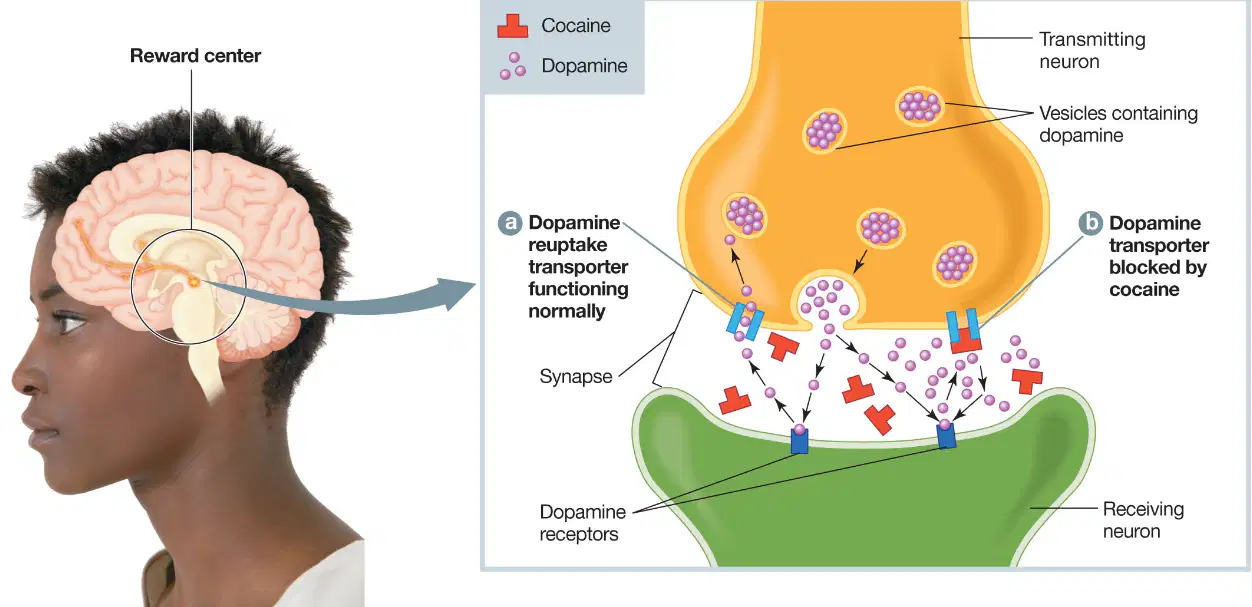
What is the primary effect of cocaine on dopamine transporters in the brain?
It increases dopamine reuptake
It blocks dopamine transporters
It destroys dopamine receptors
It decreases dopamine release
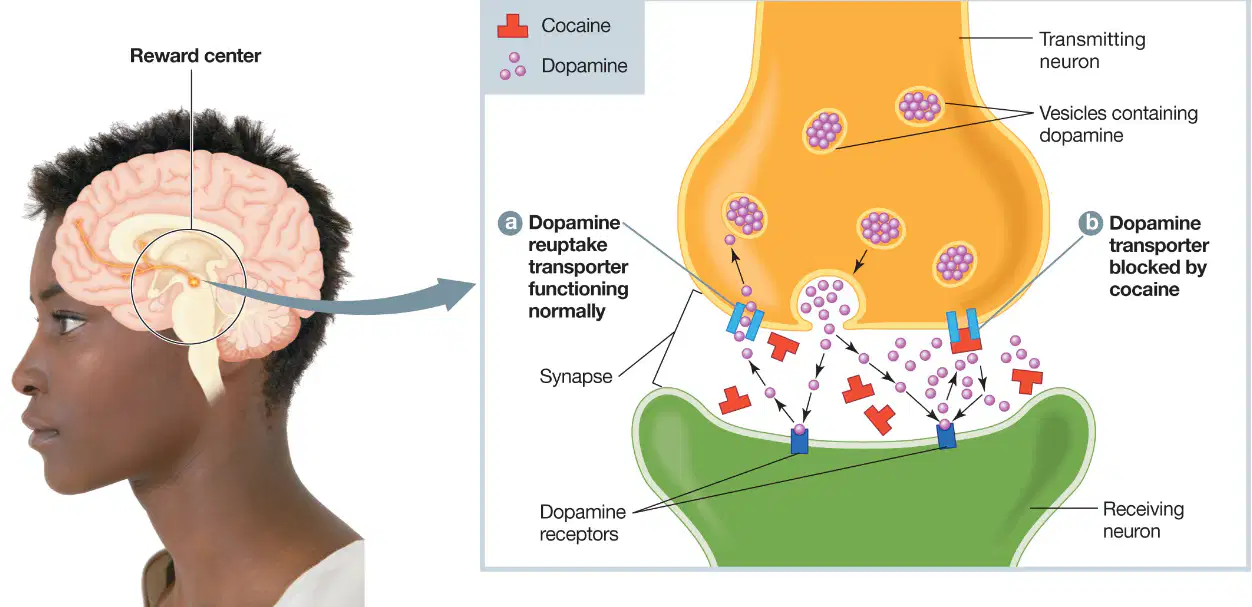
The reward center in the brain is associated with which neurotransmitter shown in the diagram?
Dopamine
Serotonin
Acetylcholine
GABA
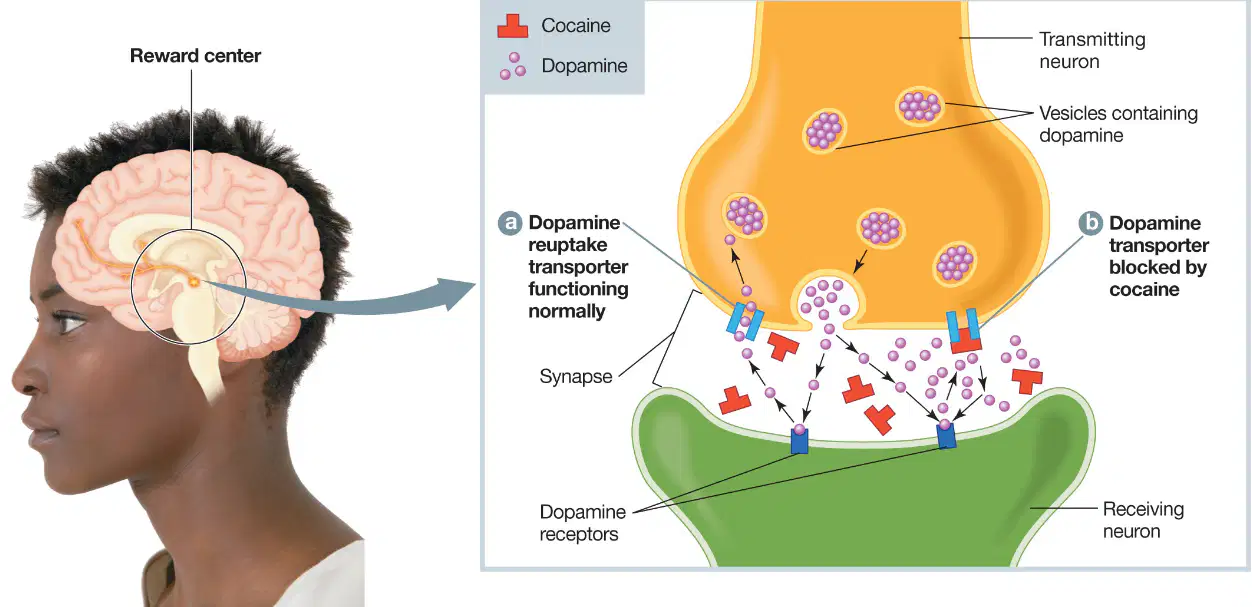
Refer to the diagram titled 'Figure 8.4 The Action of Cocaine at Dopamine Receptors in the Brain.' When the dopamine reuptake transporter is functioning normally, what happens to dopamine in the synapse?
Dopamine is reabsorbed by the transmitting neuron
Dopamine is blocked from entering the synapse
Dopamine is destroyed immediately
Dopamine remains in the synapse indefinitely
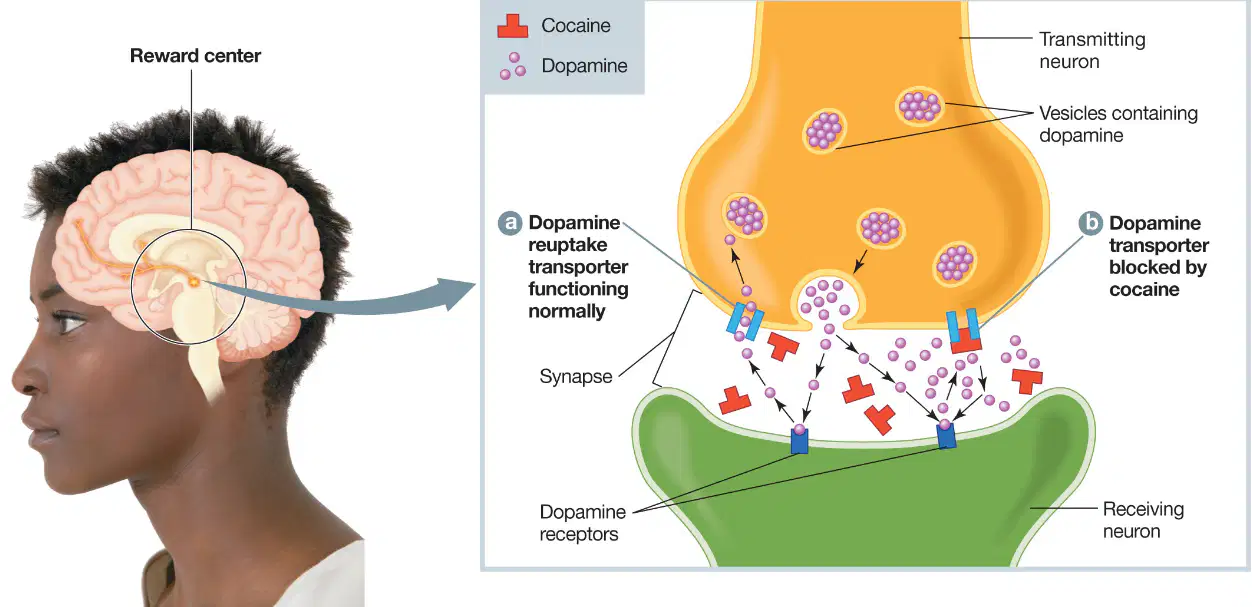
Proteins on the receiving neuron that bind dopamine
Dopamine receptors
Synapse
Dopamine transporter
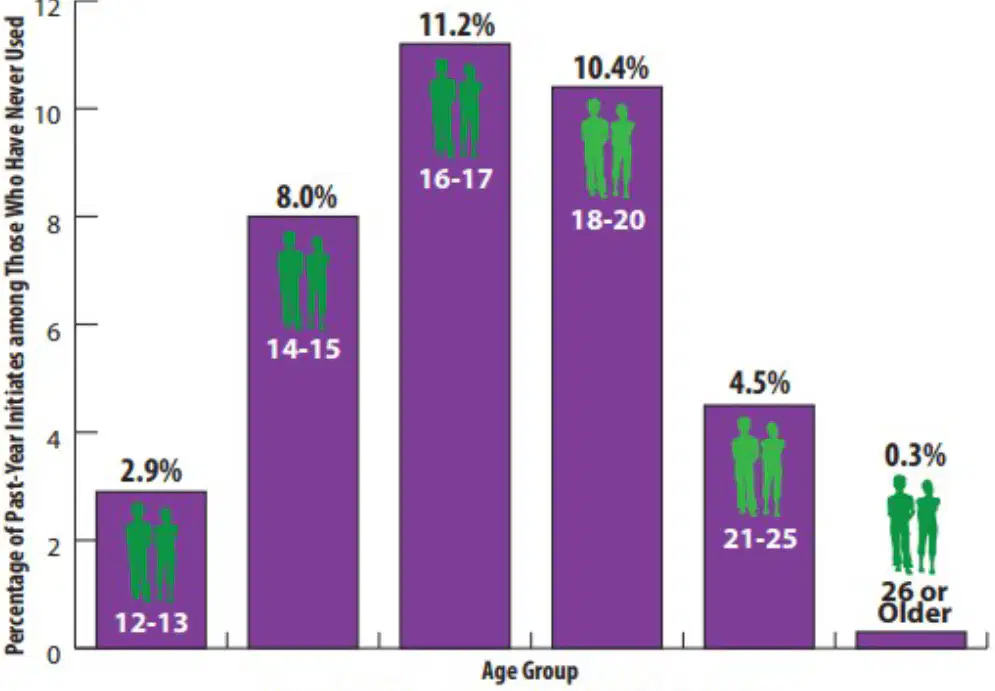
According to the National Survey on Drug Use and Health, what percentage of past year initiates among those who have never used illicit drugs are in the 16-17 age group?
2.9%
8.0%
11.2%
4.5%
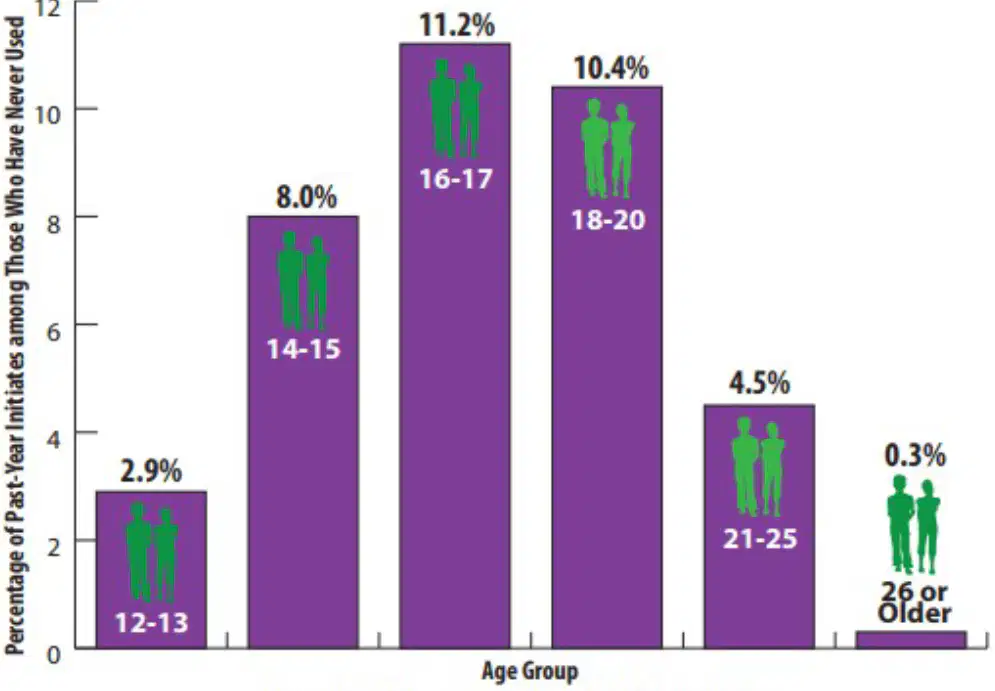
According to the National Survey on Drug Use and Health, fill in the blank: The percentage of past year initiates among those who have never used illicit drugs in the 21-25 age group is _____
4.5%
1.2%
7.8%
10.3%
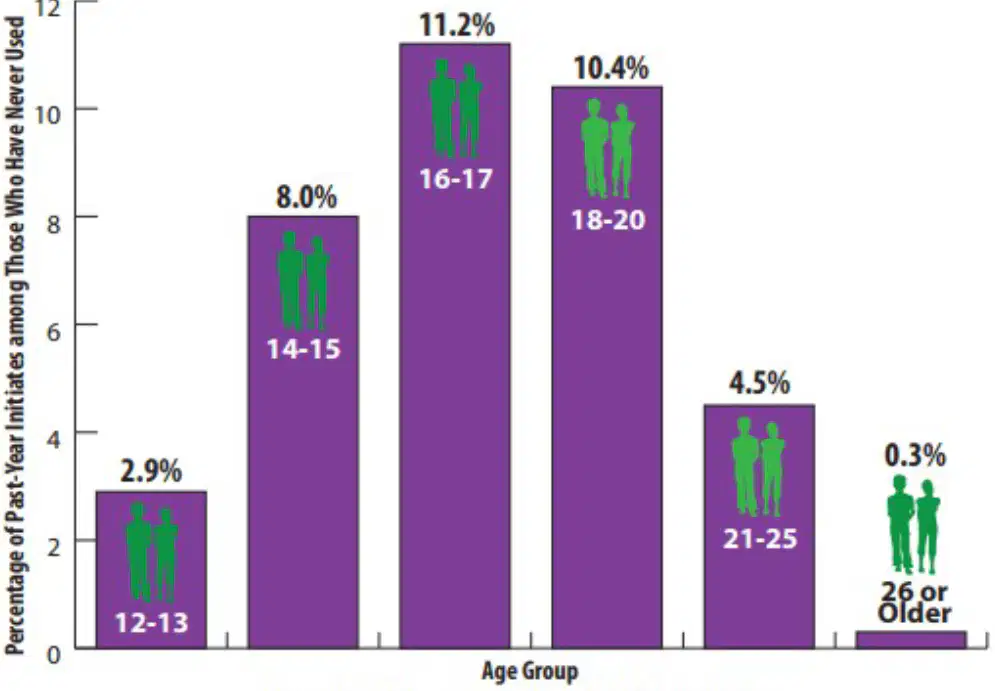
Which age group has the lowest percentage of past year initiates among those who have never used illicit drugs according to the National Survey on Drug Use and Health?
12-13
18-20
26 or Older
14-15
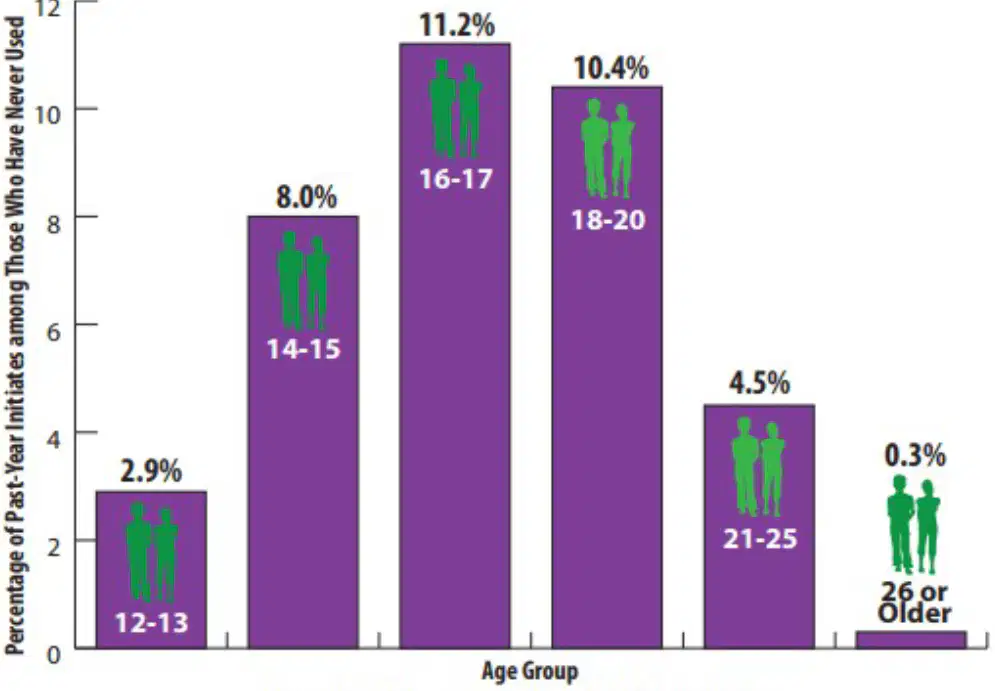
According to the National Survey on Drug Use and Health, what is the percentage of past year initiates among those who have never used illicit drugs in the 14-15 age group?
8.0%
2.5%
15.3%
20.1%
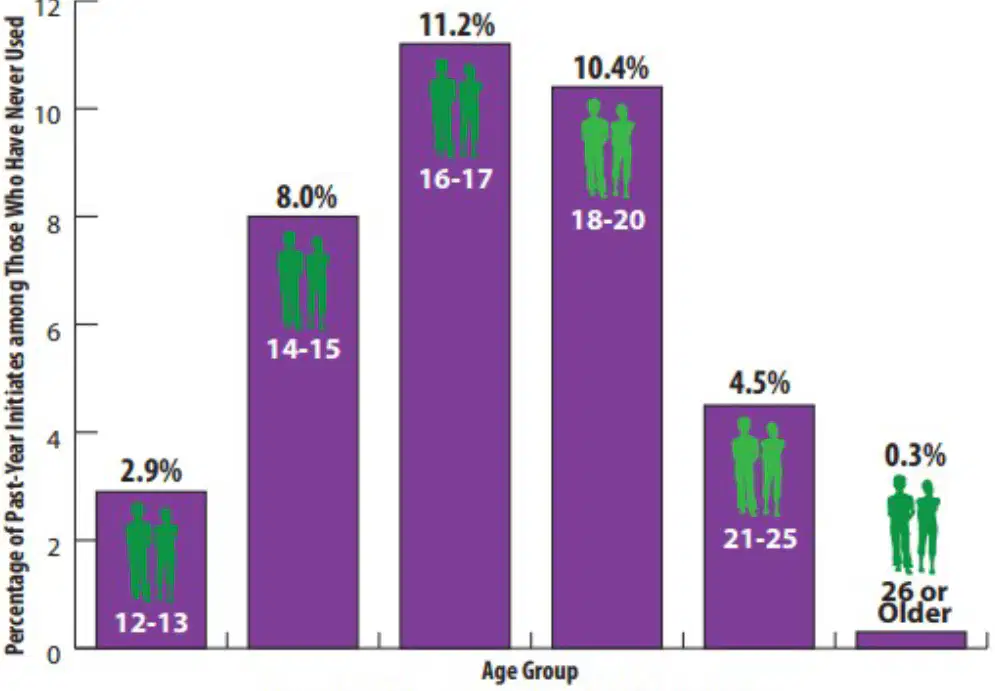
According to the National Survey on Drug Use and Health, which age group has the highest percentage of past year initiates among those who have never used illicit drugs?
12-13
16-17
18-20
21-25
Fill in the blank: The intake of drugs through the mouth is called ________.
oral ingestion
inhalation
injection
topical application
Fill in the blank: The administration of drugs through the respiratory tract is called ________.
inhalation
injection
oral administration
topical application
Which of the following is NOT a type of injection (via hypodermic needle)?
Intravenous
Intramuscular
Subcutaneous
Oral ingestion
Fill in the blank: The administration of drugs through the skin is called ________.
transdermal
intravenous
oral
sublingual
Fill in the blank: The administration of drugs through the vagina or anus is called ________.
suppositories
inhalers
tablets
injections
Intake of drugs through the mouth
Oral ingestion
Inhalation
Transdermal
Suppositories
Fill in the blank: ________ drugs are obtained only with a prescription from a licensed physician.
Prescription
Over-the-counter
Herbal
Illegal
Fill in the blank: ________ drugs do not require a prescription and there are more than 100,000 available.
Over-the-counter (OTC)
Prescription-only
Controlled substance
Experimental
Fill in the blank: ________ drugs are used to 'recreate,' relax, or socialize, and most are legal substances such as alcohol, tobacco, and coffee.
Recreational
Prescription
Antibiotic
Performance-enhancing
Fill in the blank: ________ are products of plant origin, including teas.
Herbal preparations
Mineral supplements
Synthetic drugs
Animal extracts
Fill in the blank: ________ drugs are generally recognized as harmful and all are psychoactive.
Illicit (illegal)
Prescription
Over-the-counter
Herbal
Fill in the blank: ________ drugs are found in commercially sold products such as household cleaners and pesticides.
Commercial
Prescription
Recreational
Herbal
The gap between neurons where neurotrans
synapse
dopamine receptors
dopamine transporter
proteins that reabsorb dopamine into the transmitting neuron?
synapse
dopamine receptors
dopamine transporter
intake of drugs througth the respiratory tract
oral ingestion
inhalation
transdermal
suppositories
intake of drugs through the vagina or anus
inhalation
transdermal
suppositories
oral ingestion
intake of drugs througth the skin
transdermal
suppositories
inhalation
oral ingestion