
 Worksheets
Oxygen Saturation, Pain, and Blood Pressure Review
Total questions: 84
Worksheet time: 42mins
What does oxygen saturation measure in the blood?
The percentage of hemoglobin in the blood that is bound to oxygen molecules.
The amount of carbon dioxide in the blood.
The number of red blood cells in the blood.
The total volume of blood in the body.
Which molecule in red blood cells binds to oxygen?
Hemoglobin
Glucose
Insulin
Platelets
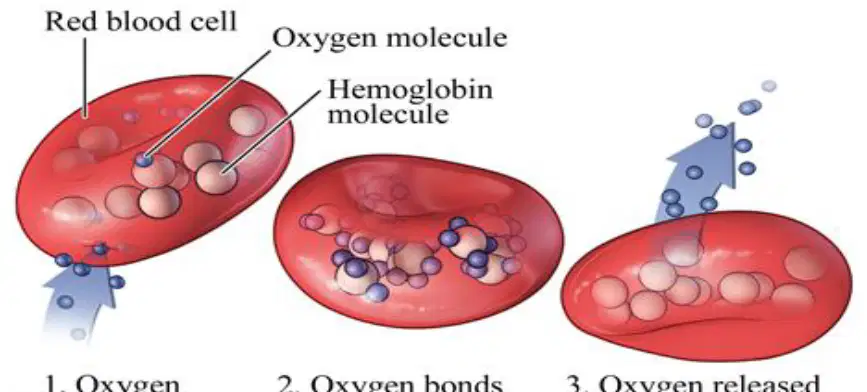
What is the correct sequence of events for oxygen transport as shown in the diagram?
Oxygen from lungs → Oxygen bonds to hemoglobin → Oxygen released to tissue cells
Oxygen released to tissue cells → Oxygen from lungs → Oxygen bonds to hemoglobin
Oxygen bonds to hemoglobin → Oxygen from lungs → Oxygen released to tissue cells
Oxygen from lungs → Oxygen released to tissue cells → Oxygen bonds to hemoglobin
Why is oxygen saturation important for the body?
It indicates how much oxygen is available for tissues and organs.
It measures the amount of sugar in the blood.
It shows the number of white blood cells.
It determines the blood pressure.
What does oxygen saturation reflect in the human body?
How well the heart and lungs deliver oxygen to tissues and how much oxygen is in the bloodstream
The amount of carbon dioxide in the blood
The rate at which the heart beats
The amount of glucose in the blood
Which device is used to measure oxygen saturation?
Pulse oximeter
Thermometer
Sphygmomanometer
Glucometer
Why is measuring oxygen saturation important for health monitoring?
It shows how well oxygen is being delivered to tissues and circulating in the bloodstream
It measures blood sugar levels
It determines cholesterol levels
It checks for bone density
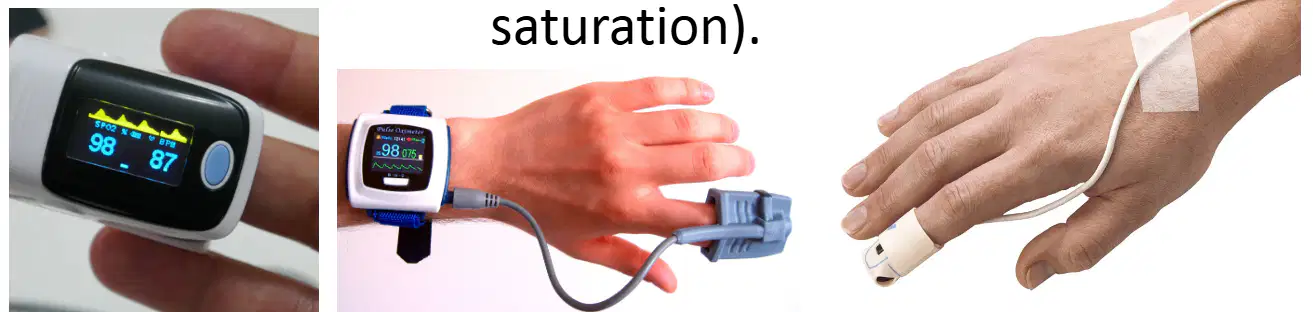
What does a pulse oximeter measure in the blood?
Oxygen level (oxygen saturation)
Blood sugar level
Blood pressure
Heart size
Which types of light does a pulse oximeter use to measure oxygen saturation?
Red and infrared light
Blue and ultraviolet light
Green and yellow light
White and purple light
How does a pulse oximeter determine the blood’s oxygen level?
By sensing how much light is absorbed
By measuring blood temperature
By detecting blood flow speed
By counting red blood cells
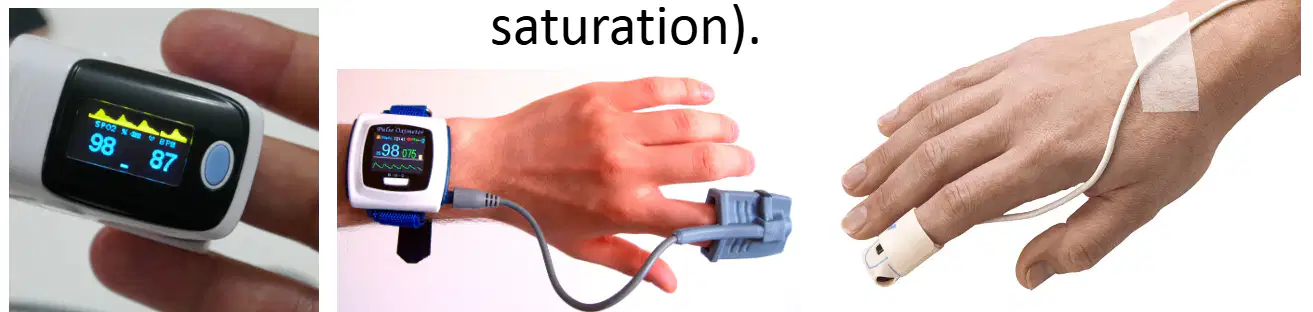
Why is it important for a pulse oximeter to shine light through the fingertip or earlobe?
These areas have good blood flow and are thin enough for light to pass through
These areas are the only places with oxygen in the blood
These areas are less sensitive to pain
These areas are easier to clean
What is the normal range for blood oxygen saturation according to the chart?
95%-100%
91%-94%
≤90%
80%-85%
If a person's blood oxygen level is measured at 92%, how would it be classified?
Normal
Low
Danger
Critical
A patient has a blood oxygen saturation of 89%. What should be the immediate concern according to the chart?
The patient is in the normal range.
The patient is in the low range.
The patient is in the danger range.
The patient is in the safe range.
Why is it important to monitor blood oxygen saturation levels, especially if they fall into the "danger" category?
Low oxygen levels can cause fatigue.
Dangerously low oxygen levels can indicate a serious health risk and require immediate medical attention.
High oxygen levels are always dangerous.
Oxygen saturation does not affect health.
What is hypoxemia?
A dangerously low level of oxygen in the blood.
A high level of carbon dioxide in the blood.
A condition where the heart beats irregularly.
A deficiency of red blood cells.
Which of the following conditions might allow patients to function normally with oxygen saturation levels below 95%?
COPD, sleep apnea, or heart failure
Asthma, diabetes, or hypertension
Anemia, leukemia, or lymphoma
Stroke, migraine, or epilepsy
A patient with sleep apnea has an oxygen saturation level of 93%. Based on the information provided, what can you infer about their ability to function?
They may be able to function normally.
They will definitely experience severe symptoms.
They must be hospitalized immediately.
They are at risk of high blood pressure.
What is pain?
A pleasant sensation in the nervous system
An unpleasant sensation perceived in the nervous system when illness or injury occurs
A type of muscle movement
A form of exercise
Which of the following best describes acute pain?
Pain that lasts for a long time
Pain that is always mild
Pain that lasts for a short amount of time
Pain that is only psychological
How does chronic pain differ from acute pain?
Chronic pain is always more severe than acute pain
Chronic pain is long term, while acute pain is short term
Chronic pain is only caused by injuries
Chronic pain is not perceived in the nervous system
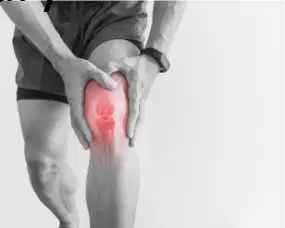
A person experiences pain in their knee after an injury, and it lasts for several months. What type of pain is this most likely to be?
Acute pain
Chronic pain
Imaginary pain
Temporary pain

According to the material, who is the best person to describe what pain feels like?
The doctor
The nurse
The patient
The family member

Which statement best describes how pain tolerance varies among individuals?
Everyone has the same pain tolerance
Only children have a high pain tolerance
Some people have a higher pain tolerance than others
Pain tolerance does not vary by individual
Why is it important for healthcare providers to listen to the patient’s description of pain?
Because only the patient can describe what they are feeling
Because pain is always visible
Because pain is the same for everyone
Because family members know best

On a standard pain scale, what number represents "no pain"?
0
5
10
3

According to the pain scale, what does a rating of 5 indicate?
No pain
Moderate pain
Severe pain
Mild pain

What is the highest level of pain someone can report on the pain scale shown?
5
0
10
8

If a patient describes their pain as the worst they have ever felt, what number would they most likely use on the pain scale?
0
3
5
10

A nurse asks a patient to rate their pain and the patient says "5." Based on the pain scale, what does this rating mean, and how might this information be used in a clinical setting?
The patient has no pain; no action is needed.
The patient has moderate pain; the nurse may consider pain management interventions.
The patient has the worst pain possible; emergency intervention is required.
The patient has mild pain; observation is sufficient.

According to the Allina Health Pain Assessment Scale, what pain level is described as "Pain keeps you from doing your regular activities"?
1-3
4-6
7-9
0
Which pain level on the Allina Health Pain Assessment Scale is associated with "Pain makes it hard to concentrate"?
10
4-6
1-3
0
If a person can ignore the pain at times, which range on the Allina Health Pain Assessment Scale best describes their pain?
7-9
4-6
1-3
10
What does a pain score of 0 indicate on the Allina Health Pain Assessment Scale?
Mild Pain
No Pain
Moderate Pain
Severe Pain

A patient reports that pain is so intense they have trouble talking. According to the Allina Health Pain Assessment Scale, what is the most likely pain score range?
1-3
4-6
7-9
0
Compare and contrast the characteristics of "Mild Pain" and "Moderate Pain" as described in the Allina Health Pain Assessment Scale. Provide at least two differences in how these pain levels affect daily activities.
Mild pain does not interfere with regular activities, while moderate pain may interfere; mild pain can be tolerated, while moderate pain makes it hard to concentrate.
Both mild and moderate pain prevent all activities.
Mild pain is always ignored, while moderate pain is never ignored.
Moderate pain is less noticeable than mild pain.
What is the Wong-Baker Pain Scale primarily used for?
Measuring blood pressure
Assessing pain in patients with trouble with verbal communication
Testing vision
Monitoring heart rate
Who was the Wong-Baker Pain Scale originally developed for?
Elderly patients
Children
Athletes
Pregnant women
Which of the following statements is true about the Wong-Baker Pain Scale?
It can only be used for adults.
It was originally developed for children but can be used for anyone.
It is only used in emergency rooms.
It measures temperature.
Based on the Wong-Baker FACES Pain Rating Scale, what does a score of 10 indicate?
No pain
Hurts little bit
Hurts worse
Hurts little more
A patient who cannot speak is asked to point to a face on the Wong-Baker Pain Scale. Why is this method effective?
It uses colors to indicate pain
It allows non-verbal communication of pain intensity
It measures heart rate
It is only for adults
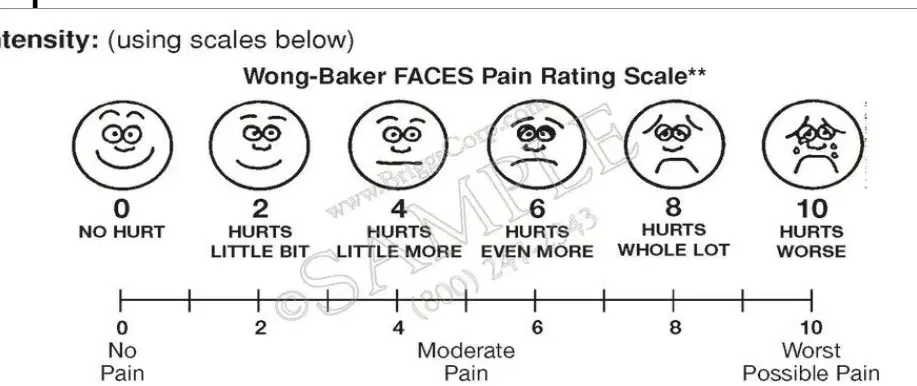
What does the face labeled with "0" on the Wong-Baker FACES Pain Rating Scale represent?
Hurts little bit
Hurts whole lot
No hurt
Hurts even more

Which of the following is a method to assess pain in unconscious patients?
By their behaviors
By asking them directly
By checking their temperature
By measuring their blood pressure
Which of the following behaviors is NOT typically used to assess pain in unconscious patients?
Facial muscles
Restlessness
Muscle tone
Blood sugar level
A nurse observes an unconscious patient for signs of pain. Which combination of behaviors should the nurse look for?
Facial muscles, restlessness, muscle tone, vocalization, consolability
Heart rate, blood pressure, temperature, oxygen saturation
Skin color, pupil size, reflexes, blood sugar
Appetite, sleep pattern, weight, hydration
Why is it important to assess behaviors such as facial muscles and restlessness in unconscious patients?
Because these behaviors can indicate the presence of pain
Because they help diagnose infections
Because they show the patient is waking up
Because they measure the patient's intelligence
Why must pain be assessed frequently in patients?
Because pain is often the first sign of a problem
Because it is required by law
Because patients always ask for it
Because it saves time for nurses
After administering pain medication, when should pain be reassessed for IV medications?
30 minutes
15 minutes
60 minutes
90 minutes
After administering oral pain medication, when should pain be reassessed?
60 minutes
15 minutes
30 minutes
90 minutes
Which of the following best describes when pain assessment should occur after an intervention?
Always after an intervention such as pain medication
Only if the patient requests it
Only at the end of the shift
Only if the patient is elderly
How does the situation of the patient affect pain assessment?
The frequency of pain assessment depends on the patient's situation
It does not affect pain assessment at all
Pain should only be assessed once per day regardless of the situation
Pain should only be assessed if the patient is sleeping
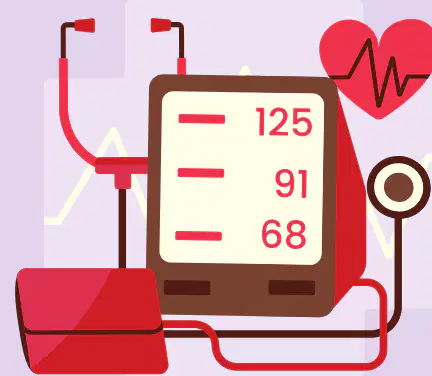
What is blood pressure?
The measurement of the pressure that blood exerts on the walls of the arteries during various states of health activity.
The amount of oxygen in the blood.
The rate at which blood is pumped by the heart.
The temperature of the blood in the arteries.
Which of the following best describes what is measured by blood pressure?
The pressure blood exerts on the walls of the arteries.
The sugar level in the blood.
The number of red blood cells in the arteries.
The cholesterol content in the blood.
Why is it important to measure blood pressure during various states of health activity?
To understand how blood pressure changes with different health conditions.
To measure the amount of blood in the body.
To determine the body temperature.
To check the level of vitamins in the blood.
Which of the following pieces of equipment is required to measure blood pressure?
Thermometer
Stethoscope
Glucometer
Otoscope
What is the unit of measurement for blood pressure?
Kilograms
Liters
Millimeters of mercury (mm Hg)
Pascals
Which combination of equipment is necessary to measure blood pressure accurately?
Sphygmomanometer and thermometer
Stethoscope and sphygmomanometer
Glucometer and stethoscope
Otoscope and thermometer
What does the systolic blood pressure measure?
Pressure on the arteries when the left ventricle contracts
Pressure on the veins when the right atrium relaxes
Pressure on the arteries when the left ventricle relaxes
Pressure on the veins when the right ventricle contracts
Which number in a blood pressure reading represents the systolic pressure?
The top number
The bottom number
The middle number
The average of both numbers
When taking a blood pressure reading, what indicates the systolic value?
The first good sound when the cuff is deflating
The last sound before silence
The highest number recorded after inflation
The lowest number recorded before inflation
What is the name of the sound used to determine the systolic blood pressure?
Korotkoff
Systolic
Diastolic
Murmur
A diagram shows a blood pressure monitor with three numbers: 125, 91, and 68. Which number most likely represents the systolic pressure?
125
91
68
All three numbers
What does the diastolic blood pressure represent?
The pressure on the arteries when the left ventricle is between beats, at rest, or refilling with blood
The pressure on the arteries during a heartbeat
The highest pressure in the arteries
The amount of blood pumped by the heart per minute
In a blood pressure reading, which number represents the diastolic pressure?
The top number
The middle number
The bottom number
The average of the two numbers
What is the Korotkoff sound used for in measuring blood pressure?
To determine the start of blood flow
To identify the last good sound when the cuff is deflating
To measure heart rate
To check oxygen levels in the blood
Why is the diastolic pressure important in a blood pressure reading?
It shows the pressure during heart contraction
It indicates the constant pressure on arteries when the heart is at rest
It measures the oxygen content in blood
It reflects the electrical activity of the heart
What is the correct way to record blood pressure values?
Systolic over Diastolic
Diastolic over Systolic
Systolic plus Diastolic
Diastolic minus Systolic
Which of the following represents the correct notation for blood pressure?
systolic / diastolic
diastolic / systolic
systolic x diastolic
diastolic + systolic
Why is it important to record systolic and diastolic values in a specific order when measuring blood pressure?
To ensure accurate communication of cardiovascular health
To make the numbers easier to add
To match alphabetical order
To avoid using decimals
What is the systolic blood pressure range for prehypertension?
120-139
100-120
<90
140-159
Which of the following diastolic values indicates hypertension?
60-80
<60
80-89
90-99
If a person has a systolic blood pressure of 85 and a diastolic blood pressure of 55, which category do they fall into?
Normal BP
Hypotension
Prehypertension
Hypertension
Which combination of systolic and diastolic values represents the normal blood pressure (Normal BP) category?
Systolic <120 and Diastolic <80
Systolic 120-139 or Diastolic 80-89
Systolic 140-159 or Diastolic 90-99
Systolic <90 or Diastolic <60
A patient has a systolic blood pressure of 145 and a diastolic blood pressure of 95. Based on the table, what is the most likely diagnosis?
Normal BP
Hypotension
Prehypertension
Hypertension
What is the term for high blood pressure?
Hypertension
Hypotension
Orthostatic Hypotension
Hypertensive Crisis
Which of the following best describes a hypertensive crisis?
A decrease in blood pressure when standing up
An acute, severe, life-threatening rise in blood pressure
Low blood pressure
Normal blood pressure
What does the term "hypotension" refer to?
High blood pressure
Low blood pressure
Normal blood pressure
Fluctuating blood pressure
If someone experiences a decrease in blood pressure when moving from lying down to standing, what is this condition called?
Hypertension
Hypertensive Crisis
Orthostatic Hypotension
Hypotension
A patient reports feeling dizzy after standing up quickly from a lying position. Based on the terms provided, which condition might they be experiencing?
Hypertension
Hypertensive Crisis
Orthostatic Hypotension
Hypotension
Which of the following is NOT listed as a cause of hypertension?
Anxiety
Obesity
High salt diet
Low blood sugar
What is plaque as described in the context of hypertension?
A narrowing of a blood vessel
A deposit made up of fatty substances, cholesterol, and waste products that adhere to the artery wall
A type of hormone
A type of medication
What does the term "stenosis" refer to?
The buildup of cholesterol in the liver
The narrowing or constriction of a blood vessel
The increase in heart rate
The thickening of the skin
Which of the following combinations could contribute to the development of hypertension according to the material?
Anxiety and high salt diet
Low salt diet and increased exercise
High sugar diet and dehydration
Vitamin deficiency and low blood pressure
Explain how plaque formation can contribute to hypertension.
Plaque increases blood flow, lowering blood pressure.
Plaque narrows arteries, increasing resistance and raising blood pressure.
Plaque helps arteries expand, reducing blood pressure.
Plaque has no effect on blood pressure.

