wayground logo

Free Printable Worksheets

NEW

Font size

S
M
L
XL
Worksheets

Mr. Brad's Six Week AssessmentPhysical First TermScience

Total questions: 20

Worksheet time: 1hrs 2mins

Name
Class
Date
1.
What is the first step in the scientific method?
a)
Make an observation --> Question
b)
Design and conduct an experiment
c)
Make an hypothesis
d)
Share your results
2.
A testable prediction about a scientific investigation is a(n)
a)
Question
b)
Observation
c)
Hypothesis
d)
Experiment
3.
Information you obtain through your senses, such as touch, sound and sight.
a)
observation
b)
hypothesis
c)
question
d)
conclusion
4.
A prediction or guess based on observations.
a)
data
b)
scientific process
c)
hypothesis
d)
question
5.

Which of the following is NOT an example of matter?

a)

Air

b)

Water

c)

Sound

d)

Rock

6.

Which of the following lists all four main states of matter?

a)

Solid, Liquid, Gas, Plasma

b)

Water, Ice, Steam, Air

c)

Solid, Liquid, Vapor, Cloud

d)

Earth, Water, Fire, Air

7.

Why is plasma considered a state of matter along with solid, liquid, and gas?

a)

Because it is a type of liquid

b)

Because it has unique properties different from solids, liquids, and gases

c)

Because it is always cold

d)

Because it is found only on Earth

8.

The positive particles of an atom are

a)

electrons

b)

positrons

c)

neutrons

d)

protons

9.
the central region of an atom where its neutrons and protons are is its 
a)
nucleus 
b)
electron cloud
c)
core 
d)
center 
10.
What part of the atom is the arrow pointing to?
a)
nucleus
b)
proton
c)
electron shell
d)
electron
11.

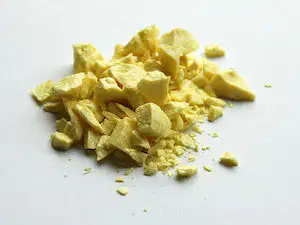
What is the atomic symbol of sulfur?

a)

S

b)

Su

c)

Sl

d)

Sr

12.

Cu

a)

carbon

b)

chlorine

c)

copper

d)

gold

13.

Carbon

a)

9

b)

8

c)

7

d)

6

14.

Neon

a)

11

b)

10

c)

9

d)

8

15.

Manganese

a)

M

b)

Ma

c)

Mg

d)

Mn

16.
What is the atomic number?
a)
the number of protons
b)
the number of protons and neutrons
c)
the number of neutrons
d)
the number of protons and electrons
17.
This particle determines what element you have - the elements identity.
a)
electron
b)
proton
c)
neutron
d)
valence shell
18.
Most of the elements on the periodic table are classified as _____.
a)
Metals
b)
Nonmetals
c)
Metalloids
d)
Periods
19.
Which is an alkali metal?
a)
Magnesium
b)
Iron
c)
Sodium
d)
Europium
20.

The atomic mass of an element is equal to the number of...

a)

protons and neutrons

b)

protons and electrons

c)

protons neutrons and electrons