
 Worksheets
Western River Civilizations Unit Test
Total questions: 20
Worksheet time: 11mins
Name
Class
Date
1.
The word “Mesopotamia” means…?
a)
ancient god of rivers
b)
between the rivers
c)
the fertile grounds
d)
heaven almighty
2.
Which two rivers surround the fertile crescent?
a)
Nile and Tigris
b)
Tigris and Euphrates
c)
Euphrates and Nile
d)
No rivers surround the fertile crescent
3.
Season floods occurred in the Fertile Crescent region. In order to control them, farmers…?
a)
prayed to the Gods
b)
collected extra water in buckets
c)
build damns and channels
d)
they were never able to control flooding
4.
Among all the technological advances in Mesopotamia, which one allowed farmers to reroute water to their fields?
a)
irrigation
b)
aqueducts
c)
plows
d)
swords
5.
What was the first major civilization of Mesopotamia?
a)
Navajo
b)
Rome
c)
Egypt
d)
Sumer
6.
Among many achievements, which one demonstrated the elevated writing skills of Mesopotamians?
a)
Epic of Gilgamesh
b)
Music creation
c)
Jewelry-making
d)
cave painting
7.
In terms of religion, the Sumerian Civilization was primarily…?
a)
Atheist
b)
polytheistic
c)
monotheistic
d)
Muslim
8.
What is a Ziggurat?
a)
Large pyramid-like temple at a city's center
b)
ancient Mesopotamian animal
c)
houses made of clay
d)
a traditional ancient dessert
9.
Which of the following embodied the righteousness and moral standards for public interaction and society in Mesopotamia?
a)
The Bible
b)
Khan's Canon
c)
Hammurabi's Code
d)
The Quran
10.
Who was the first empire builder after conquering Sumer?
a)
Cleopatra
b)
King Tutankhamen
c)
Mother Teresa
d)
Sargon of Akkad
11.
What does this excerpt from Hammurabi’s Code demonstrate about the Babylonian empire? "Hammurabi’s Code 196. If a man put out the eye of another man, his eye shall be put out. 198. If he destroyed the eye of a peasant, or broken a bone of a peasant, he shall pay one mina of silver."
a)
laws were different based on social class
b)
it served as a basis for America's law system
c)
the laws were equal for everyone
d)
the peasants' rights were most important
12.
Which geographical feature is the heart of Egypt’s landscape?
a)
The Pyramids
b)
The Nile River Valley
c)
The Fertile farmland
d)
the Pacific Ocean
13.
The first written language that was developed in Sumer was…?
a)
Hieroglyphics
b)
Cuneiform
c)
Linear A
d)
Babylonian
14.
Unlike most other rivers, the Nile river flows…?
a)
North
b)
South
c)
East
d)
West
15.
What is another name for the Old Kingdom of ancient Egypt?
a)
The Golden Age
b)
The Bronze Age
c)
Pyramid Age
d)
The Advancement Age
16.

19. The Egyptian writing system of pictographic and alphabetic elements seen below is …?
a)
Sanskrit
b)
Hieroglyphics
c)
Braille
d)
Arabic
17.
After a large period of instability and unrest, Egypt eventually fell to which empire?
a)
Persian
b)
Roman
c)
Ottoman
d)
English
18.
Who is considered the father of Judaism?
a)
John the Baptist
b)
Abraham
c)
Muhammed
d)
Christopher
19.
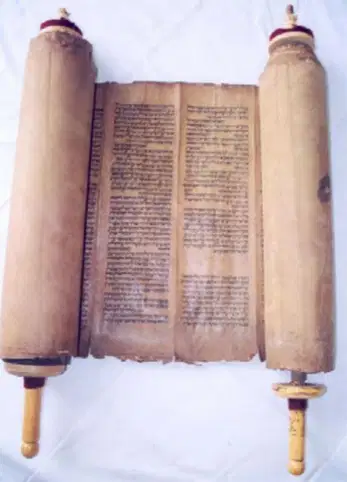
Which are the two sacred texts of Judaism as seen below?
a)
The Old Testament and the Quran
b)
The Quran and the Bible
c)
The Talmud and the Torah
d)
The Torah and the Quran
20.
Click on the correct location of ancient Mesopotamia.
A
B
C
D
100 %

