
NEW
Font size
 Worksheets
Physical Science: Ch 8: Electricity
Total questions: 55
Worksheet time: 1hrs 22mins
What are the charges of:
1) protons
2) electrons
3) neutrons
1: positive
2: negative
3: no charge
1: negative
2: positive
3: no charge
1: no charge
2: negative
3: positive
1: positive
2: no charge
3: negative
1: negative
2: no charge
3: positive

1) Which represents high electrical current?
2) Which represents low electrical current?
3) The letter symbol for electrical current in Ohm's Law is:
1: A
2: B
3: I
1: B
2: A
3: I
1: A
2: B
3: V
1: A
2: B
3: R
1: B
2: A
3: C
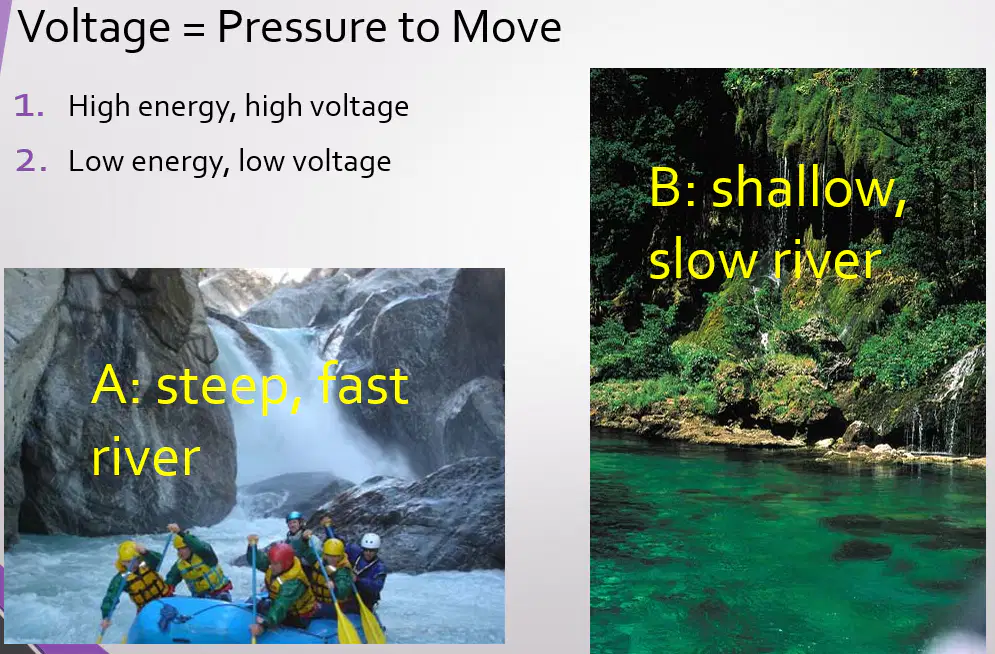
1) High energy, high voltage
2) Low energy, low voltage
3) The unit of voltage
1: A
2: B
3: volts
1: B
2: A
3: volts
1: A
2: B
3: amperes
1: B
2: A
3: amperes
1: A
2: B
3: ohms

1) High resistance, lots of work required
2) Low resistance, little work required
3) The units of electrical resistance
1: A
2: B
3: ohms
1: B
2: A
3: ohms
1: A
2: B
3: amperes
1: B
2: A
3: amperes
1: A
2: B
3: volts

Concerning Ohm's Law, this picture is mostly representing what?
current
resistance
voltage
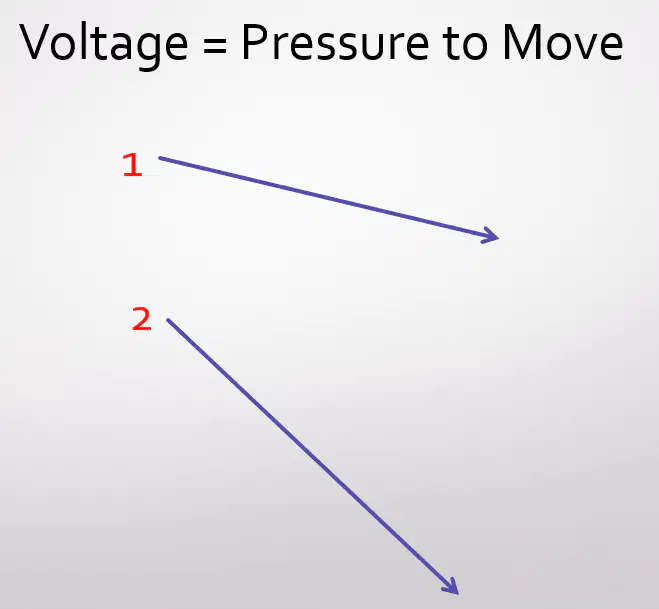
A) High voltage
B) Low voltage
3) In this depiction, zero voltage would be shown as:
1: B
2: A
3: completely horizontal line
1: A
2: B
3: completely horizontal line
1: B
2: A
3: completely vertical line
1: A
2: B
3: completely vertical line
Link the electrical units with the physical property they measure:
1) 10 W
2) 10 V
3) 10 Amps
4) 10 Ω
1: power
2: voltage
3: current
4: resistance
1: current
2: voltage
3: power
4: resistance
1: power
2: resistance
3: current
4: voltage
1: resistance
2: voltage
3: current
4: power
1) How much friction is on the riverbed or reeds slowing the flow
2) How much water in the river
3) How steep is the river or fast water is moving
1: resistance
2: current
3: voltage
1: current
2: voltage
3: resistance
1: voltage
2: current
3: resistance
1: resistance
2: voltage
3: current
1: current
2: resistance
3: voltage
Ohm's Law (Current is equal to the voltage divided by the resistance) is most similar to:
Newton's 1st Law of Motion
Newton's 2nd Law of Motion
Newton's 3rd Law of Motion
1) The amount of work that the electrons must do
2) The number of electrons (or ions) flowing
3) The energy pushing each moving electron (or charge)
1: resistance
2: current
3: voltage
1: current
2: resistance
3: voltage
1: resistance
2: voltage
3: current
1: voltage
2: current
3: resistance
1) To go in different directions, to move away from each other
2) An electrical device that opposes the flow of electrical current
3) A device used to store electric charge
4) Is a combination of one or more electrochemical cells, used to convert stored chemical energy into electrical energy
1: Dissipate
2: Electrical resistor
3: Capacitor
4: Electrical battery
1: Capacitor
2: Electrical resistor
3: Dissipate
4: Electrical battery
1: Dissipate
2: Electrical battery
3: Capacitor
4: Electrical resistor
1: Capacitor
2: Electrical battery
3: Dissipate
4: Electrical resistor
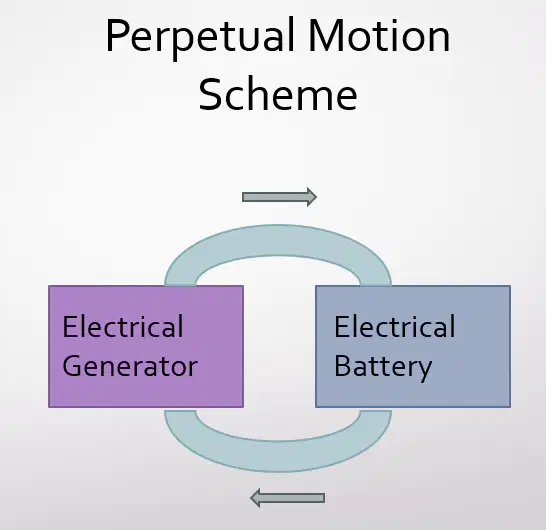
Why will this not run forever?
The electrical current traveling through the wires heat up the wires.
The generator is not 100% efficient at receiving energy and producing energy.
The battery process to store and release energy also loses energy as thermal energy to the environment
All of the answers are correct in showing how energy when changing form and location always leaks energy to the surrounding environment
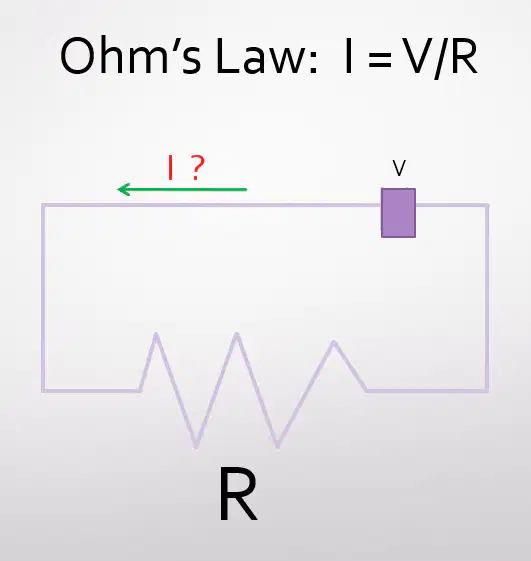
How much current will flow in the circuit?
Low amount of current
A moderate amount of current
A high amount of current
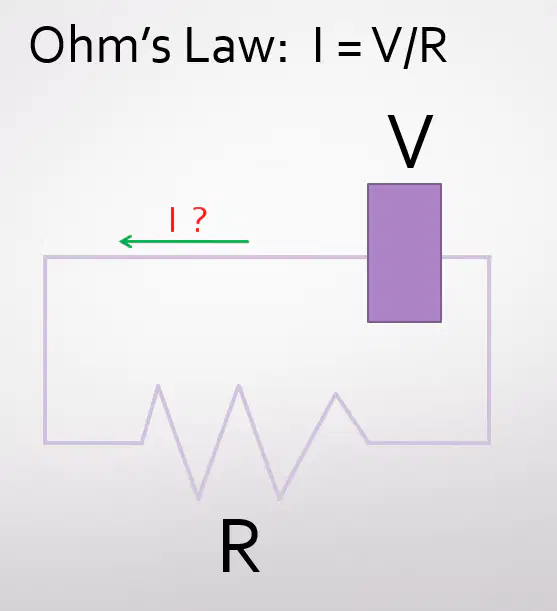
How much current will flow in the circuit?
A low amount of current
A moderate amount of current
A high amount of current
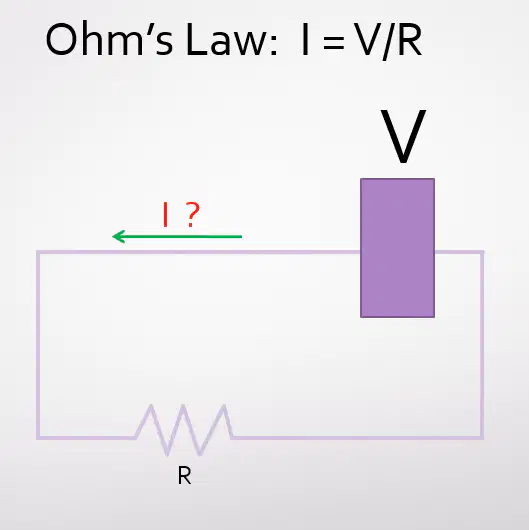
How much current will flow in the circuit?
A low amount of current
A moderate amount of current
A high amount of current
1) A material's opposition to the flow of electric current
2) A measurement of electromotive force or the pressure of electricity
3) Rate at which electric charge flows past a given point
1: resistance
2: voltage
3: current
1: current
2: voltage
3: resistance
1: voltage
2: current
3: resistance
1: resistance
2: current
3: voltage
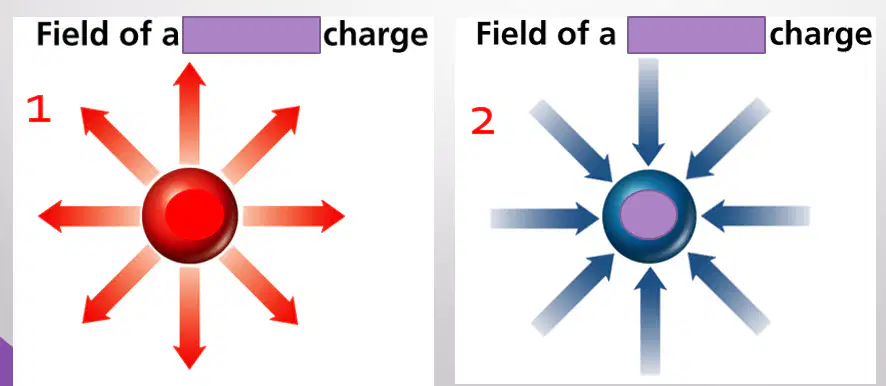
Identify
1: positive
2: negative
1: negative
2: positive
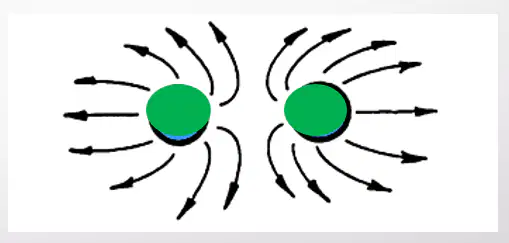
1) Two Positive or Negative charges?
2) Are these Attracting or Repelling each other?
1: Positive
2: Repelling
1: Positive
2: Attracting
1: Negative
2: Repelling
1: Negative
2: Attracting
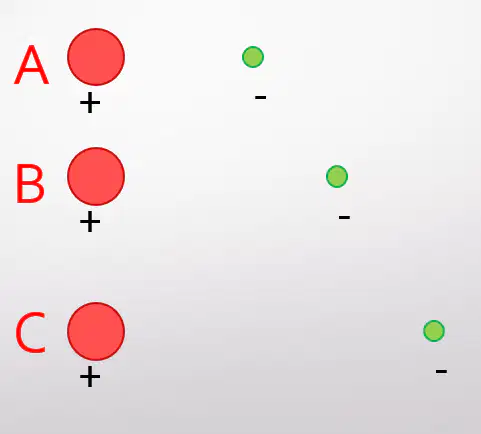
Which electron experiences the greatest attractive force?
A
B
C
All are the same
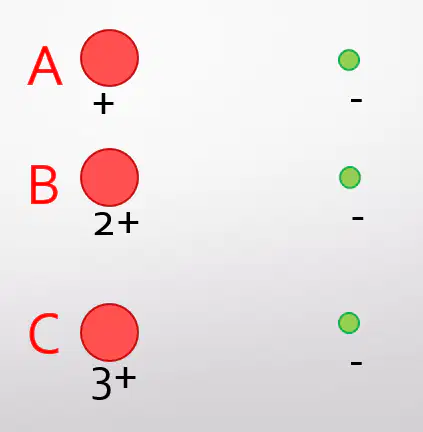
Which electron experiences the greatest attractive force?
A
B
C
They all experience the same force
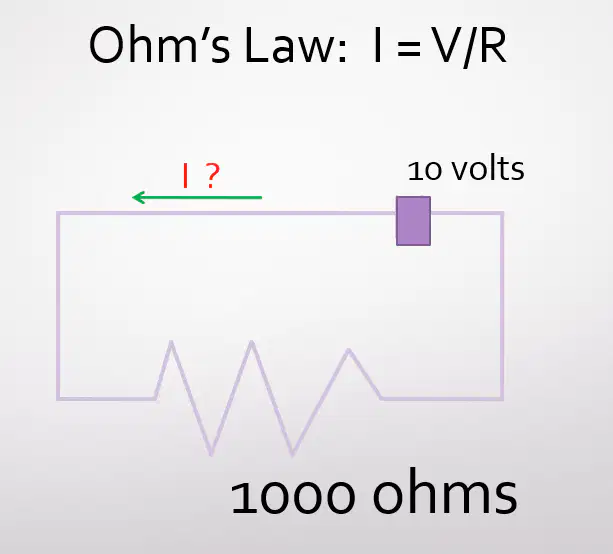
How much current?
0.01 amps
0.1 amps
1 amps
10 amps
100 amps
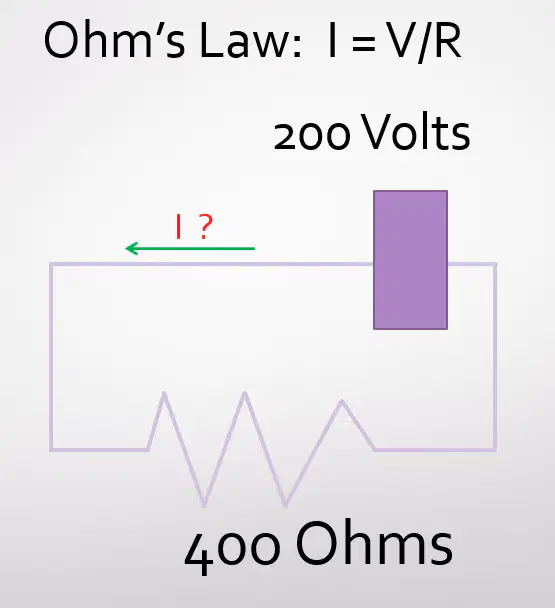
How much current?
80000 amps
8 amps
0.5 amps
2 amps
20 amps
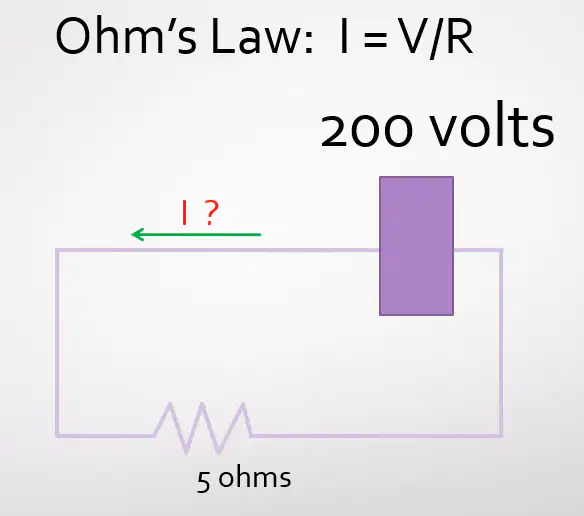
What is the current?
40 amps
4 amps
1000 amps
100 amps
A) Insulator B) Conductor
1) A device designed to transmit electricity, heat, etc.
2) A material that resists the flow of electric current
3) Material made up of atoms with tightly bound electrons that are not able to flow freely
4) A material which contains movable electric charges. In metallic [ ], such as copper or aluminum, the movable charged particles are electrons
1: B
2: A
3: A
4: B
1: A
2: A
3: A
4: B
1: A
2: B
3: A
4: B
1: B
2: A
3: B
4: A
1: A
2: B
3: B
4: A
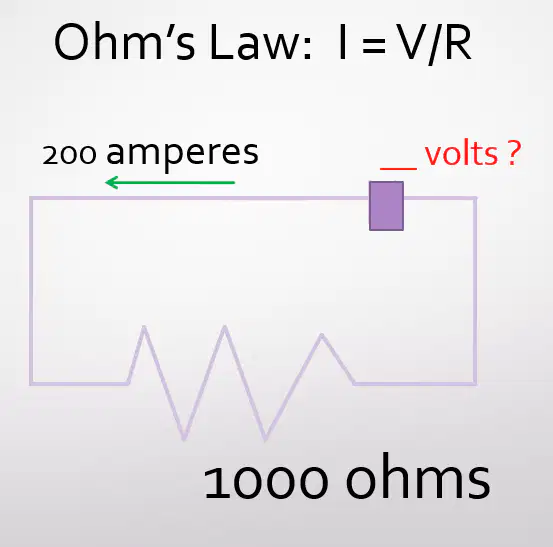
20 volts
200 volts
2000 volts
20,000 volts
200,000 volts
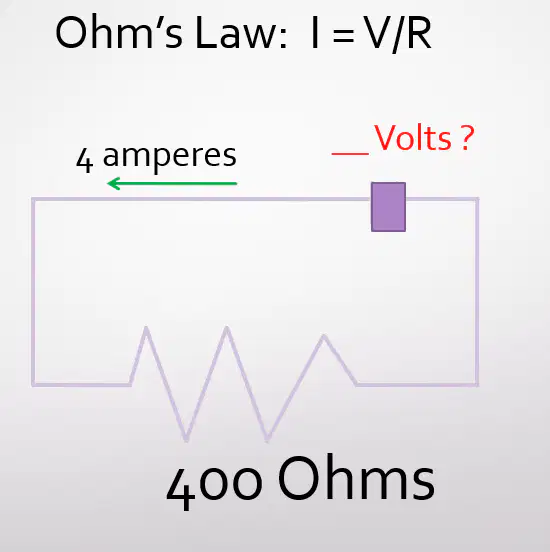
1600 volts
16,000 volts
400 volts
1000 volts
0.01 volts
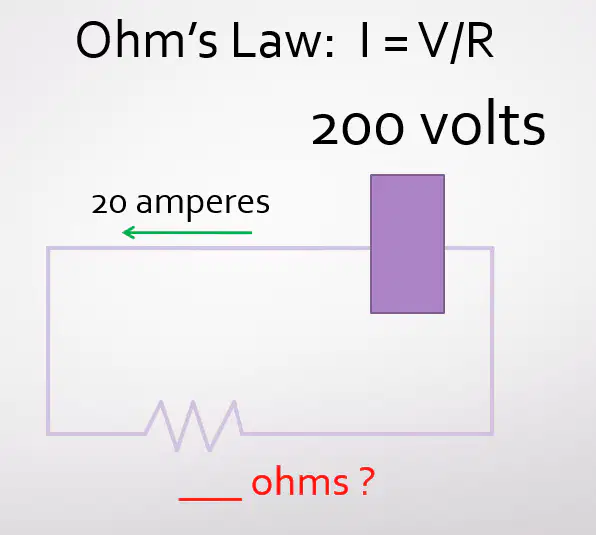
1 ohm
10 ohms
100 ohms
1000 ohms
10,000 ohms
1) Newton
2) Watt
3) Meter
4) Joule
5) Hertz
1: Force
2: Power
3: Distance
4: Energy
5: Frequency
1: Pressure
2: Power
3: Distance
4: Energy
5: Frequency
1: Force
2: Power
3: Volume
4: Energy
5: Frequency
1: Force
2: Power
3: Distance
4: Energy
5: Resistance
1: Force
2: Energy
3: Distance
4: Power
5: Frequency
1) Opposite charges:
2) Same charges:
3) Electrons have ___ charge.
1: attract
2: repel
3: negative
1: attract
2: repel
3: positive
1: repel
2: attract
3: negative
1: repel
2: attract
3: positive
A) directly proportional B) inversely related
1) As the force increases, the acceleration also increases.
2) As the mass increases, the acceleration decreases.
3) A = F/m
4) A = F/m
1: A
2: B
3: A
4: B
1: B
2: B
3: A
4: A
1: B
2: A
3: B
4: A
1: A
2: B
3: B
4: A
1: B
2: A
3: A
4: B
A) directly proportional B) inversely related
1) As the resistance in an electric circuit increases, the current decreases.
2) As the voltage in an electric circuit decreases, the current decreases.
3) I = V/R
4) I = V/R
1: B
2: A
3: A
4: B
1: A
2: B
3: B
4: A
1: A
2: B
3: A
4: B
1: B
2: A
3: B
4: A
1: B
2: B
3: A
4: A
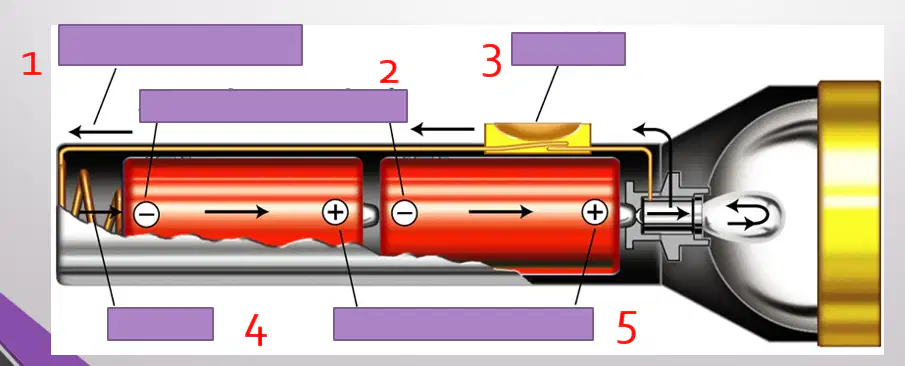
A) Flow of current
B) Negative terminals
C) Spring
D) Switch
E) Positive terminals
1: A
2: B
3: D
4: C
5: E
1: E
2: B
3: D
4: C
5: A
1: A
2: E
3: D
4: C
5: B
1: D
2: C
3: A
4: B
5: E
T / F
1) An electrical circuit is like a lazy river at a water park.
2) An electrical circuit is like energy flowing from the Sun to Earth to plants to animals to heat in the atmosphere to infrared radiation that Earth emits into space.
1: T
2: F
1: T
2: T
1: F
2: F
1: F
2: T
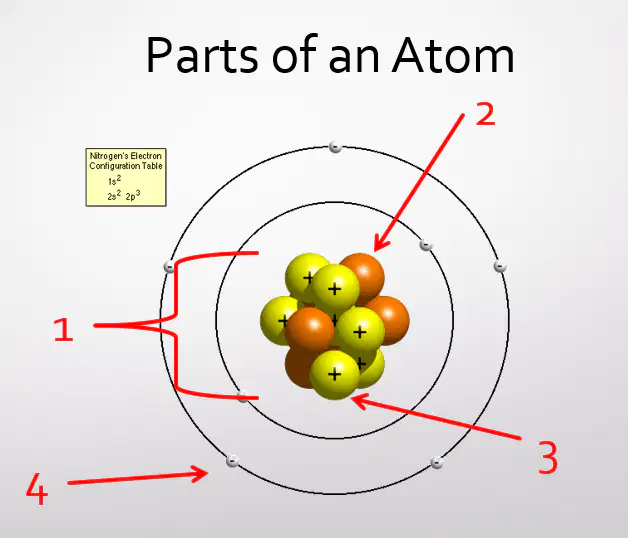
Identify:
1: Nucleus
2: Neutron
3: Proton
4: Electron
1: Neutron
2: Nucleus
3: Proton
4: Electron
1: Nucleus
2: Proton
3: Neutron
4: Electron
1: Neutron
2: Nucleus
3: Electron
4: Proton
Identify:
1: Most of the mass of the atom
2: Zero charge
3: +1
4: -1
1: Half of the mass of the atom
2: Zero charge
3: +1
4: -1
1: Most of the mass of the atom
2: -1
3: +1
4: -1
Forces on the Atom
1) Gravity is amazingly ___ compared to the other forces that affect atoms.
2) At any distance two protons are gravitationally ___ to each other.
3) At any distance, two protons are electrically ___ from each other.
4) Only at a ___ distances, two protons are attracted to each other by the nuclear strong force.
1: feeble
2: attracted
3: repelled
4: close
1: feeble
2: repelled
3: attracted
4: close
1: strong
2: attracted
3: repelled
4: close
1: strong
2: attracted
3: repelled
4: far
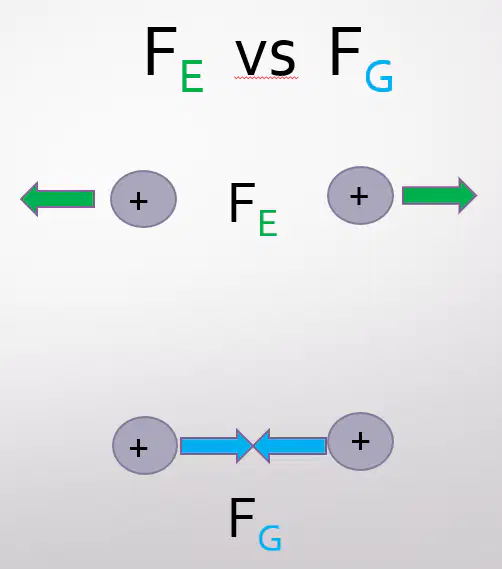
How much stronger is the electrical force of repulsion between the two protons than the gravitational force of attraction?
10
1000
1036 or
1000000000000000000000000000000000000
A googol or 10100 or 1000000000000000000000000000000000000 000000000000000000000000000000000000 000000000000000000000000000
A googolplex or 10googol
If you wrote a zero on every atom in the universe, that would still be short on writing this number out
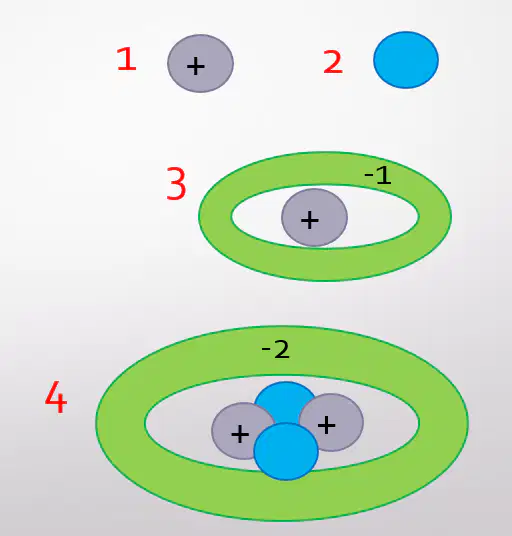
A) Hydrogen atom
B) Proton
C) Helium atom
D) Neutron
1: B
2: D
3: A
4: C
1: D
2: B
3: A
4: C
1: B
2: D
3: C
4: A
1: A
2: D
3: B
4: C
1: B
2: C
3: D
4: A
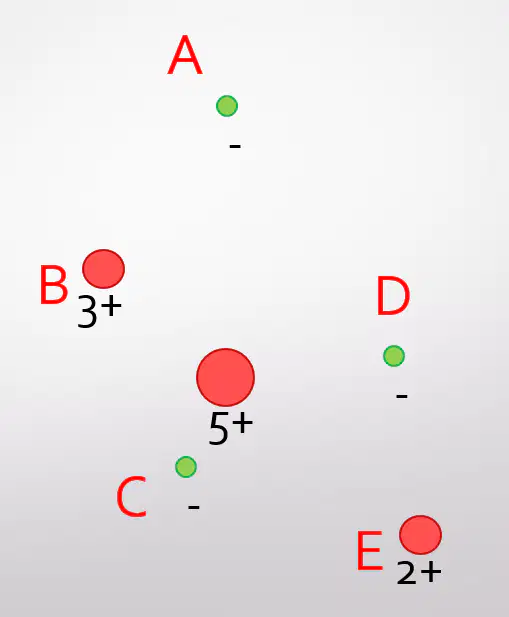
1) Which particle experiences the greatest attractive force?
2) Which particle experiences the greatest repulsive force?
1: C
2: B
1: B
2: A
1: B
2: D
1: C
2: E
1: A
2: C
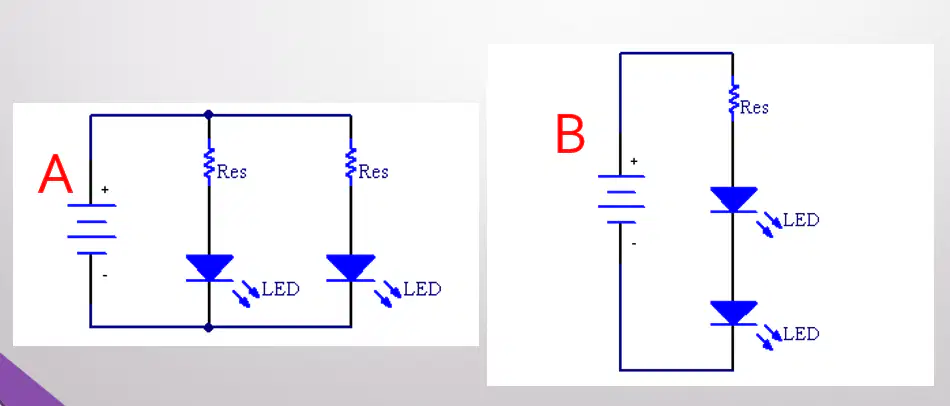
1) Circuit in series
2) Circuit in parallel
3) In which circuit does the battery experience the greatest resistance?
1: B
2: A
3: B
1: B
2: A
3: A
1: A
2: B
3: B
1: A
2: B
3: A
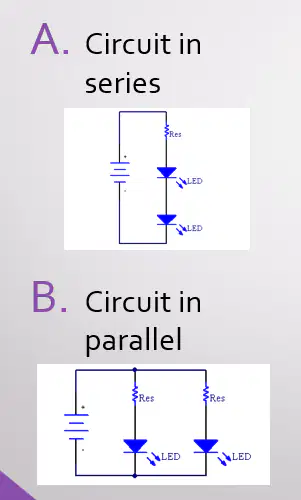
1) This is the way your house and all buildings are wired.
2) If one bulb goes out, they all do.
3) The pathways are more, so the resistance is less. Then, the current is greater.
1: B
2: A
3: B
1: A
2: B
3: A
1: A
2: A
3: B
1: B
2: B
3: A
1: B
2: A
3: A
1) The pathways are more, so the resistance is less. Then, the current is greater.
2) Because resistance is low in the circuit, too much current can melt the wires. Thus, switch breakers are installed.
3) The resistance of each bulb is added together, so the current is low in the circuit.
1: B
2: A
3: B
1: A
2: B
3: A
1: A
2: A
3: B
1: B
2: B
3: A
1: B
2: A
3: A
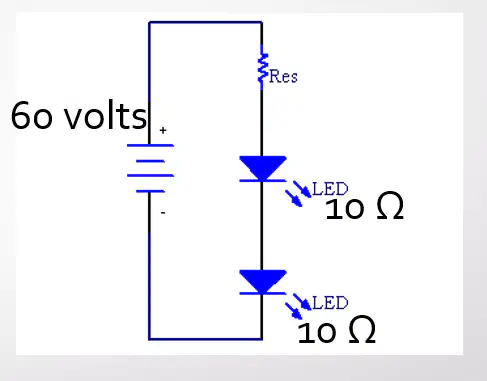
1) How much resistance does the battery experience?
2) How much current is flowing in the circuit?
1: 20 ohms
2: 3 amps
1: 60 volts
2: 3 amps
1: 10 ohms
2: 600 amps
1: 40 ohms
2: 40 amps
1: 20 ohms
2: 40 amps
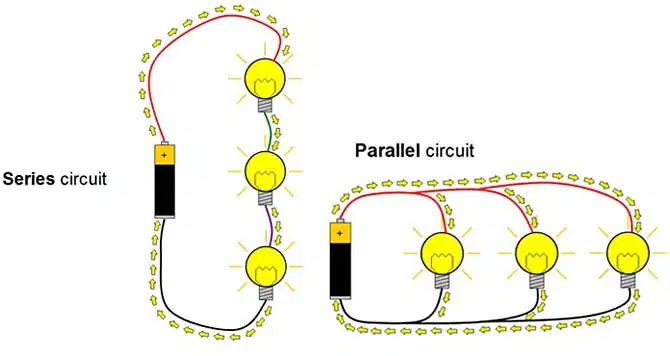
Which light bulbs will be brighter?
The bulbs in series
The bulbs in parallel
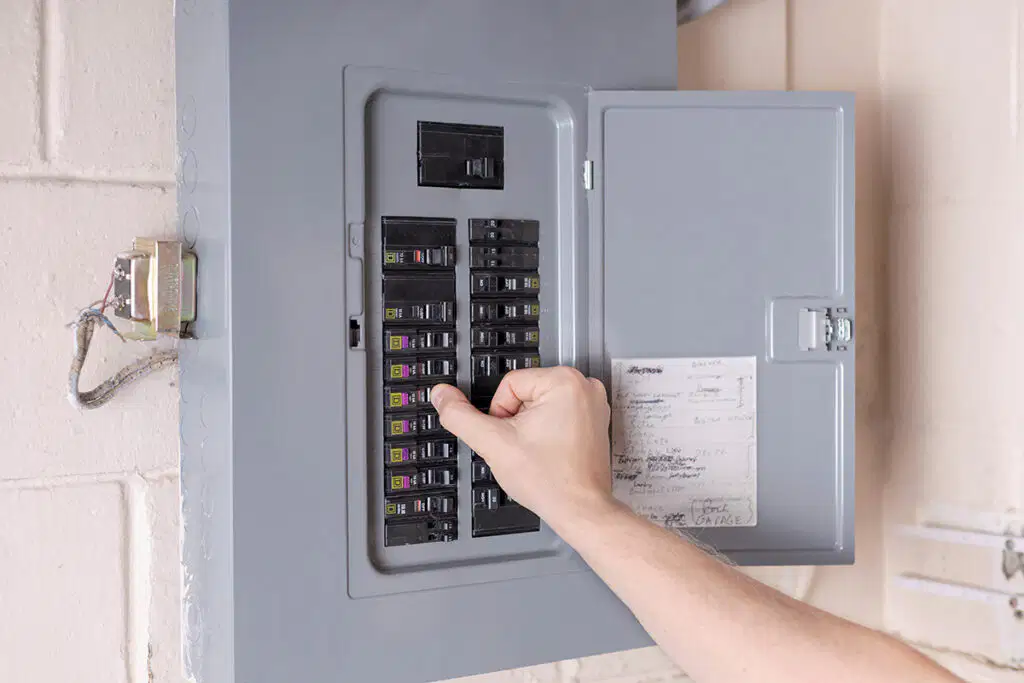
1) This requires a circuit breaker incase to much current begins to run through the wires; the circuit gets broken before the wire melts.
2) If the TV broke, then you couldn’t use the washing machine or many other appliances in the house if this was the setup.
1: A circuit setup in parallel
2: A circuit setup in series
1: A circuit setup in series
2: A circuit setup in parallel
Electric Power = Current x Voltage
If the circuit has 2.5 amperes with a voltage of 100 volts, what is the power of the circuit?
0.025 watts
25 watts
250 watts
2500 watts
0.25 watts
Electric Power = Current(I) x Voltage(IR) = I2R
The circuit has 5 amperes of current and 100 ohms of resistance. What is the power of the circuit?
500 watts
250 watts
2500 watts
5000 watts
4 watts
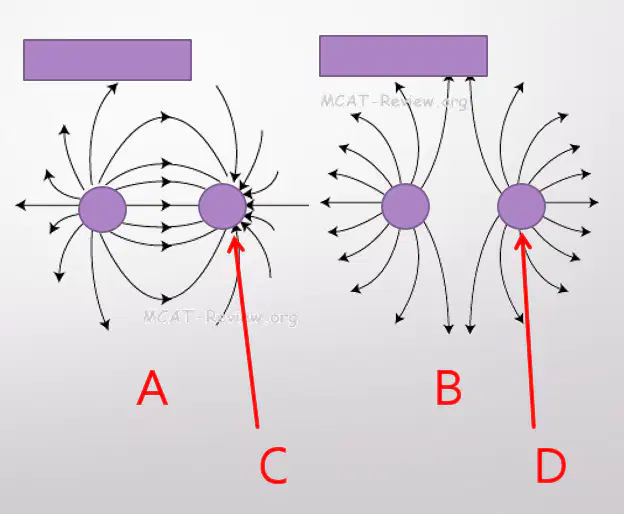
1) Which pair of charges repel each other? A or B
2) Which charge is positive? C or D
3) Which pair of charges attract each other? A or B
4) Which charge is negative? C or D
1: B
2: D
3: A
4: C
1: A
2: D
3: B
4: C
1: B
2: C
3: A
4: D
1: A
2: C
3: B
4: D
1) Current continuously flowing in one direction
2) Current that flows first in one direction and then back in the other.
3) Like blood being pumped away from the heart
4) Comes and goes like a tide, not twice a day but rather many times a second
1: Direct current (DC)
2: Alternating current (AC)
3: Direct current (DC)
4: Alternating current (AC)
1: Alternating current (AC)
2: Direct current (DC)
3: Direct current (DC)
4: Alternating current (AC)
1: Direct current (DC)
2: Alternating current (AC)
3: Alternating current (AC)
4: Direct current (DC)
1: Alternating current (AC)
2: Direct current (DC)
3: Alternating current (AC)
4: Direct current (DC)
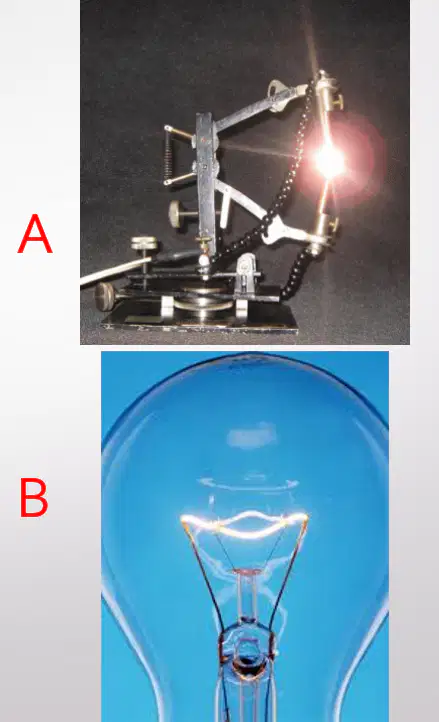
1) Filament light bulb
2) Creating lightning, air becoming a plasma
3) Hot strip of metal
4) Soft glow of light, perfect for indoors
5) Bright, miniature Sun for lighting the outdoors at night
6) Thomas Edison invented
7) Arc lamp
1: B
2: A
3: B
4: B
5: A
6: B
7: A
1: A
2: B
3: B
4: B
5: A
6: B
7: A
1: B
2: A
3: B
4: A
5: B
6: B
7: A
1: B
2: A
3: A
4: B
5: A
6: A
7: B
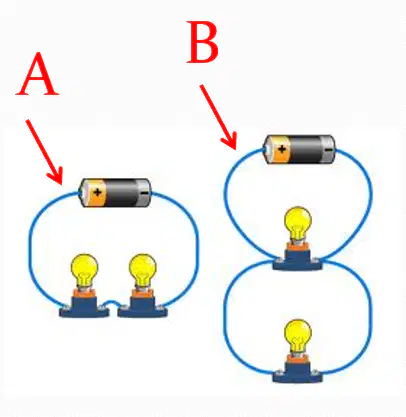
Which circuit will drain the battery of its stored chemical energy first?
A
B
The same rate
What is the electrical resistance of copper wire?
0.00000001 ohms
0.1 ohms
1000 ohms
100,000 ohms
100,000,000,000,000 ohms
What is the electrical resistance of rubber?
0.00000001 ohms
0.1 ohms
1000 ohms
100,000 ohms
100,000,000,000,000 ohms
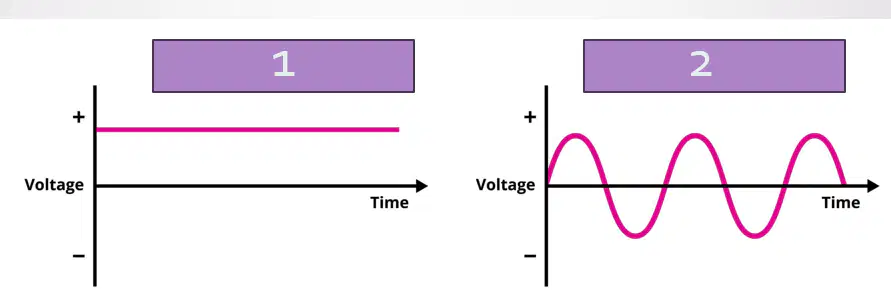
Identify:
1: Direct current
2: Alternating current
1: Alternating current
2: Direct current
The equations for the gravitational force and the electrical force are very similar. One significant difference between them is:
gravity is only attractive while electrical can also be repulsive
gravity only acts at very, very close distances
the electrical force does not diminish with distance

