
 Worksheets
CfE Higher Management of People Revision Quiz
Total questions: 89
Worksheet time: 45mins
Which department in an organization is responsible for managing people and encouraging them to work through motivational methods?
Marketing Department
Human Resources Department
Finance Department
Operations Department
Which of the following is a financial method of motivating employees?
Providing flexible working hours
Offering a company car
Paying a salary
Allowing employees to work from home
What is the main difference between 'salary' and 'time rate' as methods of employee payment?
Salary is paid for each product made, while time rate is paid monthly.
Salary is a fixed monthly amount, while time rate is based on hours worked.
Salary is only for managers, while time rate is for all employees.
Salary includes bonuses, while time rate does not.
Which of the following is an example of a non-financial reason for employee motivation?
Receiving a bonus payment
Getting paid overtime
Being part of a team
Earning commission
A company offers private health care and a company car to its employees. What type of benefit is this?
Financial benefit
Non-financial benefit
Additional benefit
Team benefit
If an employee is paid based on the number of products they sell, which payment method is being used?
Salary
Bonus
Commission
Overtime
Explain how a business can help employees achieve their particular goals, considering both financial and non-financial methods of motivation.
By only increasing salaries for all employees
By providing both monetary rewards and opportunities for personal growth and satisfaction
By reducing the number of working hours
By hiring more staff
Which of the following is NOT a typical use of employee appraisals?
To evaluate performance
To identify training needs
To plan future staffing
To reduce company profits
Which of the following is an example of a target that can be set during an appraisal?
Attendance at work
Company profits
Market share
Product design
According to Maslow’s Hierarchy of Needs, which need must be met first before others can be achieved?
Self-actualisation
Esteem needs
Physical survival
Love
What should managers do to help employees achieve self-actualisation, according to Maslow?
Give financial rewards for good performance
Help staff set and reach their own personal targets
Encourage team work and social contact
Provide job security
Why is it important for managers to encourage team work and social contact, according to Maslow’s theory?
To meet employees’ love/social needs
To increase company profits
To improve technical skills
To reduce training costs
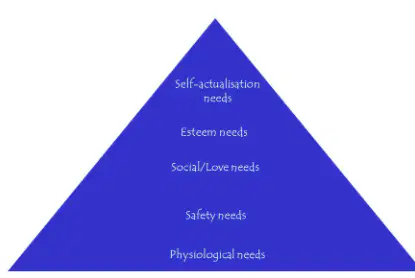
Which level of Maslow’s Hierarchy of Needs is at the top of the pyramid?
Safety needs
Self-actualisation needs
Physical survival needs
Love needs
If an employee feels valued by others and receives praise and encouragement, which of Maslow’s needs is being met?
Self-actualisation
Self-esteem
Safety
Physical survival
Appraisals can only be successful if which of the following is set?
Performance targets
Company profits
Product prices
Customer satisfaction scores
Which of the following best describes Herzberg’s Hygiene Factors?
Things a business must provide to keep workers contented, such as safe working conditions and rest breaks
Factors that encourage workers to do their best, like praise from managers
Theories about how managers should control workers
Methods for improving productivity through time and motion studies
According to McGregor’s Theory X, what do managers believe about workers?
Workers are only motivated by money and need to be controlled
Workers are motivated by many needs
Workers take pride in doing a good job
Management should trust workers
Which statement is true about Theory Y managers?
They believe workers are lazy and dislike work
They believe workers are motivated by many needs
They think workers need to be coerced by managers
They believe workers only work for money
What was a key idea in Taylor’s Scientific Management?
Workers are motivated by social needs
Managers should encourage employees to socialize
Time and motion studies can find the most efficient way to perform a task
Praise from managers is the best motivator
Why was Taylor’s Scientific Management not very successful in practice?
Workers were too motivated by money
It led to boredom among workers
Managers did not trust workers
It focused too much on social needs
According to Mayo’s Human Relations School, what should firms do to motivate workers?
Focus only on financial rewards
Meet the personal satisfactions of their workers
Use time and motion studies
Control workers strictly
Which of the following is a problem with motivation theory as mentioned in the material?
All theories agree with each other
Theories are always up to date with current working conditions
No single theory is likely to motivate every employee
Motivation theories are only about money
How do Theory Y managers differ from Theory X managers in their approach to workers?
Theory Y managers believe workers are lazy, while Theory X managers trust workers
Theory Y managers believe workers are motivated by many needs, while Theory X managers believe workers are only motivated by money
Theory Y managers use time and motion studies, while Theory X managers focus on social needs
Theory Y managers do not care about employee satisfaction, while Theory X managers do
Evaluate why some motivation theories may not be effective for every employee in a modern workplace.
Because all employees have the same needs
Because working conditions and relationships have changed over time and everyone is different
Because managers always use the same theory
Because only money motivates workers
Which of the following best describes an autocratic leader?
Makes decisions without consulting team members
Includes team members in decision-making
Gives team members complete freedom
Focuses only on training and development
What is a key characteristic of democratic leadership?
Team members are not consulted
Team members are included in decision-making
Leaders do not set any targets
Leaders avoid giving feedback
Which leadership style gives team members the most freedom in how they do their work?
Autocratic
Democratic
Laissez-faire
Transformational
Which of the following is NOT an element of Human Resource Management mentioned in the text?
Recruitment
Selection
Marketing
Training and development
Why might autocratic leadership lead to high levels of absenteeism and staff turnover?
Because team members are given too much freedom
Because team members are not consulted and may feel demoralized
Because leaders encourage too much creativity
Because leaders focus only on training
How are all the elements of Human Resource Management described in the text?
They are independent and unrelated
They are linked together and cover all stages of employment
They only focus on recruitment
They only apply to managers
Which leadership style is most likely to result in high job satisfaction and high productivity, according to the text?
Autocratic
Democratic
Laissez-faire
Transactional
What potential problem can arise with laissez-faire leadership if team members lack motivation or skills?
High productivity
Effective time management
Difficulty in working effectively
Increased creativity
What does recruitment mean in the context of an organisation?
Attracting a suitable number of people to apply for jobs within an organisation
Firing employees who are not performing well
Promoting employees to higher positions
Training employees for new skills
Which department is usually responsible for recruitment at all levels below senior executive?
Marketing Department
Human Resource Department
Finance Department
Sales Department
Which of the following is NOT typically included in a job description?
Job title
Department
Main duties
Personal hobbies
What is the purpose of job analysis in the recruitment process?
To advertise the job vacancy
To analyse what the job actually involves
To interview applicants
To train new employees
Which of the following is a step businesses must take to get the right people to apply for a job?
Increase product prices
Identify the job that has to be done
Reduce working hours
Change company logo
After preparing a job description and person specification, what should an organisation do next?
Advertise the job vacancy
Fire current employees
Increase salaries
Close the department
Which of the following is an example of information identified during job analysis?
The company’s annual profit
The technology required for the job
The number of competitors
The location of the business
Why is it important for the Human Resource Department to know the rates of pay and conditions of employment offered by competitors?
To ensure fair competition in the market
To attract suitable candidates by offering competitive packages
To reduce the number of job applicants
To increase the company’s profits
Which of the following is a responsibility of the Human Resource Department after the selection process starts?
Arranging interviews with chosen applicants
Designing the company website
Developing new products
Managing company finances
Which of the following best describes a job specification?
A list of company rules
A description of the qualities needed for a person to do the job
A summary of the company’s history
A report on market trends
What is a person specification in the context of recruitment?
A document describing the kind of person suitable for a job
A list of job duties and responsibilities
A company’s annual report
A training manual for new employees
Which of the following is NOT typically included in a person specification?
The achievements and skills of the individual
The interests/hobbies of the individual
The salary offered for the job
The personality of the individual
Why must an employer be able to identify the person with the best potential for a position?
To ensure the person can effectively fill the position
To increase the company’s profits immediately
To avoid training costs entirely
To reduce the number of employees
What are the two main methods of recruitment mentioned in the material?
Internal recruitment and external recruitment
Online recruitment and offline recruitment
Direct recruitment and indirect recruitment
Temporary recruitment and permanent recruitment
Which of the following best describes internal recruitment?
Filling a job vacancy with someone already working for the company
Hiring someone from outside the company
Recruiting through employment agencies
Recruiting only for temporary positions
Which of the following is an advantage of internal recruitment?
It gives existing employees the opportunity to develop their career
It always brings in new ideas from outside
It requires extensive induction for new employees
It is the most expensive form of recruitment
Explain why internal recruitment can improve staff morale.
Because it shows employees that there are opportunities for advancement within the company
Because it increases the workload for everyone
Because it reduces the number of employees
Because it eliminates the need for any training
A company is deciding between internal and external recruitment. What evidence from the material supports choosing internal recruitment if the company wants to save costs?
Internal recruitment is described as an inexpensive form of recruitment
Internal recruitment always brings in new skills
Internal recruitment requires more advertising
Internal recruitment increases training costs
Which of the following is an advantage of external recruitment?
A larger range of people can apply for the job.
It is less expensive than internal recruitment.
It guarantees immediate hiring.
It avoids the need for advertising.
Which of the following is NOT a common place or media for advertising jobs?
Supermarkets
Government job centres
Internet/websites
Local newspapers
What is the main purpose of an application form in the selection process?
To collect relevant information from the candidate
To advertise the job vacancy
To train new employees
To set the salary for the position
Which of the following information is typically NOT required on a basic application form?
Favorite movie
Date of birth
Work experience
Education, qualifications
Why might a business choose to use external recruitment instead of internal recruitment?
To bring new ideas into the business
To avoid training costs
To promote existing employees
To reduce the number of applicants
A company wants to advertise a job vacancy to reach as many qualified candidates as possible. Which combination of advertising media would be most effective?
Internet/websites and national newspapers
Notice boards only
Word of mouth only
In-house magazines only
If an application form asks, "What makes you suitable for this position?", what is the company trying to learn about the candidate? (DoK Level 3)
The candidate’s relevant skills and qualities
The candidate’s favorite color
The candidate’s salary expectations
The candidate’s previous employers’ names
What is the main purpose of a Curriculum Vitae (CV) when applying for a job?
To provide a summary of the applicant’s personal and professional details
To test the applicant’s physical fitness
To conduct an interview with the applicant
To assess the applicant’s teamwork skills
Why might some businesses ask for hand-written CVs?
To assess the applicant’s computer skills
To check the applicant’s clear writing and standard of English
To test the applicant’s physical fitness
To evaluate the applicant’s teamwork skills
Who can typically provide references for a job applicant?
Strangers
Previous employers or people known to the applicant
Only family members
Only teachers
Which type of test assesses how an applicant will react in certain situations?
Aptitude test
Attainment test
Personality test
Medical test
What is the main purpose of an interview in the selection process?
To find out as much information as possible about the applicant
To test the applicant’s physical fitness
To check the applicant’s handwriting
To assess the applicant’s teamwork skills only
Which of the following is NOT typically part of a successful interview?
Telling candidates how the interview will be conducted
Asking questions so candidates can give full answers
Ignoring the candidates’ answers
Giving candidates an opportunity to ask questions
Which test is used to measure physical fitness for certain jobs like professional footballers or fire service?
Aptitude test
Medical test
Personality test
Attainment test
What is the role of an assessment centre in the selection process?
To check the applicant’s handwriting
To assess problem solving and teamwork skills through activities
To conduct medical tests
To provide references
Which of the following can negatively affect a candidate's impression during an interview?
Wearing appropriate attire
Badly dressed appearance
Smiling and making eye contact
Answering questions confidently
What is the main responsibility of the Human Resource Department after a successful candidate is chosen?
Conducting the interview
Informing the successful applicant and unsuccessful candidates
Writing job descriptions
Deciding the salary
According to the Employment Act, within how many weeks must a Contract of Employment be given to new employees?
4 weeks
8 weeks
13 weeks
20 weeks
Which of the following is NOT typically included in a Contract of Employment?
Title of the job
Holiday entitlement
Personal hobbies
Hours of work
Why should interviewers avoid asking hostile questions during an interview?
It makes the interview longer
It can create self-doubt in candidates
It helps candidates relax
It improves the company’s image
If a candidate or interviewer appears uninterested or fidgets during an interview, what is a likely outcome?
The interview will be extended
The candidate will be hired immediately
The interview may be cut short
The candidate will receive a higher salary
Which of the following best describes the purpose of comparing information from all applicants to the person specification after interviews?
To choose the applicant who matches the person specification most closely
To eliminate all applicants
To increase the number of interviews
To reduce the salary offered
Which of the following is a term and condition of employment that must be agreed upon with employees?
The employee’s favorite color
Hours of work
The employee’s family background
The employee’s hobbies
What is the main reason for including notice requirements in a Contract of Employment?
To allow employees to take more holidays
To ensure employees know when to give up the job
To increase the salary
To reduce working hours
How does the Human Resource Department ensure that terms and conditions of employment are properly applied?
By conducting interviews
By issuing contracts and making sure employees are paid on time
By organizing company events
By providing free meals
Which of the following best describes the main purpose of workforce planning?
Deciding how many and what types of workers are required
Increasing company profits through sales
Reducing the number of employees regardless of needs
Focusing only on staff training
Which activity is NOT typically part of workforce planning?
Forecasting potential future supply of workers with the appropriate skills
Planning how best to support staff training and development
Deciding on the company’s marketing strategy
Forecasting potential labour turnover
Human Resource planning is concerned with which of the following?
Planning all aspects of the organisation’s staff requirements
Only hiring new employees
Only firing surplus staff
Only training existing staff
Which of the following is a category under which human resources can be classified for planning purposes?
Newly appointed staff
Temporary suppliers
External consultants
Marketing team only
What might newly appointed staff require according to workforce planning?
Induction and/or future training
Immediate promotion
Retirement arrangements
Grievance procedures
Which of the following is important for potential staff recruitment?
Good advertising
Performance appraisal
Retirement arrangements
Grievance procedures
How do existing staff benefit from effective workforce planning?
Performance appraisal and opportunities for promotion/career development
Immediate retirement
Only induction training
Grievance procedures
Departing staff expect which of the following from the organisation?
Appropriate retirement arrangements and easily understood grievance procedures
Induction training
Performance appraisal
Good advertising
Why is forecasting potential labour turnover important in workforce planning?
It helps determine the rate at which staff will leave the organisation
It increases the company’s profits directly
It reduces the need for staff training
It focuses only on hiring new staff
A manager is planning how to develop a particular organisational culture. Which aspect of workforce planning does this relate to?
Ensuring the organisation can utilise its workforce to best effect
Only hiring new staff
Focusing on external suppliers
Ignoring staff motivation
Which of the following is an external factor that Human Resource planning must be flexible to react to?
Employee hobbies
Technological developments
Office decoration
Lunch break duration
Which trend is contributing to the rapid change in the world of work?
Decrease in part-time working
Fewer women seeking work
Ageing population
Less emphasis on flexible working hours
What is the main purpose of an induction course for new employees?
To introduce new employees to the firm, its organisation, and procedures
To assign daily tasks
To evaluate employee performance
To provide salary information
Which of the following is NOT typically an activity included in an induction course?
Welcome and introduction by the Human Resource Manager
Security procedures within the firm
Annual performance review
Issue of passwords for IT system

