
 Worksheets
Intro to BME Exam 1 Review
Total questions: 20
Worksheet time: 14mins
What is the physiological pH?
(a)
Which of the following is STRICTLY a diffusive process?
Convection of air into lungs
Diffusion of oxygen into red blood cells
Adsorption of nutrients into the intestines
Air flow in the respiratory system
What is the central dogma of biology?
DNA to RNA, RNA to protein, and replication of DNA
post-translational modification, protein folding, & RNA editing
RNA to protein, DNA to RNA, & reverse transcription
What are the molecules of life?
(a)
What are the stages in a growth curve IN ORDER?
(a)
Cholesterol is what?
Carbohydrate
Lipid
Protein
Nucleotide
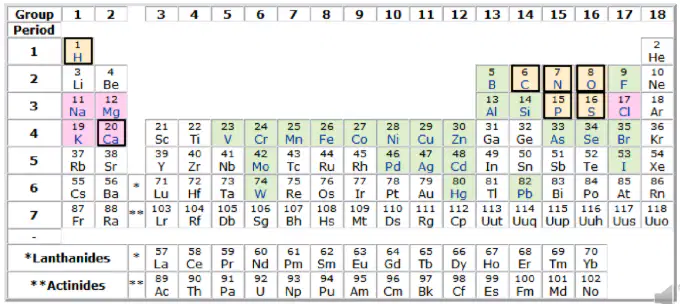
Which colored atoms are involved in making macromolecules?
Yellow
Pink
Green
White
How much of the total water in the body is extracellular fluid (ECF)?
(a)
Which is the strongest molecular bond we discussed in class?
Ionic
van der waals
Covalent
Metallic
The selectable marker in a plasmid allows for the selection of plasmid based on antibiotic resistance.
True
False
What is the second step in the process of using a plasmid to make purified proteins?
Use bacteria to make more plasmids
Purify proteins
Add plasmid into other bacteria to make proteins
Get plasmid DNA out of bacteria
If you are using recombinant DNA, what expression system would give the most accurate post-translational modifications?
Yeast
Insect cells
Mammalian Cells
Bacteria
What is homeostasis?
Maintaining balance in physiological functions
Maintaining "normal" in the body
What is blood clotting an example of?
Positive Feedback
Negative Feedback
for a negative delta G the reaction is...
(a)
Km is the substrate concentration at which the enzyme reaches what percentage of its maximum velocity (Vmax)?
(a)
Which of the 4 is NOT a connective tissue?
Schwann cells
Cartilage
Adipose tissue
Bone
What does an enzyme do to reactions?
Increase activation energy
Prevent the reaction from happening
Speeds up reaction
Slows down reaction
Types of Cell Culture
(a)

what is this equation?
(a)

