
NEW
Font size
 Worksheets
Sanitary Piping Quiz
Total questions: 60
Worksheet time: 30mins
Drainpipes stood on end and carrying nothing but dirty water from sinks and the likes.
Waste Stacks
Soil Stacks
Vent Stacks
Branch Waste Lines
Drainpipes stood on end carrying human excreta along with water.
Waste Stacks
Soil Stacks
Vent Stacks
Branch Soil Lines
Vent pipes extended through the roof in order to admit air to, and discharge gases from, the sanitary piping system.
Waste Stacks
Soil Stacks
Vent Stacks
Branch Waste Lines
Waste pipes that are slightly pitched from the horizontal and connect to a stack.
Branch Waste Lines
Soil Stacks
Vent Stacks
Floor Drains
A soil or horizontal pipe which has one or more branches.
Waste Stacks
Branch Soil Lines
Vent Stacks
Branch Waste Lines
Drainpipes that are slightly pitched from the horizontal and connect to a stack or the main building drain.
Vent Stack
Branch Vents
Soil Stack
Waste Stack
A trapped outlet fitting for the floor of a wet area, garage, etc., through which wastewater and other fluids are conveyed into a drain.
Branch Soil Lines
Floor Drains
Clean-Outs
Vent Stack
A pipe fitting with a removable plug which provides access for inspection or cleaning of the pipe run.
Waste Stack
Soil Stack
Vent
Clean-Outs
An opening to allow the entrance of fresh air to a drainage system.
Floor Drains
Fresh-Air Inlets
Clean-Outs
Vent Stack
Sanitary system conveys foul water from a building to an on-site sewage disposal or sewer.
Storm Drainage System
Sanitary Plumbing
Ventilation System
Irrigation System
Sewage flow in sanitary piping travels entirely by:
Pressure pumps
Gravity
Air compression
Vacuum suction
Minimum slope toward the disposal point in sanitary piping is:
0.5–1%
1–2%
3–5%
5–10%
Waste pipes slightly pitched from horizontal and connect to a stack are called:
Vent Stack
Branch Waste Lines
Soil Stack
Fresh-Air Inlet
A soil or horizontal pipe which has one or more branches is called:
Waste Stack
Branch Soil Line
Branch Vent
Floor Drain
A pipe installed to provide a flow of air to or from a drainage system, protecting trap seals from siphonage and back pressure:
Vent
Waste Stack
Clean-Out
Floor Drain
This essentially ventless system changes the nature of the effluent instead of coping with normal pressures and suctions:
Septic Tank
Sovent System
Aerobic Unit
Grease Trap
A trapped outlet fitting in the floor of wet areas, garages, etc. to convey wastewater into a drain:
Vent Stack
Floor Drain
Clean-Out
Fresh-Air Inlet
Pipe fitting with a removable plug for inspection or cleaning of pipe run (also called access eye):
Vent Stack
Clean-Out
Waste Stack
Floor Drain
An opening that allows entrance of fresh air into the drainage system:
Vent Stack
Clean-Out
Fresh-Air Inlet
Branch Waste Line
Which sanitary piping material shall NOT be used underground and must be kept at least 152mm above ground?
Cast Iron
Galvanized Steel/Wrought Iron
Vitrified Clay
Plastic
Which sanitary piping material shall NOT be used above ground or when pressurized, and must be kept at least 300mm below ground?
Cast Iron
Galvanized Steel
Vitrified Clay
Copper
Plastic piping in high-rise buildings may be used provided it is at the discretion of the:
Engineer-in-Charge
Designer/Master Plumber
Contractor
Building Official
Pipe sizing shall be based from the:
Number of fixtures
Total fixture units
Number of floors
Drainage type
Pipe size of 32mmØ corresponds to how many fixture units?
1
2
3
4
A bathtub has how many fixture units?
1
2
3
4
A floor drain requires a trap & arm size of:
38mmØ
51mmØ
64mmØ
76mmØ
A private water closet (WC) has how many fixture units?
2
3
4
6
A public water closet (WC) has how many fixture units?
2
3
4
6
The maximum fixture unit load for a 76mmØ vertical pipe is:
32
48
65
84
The maximum fixture unit load for a 76mmØ horizontal vent pipe is:
32
48
65
84
Maximum vertical length of a 102mmØ sanitary pipe is:
65 m
91 m
119 m
155 m
What should be used for pipes passing under or through walls?
Bitumen
Metal Sleeves
Polyethylene Casing
Lead Shield
For pipes passing through cinders or corrosive materials, the protective material used is:
Polyethylene Sheath Casing
Bitumen
Metal Sleeve
Concrete Wrap
Cast iron soil pipe (vertical) shall be supported at:
Every 1.20 m
Every storey
Every 3.00 m
Every 1.50 m
Horizontal cast iron soil pipe shall be supported at maximum interval of:
1.20 m
1.50 m
1.80 m
3.00 m
On-site sewage disposal includes which of the following?
Septic Tank
Storm Sewer
Roof Drain
Floor Drain
Minimum volume capacity of a septic tank is:
1.50 m³
2.00 m³
3.00 m³
4.00 m³
Minimum size of a septic tank is:
0.60 m x 1.20 m
0.90 m x 1.50 m
1.00 m x 2.00 m
1.20 m x 2.40 m
Minimum liquid depth of a septic tank is:
0.30 m
0.60 m
0.90 m
1.20 m
Maximum liquid depth of a septic tank is:
1.20 m
1.50 m
1.80 m
2.00 m
Minimum vertical distance of the air gap in a septic tank is:
100mm
150mm
200mm
300mm
The invert of the inlet pipe shall be at least how much higher than the outlet pipe?
25mm
38mm
50.80mm
75mm
Type of bacteria in septic tanks that do not require oxygen (break down scum to sludge):
Aerobic
Anaerobic
Phototrophic
Parasitic
Type of bacteria in sewage treatment that are oxygen-dependent (important in open sewage systems):
Aerobic
Anaerobic
Phototrophic
Parasitic
Minimum distance of septic tank from a water supply well:
7.50 m
10.00 m
15.20 m
20.00 m
An alternative for a septic tank that uses air bubbling to achieve faster digestion is:
Grease Trap
Aerobic Treatment Unit (ATU)
Sovent System
Sewage Ejector Pump
A sewage treatment plant (STP) contains which of the following?
Pumps, filters, vessels, pipework
Only grease traps
Only aerators
Only septic tanks
A system that conveys liquid and solid wastes in suspension to a treatment plant is called:
Septic Tank
Sewer System
Aerobic Unit
Floor Drain
When the sewer line is higher than the building sewer outlet, what must be used?
Floor Drain
Vent Stack
Sewage Ejector Pump
Fresh-Air Inlet
Vertical Piping in High-Rise Buildings
Wet Column
Distributed Pipe Chase
Service Core Chase
Fresh-Air Inlet
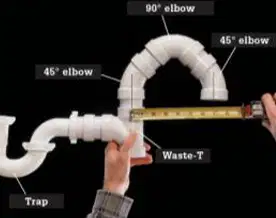
What element of sanitary piping?
Loop
branch vent
clean out
fresh-air inlets
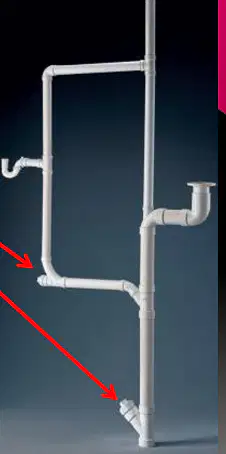
What element of sanitary piping?
Loop
branch vent
clean out
fresh-air inlets
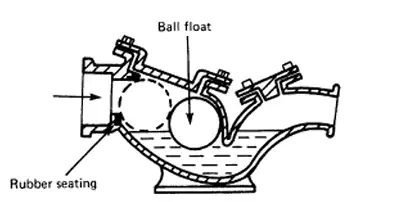
Anti-flood Interceptor
Grease Interceptor
Hair Interceptor
floor drain
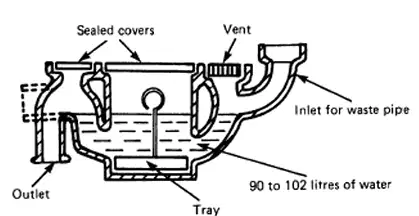
Anti-flood Interceptor
Grease Interceptor
Hair Interceptor
floor drain
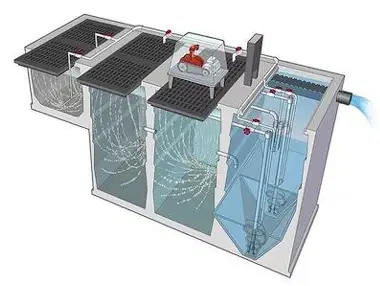
the apparatus, vessels and pumps, filters, pipework etc. for treating raw sewage
Aerobic Treatment Unit (ATU)
Sewage Treatment Plant (STP)
Sewer System
Septic System
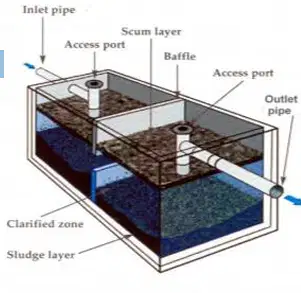
Aerobic Treatment Unit (ATU)
Sewage Treatment Plant (STP)
Sewer System
Septic System
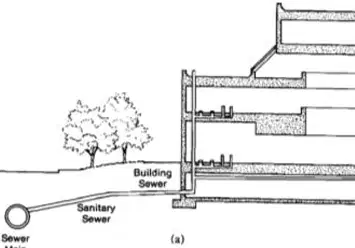
Aerobic Treatment Unit (ATU)
Sewage Treatment Plant (STP)
Sewer System
Septic System
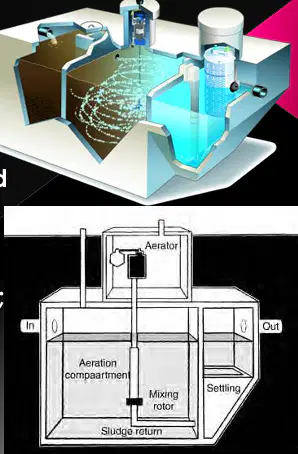
Aerobic Treatment Unit (ATU)
Sewage Treatment Plant (STP)
Sewer System
Septic System
A device installed to prevent waste discharge that can cause problems at the sewer or private disposal storage
Interceptors or Separator
clean out
drain pipes
Grease trap
Any matter not dissolved sinks to the bottom of the tank (called as sludge)
true
false

