
 Worksheets
Istinjaa (Toilet Etiquette in Islam)
Total questions: 91
Worksheet time: 46mins
What should you do with any article on which there is some mention of Allah, such as a ring or pendant, before going to the toilet?
You must set it aside.
You must wear it proudly.
You must wash it in the toilet.
You must hide it in your pocket.
Before stepping into the toilet with your left foot first, what should you say?
Bismillaah. Allaahumma innee a’oodhu bika minal-khubuthi wal-Khabaa’ith
Alhamdulillah. Subhanallah wa bihamdihi
Astaghfirullah. La ilaha illallah
Allahu Akbar. La hawla wa la quwwata illa billah
Translate the following supplication: 'Bismillaah. Allaahumma innee a’oodhu bika minal-khubuthi wal-Khabaa’ith'.
In the name of Allah. O Allah, I seek protection in you from the male and female devils.
O Allah, grant me wisdom and patience in all matters.
In the name of Allah. O Allah, forgive my sins and guide me to the straight path.
O Allah, I seek your mercy and blessings upon my family.
While using the toilet, you should keep your body screened from view.
True
False
While in the toilet, you should engage in conversation.
True
False
If you happen to sneeze in the toilet, how should you praise Allah?
By saying 'Alhamdulillah' (all praise is due to Allah) only in your heart, but not out loud.
By saying 'Alhamdulillah' loudly so everyone can hear.
By not saying anything at all, neither in your heart nor out loud.
By clapping your hands three times.
According to the passage, where should you NOT relieve yourself?
On a stone
Under a tree
In public places
In a source of water supply
All of the above
Why should you avoid relieving yourself under a tree, even if it does not bear fruit?
Because people may seek the shelter of its shade and get their clothes dirty, while any fruit that falls will be polluted.
Because trees without fruit are considered unlucky.
Because it will make the tree grow faster.
Because animals may get scared away.
What should you avoid facing when relieving yourself outdoors according to the passage?
You should avoid facing the qiblah.
You should avoid facing the sun.
You should avoid facing the wind.
You should avoid facing the trees.
True or False: It is respectful to mention the name of Allah while using the toilet.
True
False
Which hand should you use while washing yourself after relieving yourself, according to the passage?
You should use your left hand.
You should use your right hand.
You should use both hands.
You should not use your hands at all.
What should you say after leaving the toilet, according to the passage?
Ghufraanaka (I seek Your forgiveness, O Allah)
Subhanallah (Glory be to Allah)
Alhamdulillah (All praise is due to Allah)
Bismillah (In the name of Allah)
How should a Muslim use the toilet?
the appropriate dua (prayer) before entering the toilet, e.g., 'Bismillah, Allahumma inni a'udhu bika minal khubuthi wal khaba'ith'
Recite any verse from the Quran loudly
Face the Qibla while using the toilet
Enter the toilet with the right foot first
How should a Muslim use the toilet? I may not take anything with ________________.
the name of Allah or anything with Allah's name on it
food or drink
money or valuables
books or magazines
How should a Muslim use the toilet? I must be careful to enter the toilet ________________.
with my left foot
with my right foot
backwards
while running
How should a Muslim use the toilet? While relieving myself, I must not ________________.
face the Qiblah or talk
wash my hands
close the door
wear shoes
How should a Muslim use the toilet?
my left hand
my right hand
both hands
with gloves
How should a Muslim use the toilet?
the appropriate dua (prayer) after leaving the toilet, e.g., 'Ghufranak'
Recite the Adhan loudly
Face the Qiblah while using the toilet
Eat food while in the toilet
What does the Arabic word 'Tahaara' mean?
Cleanliness
Purity
Worship
Prayer
In Islam, what does tahaara mean?
The state of cleanliness required to perform certain acts of worship
The act of praying
The act of fasting
The act of giving charity
Fill in the blank: The main purpose of tahaara is cleanliness of the ______ and mind.
heart
body
soul
skin
Which of the following will break tahaara?
Breaking wind
Passing urine
Passing stool
Deep sleep
What is required to regain purity after minor defilement (al-hadath al-asghar)?
Wudhu is required to regain purity after minor defilement (al-hadath al-asghar).
Ghusl is required to regain purity after minor defilement (al-hadath al-asghar).
Tayammum is required to regain purity after minor defilement (al-hadath al-asghar).
Reciting a specific prayer is required to regain purity after minor defilement (al-hadath al-asghar).
A Muslim can offer salah in a state of impurity.
True
False
According to the passage, if any of the things mentioned above (al-hadath al-asghar) happens to anyone of us, are we allowed to perform salah? Fill in the blank: We are _______ allowed to perform salah.
not
always
sometimes
definitely
How can the proper state of tahaara be regained according to the passage? Fill in the blank: The tahaara may be regained by making _______
wudhu
salah
zakah
sawm
Which of the following is NOT mentioned as a way to regain tahaara in the passage?
Wudhu
Tayammum
Ghusl
Fasting
Which of the following is something that breaks tahaaraah?
Passing urine or stool
Reciting a prayer
Wearing clean clothes
Reading a book
Tahaaraah refers to which of the following?
Purification
Charity
Prayer
Fasting
Exercise 2 Fill in the blanks. 1. Tahaaraah is the cleanliness of ________ and ________.
body; clothes
food; water
mind; soul
hands; feet
Tahaaraah may be regained by making __________, __________ or ____________.
wudhu; ghusl; tayammum
salah; zakat; sawm
hijab; niqab; khimar
adhan; iqamah; khutbah
A Muslim cannot offer his __________ if he is not pure.
salaah (prayer)
zakaat (charity)
hajj (pilgrimage)
sawm (fasting)
According to the Prophet Muhammad (ﷺ), is a person's prayer (salah) accepted if he is not pure?
True
False
What should a Muslim do before praying to purify himself?
He should perform wudhu and make sure that his dress is clean.
He should eat before praying.
He should sleep for a while.
He should recite a poem.
Wudhu should be performed with ______ water.
pure
dirty
hot
salty
What is the first step in performing wudhu?
Make the intention of purifying yourself for worship.
Wash your feet first.
Recite a dua loudly.
Start by wiping your head.
What should you say to start wudhu in the name of Allah?
Bismillaah (In the name of Allah)
Alhamdulillah (All praise is due to Allah)
Subhanallah (Glory be to Allah)
Astaghfirullah (I seek forgiveness from Allah)
How many times should you wash the right hand and the left hand during wudhu?
Three times
One time
Four times
Five times
How many times should you rinse your mouth out during wudhu?
Three times
One time
Five times
Seven times
How many times should you sniff water into the nose and give it a gentle blow during wudhu?
Three times
One time
Five times
Seven times
Step 6 of performing Wudhu: Wash the face __ times, from the hairline to the chin and from ear to ear.
three
one
two
four
Step 7 of performing Wudhu: Wash the right forearm up to the elbow including the hand __ times. Then wash the left forearm up to the elbow including the hand __ times.
three, three
two, two
one, one
four, four
Step 8 of performing Wudhu: Wet your hands and wipe the head once from the hairline to the neck and back again to the __.
front
ears
shoulders
chin
Step 9 of performing Wudhu: Wipe the inside parts of the ears with your __ fingers and the outside parts with your __ once.
index, thumbs
thumbs, index
middle, ring
ring, little
Step 10 of performing Wudhu: Wash the feet starting with the __ foot, from the toes to the heels and ankles. Remember to rub between the toes.
right
left
back
front
What is the du'aa to recite after completing Wudhu?
Ash-hadu allaa ilaahaa illallaahu wahdahu laa shareeka lahu, wa ash-hadu anna muhammadan ‘abduhu warasooluh
Subhana rabbiyal a'la wa bihamdih
Rabbighfir li warhamni wahdini
Allahu Akbar, Allahu Akbar, La ilaha illallah
What is the meaning of the du'aa recited after Wudhu?
I bear witness that there is no god worthy of worship except Allah, Alone, without any partners, and I bear witness that Muhammad is His slave and Messenger.
O Allah, forgive my sins and have mercy on me.
Guide us to the straight path, the path of those who have received Your grace.
All praise is due to Allah, Lord of the worlds.
Who calls out the adhan five times a day in the mosque?
The mu'adh-dhin calls out the adhan five times a day in the mosque.
The imam calls out the adhan five times a day in the mosque.
The muezzin's assistant calls out the adhan five times a day in the mosque.
The caretaker calls out the adhan five times a day in the mosque.
What does the adhan remind Muslims to do?
The adhan reminds Muslims that it is time for prayer.
The adhan reminds Muslims to fast during Ramadan.
The adhan reminds Muslims to give charity.
The adhan reminds Muslims to read the Quran.
Translate the following phrase from the adhan: 'Allaahu Akbar, Allaahu Akbar'.
Allah is Most Great, Allah is Most Great
God is Merciful, God is Merciful
Peace be upon you, Peace be upon you
There is no god but Allah, There is no god but Allah
Translate the following phrase from the adhan: 'ash-hadu allaa ilaaha illallaah'.
I testify that there is no god but Allah
I seek forgiveness from Allah
Allah is the greatest
Peace be upon you
What is the English translation of 'ash-hadu allaa ilaaha illallaah'?
I testify that there is no god but Allah
Allah is the only messenger
There are many gods
I believe in angels
What is the English translation of 'ash-hadu anna muhammadar-rasoolullaah'?
I testify that Muhammad is the Messenger of Allah
I seek forgiveness from Allah
Allah is the Greatest
Peace be upon you
What is the English translation of 'hayya alassalaah, hayya alassalaah'?
Hasten to the prayer, hasten to the prayer
Peace be upon you, peace be upon you
God is the greatest, God is the greatest
Come to success, come to success
What is the English translation of 'hayya alal falaah, hayya alal falaah'?
Hasten to success, hasten to success
Come to prayer, come to prayer
God is the greatest, God is the greatest
Peace be upon you, peace be upon you

The mu'adh-dhin calls out the _________ five times a day. Muslims then come together to offer _____________.
adhan, prayer
iqamah, zakat
khutbah, fasting
dua, charity
When you hear the adhan you should prepare yourself for ________________________.
prayer
eating
sleeping
studying
The adhan should be learned by heart.
True
False
Sometimes
Never
According to the passage, how many times a day does the muadh-dhin call Muslims to worship Allah alone?
Three times
Four times
Five times
Six times
What does the Arabic word 'jamaa’ah' mean according to the passage?
Prayer
Congregation
Mosque
Direction
Muslims perform their salah facing the ________, the direction of the Ka'bah in Makkah.
qiblah
minbar
mihrab
sunnah
According to the passage, Muslims can only perform salah in a mosque (masjid).
True
False
According to the Prophet's (PBUH) saying in the passage, the benefit of performing the five daily prayers is:
Forgiveness of sins
Wealth and prosperity
Longer life
Fame and recognition
What are the five daily prayers in Islam? List them with their corresponding times.
1. Fajr (Dawn) 2. Dhuhr (Afternoon) 3. Asr (Mid-Afternoon) 4. Maghrib (Sunset) 5. Isha (Night)
1. Fajr (Noon) 2. Dhuhr (Evening) 3. Asr (Night) 4. Maghrib (Morning) 5. Isha (Afternoon)
1. Fajr (Sunset) 2. Dhuhr (Dawn) 3. Asr (Afternoon) 4. Maghrib (Night) 5. Isha (Mid-Afternoon)
1. Fajr (Afternoon) 2. Dhuhr (Dawn) 3. Asr (Evening) 4. Maghrib (Mid-Afternoon) 5. Isha (Sunset)
Fajr prayer is performed at what time of the day?
Dawn
Noon
Afternoon
Night
Dhuhr prayer is performed at what time of the day?
Afternoon
Morning
Evening
Night
Asr prayer is performed at what time of the day?
Mid-Afternoon
Early Morning
Late Night
Noon
Maghrib prayer is performed at what time of the day?
Sunset
Noon
Midnight
Sunrise
Isha prayer is performed at what time of the day?
Night
Morning
Afternoon
Evening
According to the passage, what is the merit of congregational prayer compared to individual prayer?
Congregational prayer surpasses individual prayer by twenty-seven degrees.
Congregational prayer is equal to individual prayer in merit.
Congregational prayer is less meritorious than individual prayer.
Congregational prayer surpasses individual prayer by only two degrees.
The person who is farthest from the mosque will get the greatest reward for attending prayer.
True
False
Unscramble the following prayer names and say when they are offered. 1. jafr ____________ is offered at _____________.
fajr is offered at dawn.
fajr is offered at noon.
fajr is offered at sunset.
fajr is offered at midnight.
A. Unscramble the following prayer names and say when they are offered. 2. hagrmib ____________ is offered at _____________.
maghrib is offered at sunset.
maghrib is offered at midnight.
maghrib is offered at sunrise.
maghrib is offered at noon.
A. Unscramble the following prayer names and say when they are offered. 3. hrduh ____________ is offered at _____________
dhuhr is offered at noon.
asr is offered at sunset.
maghrib is offered at midnight.
fajr is offered at afternoon.
A. Unscramble the following prayer names and say when they are offered. 4. hsia ____________ is offered at _____________.
isha is offered at night.
isha is offered at noon.
isha is offered at sunrise.
isha is offered at afternoon.
Unscramble the following prayer names and say when they are offered. 5. ras ____________ is offered at _____________.
asr is offered in the afternoon.
asr is offered at night.
asr is offered in the morning.
asr is offered at sunset.
B. Salah benefits you in which of the following ways?
It helps you develop discipline and spiritual connection.
It increases your physical strength only.
It allows you to avoid all responsibilities.
It guarantees material wealth.
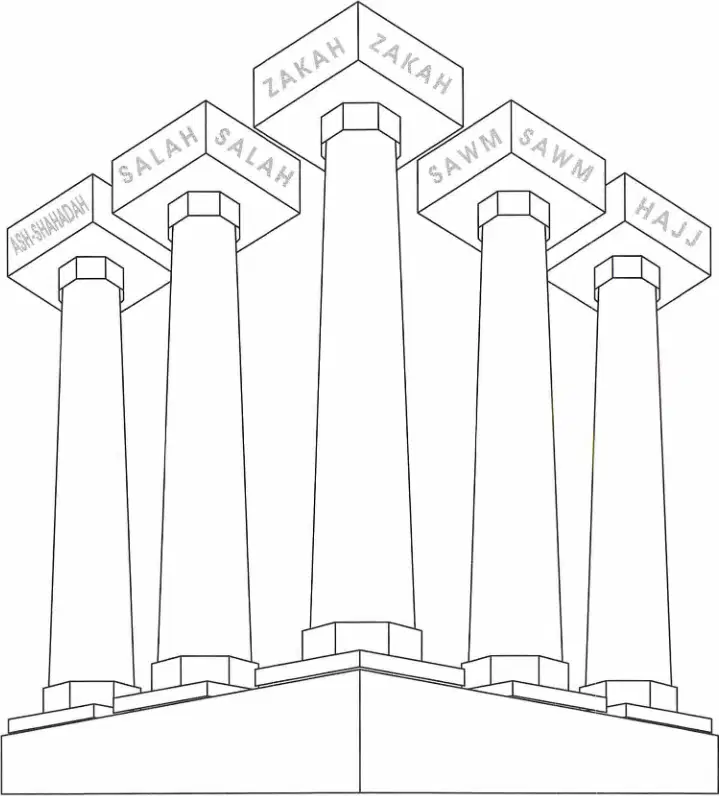
What is the first pillar of Islam?
Shahadah
Salah
Zakat
Hajj
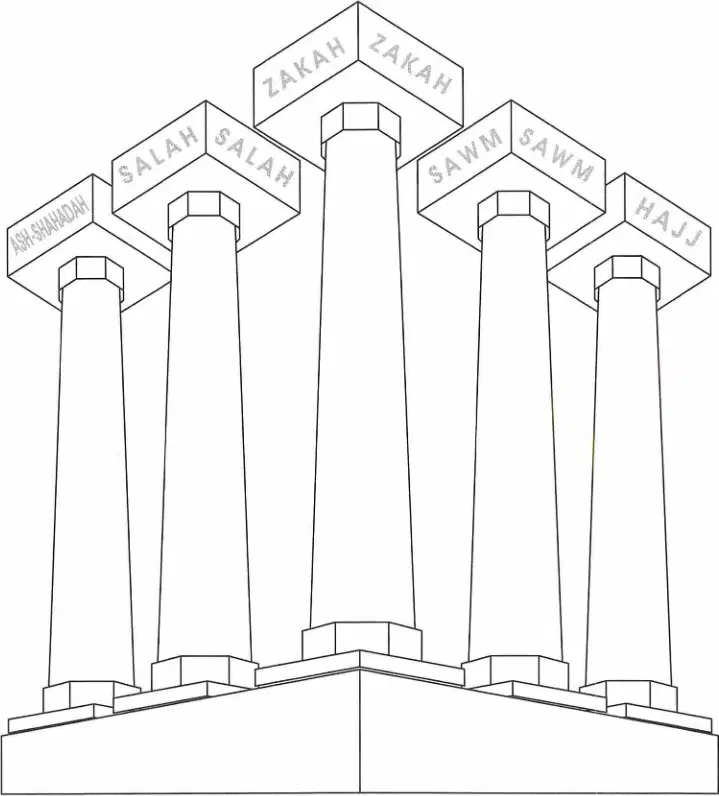
What is the second pillar of Islam?
Salah
Zakat
Hajj
Shahada
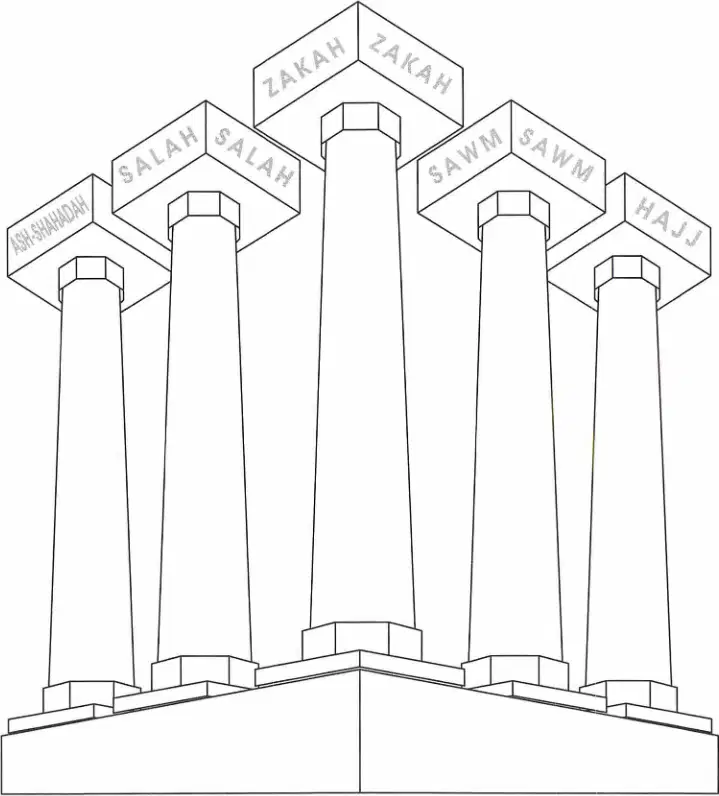
What is the third pillar of Islam?
Zakah
Hajj
Sawm
Shahadah
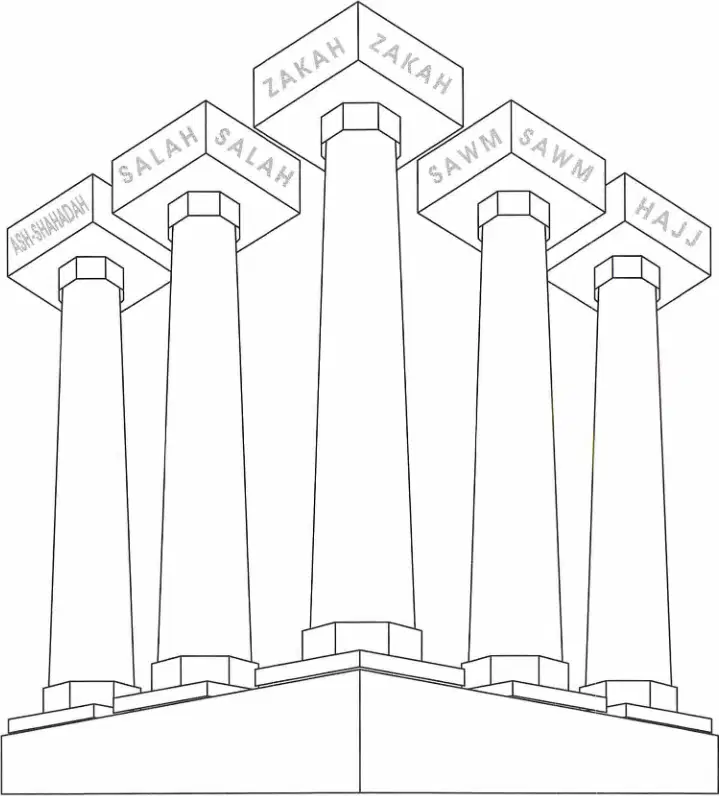
What is the fourth pillar of Islam?
Sawm
Zakat
Hajj
Shahada
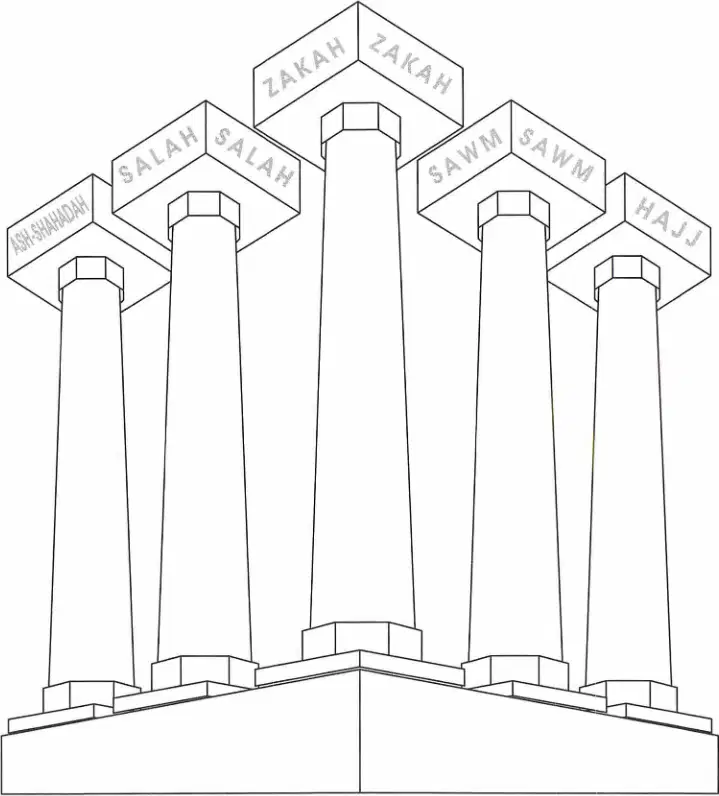
What is the fifth pillar of Islam?
Hajj
Zakat
Salah
Shahada

According to the passage, what is the time for Fajr Prayer? Fill in the blank: The time for Fajr Prayer is from ______ until the sky starts to become bright yellowish, and lasts until sunrise.
dawn
midnight
afternoon
evening

According to the passage, when does the time for Dhuhr Prayer begin? Fill in the blank: The time for Dhuhr Prayer is from after ______ until an object's shadow is about the same length as the object itself.
midday
sunset
midnight
dawn

According to the passage, when does the time for Asr Prayer end? The time for Asr Prayer lasts until just before ______.
sunset
midnight
dawn
noon
What is the number of rak'ahs for Fajr prayer?
Two rak'ahs
Three rak'ahs
Four rak'ahs
Five rak'ahs
What is the number of rak'ahs for Dhuhr prayer?
Four rak'ahs
Two rak'ahs
Three rak'ahs
Five rak'ahs
What is the number of rak'ahs for Asr prayer?
Four rak'ahs
Two rak'ahs
Three rak'ahs
Five rak'ahs
What is the number of rak'ahs for Maghrib prayer?
Three rak'ahs
Two rak'ahs
Four rak'ahs
Five rak'ahs
What is the number of rak'ahs for Isha prayer?
Four rak'ahs
Two rak'ahs
Three rak'ahs
Five rak'ahs
When does the time for Maghrib prayer begin?
Immediately after sunset
At midnight
After sunrise
At noon

