
 Worksheets
What is Negotiation Architecture?
Total questions: 60
Worksheet time: 30mins

Fill in the blank: The ________ is the business environment and is beyond the control of negotiators.
Negotiation environment
Negotiation process
Negotiation tactics
Negotiation strategy

Fill in the blank: ________ refers to aspects such as the relative power of negotiators and the nature of their interdependence, on which negotiators have influence upon.
Negotiation settings
Negotiation outcomes
Negotiation tactics
Negotiation agreements

Fill in the blank: The ________ is the interaction and events that take place while reaching for an agreement.
Negotiation process
Final agreement
Conflict resolution
Decision making

What is one of the factors in the negotiation external environment that involves changes and unpredictability?
Instability and change
Legal regulations
Technological advancement
Cultural traditions

Which factor in the negotiation external environment refers to government intervention and administrative procedures?
Foreign Government control and bureaucracy
Cultural differences and language barriers
Market demand and supply fluctuations
Technological advancements

Currency fluctuations and foreign exchange are part of which aspect of negotiation?
Negotiation external environment
Negotiation tactics
Negotiation closing techniques
Negotiation communication skills

Political & legal pluralism is a factor in which category of negotiation architecture?
Negotiation external environment
Negotiation process design
Negotiation tactics
Negotiation outcomes

External stakeholders are considered under which part of the negotiation architecture?
Negotiation external environment
Negotiation process design
Negotiation tactics
Negotiation internal team

Ideological & cultural differences are part of the negotiation external environment.
True
False
What is the first phase in the negotiation process according to the Negotiation Architecture overview?
Planning prenegotiations/Preparation phase
Bargaining phase
Closure phase
Implementation phase
Which phase in the negotiation process involves making the first move and creating value?
Initiating negotiations
Closing the deal
Evaluating alternatives
Reaching agreement
Negotiating, making concessions, and trade offs are part of which process?
Negotiation process
Planning process
Evaluation process
Implementation process
Closing business negotiations is a phase in the negotiation process.
True
False
What is the final phase in the negotiation process as shown in the Negotiation Architecture overview?
Undertaking renegotiations
Initial preparation
Bargaining and closing
Identifying stakeholders

Levels of conflict underlying potential negotiations are part of which negotiation aspect?
Negotiation setting
Bargaining power
Communication style
Outcome evaluation

Which negotiation setting factor refers to the influence of people directly involved in the negotiation?
Impact of immediate stakeholders
Physical environment
Cultural background
Legal framework
What is legal pluralism?
The existence of multiple legal systems within one geographic area
The existence of only one legal system
The absence of any legal system
The existence of only political systems
Which of the following is an example of legal pluralism mentioned in the slide?
Case law vs common law vs no functioning legal systems
Democracy vs dictatorship
Free market vs planned economy
Urban vs rural development
Taxes, labour codes, and standards (e.g. ________) are examples of legal pluralism.
Child labor
Traffic signals
Weather patterns
Sports rules
What does political pluralism imply according to the slide?
What may be legal may not be politically prudent
All legal actions are politically correct
Political systems are always legal
Legal and political systems are the same
Fill in the blank: Fluctuations of ________ rate are a risk in international economics during negotiations.
exchange
interest
growth
inflation
Some governments regulate industries and organizations as part of their negotiation external environment.
True
False
Which of the following is an example of a legislative measure mentioned in the negotiation external environment?
Protecting human rights and the environment
Increasing internet speed
Reducing food prices
Promoting tourism
Why is it important to be aware of the government in place and the next elections when negotiating in a foreign country?
Because policy changes may occur that impact negotiations.
Because it helps you learn the local language faster.
Because it guarantees you will win the negotiation.
Because it allows you to avoid all legal requirements.
What might sovereign nations do to protect their independence and assert their authority in the context of foreign operations?
Lower taxes
Anticipate changes on sanctions and taxes
Ignore foreign operations
Increase imports
Potential diverging or conflicting ideology in negotiation external environments can be seen in which of the following examples?
US individualism vs European Group Right
Lack of resources
Political instability
None of the above
Which of the following are considered external stakeholders in negotiation?
Business associations
Labour unions
Embassies
Industry associations
All of the above
Deductive negotiation style means negotiating from the _______ to the _______.
general, specifics
specifics, general
facts, opinions
details, overview
Inductive negotiation style means settling on a series of specific issues that become a _______ agreement.
general
temporary
verbal
written
Which of the following is NOT a negotiation setting mentioned in the negotiation architecture?
Levels of conflict underlying potential negotiations
Relationship between negotiators before and during negotiations
Impact of immediate stakeholders
Financial status of negotiators
Style of negotiators
Fill in the blank: In negotiations, if parties are INTERdependent, it means _________.
we need each other to achieve our goals
we can act completely independently of each other
one party always dominates the other
negotiation is unnecessary
Interdependency in negotiations refers to:
the mutual reliance of parties on each other to achieve their goals
the complete independence of each party in achieving their goals
the lack of any relationship between negotiating parties
the dominance of one party over the other in negotiations
Factors that contribute to relative bargaining power in negotiations include:
The availability of alternatives, the importance of the outcome, and the amount of information each party has.
The number of people present in the negotiation room.
The color of the negotiation table.
The time of day the negotiation takes place.
Power in a negotiation setting is determined by the concept of interdependency or dependency and the role of alternatives (BATNA).
Power is influenced by interdependency and the strength of each party's alternatives (BATNA).
Power is always balanced between both parties in a negotiation.
Power depends only on the number of people involved in the negotiation.
Power is unrelated to alternatives or dependency in negotiation.
The nature of the negotiation can be either distributive, involving tough discussions and hard bargaining, or integrative, allowing room for creating value. Which type of negotiation involves creating value?
Integrative negotiation
Distributive negotiation
Competitive negotiation
Zero-sum negotiation
The negotiators may or may not know each other, and trust can vary in negotiation settings.
The negotiators may or may not know each other, and trust can vary.
Negotiators always know each other and trust is always high.
Negotiators never know each other and trust is irrelevant.
Trust is guaranteed if negotiators know each other.
Explain the tension that can exist between short term and long term objectives in negotiation settings.
Tensions can exist because parties may settle for less than their desired short-term outcomes due to the importance of long-term relationships.
There is no tension as both objectives always align perfectly in negotiations.
Short-term objectives are always prioritized over long-term goals in every negotiation.
Long-term objectives are irrelevant if short-term gains are achieved.
The impact on either negotiator’s incentive to get to a deal is significant.
Yes, it will impact their incentive.
No, it will not impact their incentive.
It depends on the context, but usually not.
Only one negotiator is impacted.
According to the research report of J. W. Salacuse (1998), what must negotiators do?
Ignore cultural differences
Accept the difference and adapt
Change their own culture
Avoid negotiations
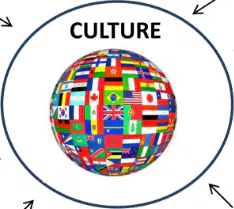
Which of the following is NOT listed as an element of culture in the diagram?
Language
Communication
Technology
Customs
Fill in the blank: Culture is shared between people of the same ______.
group
planet
species
continent
Fill in the blank: Culture slowly ______ over time.
evolves
jumps
disappears
stops
According to the research report of J. W. Salacuse (1998), what is the range of cultural responses for the negotiation factor 'Definition of Negotiation/Goals'?
Contract. <———————> Relationship
Distributive <———————> Integrative
Experts <———————> Trusted Associates
Informal <———————> Formal
According to the research report of J. W. Salacuse (1998), what is the range of cultural responses for the negotiation factor 'Negotiation Opportunity/Attitude'?
Direct <———————> Indirect
Distributive <———————> Integrative
High <———————> Low
One leader <———————> Consensus
According to the research report of J. W. Salacuse (1998), what is the range of cultural responses for the negotiation factor 'Risk Propensity'?
High <———————> Low
Low <———————> High
Direct <———————> Indirect
One leader <———————> Consensus
According to the research report of J. W. Salacuse (1998), what is the range of cultural responses for the negotiation factor 'Team Organization'?
One leader <———————> Consensus
Contract. <———————> Relationship
Distributive <———————> Integrative
Informal <———————> Formal
According to the research report of J. W. Salacuse (1998), what is the range of cultural responses for the negotiation factor 'Emotionalism'?
Low <———————> High
High <———————> Low
One leader <———————> Consensus
Contract. <———————> Relationship
, in Japan, negotiation is about sharing information and developing a ______ that may lead to a deal
relationship
contract
argument
competition
Fill in the blank: Asian people tend to view the negotiation as a ________ process. (Japan, China, ...)
win-win
competitive
hostile
zero-sum
Fill in the blank: In the Middle East, the selection of negotiators is influenced by age, family connection, gender, and _____
status
height
accent
hobby
Fill in the blank: Germans are more ______ than Americans and will address counterparts by their job title.
formal
relaxed
casual
informal
Many languages do not translate literally from one to another.
True
False
Understanding _______ is even more difficult than translating languages literally.
symbolism
grammar
punctuation
vocabulary
French and Japanese cultures are examples of _______ communication, which involves assumptions, circumlocution, allusions, and figurative form.
indirect
direct
explicit
literal

Fill in the blank: In some cultures, time is considered ______ and valuable (time is money!).
fixed
infinite
irrelevant
flexible

Which of the following statements is true according to the slide on 'Time Sensitivity'?
A) All cultures value time in the same way.
B) In some cultures, completing the task is more important than how long it takes.
C) Time is not important in negotiations.
D) Americans negotiate more slowly than Japanese.
According to the slide, how does culture affect organizations?
It affects the way groups are organized and how organizations function
It determines the language spoken
It has no effect on organizations
It only affects individual behavior
In cultures where individuality is highly valued, individuals can make ______ decisions.
swift
hesitant
delayed
collective
Which countries are given as examples of group-oriented cultures where negotiation takes more time and consensus must be built?
US, Brazil, Canada
Japan, India, Germany
France, Italy, Spain
China, Russia, Mexico
According to the passage, what is a key factor in striking a deal in traditional cultures?
Legal enforceability
Family or political connections
Detailed contracts
General principles

