
 Worksheets
26sci1
Total questions: 130
Worksheet time: 5hrs 5mins
which is not a chemical change
precipitate
new
dissolve
rust
if one molecule has three atoms of hydrogen how many hydrogen in two molecules
3
6
9
1
how many carbon atoms in CHO+ CNa+ Cs
1
2
3
0


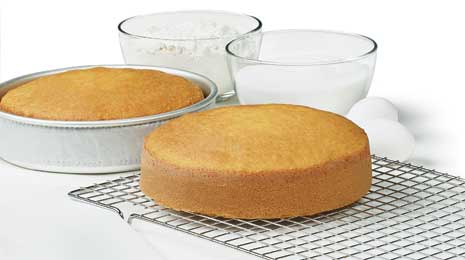

4g + 10g --> 5g + ____g
14g
9g
10g
4g
HClNa---> H+ Cl+ Na what is on the reactant side
3 elements
4 elements
1 compound
element and compound

This picture represents which of the following?
element
compound

A white tablet is dropped into water. The water becomes cloudy and bubbles are produced. What type of change has occurred?
Physical change
Chemical change
No change

Precipitant is when you mix two liquid chemicals and something new forms at the bottom of the container. This is ...
Chemical Change
Physical Change

What are the products of the chemical reaction pictured?
CH4 and CO2
CH4 and O2
CO2 and H2O
O2 and H2O

In this chemical equation, the elements in black are the_______.
Products
Reactants
Subscripts
Coefficients

Which of the following is an example of a chemical change?
boiling
burning
evaporation
melting


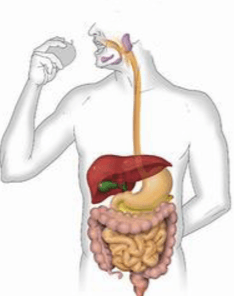
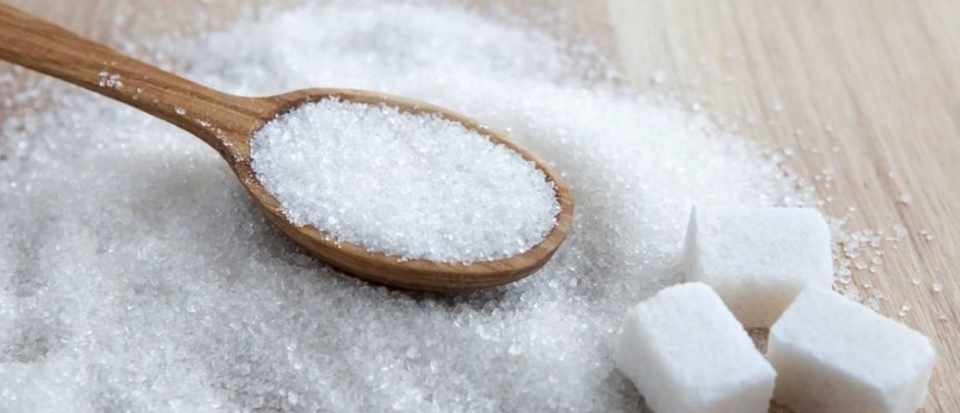
What happens when sugar dissolves in water?
Physical change because a new substance is formed
Chemical change because a new substance is formed
Physical change because the sugar is just getting smaller
Chemical change because the sugar is just getting smaller

Which are signs of a chemical change? CHOOSE ALL THAT APPLY
gas bubbles forming
solid melting
solid dissolving
formation of a precipitate
formation of a precipitate

a penny is dirty, i wash the penny, the penny has
less mass
more mass
same mass
no mass
i have a dirty penny, i wash it, the water i washed it with has
less mass
more mass
same mass
no mass

When a divergent boundary occurs underneath the ocean, it's called a:
Rift Valley
Mid-Ocean Ridge
Subduction Zone
Fault Block Mountain


Tectonic Plate movement is caused by ______________.
the rotation of the Earth
ocean tides
convection currents in the mantle
the moon's gravity
The ancient continent that contained all the landmasses is called...
Pangaea
Gondwana
Laurasia
Panthalassa

Which letter corresponds with the oldest rock?
L
M
N
O

What two crustal features occur near every subduction zone?
Volcanoes and Trenches
Rift Valleys and Mid Ocean Ridges
Volcanoes and Rift Valleys
Mid Ocean Ridges and Trenches
Objects in motion tend to stay in motion
Newtons 1st Law
Newtons 2nd Law
Newtons 3rd Law
None


What Newtons law does this picture represent
Newtons 1st law
Newtons 2nd law
Newtons 3rdt law
Newtons 4rth law

Newton’s law states that for every action, there is an ________ reaction.
unequal and opposite
equal and similar
stronger and opposite
equal and opposite

A book pushes down on a table with a force of 5N, the table..
Pushes back with a force of 5N
Pushes back with a force less than 5N
Pushes back with a forcec greater than 5N
Does nothing. A table has no force.

The illustration shows the masses of a tennis ball, soccer ball, and bowling ball.
According to Newton's second law of motion, if you use the same force to set each ball in motion, which will accelerate the most?
Tennis Ball
Soccer Ball
Bowling Ball
They would all accelerate at the same rate
2H2 + O2 --> 2H2O
Which is the Law of Conservation of Matter?
matter cannot be created or destroyed, it only rearranges
matter can be created but it cannot be destroyed, it never rearranges
matter can be destroyed but it cannot be created, it usually just rearranges
matter is an unproven theory created by Hans Geiger

a substance that is created during a chemical reaction
reactant
product
subscript

Is this a balanced or unbalanced force?
Balanced
Unbalanced

Is this a balanced or unbalanced force?
Balanced
Unbalanced


If you slow down on your bicycle, you accelerate.
TRUE
FALSE
What makes velocity different from speed?
time
distance
direction
mass


Determine whether the following example is Potential Energy (PE) or Kinetic Energy (KE):
flashlight turned off
Potential Energy
Kinetic Energy

This car is moving fast. This is ...
Potential Energy
Kinetic Energy

Which of the following can the human eye not see?
infrared light
red light
orange light
violet light

The lower the frequency the ______ the energy.
higher
lower
neither, stays the same

Plates slide apart along _____________ boundaries.
convergent
divergent
transform
universal
What does the theory of Continental Drift explain?
Ocean currents move continents around the planet
Convection works deep within the asthenosphere
Mid-ocean ridges force tectonic plates to move
Continents were once together and slowly drifted to where they are today


Which of these actions causes wind?
rotation of Earth on its axis
movement of air from water to land
uneven heating of Earth’s surface
air passing Earth as it revolves around the Sun

The weather map shows the weather in four states on the same day.
Based on this map, the weather in Ohio on the following day will MOST likely be
foggy
rainy
snowy
sunny
Which polar jet stream path would bring unusually warm weather to the Great Lakes region in winter?


Which statement best explains how wind is formed?
Air is warmed by radiation and air flow increases as a result of the warming.
Pressure decreases as a result of frictional contact with earth causing air to flow more freely.
Unequal heating of the land causes air to flow from areas of higher pressure to areas of lower pressure.

What type of star is our sun according to the HR diagram?
White Dwarf
Red Dwarf
Red Giant
Main Sequence

Which of the following shows the correct order of stars from hottest to coldest?
red, yellow, white, blue
red, yellow, white, blue
blue, white, yellow, red orange, red
red, yellow, blue, white

In the universe, most stars are classified as which type?
Supergiants
Giants
White Dwarfs
Main Sequence
Which group of stars are the dying or Ancestry stars?
Main Sequence
Giants
Supergiants
White Dwarfs
Large mass stars have a shorter life span.
True
False


The universe has many different components. Which list places four components of the universe in the most likely order from smallest to largest?
Planets, stars, nebulae, galaxies
Planets, stars, galaxies, nebulae
Nebulae, stars, planets, galaxies
Galaxies, stars, planets, nebulae
makes protein
ribosome
mitochondria
vacuole
skin
what do plants cells have that animal cells dont
cell membran
ribosome
cytoplasm
chloroplast
What is meant by adaptation?
An animal can swim in warm water and cold water.
It is any characteristic that helps a plant or animal survive in its environment.
It is a habitat that animals can change.
They develop over long periods of time.
The action of an organism changing to better suit its new or old environment.
Natural Selection
Physical Trait
Camouflage
Adaptation

What adaptation is represented by the image?
Camouflage
Beak Design
Hibernation
Seed Dispersal

The picture below shows a giraffe eating leaves off of a tree. Which of the following characteristics would help individuals in a population of giraffe outlive the other giraffes?
Having the longest necks
Having the brightest fur
Having the most spots
Having the sharpest teeth
Chameleons are reptiles that have the ability to hide from predators and prey by blending in with their environment. They can change the pattern and/or color of their skin.
This ability is known as —
natural selection
imitation
mimicry
camouflage
Over time, the food supply for birds on an isolated island has changed. The supply of insects, small tender seeds, and vegetation has shrunk. The supply of tough, large, hard seeds has remained unchanged. Over several generations, changes in genetic traits of birds' beaks have occurred. Which beak is most likely to improve the survival rate of the birds?


How does the DNA of the offspring formed from asexual reproduction compare to the parent?
none of the DNA is transferred to the offspring
half of the DNA is transferred to the offspring
the DNA of the offspring is identical to the DNA of the parent
none of these are correct
What is natural selection?
When reproduction occurs and mutations happen.
When a offspring has the traits from its parents.
When an organism is able to camoflauge in its environment.
the process whereby organisms that are better adapted to their environment tend to survive and reproduce more offspring.

In the diagram, which organism provides nutrients for the
largest number of other organisms?
Seal
Herring
Snapper
Bluefish

What are the organisms that break down dead stuff?
Producers
Consumers
Decomposers
Organisms

Which of these organisms would receive energy from the snake?
Plant
Rabbit
Mouse
Hawk

Which of the following is producer/autotroph?
rabbit
frog
tree
worm

Using the food web which of the following is a primary consumer?
butterfy
snake
fox
frog

Using food web which of the following is a secondary consumer?
snake
worm
butterfy
squirrel

Using the food web what would happen if the eagle became extinct?
The frog population would decrease.
The frog population would increase.
The butterfly population would increase.
The snake population would decrease.

If fish were poisoned which organism would be affected?
algae
phytoplankton
clams
octopus

Click on the image to make it larger-- Choose all that apply: The hawk gets energy from...
mouse
rabbit
wildflowers
snake

In the food web above, what organism is missing from this food chain:
Grass --> Slug --> ________ --> Hawk
Vole
Frog
Insect
Thrush

Why are advantageous traits more likely to be passed onto offspring?
Because they are more likely to survive and reproduce
Because they come from recessive alleles.
Because they come from dominant alleles.
Selective breeding is...
a process to create an organism with desired traits from parents with those desired traits to benefit humans
natural method of producing offspring with desired traits
creating a new species
making organisms reproduce during times of stress

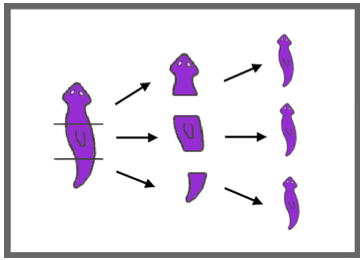
Requires only one parent
sexual
asexual
first to grow in primary succession
trees
shrubs
grass
lichens and mosses
first to grow in secondary succession
grass
lichens and mosses
trees
shrubs
filter blood/ remove waste
endocrine
excretory
immune
nervous
transport oxygen
respiratory
digestive
circulatory
immune
white blood cells
excretory
endocrine
immune
intergumentary