wayground logo

Free Printable Worksheets

Font size

S
M
L
XL
Worksheets

Unit 1 Review Geography Basics

Total questions: 49

Worksheet time: 44mins
Name
Class
Date
1.

Determined by nature - mountains, climate, rivers.

(a)  
2.

Defined by common characteristics such as

language, culture, religion, exports/imports

(a)  
3.

Absolute & Relative

(a)  

4.

A “view of the whole” earth by mapping the

location of places

(a)  

5.

Interaction through travel, trade, communication

(a)  

6.

Come from the ideas and actions of people

(a)  

7.

Physical & Human Characteristics

(a)  

8.

Humans adapt to, modify, and depend on the environment

(a)  

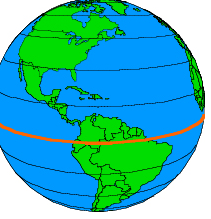
9.

Measures distances north and south of the equator, called parallels.

(a)  

10.

Latitude, longitude, street address, exact location

(a)  

11.

Tools of Geographers

(a)  

12.

Measure East and West of the Prime

Meridians, called Meridians

(a)  

13.

Described by landmarks, directions, time, or

distance from one place to the other

(a)  

14.

Mountains formed when lava rises through the

crust.

(a)  

15.

The part of the earth where life is found.

(a)  

16.

The part of the earth's crust that is made up by land

(a)  

17.

The thin layer of earth surrounding the mantle

(a)  

18.

Shaking or sudden movements in plates

(a)  

19.

Oceans, lakes, rivers, and other bodies of water on the earth

(a)  

20.

The thick middle layer of the earth's interior structure consisting of dense hot rock

(a)  

21.

The centermost part of the earth is called the...

(a)  

22.

The major land masses of the world

(a)  

23.
Certain stages of the water cycle are most likely occurring under certain weather conditions.  Which stage is most likely going to occur on a warm, sunny day?
a)
precipitation
b)
condensation
c)
evaporation
24.
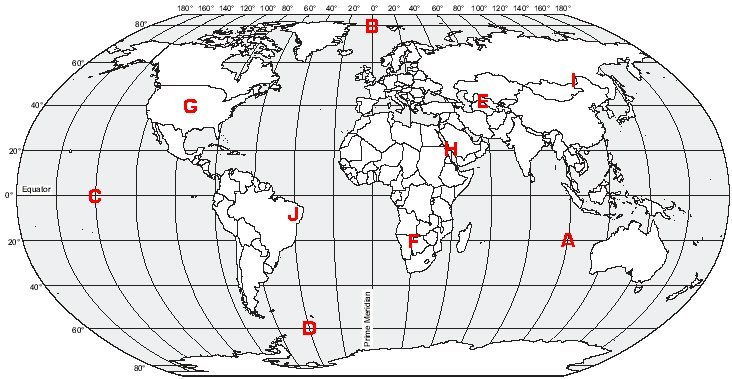
Which letter would you find at 15oS, 60oW?
a)
A
b)
C
c)
L
d)
H
25.
Which continent is completely south of the Equator and east of the Prime Meridian?
a)
Antartica 
b)
South America
c)
North America 
d)
Australia 
26.
Asia and Australia are in what hemisphere?
a)
Northern
b)
Southern
c)
Western
d)
Eastern
27.
Antarctica, Australia, and most of South America are in what hemisphere? 
a)
Northern 
b)
Southern 
c)
Western 
d)
Eastern
28.
This picture shows
a)
Atmosphere
b)
Biosphere
c)
Hydrosphere
d)
Geosphere
29.
This is part of the....
a)
Geosphere
b)
Biosphere
c)
Hydrosphere
d)
Cryosphere
30.
Why is MOST of the freshwater on Earth not available for our use?
a)
All freshwater on Earth is easily accessible for use.
b)
It is frozen in the icecaps and glaciers.
c)
It is surface water.
d)
It is underground.
31.
Which Hemisphere are both North America and South America found in?
a)
Western Hemisphere
b)
Eastern Hemisphere
c)
Southern Hemisphere
d)
Northern Hemisphere
32.

Half of a globe or sphere. The 

Earth is divided into 4 (Northern, 

Southern, Eastern, Western).

a)

parallel lines

b)

hemisphere

c)

political map

d)

natural resources

33.

The following diagram represents the water cycle. Which of the following points represents evaporation?

a)

Point 1

b)

Point 2

c)

Point 3

d)

Point 4

34.

Which stage does the #3 show in the diagram

a)

condensation

b)

evaporation

c)

precipitation

d)

coolection

35.

Which stage does the #4 show in the diagram

a)

condensation

b)

evaporation

c)

precipitation

d)

colllection

36.

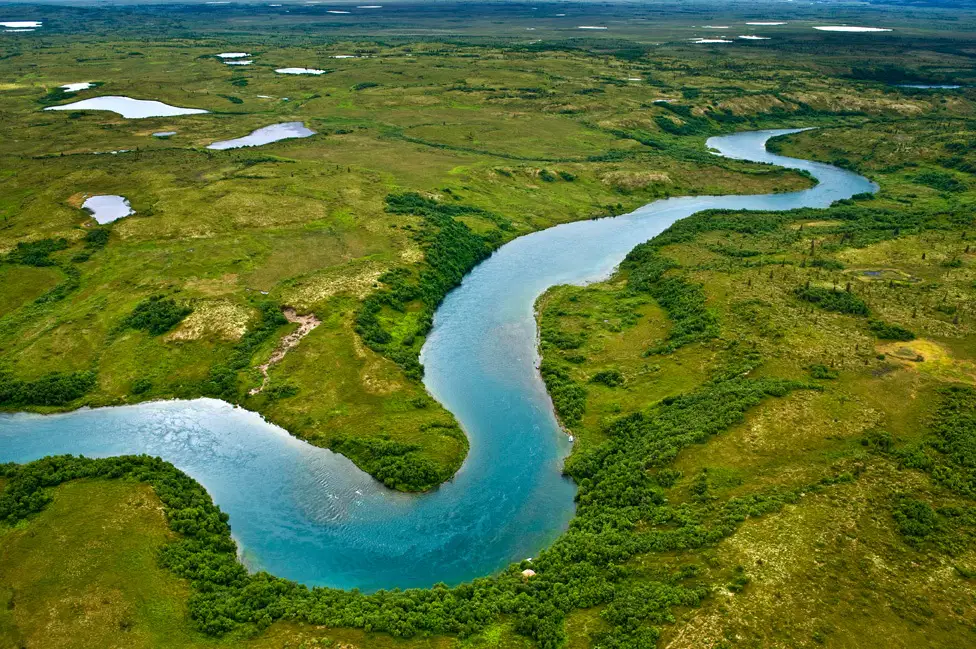
What body of water is this?

a)

River

b)

Stream

c)

Creek

d)

Brook

37.
The huge pieces of the earth's crust are called ____________________________. 
a)
crust
b)
plates
c)
directions
d)
seismos
38.

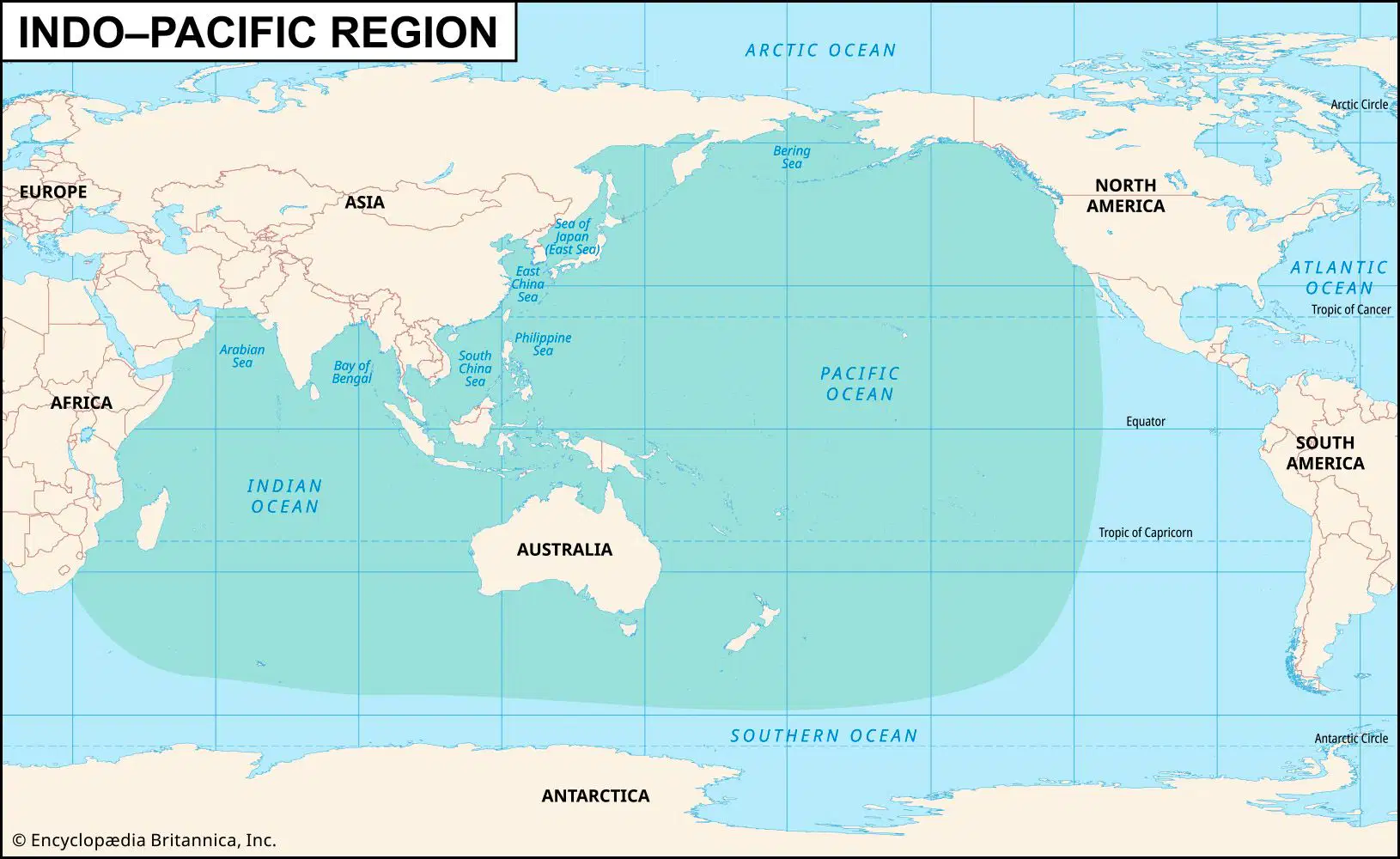
Where is the Ring of Fire located?

a)

Along the Pacific Ocean

b)

Along the Atlantic Ocean

c)

Along the Gulf of Mexico

d)

Along the Western coast of Africa

39.
When two tectonic plates push toward each other (convergent plates), what landform is created?
a)
The destruction of landforms
b)
An intense crashing sound
c)
The creation of mountain ranges such as the Rockies
d)
Higher insurance deductibles
40.
a)
The map shows lines of longitude.
b)
The map shows lines of latitude.
41.
What is the approximate location of letter B?
a)
80oN, 0o
b)
0o, 80oW
c)
80oS, 0o
d)
0o, 80oE
42.
The outside layer of the earth is called ______________________.
a)
core
b)
crust
c)
mantle
d)
outer core
43.

What types of lines are these?

a)

Latitude

b)

Longitude

44.

What do we call the 0 degree latitude line?

a)

Equator

b)

Prime Meridian

45.
To locate a place on the earth, you need to look at...
a)
where the lines of latitude and longitude meet
b)
the lines of latitude only
c)
the lines of longitude only
d)
the compass rose
46.
What layer is the surface of the earth?
a)
Asthenosphere
b)
Lithosphere
c)
Outer Core
d)
Mesosphere
47.
Label C represents what layer of the earth?
a)
Core
b)
Crust
c)
Mantel
d)
Lithosphere 
48.
This sphere is composed of all the living things 
a)
Hydrosphere 
b)
Biosphere 
c)
Atmosphere 
d)
Geosphere 
49.
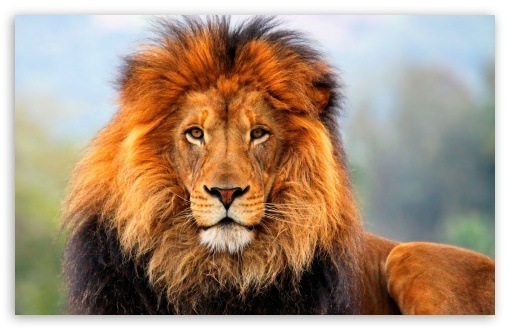
A monkey is:
a)
Atmosphere
b)
Biosphere
c)
Geosphere
d)
Hydrosphere