
NEW
Font size
 Worksheets
Comic-Based Liver and Gall Bladder Quiz
Total questions: 10
Worksheet time: 5mins
What is the preferred initial management for gall bladder ascariasis?
Immediate surgical intervention
Conservative management with anti-helminthic drugs
Chemotherapy
Radiation therapy
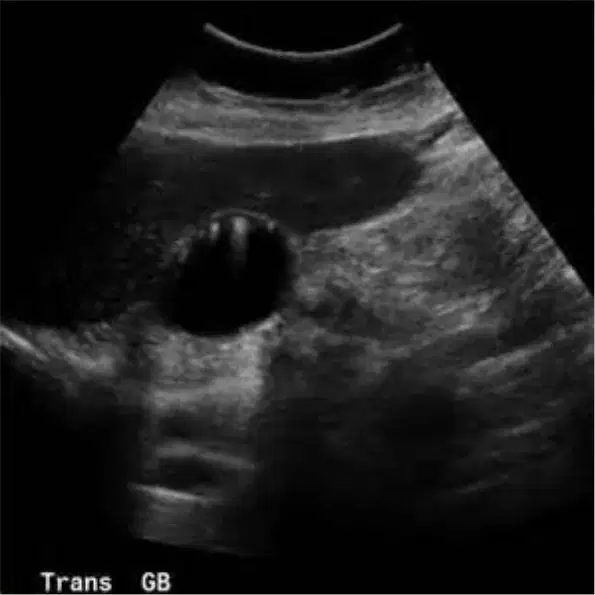
Which of the following best describes the pathological process involved in adenomyomatosis of the gallbladder?
Hyperplastic changes causing overgrowth of mucosa and thickening of the gallbladder wall
Inflammatory destruction of the gallbladder wall
Malignant transformation of gallbladder cells
Simple accumulation of cholesterol in the gallbladder
Why might it be challenging to differentiate between adenomyomatosis and cholesterolosis on imaging?
Both conditions can present with similar sonographic features
Both conditions always present with gallstones
Both conditions are associated with acute inflammation
Both conditions cause complete obstruction of the bile duct
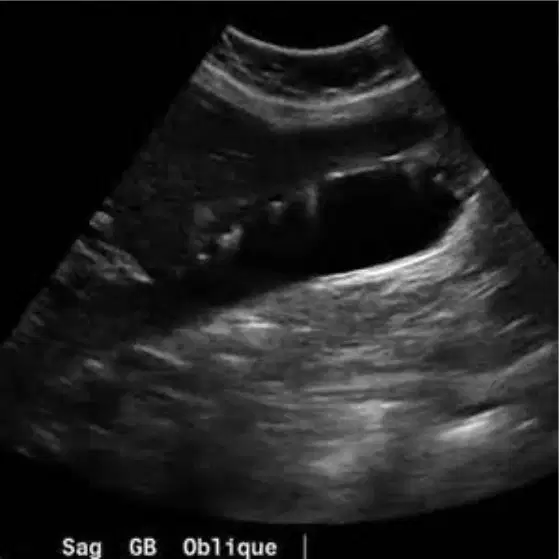
Based on the image and the term "Adenomyomatosis," which organ is most likely being examined in this ultrasound?
Gallbladder
Kidney
Liver
Pancreas
Which of the following are the two most common causes of biliary obstruction in the distal common bile duct (CBD)?
Gallstones and carcinoma in the head of the pancreas
Cholangitis and biliary atresia
Choledochal cyst and Mirizzi syndrome
Pancreatic adenocarcinoma and gallbladder carcinoma
Which laboratory findings are most likely to be elevated in a patient with biliary obstruction?
ALP, conjugated bilirubin, and GGT
AST, ALT, and amylase
Hemoglobin, hematocrit, and platelets
Sodium, potassium, and chloride
What happens to the intrahepatic ducts and gallbladder when there is an obstruction at the bifurcation (BIF) of the right and left hepatic ducts (RHD and LHD)?
Intrahepatic ducts dilate; gallbladder contracts
Intrahepatic ducts contract; gallbladder dilates
Only the cystic duct dilates; gallbladder contracts
Only the common bile duct dilates; gallbladder expands
A patient is diagnosed with Mirizzi Syndrome. Which of the following findings would you expect to observe?
Cholecystocholechochal fistula
Portal vein thrombosis
Hepatic artery aneurysm
Splenic infarction
Which laboratory findings are most likely to be elevated in a patient with cholangitis?
Conjugated bilirubin, ALP, GGT, Amylase, Lipase, WBC
Hemoglobin, Hematocrit, Platelets
Sodium, Potassium, Chloride
Glucose, Insulin, C-peptide
A patient presents with air in the biliary tract but no symptoms. Which of the following is the most likely diagnosis?
Pneumobilia
Cholelithiasis
Hepatic abscess
Acute pancreatitis

