
 Worksheets
Human Body Cells and Tissues Quiz
Total questions: 98
Worksheet time: 49mins
Approximately how many cells are in the human body?
50 billion
50 trillion
200 million
200 trillion
How many cell types are there in the human body?
50
100
200
500
What is the study of tissues called?
Cytology
Histology
Physiology
Anatomy
What do tissues consist of?
Different cells working independently
Similar cells and products working together
Random cells with no specific function
Cells that do not interact
What is the dimensionality of tissues compared to sections?
Tissues are 2D, sections are 3D
Tissues are 3D, sections are 2D
Both tissues and sections are 2D
Both tissues and sections are 3D
Why is it important to understand the orientation of sections?
To ensure the sections are colorful
To preserve the sections for longer
To accurately interpret the 3D structure
To make the sections thicker
What is the typical thickness of tissue slices used in sectioning?
5-10 cells
1-2 cells
10-20 cells
3-5 cells
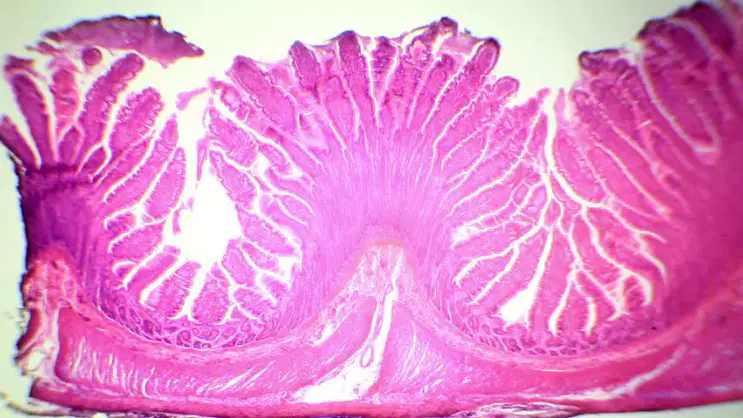
What is a common procedure done to tissue sections to enhance visibility?
Heating
Cooling
Staining
Freezing
Which of the following is a type of section axis?
Diagonal
Longitudinal
Horizontal
Vertical
What is the characteristic of a cross section (transverse) in anatomical terms?
It runs parallel to the long axis of the body.
It is a diagonal cut across the body.
It is a horizontal cut dividing the body into upper and lower parts.
It is a vertical cut dividing the body into left and right parts.
Which section axis is described as a diagonal cut?
Longitudinal
Cross Section (transverse)
Oblique
Vertical
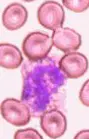
What is an example of a tissue that is typically prepared as a smear in histology?
Blood
Areolar connective tissue
Duodenum section
Muscle tissue
What is a characteristic of epithelial tissue?
It is highly vascular
It is composed of loosely packed cells
It has one or more surfaces exposed to the environment
It is primarily found in the brain
Which of the following is a function of epithelial tissue?
Conducting electrical impulses
Producing and releasing secretions
Storing fat
Contracting to produce movement
Epithelial tissue is described as avascular. What does this mean?
It has a rich blood supply
It lacks blood vessels
It is composed of nerve cells
It is found only in the heart
Which of the following is NOT a function of epithelial tissue?
Protecting deeper tissues
Excreting wastes
Absorbing chemicals
Generating electrical signals
What is the function of the basal membrane in epithelial tissue?
It faces the external environment.
It anchors the cell to the basement membrane.
It absorbs nutrients.
It secretes hormones.
Which surface of the epithelial tissue faces away from the basement membrane?
Basal surface
Lateral surface
Apical surface
Internal surface
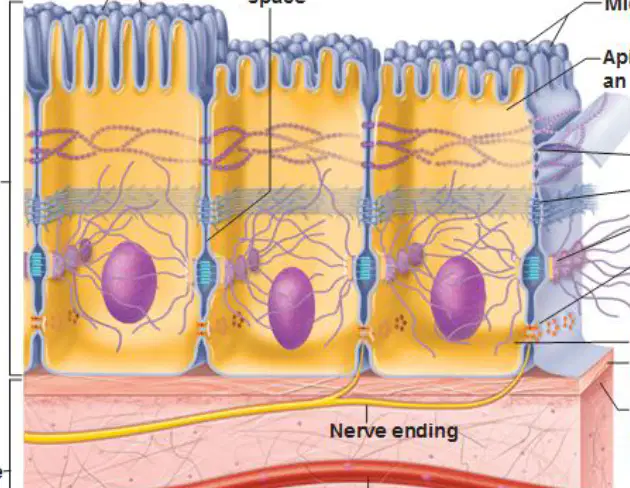
What components are found in the basement membrane of epithelial tissue?
Lipids and carbohydrates
Collagen and glycoproteins
DNA and RNA
Proteins and lipids
What is a characteristic of simple epithelia?
Multiple layers
Named by color
One layer
Does not touch basement membrane
Which of the following is NOT a type of simple epithelia?
Squamous
Cuboidal
Stratified
Columnar
Where are goblet cells typically found?
Within squamous epithelia
Within cuboidal epithelia
Within columnar epithelia
Within stratified epithelia
What is the function of goblet cells?
Absorb nutrients
Secrete mucus
Provide structural support
Transport oxygen
What is the primary function of simple squamous epithelium?
Provides structural support
Permits rapid diffusion or transport of substances
Produces hormones
Absorbs nutrients
Where can simple squamous epithelium be found in the body?
Alveoli, glomeruli, endothelium, and serosa
Skin, hair, and nails
Muscles and tendons
Brain and spinal cord
What type of fluid does simple squamous epithelium secrete?
Mucous fluid
Serous fluid
Synovial fluid
Cerebrospinal fluid
How are the cells arranged in simple squamous epithelium?
Multiple layers of thick cells
Single row of thin cells
Clusters of round cells
Randomly scattered cells
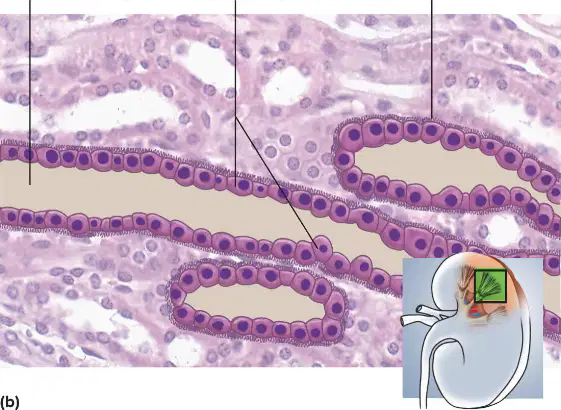
What is the structure of simple cuboidal epithelium?
Single layer of square or round cells
Multiple layers of flat cells
Single layer of columnar cells
Multiple layers of cuboidal cells
What are the functions of simple cuboidal epithelium?
Absorption and secretion, mucus production and movement
Protection and support
Sensory reception and signal transmission
Contraction and relaxation
Where can simple cuboidal epithelium be found in the body?
Liver, thyroid, mammary and salivary glands, bronchioles, and kidney tubules
Skin, mouth, esophagus, and vagina
Heart, blood vessels, and lymphatic vessels
Brain, spinal cord, and nerves
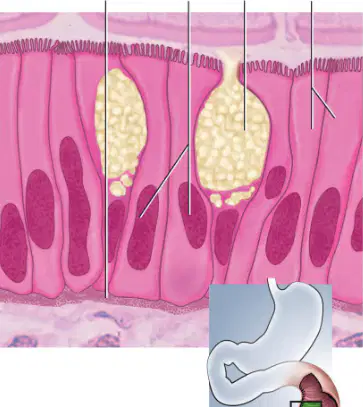
What is a characteristic feature of simple columnar epithelium?
Single row of flat, wide cells
Single row of tall, narrow cells
Multiple layers of tall, narrow cells
Multiple layers of flat, wide cells
Where are simple columnar epithelial cells commonly found?
Lining of the heart
Lining of the GI tract, uterus, kidney, and uterine tubes
Surface of the skin
Inside the bones
What is the function of the brush border in simple columnar epithelium?
Protection against physical damage
Absorption and secretion
Transmission of nerve impulses
Structural support
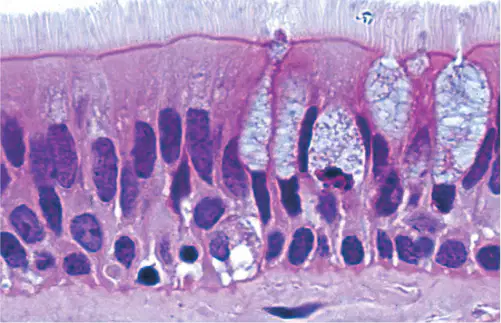
What is a characteristic of pseudostratified epithelium?
All cells do not touch the basement membrane
Nuclei are at the same level
Looks multilayered, but all cells touch the basement membrane
Does not have cilia or goblet cells
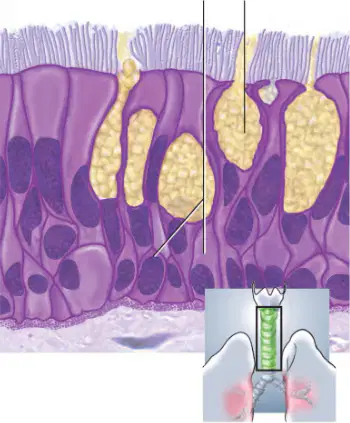
Where can pseudostratified epithelium be found in the body?
Digestive tract
Respiratory tract and portions of male urethra
Skin surface
Heart lining
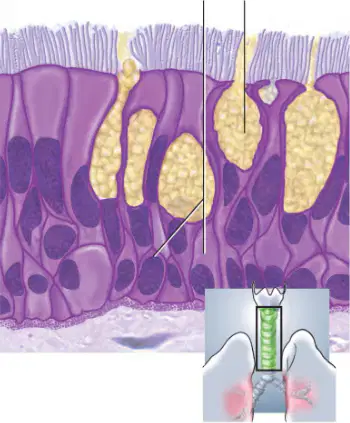
What is one function of pseudostratified epithelium?
Absorbs nutrients
Secretes and propels mucus
Provides structural support
Transmits nerve impulses
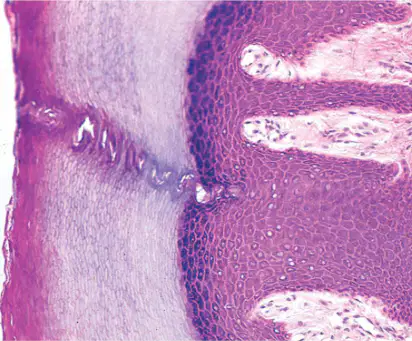
What is a characteristic of keratinized stratified squamous epithelium?
Single cell layer
Cells become flat and scaly toward the surface
Allows easy water loss
Found in the heart
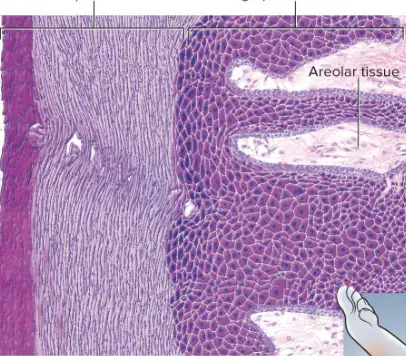
Where is keratinized stratified squamous epithelium commonly found?
Lining of the stomach
Inside the lungs
Epidermis, palms, and soles
In the liver
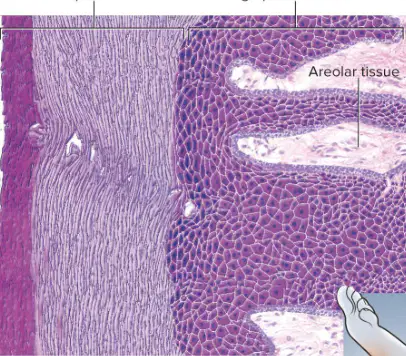
What is one function of keratinized stratified squamous epithelium?
Facilitates nutrient absorption
Resists abrasion and water loss
Produces hormones
Aids in digestion
What is a characteristic of nonkeratinized stratified squamous epithelium?
It has a surface layer of dead cells.
It resists abrasion and penetration of pathogens.
It is found in the skin.
It is a single layer of cells.
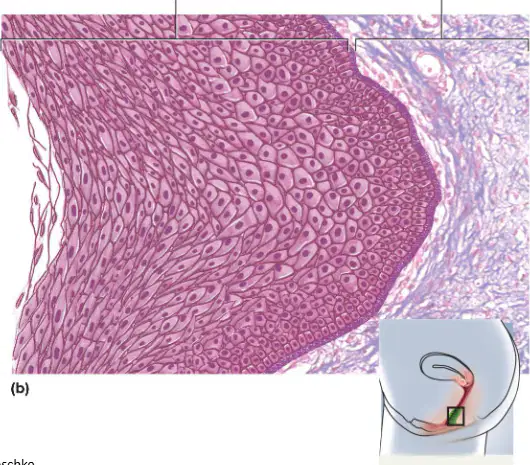
Where can nonkeratinized stratified squamous epithelium be found in the body?
Skin
Stomach lining
Tongue
Heart
What is a characteristic of stratified cuboidal epithelium?
Single cell layer; surface cells flat
Two or more cell layers; surface cells square or round
Single cell layer; surface cells columnar
Two or more cell layers; surface cells flat
Which of the following is a function of stratified cuboidal epithelium?
Absorbs nutrients
Secretes sweat
Transports oxygen
Filters blood
Where can stratified cuboidal epithelium be found in the body?
Lining of the stomach
Sweat gland ducts
Inner lining of the heart
Surface of the skin
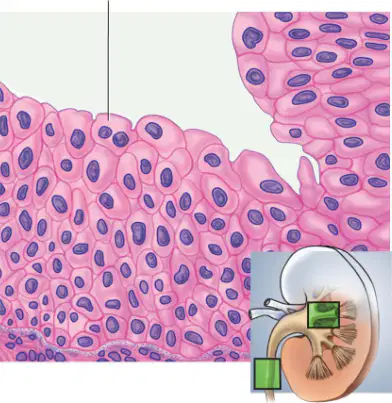
What is a characteristic feature of transitional epithelium?
Cells change from round to flat when stretched
Cells are always flat
Cells are always round
Cells are cuboidal
Where is transitional epithelium commonly found?
Ureter and bladder
Heart and lungs
Brain and spinal cord
Skin and nails
What is the function of umbrella cells in transitional epithelium?
Protects against hypertonic urine
Aids in digestion
Facilitates oxygen exchange
Produces hormones
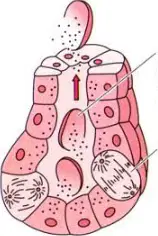
Which type of gland secretes hormones directly into the bloodstream?
Endocrine
Exocrine
Merocrine
Apocrine
What is the method of secretion where the gland's cells release substances through exocytosis?
Merocrine
Apocrine
Holocrine
Endocrine
Which type of gland secretion involves the rupture of the plasma membrane?
Holocrine
Merocrine
Apocrine
Exocrine
What is an example of an exocrine gland?
Acinar cells
Alpha cells
Beta cells
Insulin
Which of the following is a characteristic of connective tissue?
Cells are in direct contact
Limited vascularization
Widespread distribution
Uniform histology
What is one of the main types of connective tissue?
Nervous
Muscular
Epithelial
Adipose
Connective tissue is known for having:
Consistent vascularization
Variable vascularization
No vascularization
High vascularization
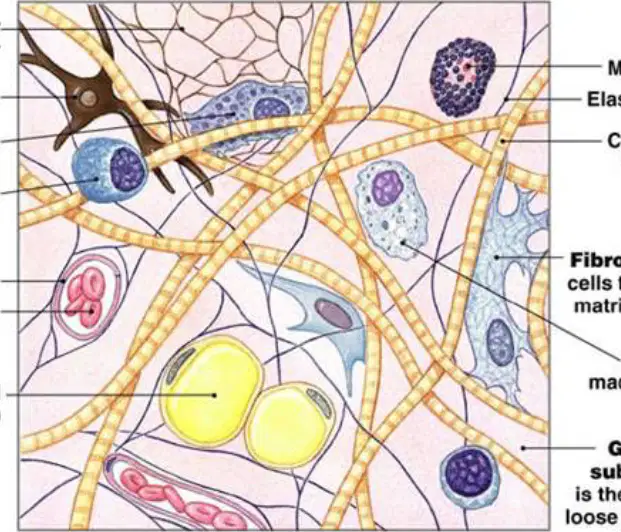
What is the primary function of fibroblasts in fibrous connective tissue?
Attack and react against bacteria
Produce fibers and matrix gel
Make antibodies
Store triglycerides
Which type of cell in fibrous connective tissue is responsible for making antibodies?
Fibroblasts
Leukocytes
Plasma cells
Adipocytes
What do mast cells secrete to inhibit clotting?
Histamine
Antibodies
Heparin
Triglycerides
Which cells in fibrous connective tissue are involved in storing triglycerides?
Fibroblasts
Leukocytes
Plasma cells
Adipocytes
What is a characteristic of collagenous fibers?
They are thin and sponge-like.
They are tough and resist stretching.
They contain elastin and fibrillin.
They are part of the basement membrane.
Where are reticular fibers commonly found?
In tendons and dermis.
In the framework of some organs like the spleen and lymph nodes.
In elastic tissues.
In muscle tissues.
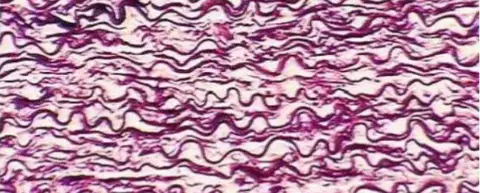
What is the main function of elastic fibers?
To provide a framework for organs.
To resist stretching.
To allow tissues to spring back after being stretched.
To coat with glycoprotein.
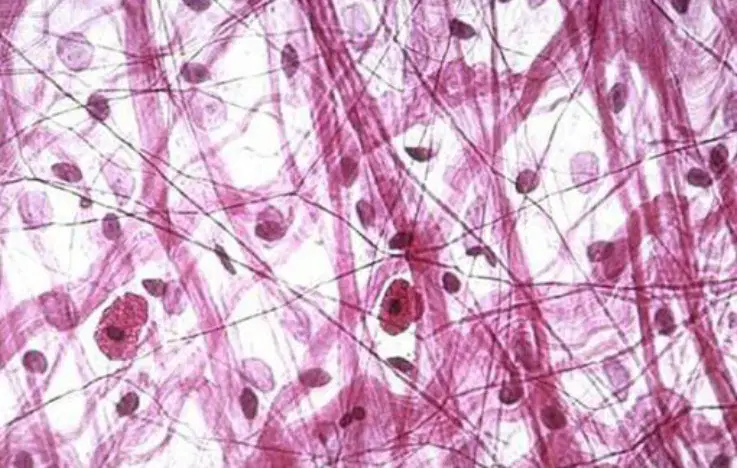
What is a characteristic of areolar connective tissue?
Densely packed fibers
Loosely organized fibers
No blood vessels
Found in bone
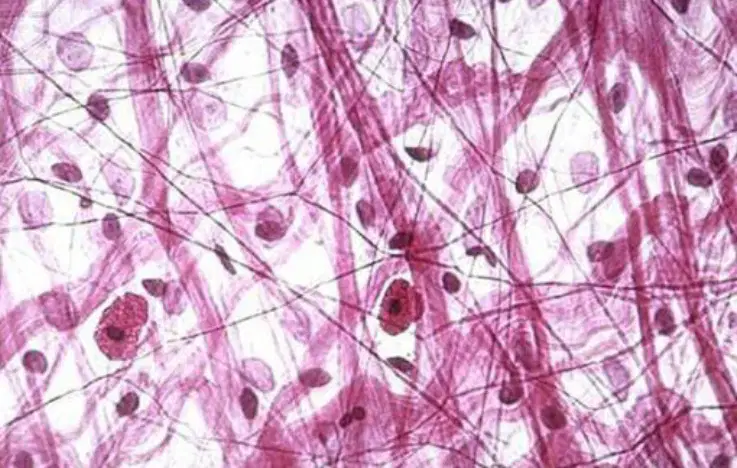
Where is areolar connective tissue typically located?
Inside bones
Beneath epithelia layers
In the brain
On the skin surface
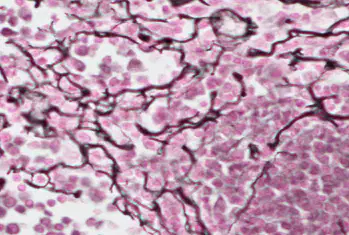
What type of fibers are found in reticular connective tissue?
Elastic fibers
Collagen fibers
Reticular fibers
Muscle fibers
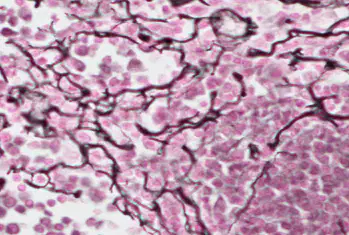
What is a unique feature of reticular connective tissue?
Contains no blood vessels
Blood between fibers (like a bloody sponge)
Found in the heart
Made of muscle cells
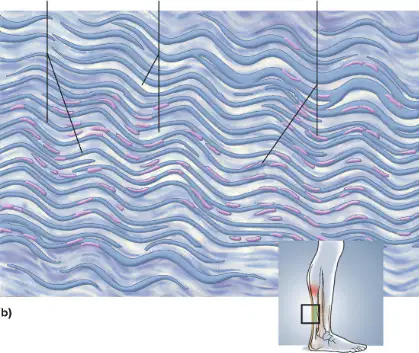
What is a characteristic of dense regular connective tissue?
Collagen fibers in random directions
Collagen fibers tightly packed and parallel
Fibers occupy less space than cells
Unpredictable stresses
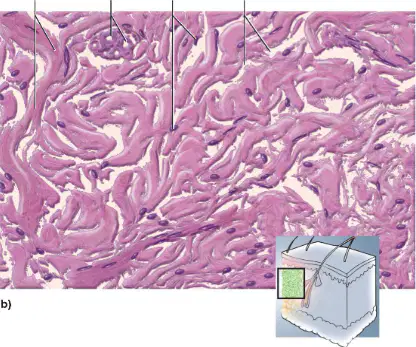
Which type of dense connective tissue is associated with unpredictable stresses?
Dense regular
Dense irregular
Loose connective
Elastic connective
In dense connective tissue, what occupies more space than cells and matrix?
Blood vessels
Fibers
Nerve endings
Gland ducts
What is the primary function of adipocytes?
Store carbohydrates
Store fat
Store proteins
Store minerals
Which type of fat is most abundant in the body?
Brown fat
Yellow fat
White fat
Red fat
Where is brown fat primarily found in the body?
Abdomen
Shoulders and upper back
Legs
Arms
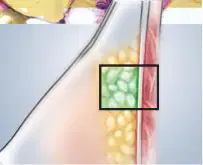
What is a key characteristic of brown fat?
It stores energy
It generates heat
It cushions organs
It is most abundant
What is the primary function of chondroblasts in cartilage?
Produce bone
Produce cartilage
Produce muscle
Produce blood
What happens to chondroblasts once they are surrounded by the matrix?
They become osteocytes
They become fibroblasts
They become chondrocytes
They become adipocytes
Which of the following best describes the nature of cartilage?
Rigid and inflexible
Soft and vascular
Firm and flexible
Hard and brittle
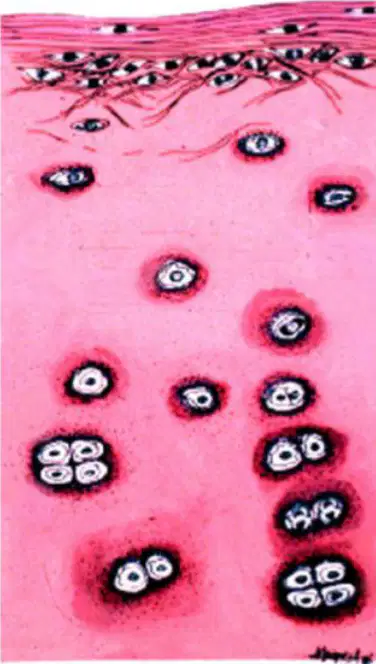
What characteristic of cartilage makes it different from other connective tissues?
It is vascular
It is avascular
It is highly innervated
It is rigid
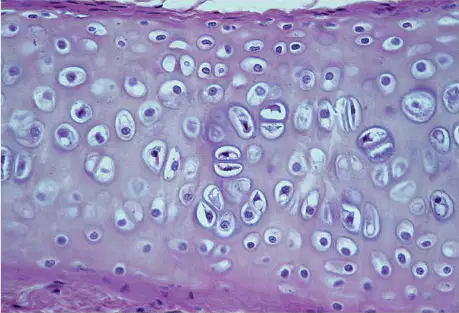
Which type of cartilage is described as clear and glassy?
Hyaline
Elastic
Fibrocartilage
Spongy
What type of fibers are found in elastic cartilage?
Collagen fibers
Elastic fibers
Muscle fibers
Nerve fibers
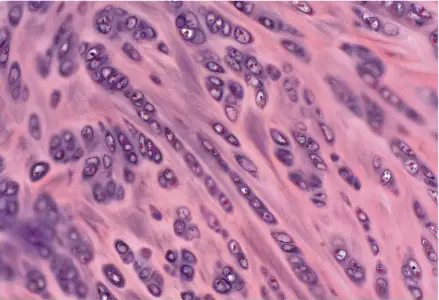
Which type of cartilage contains coarse bundles of collagen?
Hyaline
Elastic
Fibrocartilage
Compact
What type of bone is found at the heads of long bones?
Compact
Spongy
Calcified
Dense
Which type of bone is dense and has no visible spaces?
Spongy
Calcified
Compact
Flat
Where is spongy bone typically located in flat bones?
On the surface
In the middle
At the edges
In the corners
What is the characteristic feature of stratified epithelia?
Single layer of cells
Multiple layers of cells
No layers of cells
Circular arrangement of cells
How are stratified epithelia named?
By the number of layers
By the shape of apical cells
By the color of cells
By the size of cells
What process occurs in the deepest layer of squamous epithelium?
Exfoliation
Mitosis
Desquamation
Keratinization
Which type of squamous epithelium is abrasion resistant?
Nonkeratinized
Transitional
Keratinized
Cuboidal
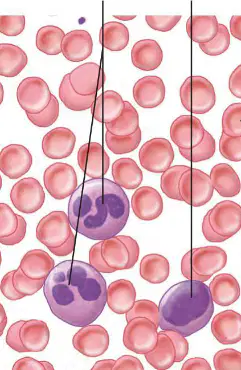
What are the formed elements of blood?
Plasma, Serum, Water
Erythrocytes, Leukocytes, Platelets
Hemoglobin, Oxygen, Carbon Dioxide
Proteins, Lipids, Carbohydrates
Where is blood produced in the body?
Heart
Liver
Bone marrow
Lungs
What is the primary function of blood?
Digestion of food
Transport of cells and matter
Production of hormones
Regulation of body temperature
What are the two types of signaling used in communication within nervous tissue?
Electrical and mechanical signaling
Electrical and chemical signaling
Chemical and thermal signaling
Thermal and mechanical signaling
What is the primary function of neurons in nervous tissue?
Store energy
Detect stimuli and transmit information
Produce hormones
Support other cells
What role do neuroglial cells play in nervous tissue?
Transmit electrical signals
Detect environmental changes
Support cells for neurons
Produce neurotransmitters
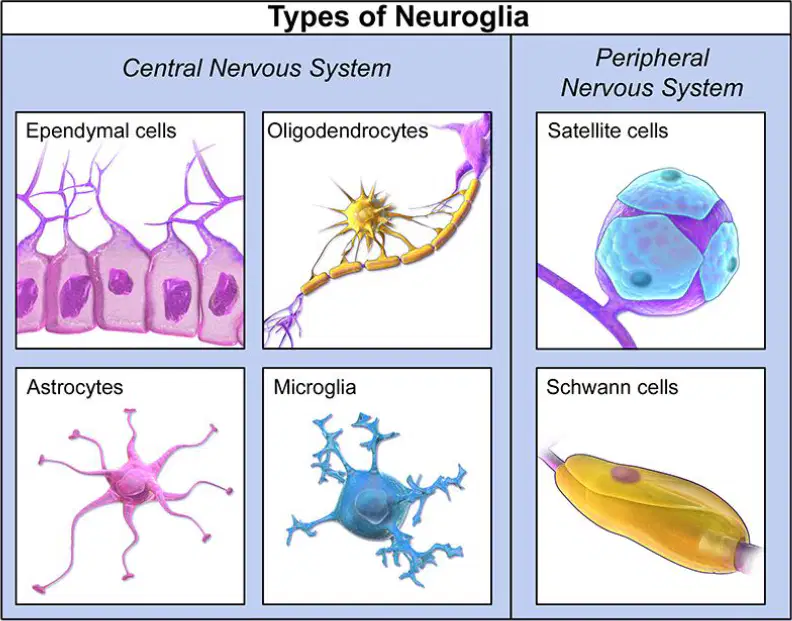
Which type of neuroglial cell is responsible for the immune response in the central nervous system?
Astrocytes
Microglia
Schwann cells
Ependymal cells
What is the primary function of astrocytes in the nervous system?
Create cerebrospinal fluid (CSF)
Maintain the environment
Myelinate axons in the peripheral nervous system
Provide immune response
Which cells are responsible for myelinating axons in the peripheral nervous system?
Oligodendrocytes
Microglia
Schwann cells
Ependymal cells
What role do oligodendrocytes play in the central nervous system?
Create cerebrospinal fluid
Support axons by forming myelin sheaths
Maintain the environment
Provide immune response
Which type of muscle tissue is responsible for voluntary movements?
Skeletal
Smooth
Cardiac
Nervous
What is the primary function of muscle tissue when stimulated?
To contract and exert force
To store energy
To produce hormones
To filter blood

