
 Worksheets
Mass Production
Total questions: 102
Worksheet time: 51mins
Who invented the cotton gin?
Eli Whitney
James Watt
Samuel Morse
Robert Fulton
What was the main benefit of Eli Whitney's interchangeable parts?
It allowed any part in a gun to be changed for the same part in another gun, increasing production.
It reduced the need for skilled labor.
It made cotton production more efficient.
It improved transportation.
Did the invention of the cotton gin decrease cotton production? True or False.
True
False
What did the U.S. government hire Eli Whitney to make?
Muskets
Steam engines
Railroad tracks
Telegraph machines
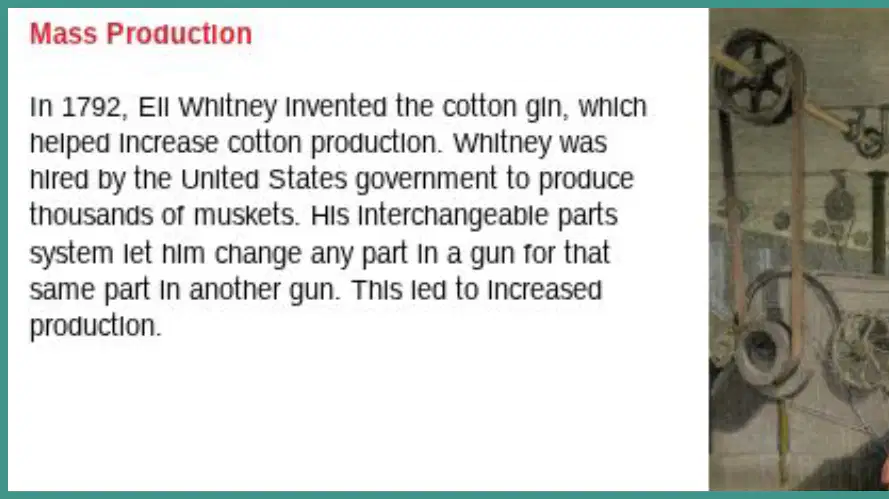
Based on the passage and the image, how did mass production affect factories?
It allowed factories to produce goods more quickly and efficiently.
It caused factories to close down due to high costs.
It reduced the number of workers needed to zero.
It made factories less organized and more chaotic.
Who invented the telegraph?
Samuel F.B. Morse
Alexander Graham Bell
Thomas Edison
Guglielmo Marconi
What is Morse code?
A letter
A code of dots and dashes for messages
A boat
A discovery
Samuel Morse invented the telegraph using electricity. True or False: The telegraph was invented before electricity was discovered.
True
False
How did people send letters before the telegraph?
By horse or boat
By email
By telegraph
By mobile phone
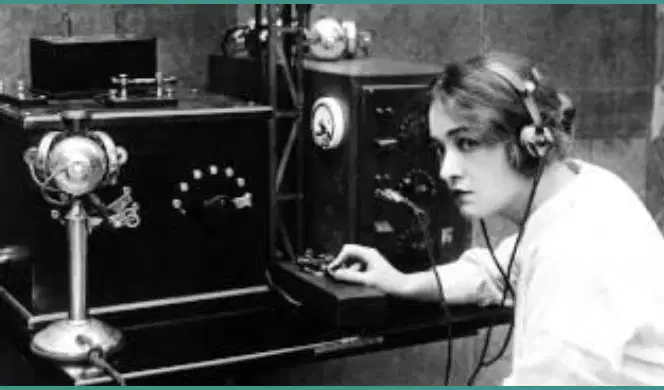
What was the main advantage of the telegraph over earlier ways of sending messages?
It allowed messages to be sent much faster over long distances.
It was less expensive than all previous methods.
It could send packages as well as messages.
It required no special equipment to operate.
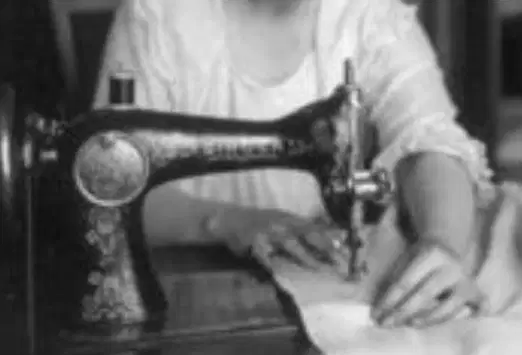
Who invented the sewing machine?
Thomas Edison
Elias Howe
Alexander Graham Bell
Nikola Tesla
When was the sewing machine invented?
1846
1825
1873
1809
Sewing machines made clothing take longer to make.
True
False
How did factory work change American lives?
Everyone had to work the same hours at a fast pace.
Everyone worked from home.
Everyone took long breaks.
Everyone chose their own hours.
Where were most factories located?
In rural areas
In cities or new factory towns
In foreign countries
On farms
Francis Cabot Lowell's factories mainly relied on which group to run the machines?
Young women from New England
Immigrant men from Ireland
Children from orphanages
Retired Revolutionary War soldiers
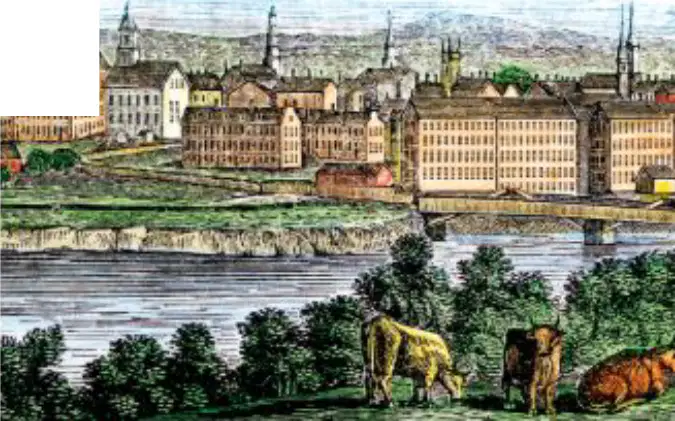
The illustration shows:
Factories, houses, and smokestacks representing industrialization.
A rural landscape with farms and animals.
A city skyline with tall office buildings.
A beach with people swimming and sunbathing.
In the early 1800s, new inventions and better transportation helped businesses. Which statement is correct?
New inventions and transportation had no effect on businesses.
New inventions and better transportation helped businesses make a profit.
Businesses lost money due to new inventions.
Transportation was not important in the 1800s.
Some ideas, like mass production, changed how people worked.
True
False
The telegraph changed how information was ________.
shared
destroyed
hidden
forgotten
The Industrial Revolution moved work from _______ to _______.
home, factory
city, country
factory, home
office, school
Scientific discoveries in medicine helped Americans.
True
False

The mechanical reaper helped farmers increase ________.
production
expenses
pollution
labor hours
How would you send an urgent message to a distant family member in the mid-1800s?
By telegraph
By email
By mobile phone
By social media
Fill in the blank: Making many products quickly and efficiently is called ________.
Mass Production
Handcrafting
Personalization
Batch Cooking
Fill in the blank: The invention that let people send messages quickly over long distances in the 1800s is called ________.
Faster Messages (Telegraph)
Steam Engine
Printing Press
Telephone
Fill in the blank: The device that made clothes faster in the 1800s is called a ________.
Sewing Machine
Telegraph
Steam Engine
Cotton Gin
Many people in the 1800s moved to ________ to live and work.
Factory Towns
Castles
Farms
Mansions
The National Road was completed in _____. It became the main route for settlers heading west.
1837
1825
1845
1806
The National Road went from Cumberland, Maryland to _____
Vandalia, Illinois
Richmond, Virginia
St. Louis, Missouri
Pittsburgh, Pennsylvania
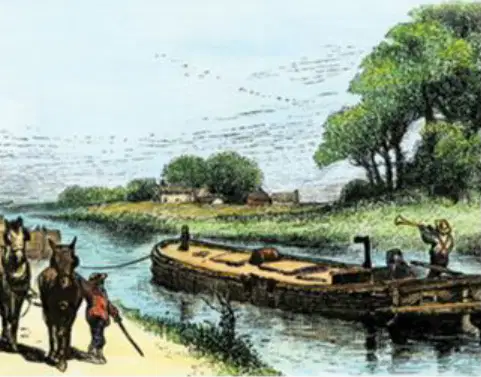
The Erie Canal opened in 1825 and ran from Albany to which city in New York?
New York City
Buffalo
Rochester
Syracuse
In 1830, the Tom Thumb steam engine first ran on the _____
Erie Canal
Baltimore & Ohio Railroad
National Road
Hudson River
Which two cities are connected by The National Road?
Cumberland and Vandalia
Baltimore and St. Louis
Philadelphia and Pittsburgh
Richmond and Charleston
What is the purpose of the Erie Canal?
To ship goods
To provide drinking water
To generate electricity
To be a tourist attraction
What does the red line represent on the map?
The Erie Canal
The National Road
The Mississippi River
The Appalachian Mountains
What does the blue dashed line represent on the map?
The Erie Canal
The National Road
The Mississippi River
The Appalachian Mountains
In what year did Texas gain independence?
1836
1845
1821
1861
In the 1820s, was Texas part of the United States?
True
False
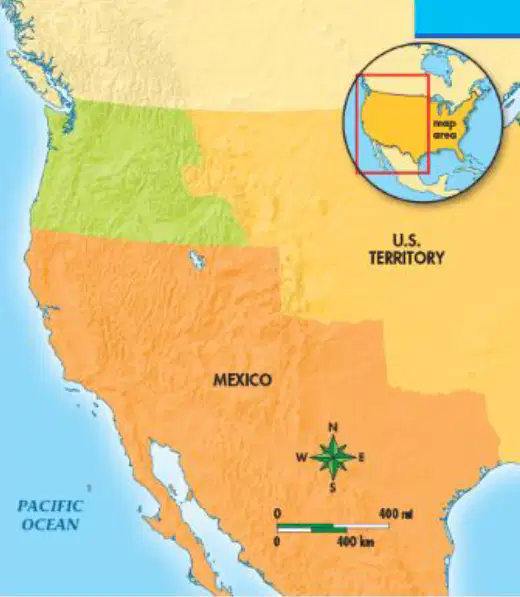
In 1835, was Texas part of Mexico or the United States?
Texas was part of Mexico in 1835.
Texas was part of the United States in 1835.
Texas was an independent country in 1835.
Texas was part of Canada in 1835.
Why did the Mexican government want people to settle in Texas?
The Mexican government wanted people to live there, work the land, and become loyal citizens.
The Mexican government wanted to create a new country in Texas.
The Mexican government wanted to remove all native plants from Texas.
The Mexican government wanted to use Texas as a prison colony.
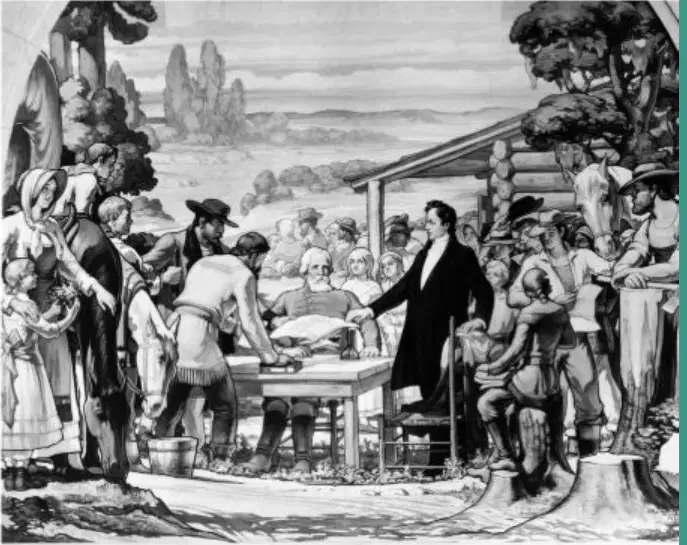
Who did the Mexican government allow to bring American families into Texas?
Stephen Austin
Sam Houston
James Bowie
Davy Crockett
By 1832, about how many settlers had moved to Texas?
20,000
5,000
50,000
100,000
Who did the settlers outnumber in Texas?
the Tejanos
the Comanches
the Spanish soldiers
the American traders
What did vaqueros teach settlers?
Many Mexican ranching techniques
How to build log cabins
How to mine for gold
How to navigate by the stars
What did Texan settlers complain about the Mexican government?
The Mexican government’s strict rule over its citizens.
The Mexican government’s support for Texan independence.
The Mexican government’s generous land grants to settlers.
The Mexican government’s refusal to trade with the United States.
According to the passage, what did Texan settlers want to be legal in Texas?
Slavery
Voting rights for women
Prohibition of alcohol
Universal healthcare
By what year did Texans and Tejanos want independence from Mexico?
1835
1821
1845
1861
According to the passage, what event had begun by fall 1835?
The Texas Revolution
The American Civil War
The Gold Rush
The Mexican-American War
According to the passage, what did Texan settlers want?
Stricter Mexican rule
More open trade with the United States
To remain part of Mexico
Less trade with the United States
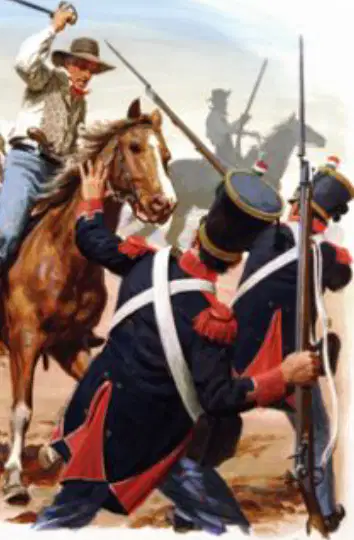
Which event does this battle scene show according to the passage 'Texas Revolution Begins'?
The Texas Revolution
The American Civil War
The Battle of Gettysburg
The War of 1812
In 1836, who led the Mexican army toward San Antonio?
Davey Crockett
Jim Bowie
General Antonio Lopez de Santa Anna
Sam Houston
Texans Defend the Alamo: How many Texans held off Santa Anna’s army for two weeks at the Alamo?
100
180
250
300
Texans Defend the Alamo: On March 6, Mexican forces stormed the Alamo. All defenders were killed, including ________ and Jim Bowie.
Davey Crockett
Sam Houston
Stephen F. Austin
William B. Travis
Texans Defend the Alamo: True or False: The defenders of the Alamo survived the attack by Mexican forces.
True
False
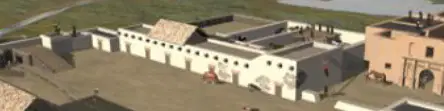
Texans Defend the Alamo: Refer to the diagram of the Alamo. What event took place at this location in 1836?
The signing of a peace treaty
The storming of the Alamo by Mexican forces
The founding of San Antonio
The election of a new president
According to the passage, who commanded the Texan army during the conflict for Texas independence?
Sam Houston
Stephen F. Austin
James Fannin
Antonio López de Santa Anna
What happened to Santa Anna after the Texans defeated the Mexicans at San Jacinto?
Santa Anna was captured and forced to sign a treaty giving Texas its independence.
Santa Anna was killed in battle by the Texans.
Santa Anna escaped to Mexico and continued to fight.
Santa Anna surrendered and was exiled to Europe.
The Texans stopped their retreat at the San Jacinto River and defeated the Mexicans.
True
False
Which event led to Texas gaining its independence?
The Texans retreated from the San Jacinto River
Santa Anna signed a treaty after being captured
The Mexicans defeated the Texans
Sam Houston surrendered
Look at the painting provided. Based on the passage and the image, what is happening in the scene and what is its significance to Texas history?
The painting depicts the Battle of the Alamo, a pivotal event in the Texas Revolution.
The painting shows the signing of the Declaration of Independence in Texas.
The painting illustrates the construction of the first Texas railroad.
The painting represents a peaceful meeting between settlers and Native Americans.
According to the passage, what year did Congress vote to annex Texas?
1845
1836
1848
1861
Why did Northerners not want to add Texas to the Union?
They wanted more free states
They did not want Texas as a slave state
They wanted to annex Mexico instead
They did not like the Texas flag
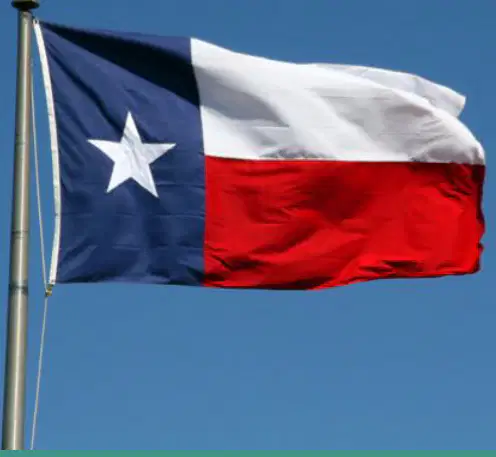
What colors are on the flag of Texas, as described in the passage?
Red, white, and blue
Green, white, and red
Blue, yellow, and red
Red, white, and green
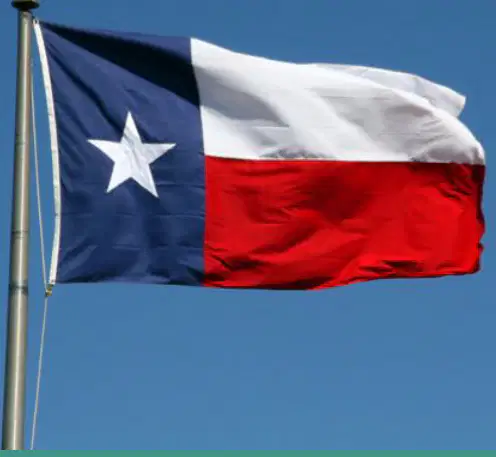
The flag of Texas has a lone ______, according to the passage.
star
eagle
stripe
tree
Sam Houston became president of the Republic of Texas in _________.
September 1836
March 1835
July 1837
December 1838
Who became the secretary of state of the Republic of Texas in September 1836?
Sam Houston
Stephen Austin
James Polk
Andrew Jackson
The Missouri Compromise of 1820 banned slavery in most of the _________.
Louisiana Purchase
Oregon Territory
Mexican Cession
Florida Territory
Mexico banned slavery in 1829.
True
False
Fill in the blank: The Mexican War began in ________, when Mexican troops crossed the Rio Grande and attacked American forces.
April 1846
May 1848
June 1845
March 1847
Settlers in California attacked Mexican troops and declared California to be an independent republic during the _________
Bear-Flag Revolt
Gold Rush
Mexican-American War
Gadsden Purchase
The war officially ended in 1848 with the _________
Treaty of Guadalupe Hidalgo
Treaty of Paris
Treaty of Versailles
Treaty of Tordesillas
Read the Key Idea Summary: The vast territory gained from the Mexican War filled out the American Southwest and Americans achieved their goal of _________
manifest destiny
industrialization
isolationism
reconstruction
Manifest Destiny is the idea that the United States had a right to add territory until it reached the _________?
Pacific Ocean
Atlantic Ocean
Rocky Mountains
Mississippi River
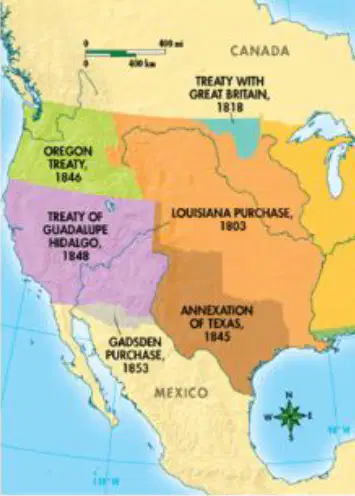
Which treaty officially ended the Mexican War and resulted in the acquisition of a large part of the American Southwest?
Oregon Treaty
Treaty of Guadalupe Hidalgo
Gadsden Purchase
Louisiana Purchase
By 1847, all of northern Mexico was in American hands. President James K. Polk sent General Winfield Scott to invade Mexico by sea. Who captured Mexico City on September 14, ending the main fighting?
General Winfield Scott
General Zachary Taylor
Santa Anna
Stephen Kearny
Under the Treaty of Guadalupe Hidalgo, Mexico gave up its claims to which territory?
Texas
Florida
Louisiana
Oregon
Mexicans living in the Northern territory were given the option to move to ______ or to become United States citizens with protected rights.
Mexico
Canada
Spain
Texas
In 1853, the ______ Purchase gave the United States another chunk of land. It completed the present-day southern boundaries of New Mexico and Arizona.
Gadsen
Louisiana
Alaska
Oregon
The Texas Revolution led to Texas' declaration of independence from ______ in 1836.
Mexico
France
Spain
Great Britain
The American annexation of Texas led to the ______ War.
Mexican
Civil
Spanish-American
Revolutionary
The Treaty of ______ Hidalgo ended the war and gave all of Northern Mexico to the United States.
Guadalupe
Versailles
Tordesillas
Paris
In 1853, the ______ Purchase gave the United States land that completed the present-day southern boundaries of New Mexico and Arizona.
Gadsden
Louisiana
Alaska
Oregon
What happened at the end of the Battle of the Alamo?
Santa Anna surrendered to Texan forces.
Both sides agreed to end the war.
Texan forces kept Mexican soldiers away from the Alamo.
Mexican forces stormed the Alamo and people died on both sides.

What happened when Santa Anna was captured by Texans during the Texan Revolution?
He made changes to the treaty granting Texas independence.
He was forced to sign the treaty giving Texas independence.
He was willing to sign the treaty giving Texas independence.
He refused to sign the treaty giving Texas independence.

What year did Congress vote to annex Texas from Mexico?
1836
1845
1857
1862
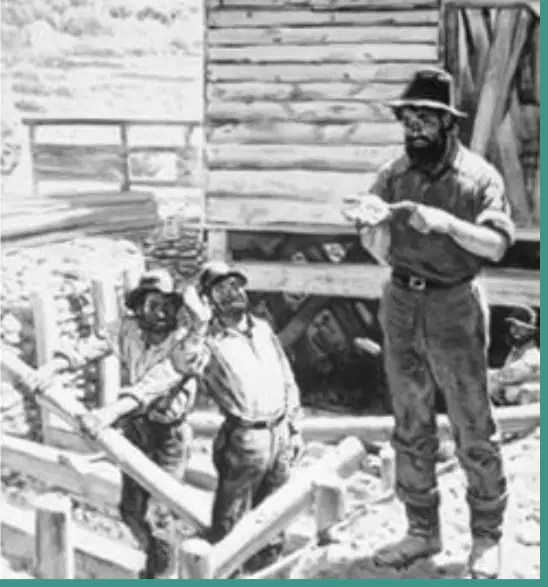
In what year did the carpenter find gold in California?
1848
1852
1861
1836
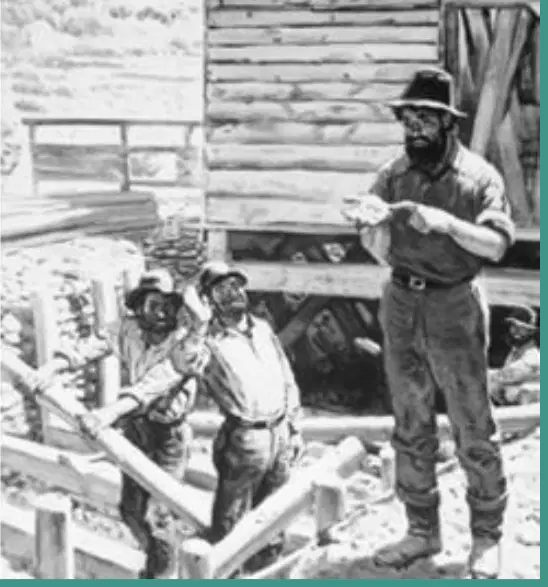
Who was the owner of the mill where gold was discovered?
John Sutter
James Marshall
Samuel Brannan
Levi Strauss
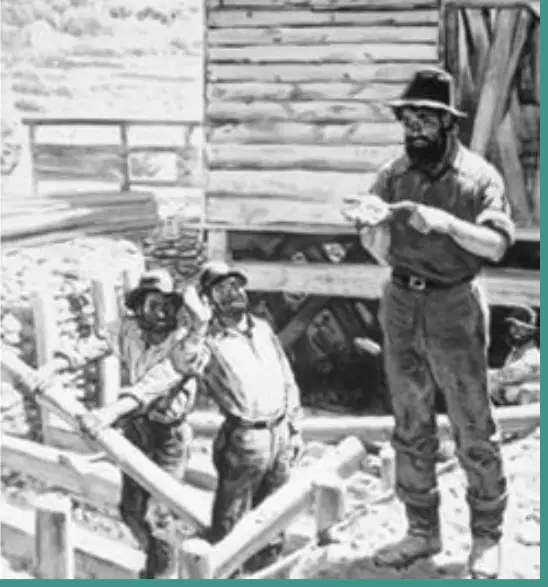
Read the passage 'Gold in California'. True or False: The discovery of gold in California was kept a secret and no one else found out about it.
True
False
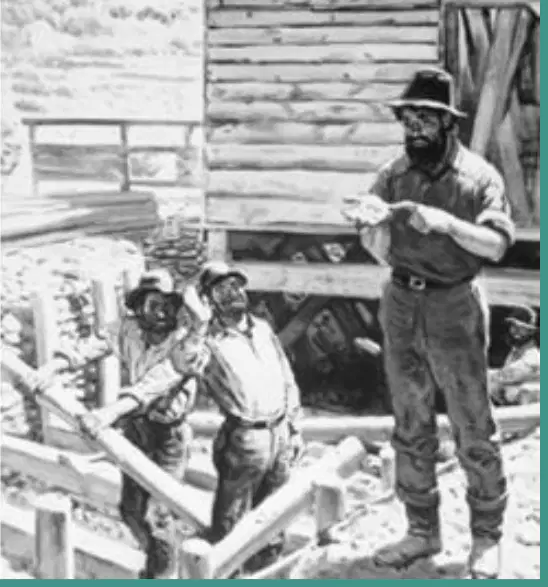
What happened after the news of gold discovery spread?
Thousands of fortune seekers set up tents and shacks on Sutter's property.
The government immediately banned all mining activities.
The gold was quickly hidden and never found again.
Only a few people showed interest in the discovery.
Who announced the discovery of gold to Congress in December 1848?
President Lincoln
President Polk
President Washington
President Adams
How many people moved to California after the discovery of gold was announced?
More than 80,000 people
About 10,000 people
Less than 5,000 people
Around 25,000 people
Read the passage below and answer the question: In December 1848, President Polk announced the discovery of gold to Congress. As the news spread, more than 80,000 people moved to California. The “forty-niners” came from as far away as Europe and China. Americans from the East arrived by boat and 40,000 more came on the California Trail. True or False: The 'forty-niners' only came from the United States.
True
False

How did Americans from the East travel to California during the Gold Rush?
By boat and on the California Trail
By airplane
By subway
By hot air balloon
Read the passage 'Panning for Gold'. What did miners use to scoop up gravel while searching for gold?
A shovel
A flat pan
Their hands
A bucket
Why did miners often suffer from disease and poor diet?
Because they worked in freezing streams and had poor living conditions.
Because they had access to plenty of fresh food and clean water.
Because they worked in comfortable environments with good healthcare.
Because they were given nutritious meals by mining companies.
Read the passage 'Panning for Gold'. True or False: All miners became rich from panning for gold.
True
False
Read the passage 'Panning for Gold'. What happened to the heavier particles of gold when miners scooped up gravel in a flat pan?
They floated to the top
They dropped to the bottom
They dissolved in water
They disappeared
Look at the illustration and read the passage 'Panning for Gold'. What activity are the men in the picture doing?
Fishing
Panning for gold
Building a bridge
Washing clothes
According to the passage 'Other Ways of Mining', what tool did miners use to separate gold from lighter material?
sluice
pickaxe
shovel
pan
From 1848 to 1849, miners produced how many tons of gold according to the passage 'Other Ways of Mining'?
76 tons
150 tons
25 tons
300 tons
1. Why were pioneers attracted to move west to Oregon according to the Haywood family’s discussion?
A) To find gold and become rich quickly
B) Because the government was offering free farmland to settlers
C) To escape the cold winters in the east
D) To join the railroad construction crews
2. What was one of the main challenges families faced on the Oregon Trail mentioned in the play?
A) Running out of food because of wild animals
B) Sickness such as dysentery that caused people to get very ill and sometimes die
C) Attacks from bandits on the trail
D) Getting lost because there were no maps

