Worksheets
Review - 10/1 - 10/3
Total questions: 216
Worksheet time: 5hrs 46mins
Which of the following is a lab safety rule?
Eat food in the lab
Wear safety goggles
Mix chemicals with bare hands
Ignore spills
What is the main difference between speed and velocity?
Speed has direction, velocity does not
Velocity has direction, speed does not
Both have direction
Neither has direction
Which state of matter has a definite shape and volume?
Solid
Liquid
Gas
Plasma
What is the process called when a solute dissolves in a solvent?
Evaporation
Dissolution
Condensation
Filtration
How many oxygen atoms are in one molecule of CO 2 ?
1
2
3
0
Which of the following is a chemical change?
Boiling water
Dissolving sugar in water
Burning paper
Freezing juice
What should you do if a chemical spills on your skin in the lab?
Ignore it
Wash immediately with water
Cover it with a cloth
Smell it
Which of the following best describes a solution?
A mixture where substances are evenly distributed
A solid with a definite shape
A gas with no volume
A liquid that cannot dissolve anything
If you have the compound NaCl, how many sodium atoms are present in one molecule?
1
2
3
4
Which of the following is NOT a state of matter?
Solid
Liquid
Plasma
Energy
Which of the following is an example of dissolution?
Sugar disappearing in tea
Ice melting in the sun
Water boiling
Iron rusting
Which of the following is the correct formula for counting the total number of atoms in H 2 SO 4 ?
2
4
7
6
Which of the following is the best example of velocity?
60 km/h
60 km/h north
60
60 km
Which of the following changes is reversible?
Burning a candle
Melting chocolate
Cooking an egg
Rusting iron
If you have 3 molecules of H 2 O, how many hydrogen atoms do you have in total?
3
6
9
12
Why is it important to tie back long hair during a lab experiment?
To look neat
To prevent hair from catching fire or contaminating chemicals
To avoid getting hair wet
To follow fashion
A student measures the speed of a car as 50 km/h. What additional information is needed to determine the car's velocity?
The color of the car
The direction of motion
The weight of the car
The time of day
Which of the following will increase the rate at which a solute dissolves in a solvent?
Decreasing temperature
Stirring the solution
Using larger solute pieces
Not mixing at all
How many atoms are in one molecule of C 6 H 12 O 6 ?
24
12
18
6
Which of the following best explains why dissolving salt in water is a physical change?
The salt changes into a new substance
The salt and water can be separated by evaporation
The salt burns in water
The water changes color
A student observes that a chemical reaction produces bubbles and heat. What type of change is this most likely to be?
Physical change
Chemical change
No change
Dissolution
If you mix 10 g of sugar in 100 mL of water and all the sugar dissolves, what can you say about the solution?
It is saturated
It is unsaturated
It is a solid
It is a gas
A student is given the formula Al 2 (SO 4 ) 3 . How many oxygen atoms are present in one formula unit?
4
7
12
6
A student notices that when baking soda is added to vinegar, bubbles form and the temperature drops. Explain what type of change is occurring and why.
Physical change, because only bubbles form
Chemical change, because new substances and energy change are observed
Physical change, because temperature drops
No change, because nothing new is formed
You are given a mixture of sand and salt. Describe a safe procedure to separate the two substances in a laboratory setting.
Use a magnet to remove both
Dissolve in water, filter out sand, evaporate water to get salt
Burn the mixture
Add oil to separate them
A student records the following data: A car travels 120 km north in 2 hours. Calculate the velocity of the car.
60 km/h north
60 km/h
120 km/h north
240 km/h
Explain why it is important to never return unused chemicals to their original containers in a laboratory.
It saves time
It prevents contamination of the chemicals
It makes the chemicals stronger
It is easier to clean up
A student wants to dissolve more sugar in water but finds that no more will dissolve at room temperature. What can the student do to increase the amount of sugar that dissolves?
Cool the water
Heat the water
Add salt
Stop stirring
How many atoms of Hydrogen are in H2O
1
2
3
more than 3
How many different elements are present in H2COCH2
5
4
3
2
Calculate the number of Oxygen atoms in Al(OH)3
1
2
3
4
The ______ are numbers found on the lower right-hand side of an element symbol.
Coefficient
Exponent
Multiplier
Subscript
Coefficients in chemical formulas...
Multiply just the first atom
Add to the subscripts at the end of the molecule
Multiply elements without subscripts
Multiply EVERYTHING!
4CF2Cl2
C = 4, F = 4, Cl = 2
C = 1, F = 8, Cl = 8
C = 4, F = 8, Cl = 8
C = 1, F = 4, Cl = 8
C3H5(NO3)3
C = 3, H = 5, N = 3, O = 9
C = 3, H = 5, N = 1, O = 9
C = 9, H = 15, N = 3, O = 9
C = 9, H = 15, N = 1, O = 3
H2SO4
H = 2, S = 4, O = 4
H = 2, S = 1, O = 4
H = 8, S = 4, O = 4
H = 2, SO = 4
How many different elements are present in this molecule?
3 NH4C2H3O2
15
36
5
4
A ______ is a number written in front of a chemical formula.
Coefficient
Subscript
Exponent
Coordinator
How many atoms of Hydrogen are in H2O
1
2
3
more than 3
How many different elements are present in H2COCH2
5
4
3
2
Calculate the number of Oxygen atoms in Al(OH)3
1
2
3
4
Calculate the number of Oxygen atoms in Al(OH)3
1
2
3
4
The ______ are numbers found on the lower right-hand side of an element symbol.
Coefficient
Exponent
Multiplier
Subscript
C3H5(NO3)3
C = 3, H = 5, N = 3, O = 9
C = 3, H = 5, N = 1, O = 9
C = 9, H = 15, N = 3, O = 9
C = 9, H = 15, N = 1, O = 3
4CF2Cl2
C = 4, F = 4, Cl = 2
C = 1, F = 8, Cl = 8
C = 4, F = 8, Cl = 8
C = 1, F = 4, Cl = 8
H2SO4
H = 2, S = 4, O = 4
H = 2, S = 1, O = 4
H = 8, S = 4, O = 4
H = 2, SO = 4
How many different elements are present in this molecule?
3 NH4C2H3O2
15
36
5
4
H2SO4
How many Sodium atoms are in 6NaCl?
1
12
6
How many atoms are there TOTAL in H2SO4 ?
6
5
7
3

How many CARBONs are in this formula?
1
4
8
12

How many total POTASSIUM atoms are in this formula?
8
2
4
12

How many CARBON are in this formula?
5
2
10
20
How many chlorine atoms are in NaClO4 ?
1
2
4
What elements are represented in this chemical formula? Fe2O3
Iron, Oxygen
Francium, Europium, Oxygen
Ferrium, Oxygen
Berylium, Oxygen
What is the total number of atoms in this formula? H2O2
2
4
3
H2C3O4N5
Mg2As3COHNi2
How many total atoms in the following equation?
ClN6Fe2
6
8
10
9
The coefficient in 3H2O is:
6
5
3
2

How man atoms of carbon are there?
1
2
3
4

How many atoms of Iron are in this compound?
1
2
3
4
How many atoms of hydrogen are in
C6H12O6
6
12
18
2
A substance made up of atoms of two or more different elements joined by chemical bonds
Molecule
compound
polar covalent bond
nonpolar covalent bond
How many different elements are present in H2COCH2
5
4
3
2
Calculate the number of Oxygen atoms in Al(OH)3
1
2
3
4
How many total POTASSIUM atoms are in this formula?
8
2
4
12
How many elements are in this chemical formula? NaHCO3
1
2
3
4
Coefficients in chemical formulas...
Multiply just the first atom
Add to the subscripts at the end of the molecule
Multiply elements without subscripts
Multiply EVERYTHING!
C3H5(NO3)3
C = 3, H = 5, N = 3, O = 9
C = 3, H = 5, N = 1, O = 9
C = 9, H = 15, N = 3, O = 9
C = 9, H = 15, N = 1, O = 3
How many atoms of Calcium are in this equation?
H3O5CaCl7
3
5
1
7
How many atoms of Carbon are in this equation?
HʒC5O4
3
1
5
4
How many total atoms in the following equation?
ClN6Fe2
6
8
10
9
Identify the Coefficient.
3BeH5Si8
5
3
1
8
Identify the subscripts.
4Fe5K2
4
5
2
1
How many atoms of Iron in the following equation?
2HFe5Cl
1
10
5
20
How many total atoms in the following equation?
3He2Ag5
2
21
24
5
How many atoms of Hydrogen are in this equation?
5Cl2H5
10
2
5
25
How many atoms of Iron in the following equation?
C2HAu5
2
0
9
7
How many total atoms in the following equation?
2(H2)3
2
6
7
12
When water in an open pan is heated for a long time, it becomes...
a solid
a vacuum
a gas
dew
Which of the following is an example of MELTING?
stirring some sugar in water until you can't see the sugar
heating a pan of water until the water is all gone
heating a block of ice until the ice turns to water
cooling water in the freezer until the water becomes solid
Iron is most likely to rust when it is
damp
dry
painted
covered with grease

Vinegar is an acid that bubble when it interacts with calcite. Which mineral contains calcite? (Use the table below to answer.)
limestone
sandstone
granite
gneiss
Mark is observing a burning candle. He notices that the candle wax makes a pool and dribbles down the side of the candle, where it hardens again. The wax has undergone:
a physical change
a chemical change
a physical and chemical change
the formation of a new substance
A different chemical substance is formed when
a cloth is cut
a cup breaks
a candle burns
a piece of chalk falls apart
Which object would be most likely to rust?
an iron nail
a plastic comb
a glass marble
a paper cup
David added a little baking soda to a beaker that contained vinegar. Bubbles started coming from the mixture and a gas was released. The gas was evidence that:
the mixture was starting to boil.
the air in the flask contracted.
the vinegar and baking soda expanded.
a chemical reaction took place.
An example of a liquid turning into a gas is:
a chocolate bar melting
steam escaping from a cup of hot chocolate
an ice cream cone dripping
a stick of butter getting warm
If you dissolved a lot of salt in some water in a large, flat dish and put the dish in bright sunlight on a hot day, what would be left in the dish after a long time?
dry salt
water with no salt
the same salty water as before
nothing
A Chemical Change is one that
Changes the molecules of the matter
Does not change the molecules of the matter
A change in the state of matter is an indicator of a:
Chemical Change
Physical Change
Cutting paper would be a physical change because:
Cutting Changes the molecules of the paper
cutting only change the size and shape of the paper
A new substance was produced by cutting

Burning wood is an example of:
Chemical Change
Physical Change
Boiling water and it turning into steam is an example of:
Chemical Change
Physical Change

Roasting a marshmallow (turning black, bubbling, smoking) is an example of a:
Chemical Change
Physical Change

Rust forming on a can after being left outside is an example of a chemical change because: (choose all that apply)
The color changed
Rust is a new solid that formed
The can feels different
Rust is a new gas that formed

Mixing Vinegar and Milk is a chemical change because:
A gas was formed with bubbling
A solid was formed from two liquids
The color changed
The temperature changed

An explosion is an example of a:
Chemical Change
Physical Change

When two substances physically mix together this is:
Chemical Change
Physical Change
Which of the following is a physical change?
Ice melting
Baking potatoes
Rusty nail
Rotting wood
Which change creates a NEW substance?
Physical change
Chemical Change

The formation of a solid when two liquids combine is called?
Solidification
Freezing
Precipitate
Solubility

Identify what type of change happening in the picture below...
Chemical Reaction
Physical Change
Change in State
Change in appearance only
When a new substance is formed with different properties than the original substance it is called a...
Chemical change
Physical change
Change in State
Change in appearance only.


A worm traveled 3 miles in 30 minutes. What is the average speed of the worm in miles per hour?
10 mi/h
6 mi/h
33 mi/h
3 mi/h
km/h
h


How fast is a monkey running if it takes him 30 minutes to travel 240 meters?
80 m/min
18 m/min
8 m/min
8 m/s
You arrive in my class 45 seconds after leaving math which is 90 meters away. How fast did you travel?
2 m/s
20 m/s
2 mph
0.5 m/2
Time can be measured in...
how far an object moves
seconds, minutes, hours, etc
the rate at which velocity changes (speeds up)
an object's change in position relative to a reference point
Time is...
how fast an object is moving
how far the object has moved
how long it took the object to travel the distance
Distance is...
how fast an object is moving
how far the object has moved
how long it took the object to travel the distance

Cesar drove from Houston to Dallas in 4 hours. Dallas is roughly 250 miles NW of Houston. What was his average speed?
1000 mph
62.5 mph
55 mph
60 mph

Xavier runs during gym class. He runs 100 meters in 10 seconds. What is his speed in meters per second?
15 m/s
10 m/s
5 m/s
12 m/s

In a Fall Trip, the 6th grade students drove to Austin, which is 180 miles away. It takes them 3 hours to get there. What was the bus's speed in miles per hour?
60 mph
50 mph
30 mph
55 mph

Beyonce hits a volleyball to Cardi. The ball travels 16 meters in 8 seconds. What is the speed of the ball in meters per seconds?
3 m/s
5 m/s
2 m/s
4 m/s

You need to get to science class in 90 seconds after leaving Ms. William's class, which is 45 meters away. In order not to be tardy, how fast do you need to travel to make it on time in meters per seconds? (HINT: double check your placement in the formula for this problem)
5 m/s
0.5 m/s
0.2 m/s
10 m/s

Jay-Z is driving a remote control car down the hallway. The car goes 60 meters in 15 seconds. What is the car’s speed in meters per second?
3 ms
6 m/s
5 m/s
4 m/s

Pancho runs the first 1600 meters of a race in 200 seconds. What is his speed in meters per second?
5 m/s
9 m/s
8 m/s
10 m/s

Who wore it best?
Neither, he needs to go shopping
The cup
The boy
I'd wear that!

Drake rides his skateboard 1500 meters in 15 minutes. How fast did Drake go in his skateboard in meters per minute?
110 m/m
120 m/m
50 m/m
100 m/m

A comet travels 30,000 kilometers in 15 minutes. What is the speed of the comet in kilometers per minute?
2,200 km/m
1,000 km/m
2,000 km/m
1,800 km/m

If Obama throws the football 55 meters in 5 seconds, what is the average speed of the football in meters per second?
11 m/s
10 m/s
8 m/s
12 m/s

What is the best food?
Pizza
Nachos
Wings
Burger

Ms. H rides her unicorn to the mall. The mall is 2400 meters from her home and it takes her 12 minutes to get to the mall. What is Ms. H's average speed in meters per minute?
200 m/m
150 m/m
220 m/m
250 m/m

Picasso (Ms.H's dog) runs after a ball that is 45 meters away. It takes him 9 seconds to reach the ball. How fast is Picasso running?
4 m/s
3 m/s
5 m/s
6 m/s

How fast is uncle Billy running if it takes him 30 minutes to travel 240 meters?
10 m/m
6 m/m
8 m/m
5 m/m
The formula d/t is used for calculating ______________ and _________________.
Speed and velocity
Speed and acceleration
speed and average speed
What is the unit for speed? ____________
m/s
d/t
m/s2
Which of the following describes the velocity of an object?
________________
50m/s
50 m east
50 m/s east
What is the difference between velocity and speed of an object?
Velocity is the change in distance over time, while speed is the velocity over time.
Velocity has a direction associated with it while speed has no specific direction.
Velocity is the change in speed over time, while speed is the change in distance over time.
What is the formula for calculating average speed?
Distance = speed divided by time
average speed = total distance divided by total time
velocity times speed = average speed
Mr. Johnson is traveling from Sweeny, TX to San Antonio, TX. It takes 4 hours to make the 224 mile trip. What is his velocity.
56 mph North or Northwest
65 mph North
56 mph North
65 mph westnorth
Change in distance over a specific amount of time (speed) plus direction.
velocity
speed
acceleration
What is the average speed of a person who walks 3 miles in 1 hour and then runs 3 miles in 30 minutes?
4 mph
5 mph
6 mph
7 mph
Cesar drove from Houston to Dallas in 4 hours. Dallas is roughly 250 miles NW of Houston. What was his average speed?
50 mph
60 mph
62.5 mph
70 mph
What is average speed?
The total distance traveled divided by the total time taken.
The speed at which an object moves in a straight line.
The maximum speed reached by an object during its motion.
The speed of an object at a specific moment in time.
A person walked 10 miles. It took them 2 hours. How fast were they walking?
3 mph
4 mph
5 mph
6 mph
If a car travels 150 miles in 3 hours, what is its average speed?
40 mph
50 mph
60 mph
70 mph
If a train travels at a speed of 60 mph for 2 hours, how far does it travel?
100 miles
110 miles
120 miles
130 miles
What is the average speed of a cyclist who travels 30 miles in 2 hours?
10 mph
12 mph
15 mph
20 mph
What is the formula to calculate speed?
S = d/t
S = t/d
S = d + t
S = d - t
If a car travels 150 miles in 3 hours, what is its average speed?
40 mph
50 mph
60 mph
70 mph
What is the difference between speed and velocity?
Speed is a vector quantity (magnitude and direction), while velocity is a scalar quantity (magnitude only).
Speed is a scalar quantity (magnitude only), while velocity is a vector quantity (magnitude and direction).
Speed and velocity are the same; both are scalar quantities.
Speed is a measure of distance, while velocity is a measure of time.
What is the average speed of a cyclist who travels 30 miles in 2 hours?
10 mph
12 mph
15 mph
20 mph
H2O
three hydrogen (H)
one sulfur (S)
four oxygen (O)

What should you wear in science lab to be safe and protected from dangerous chemicals?
Goggles
Lab apron
Closed toe shoes
ALL OF THESE
When finished working with hazardous chemicals, you should always:
Treat your hands with some lotion
Wash your hands with soap and water
Wipe your hands on a towel only
Wipe your hands on your clothes
Long hair in the lab MUST be:
Cut short
Tied back
Neatly brushed
Held over a flame
If you do not understand a direction, you should:
Try several methods until something works
Ask the teacher before proceeding
Skip it and go onto the next part
Mix chemicals randomly
Horseplay and pranks are allowed in the science lab.
TRUE
FALSE
It is okay to eat or drink in the science lab.
TRUE
FALSE
I should wear goggles and gloves for lab safety.
TRUE
FALSE
If glassware breaks, I should pick it up with my hands and throw it in the trashcan.
TRUE
FALSE
If I cut or burn myself, I don't need to tell the teacher.
TRUE
FALSE
What should you wear in the science lab to be safe? CHECK ALL THAT APPLY.
Opened toe shoes
Lab coat
Apron
Goggles
Long earrings
It is safe to chew gum in the science lab.
TRUE
FALSE
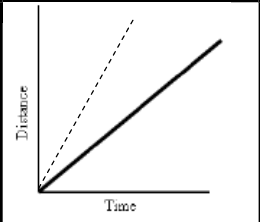
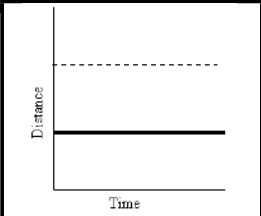
Which of the graphs shows that one of runners started 10 yards further ahead of the
other?


In which of the following graphs below are both runners moving at the same speed?


Which of the graphs shows that one of runners started 10 yards further ahead of the
other?
In which of the following graphs below are both runners moving at the same speed?
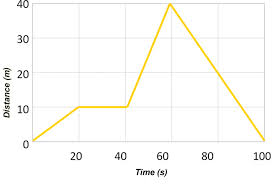
Match the description to the graph:
"The car is stopped."


Match the description to the graph:
"The car is traveling at a constant speed."
Match the description to the graph:
"The car is coming back."

Segment O-A The bus is _________________.
at rest
returning (to original position)
moving forward
Segment A-B The bus is _________________.
at rest
returning (to original position)
moving forward
Segment B-C The bus is _________________.
at rest
returning (to original position)
moving forward

Which runner won the race?
Albert
Bob
Charlie
How long did Charlie stop for a rest?
2.5 seconds
2 seconds
3 seconds
5 seconds
How long did Bob take to complete the race?
17 seconds
12 seconds
14 seconds
15 seconds
Which of the graphs shows that one of runners started in the same place?
Which of the graphs shows that one of runners ended the race 10 yards ahead of the other?