
NEW
Font size
 Worksheets
iGCSE DT: Composites
Total questions: 70
Worksheet time: 35mins
What is a composite?
A single material used alone
A mixture of materials combined to enhance their individual properties
A type of metal
A type of plastic
Fill in the blank: A composite is a mixture of materials combined to ______ their individual properties.
enhance
reduce
ignore
separate
Which of the following items is an example of a composite material?
A) Wooden chair
B) Bulletproof vest
C) Glass cup
D) Steel rod
A composite material is defined as:
A material made from two or more constituent materials with different physical or chemical properties.
A material made from a single element.
A material that is always metallic.
A material that cannot be engineered.
A range of composite materials is:
Fiberglass, carbon fiber, and concrete
Steel, copper, and aluminum
Wood, stone, and brick
Plastic, rubber, and glass
Practical applications of composite materials include:
Aircraft components, sports equipment, and automotive parts
Only food packaging
Only textile manufacturing
Only paper production
A composite is a term used to describe a ______ made by combining two or more materials.
material
color
shape
temperature
The materials combined in a composite usually have significantly different ______ or ______ properties.
chemical, physical
magnetic, radioactive
optical, acoustic
thermal, elastic
When combined, each material’s ______ is retained in a composite.
structure
color
weight
temperature
True or False: In a composite, the individual materials blend, merge, or dissolve into each other.
True
False
The individual materials in a composite work together and have ______ properties, such as lighter weight or increased strength.
enhanced
diminished
random
unpredictable
Most composites are made of two materials: the ______, which surrounds or binds the other material, and the fibre or reinforcement.
matrix
resin
core
sheath
Composites can usually be engineered to meet specific requirements for a specific ______.
application
color
season
flavor
Which of the following is a fibre based composite?
Concrete
GRP
Chipboard
MDF
Which category do Concrete, GRC, and Cermets belong to?
Fibre based
Particle based
Sheet based
None of the above
Fill in the blank: Boards made from wood pulp, chips or layers are examples of ________ composites.
Sheet based
Fibre reinforced
Metal matrix
Polymer matrix
Which of the following is NOT a sheet based composite?
Chipboard
MDF
GRP
Plywood
What are Glass Fibre Reinforced Polymers (GRP) / Fibreglass available in?
Different weights & strengths
Only one standard size
Liquid form only
Metal sheets
What forms the flexible matrix/fabric in GRP?
Strands of glass
Carbon fibers
Polyester resin
Steel wires
What is the reinforcement in GRP?
Glass fibre woven fabric
Carbon fibre mat
Polyester resin
Steel rods
What is the matrix material in GRP?
Polyester resin
Epoxy adhesive
Polyethylene
Polycarbonate
GRP can be smoothed via _______ and finishes added.
sanding
painting
welding
gluing
Is GRP suitable for batch production?
True
False
What are the properties of GRP?
Lightweight & very strong
Heavy & brittle
Highly conductive
Easily corroded
Which of the following is NOT a use of GRP?
Car bodies
Water tanks
Swimming pool slides
Cooking pots
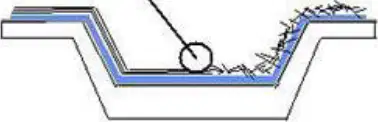
Which material is applied in layers and rolled out during the GRP manufacturing process?
Wax
Gel coat
Fiberglass, resin, and catalyst
Paint
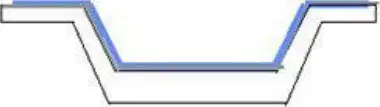
What is the purpose of applying a gel coat in the GRP manufacturing process?
To act as a mold release
To provide color
To strengthen the mold
To cure the part
What does CFRP stand for?
Carbon Fibre Reinforced Polymers
Copper Fibre Reinforced Plastics
Carbon Fibre Resin Polymers
Composite Fibre Resin Polymers
Fill in the blank: High tensile strength carbon fibres are woven together, then encased in a ________ resin.
polymer
metal
glass
ceramic
Which of the following is NOT a property of Carbon Fibre Reinforced Polymers (CFRP)?
Rigid
Lightweight
Very strong
Easily stretched
Carbon fibres are resistant to stretching.
True
False
Fill in the blank: CFRP is used to replace traditional heavier, ________ based materials.
metal
plastic
wood
ceramic
Which of the following best describes the cost of CFRP compared to other composites?
Least expensive
Moderately expensive
One of the most expensive
Cheapest
Kevlar is made by combining _______ with terephthaloyl chloride.
paraphenylenediamine
aniline
phenol
toluene
Kevlar is combined with _______ to make a composite material.
resin
water
sand
glass
Which of the following is stronger than steel when woven and manufactured into garments?
Nylon
Kevlar
Cotton
Polyester
Which of the following is NOT a property of Kevlar?
Super strong
Lightweight
Flexible
Weak
Kevlar is ______ times stronger than nylon.
9
3
5
12
Kevlar is used for PPE for people working in _______ jobs.
hazardous
comfortable
routine
sedentary
Name one use of Kevlar in sports.
Sports equipment
Food packaging
Musical instruments
Medical implants
Which of the following is NOT a use of Kevlar?
A) Body protection
B) Sails for windsurfing
C) Food packaging
D) Run flat tyres
What are the main materials that make up concrete?
Sand and cement
Water and glass
Plastic and metal
Wood and clay
Fill in the blank: Concrete can be further reinforced with glass fibres to make _________
glass reinforced concrete (GRC)
polymer concrete
ferrocement
prestressed concrete
Glass fibres in GRC replace the need for aggregate such as gravel and stone.
True
False
Concrete is made of ________, sand, and cement.
aggregates
water
bricks
glass
What is added to the dry mix of concrete before it is cast and left to harden?
Water
Sand
Lime
Gravel
Concrete can be further reinforced with glass fibres to make ________.
glass reinforced concrete (GRC)
polymer concrete (PC)
fiberboard (FB)
prestressed concrete (PSC)
Concrete can be moulded into complex shapes.
True
False
Concrete has similar properties to ________.
stone
wood
plastic
glass
Concrete can be cast in situ (on site), whereas stone has to be quarried and cut to shape.
True
False
Concrete has excellent ________ strength, making it particularly good in building and for their foundations.
compressive
tensile
shear
flexural
Why is it necessary to reinforce concrete beams with metal rods when spanning large distances?
Because concrete is poor in tension.
Because concrete is too expensive.
Because metal rods are decorative.
Because concrete is too light.
What are composites?
A single material
A mixture of materials combined to improve their properties
A type of metal
A type of wood
Composites generally fall into one of three groups: fibre based composites, particle based composites, and _________
sheet based composites
liquid based composites
gas based composites
crystal based composites
Which of the following are fibre based composites?
Concrete and cement
Carbon Fibre, GRP, and GRC
Plywood and MDF
Timber and metal
Particle based composites include ________ and ________.
concrete and cement
steel and glass
plastic and rubber
wood and fiber
Manufactured boards such as ________ and ________ are sheet based composites because they are a combination of wood and resin.
Plywood and MDF
Oak and Pine
Teak and Mahogany
Cedar and Maple
Composites are now being used to replace traditional materials such as timber and metal.
True
False
What is a composite? Fill in the blank: A composite is a mixture of materials _______ to enhance their properties.
combined
separated
destroyed
isolated
Which of the following is an example of a particle based composite?
GRP
MDF
Concrete
Alloy
Which of the following is an example of a fibre based composite?
Concrete
GRP
MDF
Alloy
Which of the following is an example of a sheet based composite?
Concrete
GRP
MDF
Alloy
What does the acronym GRP stand for? Fill in the blank: GRP is ________ Reinforced Plastic.
Glass
Graphite
Granite
Gold
Name two composite materials.
1. Carbon fibre reinforced plastic (CFRP) 2. Reinforced concrete
1. Pure copper 2. Pure aluminium
1. Glass 2. Wood
1. Iron 2. Gold

Fig. 8.1 shows a car shell made from carbon fibre reinforced plastic (CFRP). Give two advantages of using carbon fibre reinforced plastic (CFRP) rather than steel for the car shell.
1. Lighter weight 2. Greater strength or corrosion resistance
1. Heavier weight 2. Lower strength
1. More expensive 2. Less durable
1. Poorer corrosion resistance 2. Lower safety
Concrete is an example of which type of composite?
Particulate composite
Laminar composite
Fibre-reinforced composite
Polymeric composite
Name a fibre based composite.
Carbon fibre reinforced polymer
Stainless steel
Aluminium alloy
Polyethylene
Name a specific application for that composite.
Aircraft components
Food packaging
Textile dyeing
Pharmaceutical tablets
Kevlar is specifically used in which of the following applications?
Bulletproof vests
Cooking utensils
Window glass
Electrical wiring
Modern boat hulls are typically made from:
Fiberglass
Wood
Steel
Concrete