
 Worksheets
The Mexican Era: Exit Ticket Part 1
Total questions: 31
Worksheet time: 16mins
Why was it challenging for those living in New Spain due to distance?
Spain was too far away to help citizens in New Spain.
Spain was too close, causing frequent conflicts.
Spain had no interest in New Spain.
Spain provided too much help, causing dependency.
What was one of the reasons for heavy taxation in New Spain?
To build new schools in New Spain.
The Spanish King forced colonists to pay heavy taxes and took money from their churches.
To support local businesses in New Spain.
To fund exploration missions.
How did poverty affect the colonists in New Spain?
Colonists were given the best jobs.
Colonists were excluded from the best jobs, keeping most in poverty.
Colonists received financial aid from Spain.
Colonists had equal job opportunities.
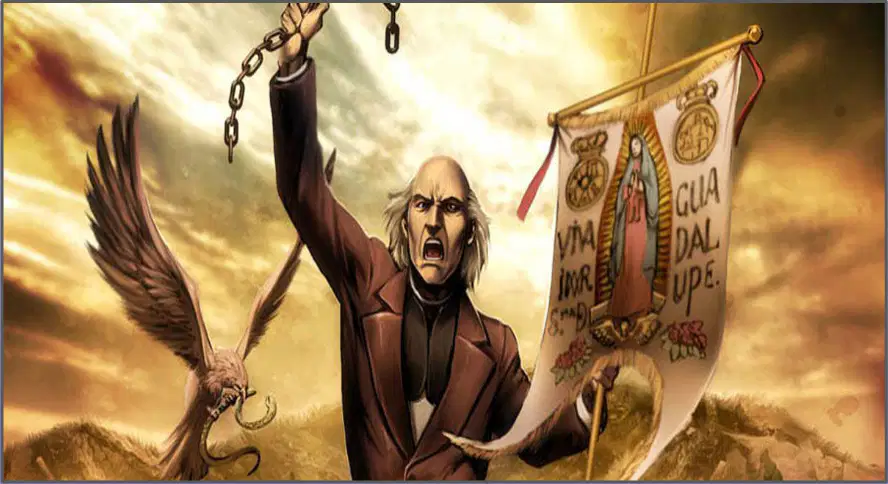
What was the "Grito de Dolores"?
A call for Mexican independence from Spain
A treaty between Mexico and Spain
A festival celebrated in Spain
A type of traditional Mexican music
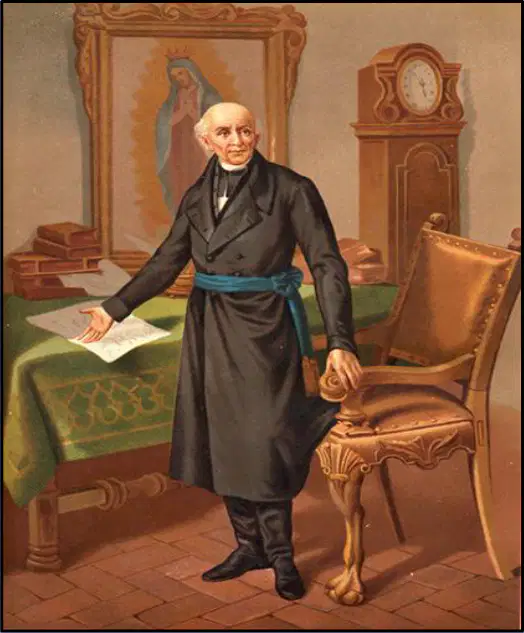
Who made the call for the "Grito de Dolores"?
Simon Bolivar
Father Miguel Hidalgo
Hernán Cortés
Benito Juárez
What was Philip Nolan's initial purpose for coming to Texas?
To establish a settlement
To capture wild horses and sell them for a profit
To explore new territories
To trade with Native Americans
Why did Spain become suspicious of Philip Nolan?
He was building a fort
He was trading with the French
His friendship with a U.S. Army commander
He was mining for gold
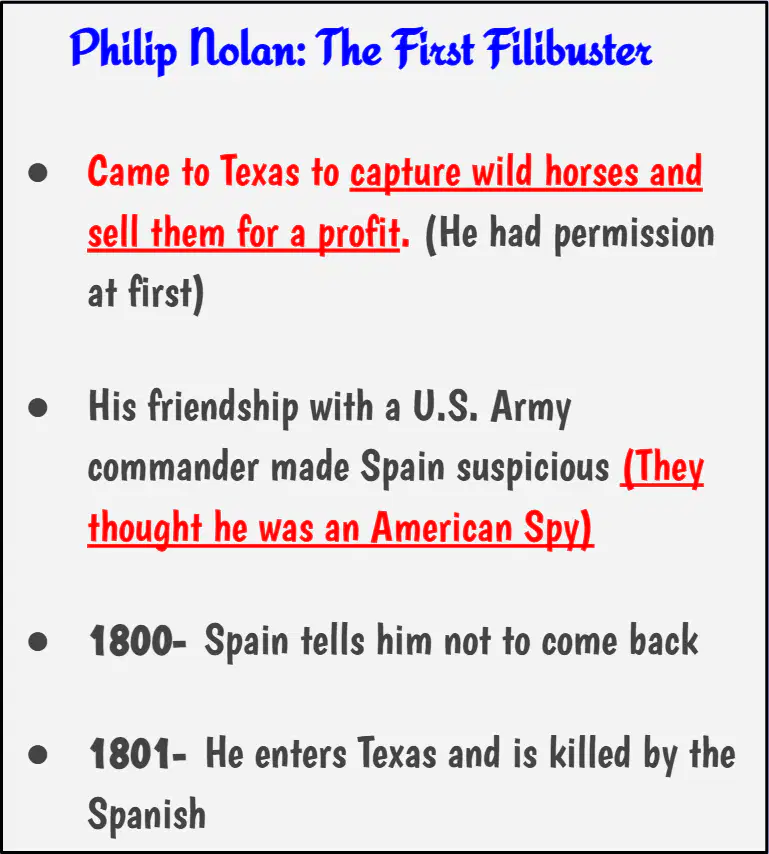
What happened to Philip Nolan in 1801?
He was captured by Native Americans
He was killed by the Spanish
He returned to the United States
He became a Spanish citizen
Who were the leaders of the Gutierrez-Magee Expedition?
Jose Bernardo Gutierrez de Lara and Augustus Magee
Sam Houston and Stephen F. Austin
Antonio Lopez de Santa Anna and Miguel Hidalgo
James Bowie and Davy Crockett
What was the goal of the Gutierrez-Magee Expedition?
To declare Texas independent from New Spain
To establish a trade route to Mexico
To find gold in California
To explore the Mississippi River
What name did the group formed by Gutierrez and Magee call themselves?
The Texas Rangers
The Republican Army of the North
The Lone Star Battalion
The Alamo Defenders
What was the Battle of Medina known as in Texas history?
The Bloodiest Battle in Texas History
The Longest Battle in Texas History
The First Battle in Texas History
The Smallest Battle in Texas History
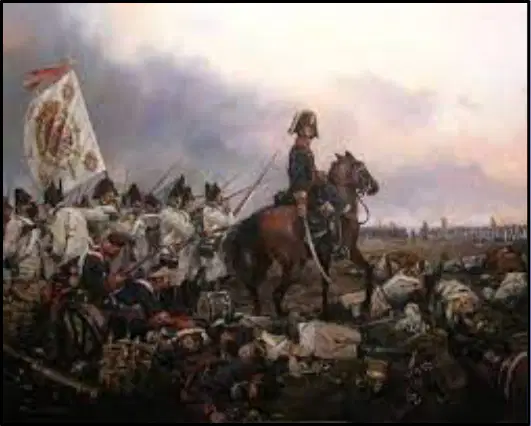
Who commanded the Spanish forces during the Battle of Medina?
General Arredondo
Santa Anna
General Houston
General Lee
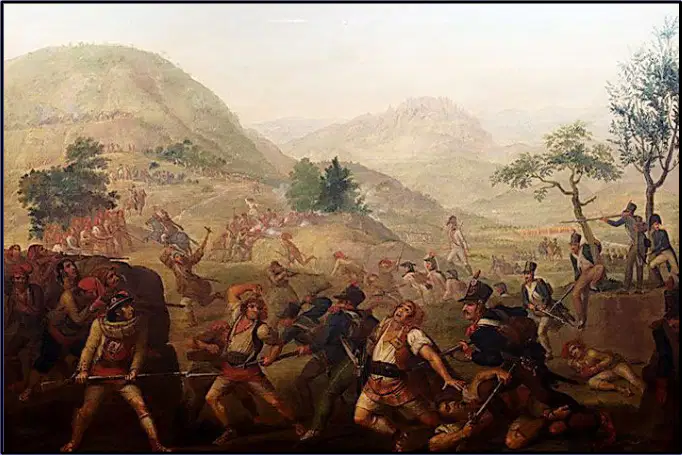
What was the outcome for the Republican Army in the Battle of Medina?
They were overwhelmed and executed
They won the battle
They retreated successfully
They formed an alliance with the Spanish
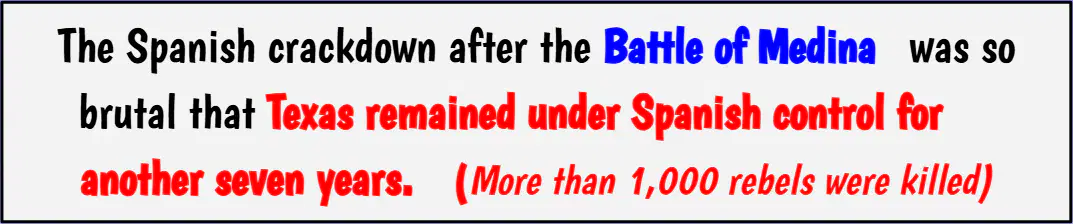
How long did Texas remain under Spanish control after the Battle of Medina?
Seven years
Five years
Ten years
Three years
Why was Galveston considered an ideal base of operations against the Spanish fleet?
It was close to the Spanish fleet.
It had a large population.
It was a remote location.
It was a wealthy city.
What was Jean Lafitte's initial claim for moving to Galveston?
To start a business.
To support the rebels.
To explore new lands.
To trade with the Spanish.
What was Jean Lafitte more interested in doing in Galveston?
Building a fort.
Trading with locals.
Stealing valuable Spanish cargo.
Farming the land.
Who was elected as the president when the group declared Texas independent?
Dr. James Long
Stephen F. Austin
Sam Houston
Antonio López de Santa Anna
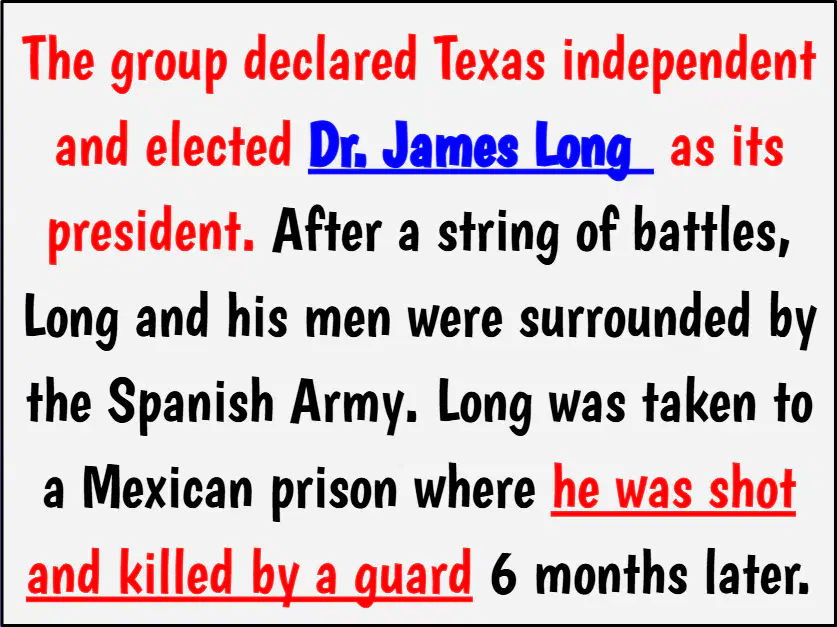
What happened to Dr. James Long after he was surrounded by the Spanish Army?
He was taken to a Mexican prison and later released.
He was taken to a Mexican prison and killed by a guard.
He escaped to the United States.
He became a Spanish citizen.
Who issued a plan to establish a Mexican empire in 1820?
Miguel Hidalgo
Simón Bolívar
Agustin de Iturbide
José de San Martín
According to the Plan de Iguala, what was declared as the official religion of Mexico?
Protestantism
Islam
Catholicism
Judaism
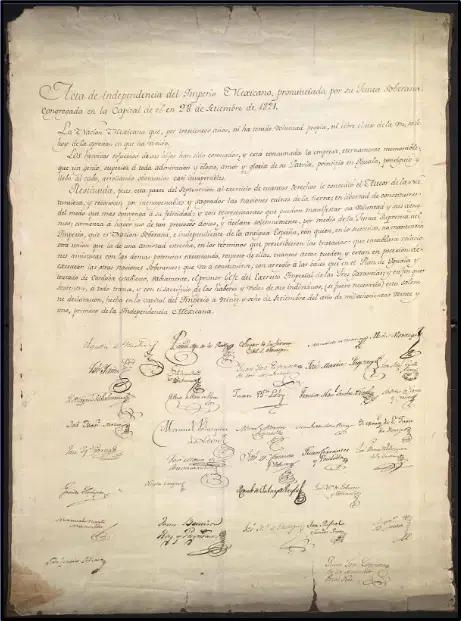
When was the Treaty of Cordoba signed?
August 21, 1821
July 4, 1776
September 16, 1810
October 12, 1492
What was the main outcome of the Treaty of Cordoba?
Mexico became independent from Spanish rule
The United States gained independence
Canada became a British colony
Brazil declared independence from Portugal
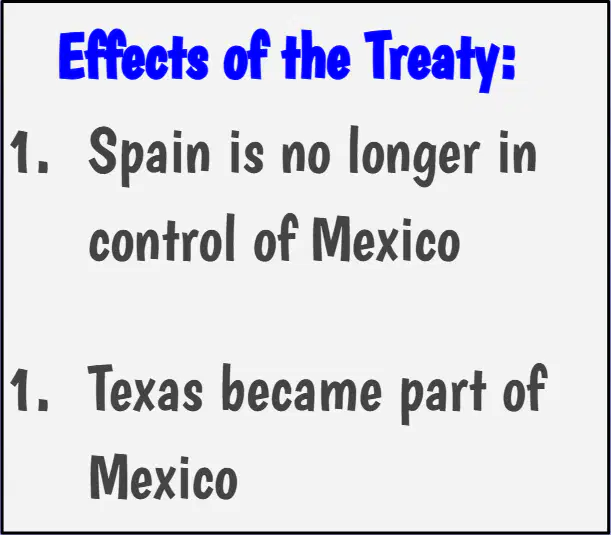
Which of the following was an effect of the Treaty of Cordoba?
Spain is no longer in control of Mexico
Mexico became a part of Spain
Texas became part of the United States
Canada gained independence from Britain
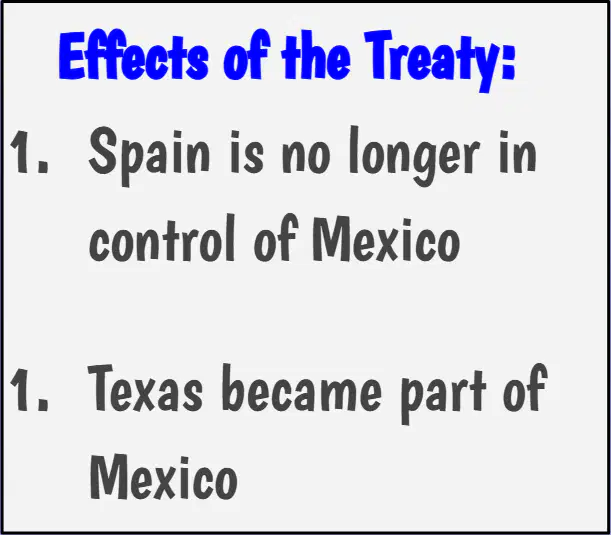
What happened to Texas as a result of the Treaty of Cordoba?
Texas became part of Mexico
Texas became part of the United States
Texas remained under Spanish control
Texas became an independent country

In what year did Mexico gain independence?
1810
1821
1830
1845

When did Mexico create their own Constitution?
1815
1820
1824
1835
What type of government was established by the Mexican Constitution of 1824?
Monarchy
Federal Republic
Dictatorship
Confederation
What was the official religion according to the Mexican Constitution of 1824?
Protestantism
Islam
Catholicism
Judaism
What were the characteristics of the area chosen for the colony?
Rich soil, access to water, and a warm climate
Rocky terrain, no water access, and a cold climate
Sandy soil, limited water, and a dry climate
Mountainous region, abundant snow, and a cool climate

