wayground logo

Free Printable Worksheets

Font size

S
M
L
XL
Worksheets

Tissue epi. con. Practice

Total questions: 60

Worksheet time: 41mins

Name
Class
Date
1.
Which tissues belong to Fibrous? (There are 4)
a)
loose connective areolar tissue
b)
reticular
c)
adipose
d)
dense regular and irregular
e)
compact bone
2.
Which tissues belong to cartilage? (There are 3)
a)
hyaline
b)
elastic
c)
fibrocartilage
d)
compact bone
e)
loose connective areolar tissue
3.
Which tissues belong to bones? (There are 2)
a)
compact bone
b)
cancellous
c)
loose connective areolar tissue
d)
erythrocytes
e)
leukocyte
4.
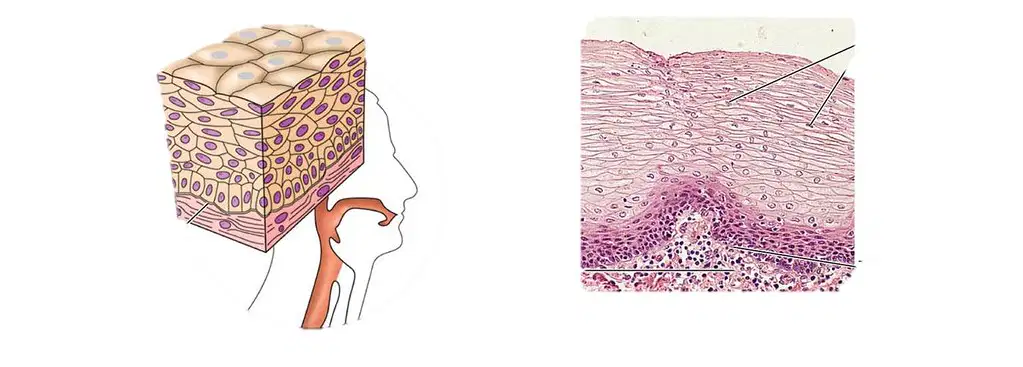
What type of tissue is shown below?
a)
Simple Squamous
b)
Stratified Squamous (keratinized)
c)
Stratified Squamous (nonkeratinized)
d)
Simple Cuboidal
e)
Stratified Cuboidal
5.
Which tissue type is located on the outer skin? It is characterized by having multiple layers and no nuclei throughout the top layers.
a)
Stratified Squamous (keratinized)
b)
Simple Squamous
c)
Stratified Squamous (nonkeratinized)
d)
Simple Cuboidal
e)
Stratified Cuboidal
6.
Which single layer tissue is found in the ducts and glands and has a function that secretes and absorbs?
a)
Simple Cuboidal
b)
Simple Squamous
c)
Stratified Squamous (keratinized)
d)
Stratified Squamous (nonkeratinized)
e)
Stratified Cuboidal
7.
Which tissue type is found in areas of extreme stress (where stretching is required) like the urinary bladder?
a)
Transitional
b)
Simple Squamous
c)
Stratified Squamous (keratinized)
d)
Stratified Squamous (nonkeratinized)
e)
Simple Cuboidal
8.
Which tissue type is the rarest tissue type and is found in your anus and the male urethra?
a)
Stratified Columnar
b)
Simple Squamous
c)
Stratified Squamous (keratinized)
d)
Stratified Squamous (nonkeratinized)
e)
Simple Cuboidal
9.
Which tissue type is shown below?
a)
Stratified Squamous (nonkeratinized)
b)
Simple Squamous
c)
Stratified Squamous (keratinized)
d)
Simple Cuboidal
e)
Stratified Cuboidal
10.
Which of the following is a function of epithelial tissues? (Check all that apply. There are 5.)
a)
protection
b)
sensory function
c)
absorption
d)
secretion
e)
excretion
11.
Cartilage type with a great deal of collagen in the matrix. Is found in the vertebral disks and pubic symphyses.
a)
fibrocartilage
b)
dense fibrous connective tissue
c)
adipose
d)
hyaline cartilage
e)
elastic cartilage
12.
Cartilage that forms the outer ear and nose.
a)
elastic cartilage
b)
dense fibrous connective tissue
c)
adipose
d)
hyaline cartilage
e)
fibrocartilage
13.
Tissue type that forms strong membranes and can be regular and irregular.
a)
dense fibrous connective tissue
b)
adipose
c)
hyaline cartilage
d)
elastic cartilage
e)
compact bone
14.
Strong tissue that forms tendons and ligaments.
a)
dense fibrous connective tissue
b)
adipose
c)
hyaline cartilage
d)
elastic cartilage
e)
compact bone
15.
The most common type of cartilage.
a)
hyaline cartilage
b)
dense fibrous connective tissue
c)
adipose
d)
elastic cartilage
e)
compact bone
16.
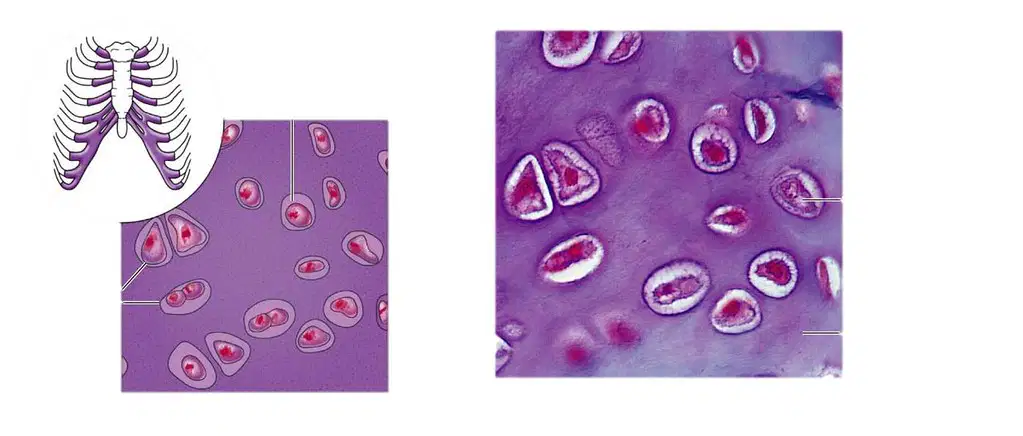
What type of tissue is seen in the picture?
a)
hyaline cartilage
b)
dense irregular fibrous connective tissue
c)
adipose
d)
elastic cartilage
e)
compact bone
17.
What type of tissue is seen in the picture?
a)
reticular tissue
b)
dense irregular fibrous connective tissue
c)
adipose
d)
hyaline cartilage
e)
elastic cartilage
18.
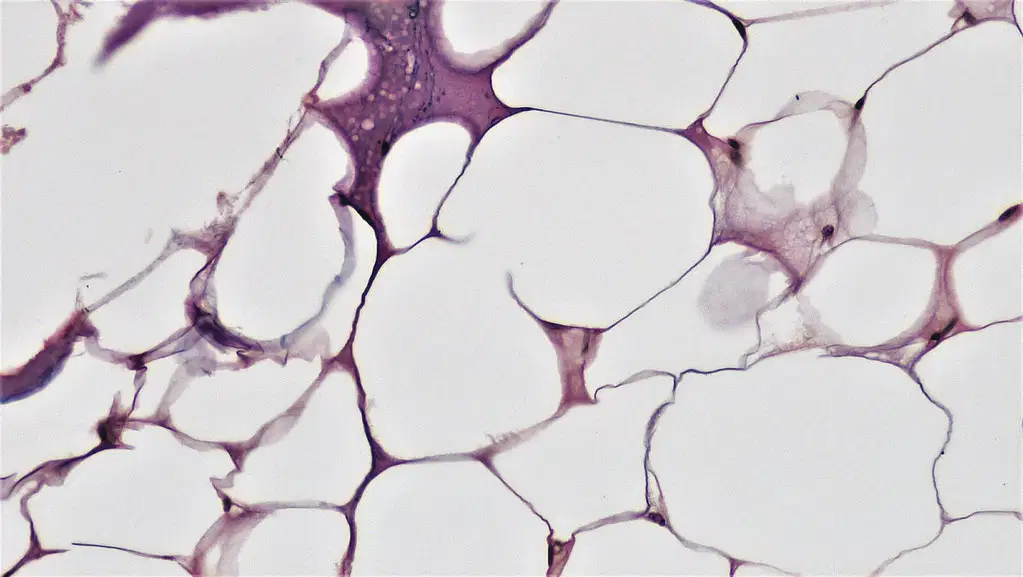
What type of tissue is seen in the picture?
a)
adipose
b)
dense irregular fibrous connective tissue
c)
hyaline cartilage
d)
elastic cartilage
e)
compact bone
19.
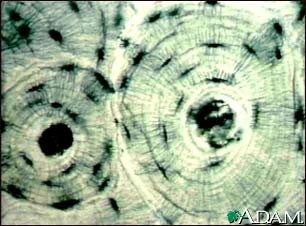
What type of tissue is seen in the picture?
a)
compact bone
b)
dense irregular fibrous connective tissue
c)
adipose
d)
hyaline cartilage
e)
elastic cartilage
20.
What type of tissue is seen in the picture?
a)
Loose, Connective (Areolar)
b)
dense irregular fibrous connective tissue
c)
adipose
d)
hyaline cartilage
e)
elastic cartilage
21.

The tissue type shown in the photomicrograph below is a ___ tissue

a)

Blood

b)

Bone

c)

Areolar

d)

Adipose

e)

Hyaline Cartilage

22.

The tissue typeshown in the line drawing is ___tissue

a)

Blood

b)

Reticular

c)

Adipose

d)

Bone

e)

Reticular Connective

23.

What kind of tissue?

a)

Epithelial

b)

Muscular

c)

Connective

d)

Nervous

24.
This type of tissue includes ligaments, tendons, and cartilage
a)
epithelial
b)
connective
c)
muscular
d)
nervous
25.
What tissue type is this?
a)

simple cuboidal

b)

simple squamous

c)

transitional

d)

pseudostratified ciliated columnar

26.
What tissue type is this?
a)

simple cuboidal

b)

simple squamous

c)

transitional

d)

pseudostratified ciliated columnar

27.
a)

smooth muscle

b)

bone

c)

nerve

d)

blood

28.

Which type of fiber has short, fine highly branched fibers?

a)

collagen

b)

elastin

c)

reticular

29.

Which of the following is a type of connective tissue?

a)

stratified squamous epithelium

b)

cartilage

c)

neuron

d)

skeletal muscle

30.

​ ​ (a)   connective tissue contains fewer extracellular collagen fibers and​ (b)   fibroblasts and other cells.

Choose from the below words
Fluid
Dense
Supportive
many
fewer
Loose
31.

​Identify the tissue in the image. ​​ (a)  

Choose from the below words
areolar
adipose
reticular
simple squamous
bone
elastic
blood
elastic cartilage
hyaline cartilage
fibrocartilage
32.

Match the following images of CT proper to their name.

a)

1.

adipose CT

b)

2.

areolar CT

c)

3.

reticular CT

d)

4.

dense irregular CT

e)

5.

elastic CT

33.

Match the following vocabulary to the correct description.

a)

the "filling" between the fibers and the cells

1.

ground substance

b)

all materials found outside of the cells

2.

extracellular matrix

c)

the strongest/largest/most abundant fiber

3.

collagen fiber

d)

this fiber is able to stretch and recoil

4.

elastic fiber

e)

this fiber forms a net-like scaffolding arrangement

5.

reticular fiber

34.

Match the following

a)

Areolar

1.

Elastic Glue

b)

Adipose

2.

Fat

c)

Reticular

3.

Mesh Framework

d)

Dense, Regular

4.

Withstand Pulling Force

e)

Dense, Irregular

5.

Impact Resistant

35.

Match the location with the type of tissue that can be found there.

a)

Dense CT

1.

Tendons, ligaments

b)

Reticular Loose CT

2.

Liver, spleen

c)

Areolar Loose CT

3.

epithelium + base layer

d)

Transitional Epithelium

4.

Bladder, ureter, urethra

e)

Simple Squamous

5.

Lung alveoli, glomerulus

36.
Name this tissue
a)
Bone
b)
Cartliage
c)
Blood
d)
Dense fibrous connective tissue
37.

Label the types of epithelial tissues by dragging them to their correct locations.

38.

What kind of epithelial tissue is this

a)

Simple squamous

b)

Stratified Cuboidal

c)

Simple cuboidal

d)

Stratified columnar

39.
Absorbs nutrients in the digestive tract
a)
Columnar
b)
Cuboidal
c)
Simple Squamous
d)
Pseudostratified
40.
Lines ducts and glands
a)
Columnar
b)
Cuboidal
c)
Simple Squamous
d)
Transitional
41.
Found in organs like the bladder that need to stretch
a)
Areolar
b)
Stratified squamous
c)
Pseudostratified
d)
Transitional
42.

Match the following

a)
1.

Elastic Cartilage

b)

Transitional

2.

Epithelial tissue that can stretch and change the shape. Found in the lining of urinary organs

c)

Elastic Dense Connective Tissue

3.

Allow tissue to bounce back after stretching. Found in walls of arteries, ligaments and lungs

43.

Match the following

a)

Simple Cuboidal

1.

Excellent at secretion and absorption. Found in the walls of kidney tubules and within glands.

b)
2.

Adipose Tissue

c)
3.

Hyaline Cartilage

d)

Smooth Muscle

4.

Found inside the stomach, intestines, blood vessels, bladder, eye, and reproductive organs.

e)
5.

Areolar Connective Tissue

44.
Name the tissue.
a)
hyaline cartilage
b)
blood
c)
bone
d)
adipose
45.
Name the tissue
a)
smooth muscle
b)
stratified squamous
c)
simple squamous
d)
skeletal muscle
46.
Name the tissue.
a)
simple cuboidal
b)
skeletal muscle
c)
nerve
d)
simple squamous
47.
Name the tissue.
a)
simple cuboidal
b)
transitional
c)
pseudostratified
d)
simple columnar
48.
Name the tissue.
a)
cardiac muscle
b)
smooth muscle
c)
simple columnar
d)
simple cuboidal
49.
Name the tissue.
a)
cardiac muscle
b)
smooth muscle
c)
simple columnar
d)
simple cuboidal
50.
Name the tissue.
a)
stratified squamous
b)
dense regular
c)
elastic cartilage
d)
simple columnar
51.
Name the tissue.
a)
simple cuboidal
b)
fibrocartilage
c)
adipose
d)
transitional
52.
Name the tissue.
a)
areolar
b)
dense regular
c)
dense irregular
d)
adipose
53.
Name the tissue.
a)
blood
b)
hyaline cartilage
c)
adipose
d)
simple cuboidal
54.
Name the tissue
a)
areolar
b)
dense irregular
c)
adipose
d)
nerve
55.
Name the tissue
a)
dense regular
b)
fibrocartilage
c)
skeletal muscle
d)
cardiac muscle
56.
Name the tissue.
a)
hyaline cartilage
b)
elastic cartilage
c)
adipose
d)
reticular
57.
Name the tissue
a)
blood
b)
bone
c)
reticular
d)
hyaline cartilage
58.
Name the tissue
a)
hyaline cartilage
b)
fibrocartilage
c)
elastic cartilage
d)
cardiac muscle
59.
Name the tissue.
a)
fibrocartilage
b)
dense regular
c)
blood
d)
elastic cartilage
60.
Name the tissue.
a)
blood 
b)
nerve
c)
bone
d)
adipose