
 Worksheets
Constitution and Bill of Rights Assessment
Total questions: 20
Worksheet time: 10mins
Name
Class
Date
1.
______________________ is the supreme law for the United States.
a)
the Declaration of Independence
b)
the U.S. Constitution
c)
the Bill of Rights
d)
the Preamble
2.
The Constitution divides the federal government into ______ branches.
a)
2
b)
3
c)
4
d)
5
3.
Article I of the Constitution tells all about the ________________ branch of government.
a)
legislative
b)
executive
c)
judicial
d)
municipal
4.
Article II of the Constitution describes the _____________________ branch of government.
a)
legislative
b)
executive
c)
judicial
d)
municipal
5.
The Constitution protects your rights in all of the following situations except:
a)
your right to practice whatever religion you choose
b)
your right to watch late night TV instead of going to bed
c)
your right not to house soldiers
d)
your right to a speedy trial
6.
The constitution protects your rights in all of the following situations except:
a)
protection from unreasonable search of your property
b)
the right to remain silent and not testify against yourself
c)
the right to park on your neighbor's lawn
d)
the right to be represented by a lawyer
7.
Constitutional rights are found in a section of the U.S. Constitution called ___________________.
a)
Preamble
b)
Articles
c)
Amendments
d)
Branches
8.
The first words of the Constitution, "We the People" are written in large font to emphasize that the power in our government belongs to ___________________.
a)
the government
b)
Congress
c)
the President
d)
the citizens
9.
The "Bill of RIghts" is part of the U.S. Constitution. It contains the first __________ Amendments of the Constitution.
a)
8
b)
6
c)
7
d)
10
10.
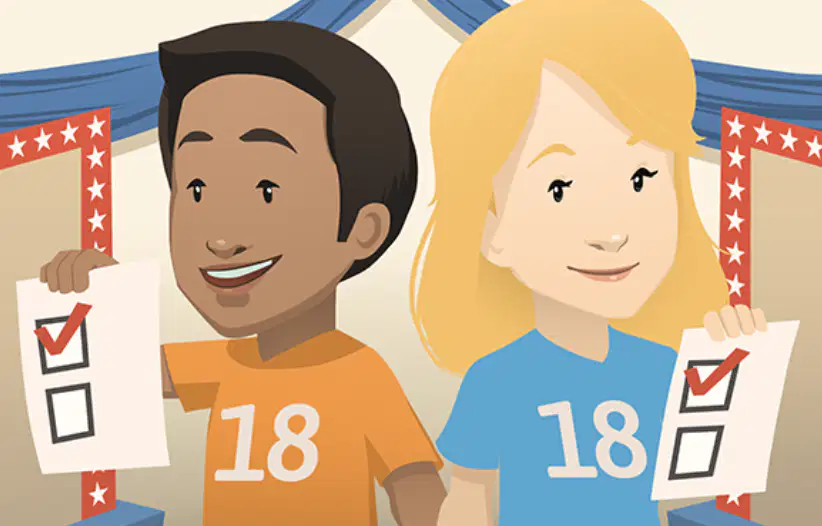
What Constitutional right is the illustration below representing?
a)
freedom of speech
b)
the right of U.S. citizens to vote when they turn 18
c)
the right to be represented by a lawyer
d)
the right to take a survey in your community
11.
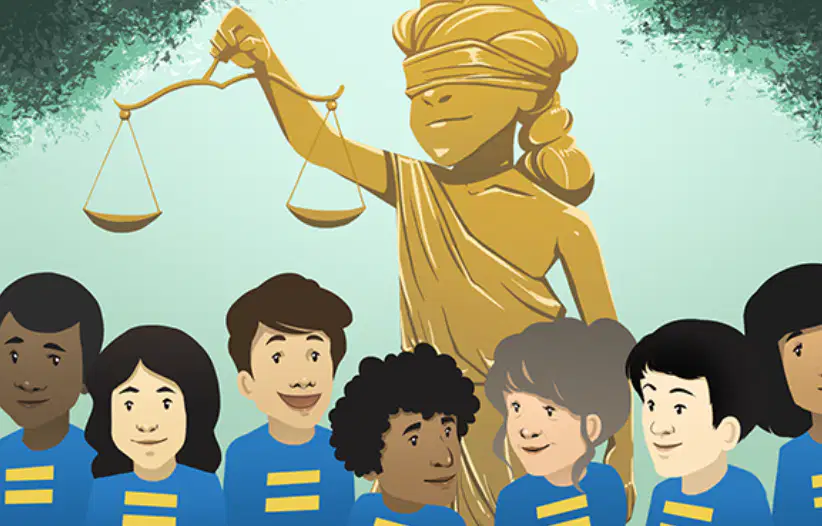
What Constitutional right is represented in the illustration below
a)
freedom of assembly
b)
the right for all citizens to be treated equally
c)
the right to receive a fair trial if you are accused of a crime
d)
the right to pay a fair price for goods
12.
The President of the United States has the power to __________, or reject a Bill proposed by congress, thus stopping it from becoming a Law.
a)
Venmo
b)
Rejecto
c)
Falsito
d)
Veto
13.
The right to not have soldiers stay in your home is an example of is protected under what Constitutional Amendment?
a)
The 1st Amendment
b)
The 2nd Amendment
c)
The 3rd Amendment
d)
The 4th Amendment
14.
Which Amendment gives citizens of the United States to "Keep and bear arms."
a)
The 1st Amendment
b)
The 2nd Amendment
c)
The 3rd Amendment
d)
The 4th Amendment
15.
The Constitution divides the powers and responsibilities of government into multiple branches to prevent __________________________________.
a)
one person or group from being too powerful
b)
arguments about whose job it is to do different things
c)
law suits by citizens that could bankrupt the government
d)
the President from being overworked with too much responsibility
16.
When Founding Fathers signed the final copy of the Constitution, indicating that they agreed with it and wanted it to become law, they were________________ the Constitution.
a)
vetoing
b)
dedicating
c)
ratifying
d)
declaring
17.
A _________________ is a person who has legal rights within a government.
a)
president
b)
alien
c)
man
d)
citizen
18.
In the United States, we elect _____________________ to represent our beliefs and make laws.
a)
representatives
b)
officers
c)
voters
d)
citizens
19.
Popular Sovereignty is the belief that ___________________ should hold the supreme power in a country.
a)
citizens
b)
representatives
c)
Mrs. Yeomans
d)
founding fathers
20.
The leaders who gathered together to write and sign the Constitution of the United States are called ___________________.
a)
governors
b)
radicals
c)
founding fathers
d)
future presidents
100 %

