
Font size
 Worksheets
Cells and Virus practice
Total questions: 45
Worksheet time: 46mins
(a) have membrane-bound organelles.
Match each type of cell or entity with whether it has a nucleus or not.
prokaryotic cell
Cell type without a nucleus
eukaryotic cell
Cell type with a nucleus
bacteria cell
Example of a cell without a nucleus
non-living cells
Entity that is not a cell and does not have a nucleus
Which type of cell free floating genetic material (DNA)?
prokaryotic cell
eukaryotic cell
plant cell
animal cell

Match the following cell parts with their main functions.
cell membrane
Controls what enters and leaves the cell
nucleus
Contains the genetic material (DNA)
mitochondria
Produces energy through cellular respiration
chloroplast
Site of photosynthesis
cell wall
Provides structure and support to the cell
Which TWO parts of the cell are involved in providing some form of energy for the cell?
cell membrane
nucleus
mitochondria
chloroplast
cell wall
Match the following
autotroph
Plant that goes through photosynthesis
heterotroph
worm that eats waste material in soil
unicellular
1 celled organism
multicellular
any organism made up of multiple cells
eukaryotic
has nucleus and organelles
Describe how temperature affects enzyme activity.
Enzymes are inactive at high temperatures.
Enzymes are more active at low temperatures.
Enzymes have an optimal temperature range.
Enzymes are unaffected by temperature.
Which letter indicates the location where DNA is stored?
Match each cell structure description with the correct organelle.
cytoplasm
The "jelly-like" substance that keeps all other organelles in place and helps keep the shape of the cell.
cell membrane
The outer boundary of the cell that controls what enters and leaves the cell.
ribosomes
Small structures that are the site of protein synthesis in the cell.
cell wall
A rigid layer that provides support and protection to plant cells.
An advertisement for a health supplement for dogs claims to build lean muscle and strengthen tendons and ligaments, as well as provide energy. Which two biomolecules must the supplement contain to provide these benefits?
Proteins and carbohydrates
Carbohydrates and lipids
Nucleic acids and carbohydrates
Lipids and nucleic acids

A student groups different types of cells as shown. Which table headings should the student use for the two groups?
Animal Cells and Plant Cells
Prokaryotic Cells and Eukaryotic Cells
Mobile Cells and Motile Cells
Fungal Cells and Bacterial Cells
Choose all parts that BOTH prokaryotic and eukaryotic cells have.
cell membrane
cytoplasm
nucleus
ribosomes
genetic material (DNA/RNA)
Bacterial cells are...
Prokaryotic
Very Small
Responsible for disease like strep throat and salmonella
Can be beneficial, like in our digestive systems.
complex
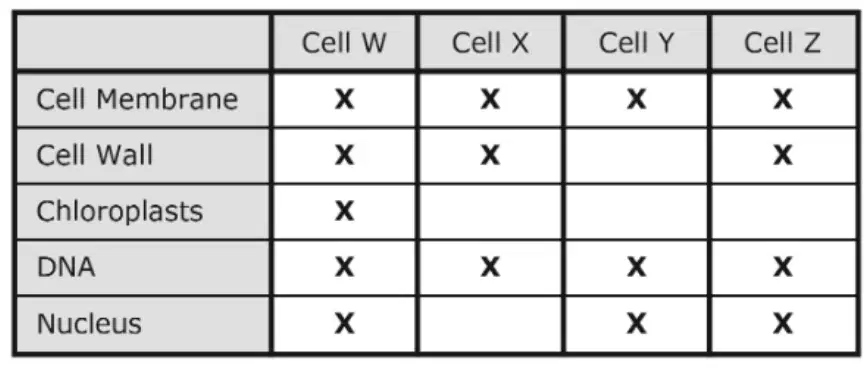
Students use a microscope to look for structures present in four different cells. The students placed an X for each structure that was viewed for each cell on the table shown.
Which cell that was viewed is most likely a prokaryote?
Cell W
Cell X
Cell Y
Cell Z

Materials are provided to students to build modes of a prokaryotic cell, a eukaryotic cell, and a virus. The material and the structures they represent are listed in the table shown. Which materials would be used in all three models?
Yellow paper oval
Gray paper hexagon
Blue yarn
Purple buttons

F
G
H
J

A
B
C
D

A
B
C
D
process by which organisms maintain a relatively stable internal environment
homeostasis
equilibrium
isotonic
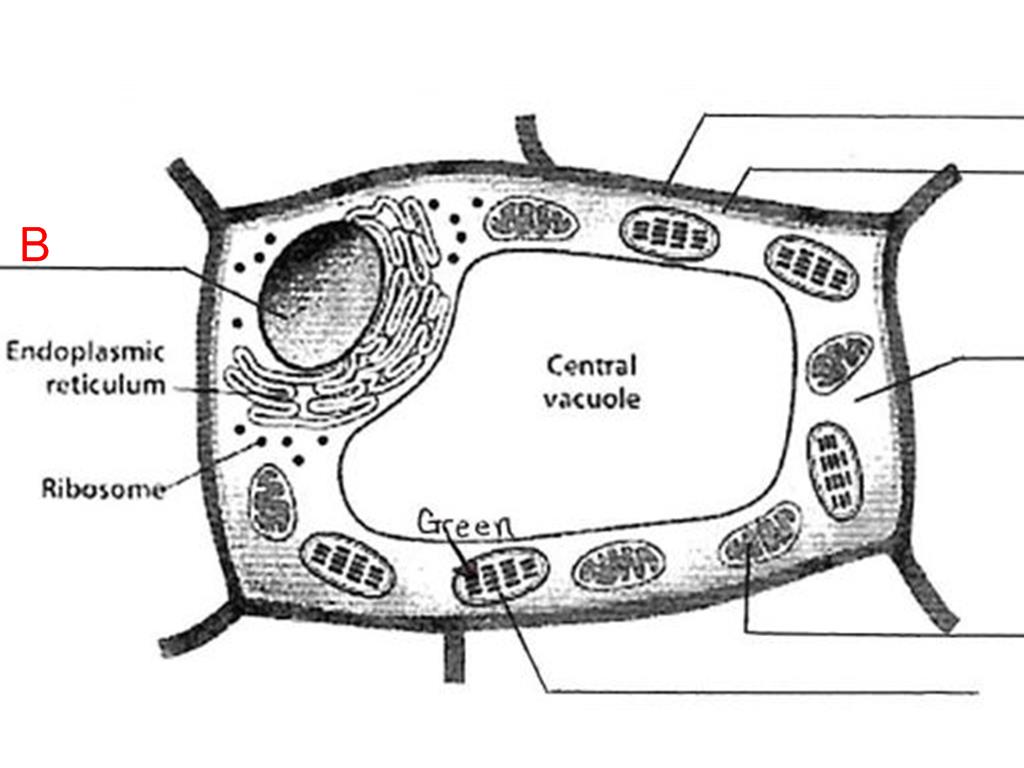

What type of cell is pictured above?
Plant Cell
Animal Cell
Eukaryote
Prokaryote

What type of cell is pictured above?
Plant Cell
Animal Cell
Eukaryote
Prokaryote
All viruses are different, but what are two parts that a virus must have?
Genetic Information (DNA or RNA)
a lipid membrane
a nucleus
a protein coat

Cell membranes of living organisms are made of a bilayer (2 layers) of
lipids
proteins
carbohydrates

The little sticks poking out of the sides of these viruses are called
sugar sticks
spike proteins
covid claws


A virus can be classified by its type of
mitochondria
chromosomes
nucleic acid
carbohydrates


A table comparing the characteristics of four samples is shown.
Which sample most likely contains viruses?
Sample 1
Sample 2
Sample 3
Sample 4

Endosymbiotic Theory is the idea that ______ cells could have evolved from_____cells
prokaryotic, eukaryotic
eukaryotic, animal
prokaryotic, plant
eukaryotic, prokaryotic
The Endosymbiotic Theory explains
the origin of prokaryotes
how bacteria lives
the origin of eukaryotes
how species develop
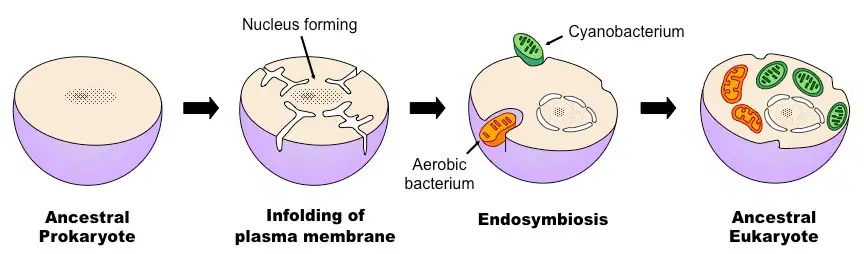
What is pictured?
Endosymbiotic theory
Miller Urey Experiment
Redi's Experiment
Photosynthesis

What kind of cell?
Eukaryote
Prokaryote
Bacteria
Animal
Match the biomolecule to the organelle that they live in.
Nucleic Acid
Nucleus
Lipids
Cell membrane
Carbohydrates
Mitochondria
Protein
Ribosome
skibidi
toilet
Label the following Cells with the correct Cell Type.
Prokaryotes
Eukaryotes
Viruses

Label the following cells.
I. (a) II (b) III (c) IV (d)
Animal
Virus
Plant
Bacteria
What Type of Cell is it?

Bacteria

Plant Cell

Animal Cell

Fungi

Protists
Identify each type of cell based on the description.
Eukaryotic and never has a cell wall but will have centrioles.
Animal Cell
Eukaryotic, contains chloroplasts and a cell wall of cellulose
Plant Cell
Eukaryotic, contractile vacuoles, moves in water
Protist Cell
Eukaryotic, cell wall made of chitin
Fungal Cell
Prokaryotic, contains ribosomes and no other organelles
Bacterial Cell

