
 Worksheets
Exploring Body Systems and Cells
Total questions: 18
Worksheet time: 9mins

The main purpose of homeostasis is to...
Fight disease-causing organisms
Keep internal conditions stable
Produce offspring
Replicate DNA
Which organ system is responsible for transporting oxygen and nutrients throughout the body?
Digestive system
Circulatory system
Nervous system
Skeletal system
What is the basic unit of life according to cell theory?
Tissue
Organ
Cell
Organ system
Which of the following is NOT one of the major human organ systems?
Respiratory system
Skeletal system
Photosynthetic system
Muscular system
Which principle is part of the cell theory?
All cells have a nucleus
All living things are made of cells
Only animals are made of cells
Cells can only be seen with a microscope
Which function is performed by nerve cells in the human body?
Transporting oxygen
Sending electrical signals
Producing hormones
Breaking down food

Which organ system helps maintain homeostasis by removing waste products from the blood?
Digestive system
Excretory system
Endocrine system
Integumentary system
Which of the following best describes the function of muscle tissue?
Protects the body from pathogens
Contracts to produce movement
Transmits electrical impulses
Stores fat
How does the respiratory system work together with the circulatory system?
By digesting food
By exchanging gases and transporting oxygen to cells
By producing hormones
By supporting the body structure
Which scenario best demonstrates the concept of homeostasis in the human body?
Sweating to cool down when you are hot
Growing taller during puberty
Learning a new language
Breaking a bone
Why is it important for cells to work together to form tissues?
To make the body look bigger
To perform specialized functions more efficiently
To help cells divide faster
To prevent diseases
A student observes a group of cells that contract and relax to move a part of the body. Which type of tissue are they most likely observing?
Connective tissue
Muscle tissue
Epithelial tissue
Nervous tissue
A person is running a race. Explain how the muscular, respiratory, and circulatory systems work together to help the person complete the race.
The muscular system provides energy, the respiratory system stores oxygen, and the circulatory system digests food.
The muscular system moves the body, the respiratory system supplies oxygen, and the circulatory system transports oxygen and nutrients to muscles.
The muscular system digests food, the respiratory system removes waste, and the circulatory system stores energy.
The muscular system stores oxygen, the respiratory system moves the body, and the circulatory system contracts muscles.
A scientist discovers a new organism. What evidence would support the idea that this organism is made of cells, according to cell theory?
The organism can move
The organism is made up of small, membrane-bound units that divide to form new units
The organism eats food
The organism breathes oxygen
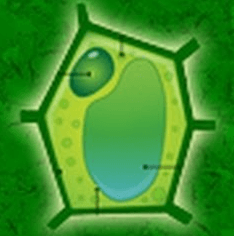

The tendency toward a relatively stable equilibrium between interdependent elements, especially as maintained by physiological processes.
Homeostasis
Isotonic
Diffusion

